In this study, natural sepiolite samples were treated with hydrochloric and acetic acid solutions at three different concentrations (0.1 M, 0.5 M, and 1.0 M). The effect of acid treatment on the reactivity of natural sepiolite and the change in cement hydration following the addition of natural sepiolite were studied using X-ray diffraction, particle size distribution analysis, inductively coupled spectrometry, thermogravimetric analysis, and isothermal calorimetry. Although acid treatment leads to a slight decrease in the amorphous phase content in natural sepiolite, the reactivity of sepiolite increased. The results indicate that the increase in sepiolite reactivity most likely stemmed from the activation of the Si phase. In addition, acid-treated sepiolite can modify the hydration of cement during the early curing period and hinder the hydration of cement during the later curing period. The compressive strength of specimens with strong acid-treated sepiolite was higher compared with specimens with weak acid-treated sepiolite.
In this study, foam ceramics were prepared via a direct foaming method at high temperatures (1080-1120 degrees C), using red mud (RM) and K-feldspar washed waste (KFW) as the raw materials and SiC as the foaming agent, respectively. The chemical compositions and crystalline phases of the raw materials as well as the structural and mechanical properties of the foam ceramics were investigated. By adjusting the formulation and sintering process parameters, the porous structure of the foam ceramics could be effectively modulated. In addition to some residual crystalline phases in the raw materials, new phases, including rutile (TiO2) and anorthite (CaAl2Si2O8), were generated in foam ceramics. The compressive strength of the foam ceramics decreased with an increase in the KFW/RM ratio and sintering temperature, which was mainly related to the low density of the foam ceramics and the poor support of the pore walls to the structure. Among all the foam ceramics investigated, the foam ceramic with the KFW/RM ratio of 1:1, SiC content of 1 wt%, sintering temperature of 1100 degrees C and sintering time of 60 min showed the best overall performance with a bulk density, an apparent porosity, an average pore size and a compressive strength of 0.77 g/cm3, 61.89%, 0.52 mm, and 3.64 MPa, respectively. Its excellent porous structure and mechanical properties rendered it suitable for application as insulation materials or decorative materials for building partition walls.
In this study, the hydration behavior of circulating fluidized bed fly ash (CFBFA) as a cementitious binder was investigated in a CFBFA-lime system. Binary mixtures of CFBFA and lime were prepared with different weight ratios, and a series of experiments were performed to evaluate the hydration behavior of the mixtures. When the mixing weight ratio of CFBFA and lime was 5:1, the prepared mixtures could reach 17 MPa at 28 days. Hydration heat curves revealed that the release heat peak related to the hydration of CFBFA appeared earlier as the content of lime increased. This likely stemmed from the release of heat by the hydration of lime. Analysis of Ca(OH)2 consumption and chemically bound water revealed that the hydration reaction of mixtures can continue for a long time after Ca(OH)2 was depleted. In addition, the main hydration products of the CFBFA-lime system were C-S-H, C-A-S-H, AFm and AFt. The micro-morphology of the hydration products changed from needles to mesh-like and then to foil-like as the lime content in mixtures increased.
In this study, the pozzolanic activity of low-grade natural sepiolite was enhanced by calcination for further utilizing as a supplementary cementitious material. Sampled sepiolite was calcinated at 400, 600, 700, 800, 900, and 1000 degrees C, and the calcinated sepiolite were characterized and respectively blending with pastes for examining their rheological and hydration behaviors. It was found the pozzolanic activity of sepiolite was maybe mainly determined by the active Si phase content, and 800-SP showed the highest pozzolanic activity. The rheological behaviors of fresh paste blended with sepiolite calcinated at different temperatures shows obviously different. In early curing stage, the addition of sepiolite obviously accelerated the cement hydration. But in later curing stage, comparing with U-SP, the calcinated sepiolite showed hindering effect on cement hydration, and this effect was obviously regular with the increasing calcinated temperature. Additionally, by comparing with all pastes blended with sepiolite, which blended with 800-SP showed the highest compressive strength values.
赤泥是氧化铝工业生产过程中产生的固体废渣.赤泥的大量堆存会带来一系列的环境、经济问题,同时赤泥也含有很大的潜在利用价值.基于此,本文综述赤泥综合利用现状,包括回收有价金属、制备建筑材料、用于环境保护和制备工业催化剂,探讨其中存在的一些问题并给出建议.
采用FLAC3D数值模拟程序对完整岩石试件及含有单一裂隙岩石试件在单轴压缩下的破坏过程进行数值模拟.结果揭示了完整岩石试件和含裂隙岩石试件破裂过程的发展规律,即岩石试件破坏一般分为3个阶段:压密阶段、微裂纹萌生阶段和扩展以及断裂破坏阶段.不同的是随着加载的进行,完整岩石试件的破坏过程首先出现一个应力集中区,最终形成一个倾斜的应力面,导致试件最后形成一个倾斜的破坏面;而含有裂隙的岩石试件的破坏过程是首先在裂隙的两端出现应力集中区,随后在裂隙的尖端产生裂纹并沿垂直裂隙方向发展贯通整个岩石试件.
With the increase of excavation depth, the zonal disintegration phenomenon appears in the deep rock mass, which is quite different from the failure mode of shallow tunnel. In order to analyse the failure mechanism of this phenomenon, an elastoplastic softening damage model was put forward based on the softening damage characteristics of deep rock mass. The constitutive equations, the equilibrium equations, and the failure criterion were deduced. The theoretical solutions of radial displacement and radial stresses and tangential stresses of deep surrounding rock mass were calculated. The distribution law of zonal disintegration in deep tunnel was obtained. The theoretical solutions presented an oscillating mode. The theoretical calculated widths of fracture zones were in good agreement with the in situ test data. Besides, the sensitivity of different parameters to fracture morphology was calculated and analysed. The results show that the relative loading strength has a controlling role in the zonal disintegration morphology, followed by the cohesion force and deformation modulus, and the internal friction angle is the least. This study reveals the morphological characteristics and influencing factors of zonal disintegration, which provides a basis for the prediction and support control of fracture modes.
Under the background of new engineering, civil engineering majors have higher and higher requirements on the training objectives of students' application ability, but classroom teaching and practice are contradictory to each other.In recent years, the examination questions of registered geotechnical engineer are more and more close to the engineering practice and it is suitable to be used in the classroom for case teaching.China's registered geotechnical engineer examination is divided into two stages.The first stage is the basic examination, the purpose of the examination is to test whether the examinee has mastered the basic and professional theoretical knowledge.The second stage is a professional examination, the purpose is to test whether the examinee has the ability to carry out the survey, design and construction of geotechnical engineering in accordance with the national laws, regulations and technical specifications and the ability to solve practical problems.Through the calendar year registered geotechnical engineer based test cases and test of soil mechanics, the researches of the registered engineer exam questions do appropriate after deformation is introduced into the case teaching in the class of soil mechanics, can improve students' comprehension of knowledge, image understanding knowledge application in the engineering practice, strengthen the cultivation of application ability, at the same time take registered engineer examination for students after graduation to lay a good theoretical and practical basis.
文章介绍制作建筑效果图可采用revit建立模型,导入3Dmax中进行精细加工.建模完成后,再将模型转化成DAE格式并导入lumion中进行渲染,这种作法比起传统作法的优势是方便快捷,可节约大量时间.
毕业设计是土木工程专业最为重要的一个综合性实践教学环节,其质量严重影响着学生工程实践能力的培养.依据近几年毕业设计所面临的困境,对所遇到的具体问题进行了总结分析,结合地方高校的实际情况提出了改善毕业设计质量的对策.
According to the characteristics of civil engineering professional continuing education, continuing education of innovative talents training mode suitable for the characteristics of our school is put forward in this paper. The characteristics of the model include: the education of professional basic courses and specialized courses should be paid attention to; engineering training should be strengthened and engineering quality should be trained; the concept of large civil engineering should be highlighted, the specialized areas should be broadened, and the curriculum system should be reconstructed; the mechanism of personnel training program should be constructed by the employers, the domestic high-level institutions and our university. It is hoped that the new training model will promote the development of continuing education of civil engineering specialty in our university.
As for civil engineering adult education graduation design, reform program is put forward combined with our school. The main points of reform include the following aspects. New pattern of graduation design which is consisted of basic training of engineering design, technical application and engineering innovation training is formed. Integration model of graduation design and employment is carried out. Multiple professional guidance graduation design pattern is put forward. Subject of graduation design is chosen based on the school actual circumstance. A "three stage" quality monitoring system is established. Performance evaluation pattern that concludes two oral examinations of the dissertation is strictly carried out.
随着高等教育的不断发展和社会需求的不断变化,产生了一种新的高等教育类型—应用型本科教育,它介于传统的理论型本科教育和实用技术型的职业高等教育之间,以培养面向生产、建设、管理、服务一线的高级应用型人才为目标定位[1].目前,我国高等教育的人才培养模式主要还是理论型的,这种人才培养模式理论教学占绝对的主导地位,与应用型人才的培养目标矛盾突出.研究改革人才培养方案,特别是研究改革实践教学体系,是实现应用型人才培养目标的前提.本文以土木工程专业为例,探讨应用型本科专业实践教学改革的途径方法,探索应用型本科人才的培养模式及其运行条件,构建应用型人才培养的实践教学新体系.
The phosphobetaine amphoteric surfactant of N, N-dimethyl-tridecane hydroxyethyl ammonium phosphate (PBET-13), was synthesized by using epichlorohydrin, NaH2PO4 and dodecyl/tetradecyl dimethyl amine and cetyl/octadecyl dimethyl ammonium as raw materials. The scale inhibition, interfacial tension and foaming performance of PBET-13 were studied. The results show that the surfactant has higher scale inhibition efficiency to CaSO4 than that of CaCO3. PBET-13 solution with the appropriate concentration of NaCl could reach to the ultra-low value of interfacial tension, and PBET-13 shows good foam performance.
Engineering practice is a indispensable teaching step in civil enginnering. Due to the difficulty of construction environment, the risk of safety, the relative limitation practice resource and the enroll examination of postgraduate, there are many difficulties and questions in civil engineering practice. This paper summarizes the questions in engineering practice, the cause of these problems is analyzed, the practice teaching reform measures and some good practice teaching methods are put forward. This paper provides some valuable suggestions for the civil engineering specialty practice teaching.
Calcium silicate for filling material used in dissolved acetylene cylinders was prepared by adding alum as additive. Samples were characterized by X-ray powder diffraction (XRD) and scanning electron microscope (SEM). The effects of alum on the bleeding, shrinkage, strength, porosity, morphology and phase composition were studied. The experimental results show that the adding of alum can improve the comprehensive performance of samples. The mechanism was discussed in detail.
According to measured shear wave velocity of Xi'an Bell Tower area (Loess Area), the dynamic parameters of site soil are determined by using the relationship between shear wave velocity and compression wave velocity. Using Mat lab program, the finite element size for low frequency subway vibration is obtained by analyzing soil dispersion phenomenon. On this basis, two-dimensional model with viscous - elastic boundaries is established by using the ANSYS program. The load-time history of the train is applied to the right tunnel, and the effects of the depth and breadth of the different models on the ground vibration velocity are discussed. Finally, the dimensions and element sizes of finite element model are obtained for the Xi'an No. 2 Metro Line with 15m depth in the loess regions.
CaCO3 whiskers were incorporated into the cement mortar in this study and the effects of whiskers on the impact resistance of mortar were investigated. The results showed that CaCO3 whiskers could improve the impact resistance of cement mortar before initial cracking. When the whisker content was 10%, the reinforcing effect was optimal. But after initial cracking, the capacity of matrix to resist further impact load was not improved significantly. By observing the failure modes of specimens, it was shown that the crack branches of whisker-reinforced cement mortar were increased, which indicated the brittleness of matrix was decreased and the toughness was improved to some extent. In addition, the reinforcing mechanisms of CaCO3 whiskers in the cement mortar were also discussed
ZnO were rapidly synthesized using different zinc salts (Zn(NO3)2, Zn(CH3CO2)2, ZnCl2and ZnSO4) by an aqueous solution method at 90°C. The products were characterized by X-ray diffractometry and scanning electron microscopy. The results show that the anions have remarkable effects on the morphologies of ZnO. When Zn(NO3)2, Zn(CH3CO2)2or ZnCl2was used, ZnO was obtained with ellipsoidal, under-developed ellipsoidal and nano-particles morphologies, respectively. In the case of ZnSO4, layered basic zinc sulfate was obtained. The remarkable effects of anions on ZnO can be ascribed to the adsorption of the anions on the surface of ZnO, which hinders the further growth of ZnO nuclei. The effect of SO42-was further investigated by changing the mole ratio of SO42-to NO3-.
Bundle-like ZnO nanostructure was rapidly synthesized by a sonochemical method at 70 °C, using zinc nitrate, citric acid, ammonia, and sodium hydroxide as reactants. The resulting materials were characterized by X-ray diffraction, scanning electron microscopy, and photoluminescence measurements. The bundle-like nanostructure was formed by the anisotropic growth of the ball-like nanostructure. The room-temperature PL spectrum of the bundle-like nanostructure exhibits a weak ultraviolet emission band and a strong visible emission.
 Xipeng Pu合作论文数6Meng Zhao-Bo合作论文数4Chun-Ran Wu合作论文数3Zhi-Qiang Hong合作论文数3XuTao Zhang合作论文数3DaFeng Zhang (张大凤)合作论文数3
 Baojian Zhan (占宝剑)合作论文数College of Civil and Transportation Engineering, Shenzhen University3
 Mingli Cao (曹明莉)合作论文数Department of Civil Engineering, School of Civil Engineering, Dalian University of Technology3Xianhua Qian合作论文数3
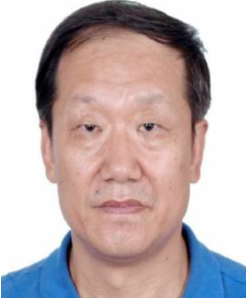 Shicong Kou (寇世聪)合作论文数College of Civil and Transportation Engineering, Shenzhen University;The Hong Kong Polytechnic Universit3Yanyan Gao合作论文数2luxin wen (温路新)合作论文数2Zhibin Su合作论文数2
 Xingjun Lv (吕兴军)合作论文数Department of civil Engineering, School of Civil Engineering, Dalian University of Technology2Jinwen Li (李晋文)合作论文数2Shengnan Sun (孙胜男)合作论文数School of Architecture & Civil Engineering, Liaocheng University2
 Hang Yao合作论文数School of Materials Science and Engineering, South China University of Technology2
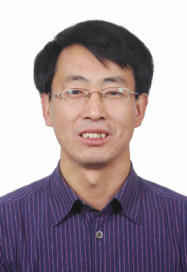 Xin Shao (邵鑫)合作论文数聊城大学物理科学与信息工程学院2Peng Cui合作论文数1JiFu Liu合作论文数1Hui WANG (王慧)合作论文数1Gui-min LI (李贵民)合作论文数1Baoliang ZHANG (张保良)合作论文数1Hong-wei WANG (王红卫)合作论文数1LinJun Xiao (肖林峻)合作论文数1ChangRui Duan (段昌瑞)合作论文数1ZeChao Du (杜泽超)合作论文数1GuiJie Wang (王贵杰)合作论文数1Feng Lian (连峰)合作论文数1SanFan Wang (王三反)合作论文数1Dong Yan合作论文数1Qingshuang Zhao合作论文数1
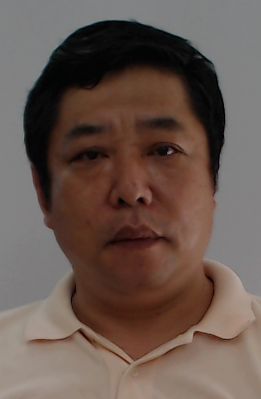 Jing Liu (刘靖)合作论文数School of Chemical Engineering, Dalian University of Technology1
 Qiang Gao (高强)合作论文数School of Mechanics and Aerospace Engineering, Dalian University of Technology;State Key Laboratory of Structural Analysis, Optimization and CAE Software for Industrial Equipment, Dalian University of Technology1Liuqin Jin合作论文数1Liqun Yuan (袁立群)合作论文数1Tiantian Ge (戈田田)合作论文数1Xia Chen (陈霞)合作论文数1Mingchen Xue (薛明琛)合作论文数1
) Xiaonan Gong (龚晓南)合作论文数College of Civil Engineering and Architecture, Zhejiang University;Research Center of Coastal and Urban Geotechnical Engineering, Zhejiang University1
Xiaonan Gong (龚晓南)合作论文数College of Civil Engineering and Architecture, Zhejiang University;Research Center of Coastal and Urban Geotechnical Engineering, Zhejiang University1 Tengfei Zhao合作论文数1Yangyang Cui (崔阳阳)合作论文数1




