Lifelong person re-identification (LReID) aims to train a generalizable model with sequentially collected data. However, such models often suffer from semantic drift, limited adaptability, and catastrophic forgetting as new domains emerge. Existing exemplar-free approaches mainly focus on visual encoder distillation or parameter regularization, while overlooking the potential of auxiliary modalities, such as text, to preserve semantic stability and enable incremental plasticity. We observe that the frozen text encoder in pretrained vision–language models can serve as a stable semantic anchor, offering consistent guidance throughout lifelong learning. To leverage the synergy between vision and text, we propose Prompt-Anchored vision–text Distillation (PAD), a unified framework that enhances semantic alignment and cross-domain generalization. On the textual side, we distill semantic prompts that maintain vision–text alignment under a fixed semantic coordinate system. On the visual side, an EMA-based teacher performs model distillation assisted by an adaptive prompt pool that allocates new slots for each incoming domain while freezing past ones, achieving both adaptability and memory retention. Extensive experiments demonstrate that our PAD substantially outperforms state-of-the-art methods across multiple LReID benchmarks.
Backward-compatible training enables the deployment of advanced models without requiring updates to old gallery databases. However, existing methods, including old-prototype-based (i.e., those relying on prototypes from the old model) and instance-based approaches, often overlook the impact of the old model's quality. High-quality old models exhibit compact intra-class feature distributions, which facilitate effective alignment between old and new models across various methods. In contrast, low-quality old models produce dispersed features, making it difficult for old-prototype-based methods to extract sufficient information. Additionally, instance-based methods are overly restrictive, limiting the flexibility of new models. In this work, we propose SA-BCT, an extremely simple yet effective backward-compatible training method that offers a unified framework for accommodating old models of varying quality. SA-BCT employs a single loss function applied to both old and new features, self-adaptively adjusting the constraint space for new features based on the distribution of old features. Extensive experiments in diverse settings demonstrate the effectiveness of SA-BCT.
In text based video retrieval, text queries commonly convey certain objects and events the user desires to retrieve, which are more concise cues than video contents. Distinct information density between video contents and query cues leads to the difficulty of query-video alignment. To pursue a more compact video representation and accurate textual-visual feature matching, this paper introduces a novel VideoAligner to disentangle video features. VideoAligner first generates ‘object’ and ‘event’ tokens from query texts. It subsequently spots and merges visual tokens related to concepts in the query. In other words, we use ‘object’ and ‘event’ tokens to represent cues of query, which therefore supervise the disentanglement and extraction of meaningful visual features from videos. VideoAligner finally leads to compact visual tokens explicitly depicting query objects and events. Extensive experiments on three widely-used datasets demonstrate the promising performance and domain generalization capability of our method. For instance, our method shows better efficiency and consistently outperforms many recent works like ProST on three datasets. We hope to inspire future work for collaborative cross-modal learning with certain modality as guidance.
Large Multimodal Models (LMMs) have achieved remarkable success in vision-language tasks, yet their vast parameter counts are often underutilized during both training and inference. In this work, we embrace the idea of looping back to move forward: reusing model parameters through recursive refinement to extract stronger multimodal representations without increasing model size. We propose RecursiveVLM, a recursive Transformer architecture tailored for LMMs. Two key innovations enable effective looping: (i) a Recursive Connector that aligns features across recursion steps by fusing intermediate-layer hidden states and applying modality-specific projections, respecting the distinct statistical structures of vision and language tokens; (ii) a Monotonic Recursion Loss that supervises every step and guarantees performance improves monotonically with recursion depth. This design transforms recursion into an on-demand refinement mechanism: delivering strong results with few loops on resource-constrained devices and progressively improving outputs when more computation resources are available. Experiments show consistent gains of +3
Pixel diffusion generates images directly in pixel space, avoiding the VAE artifacts and representational bottlenecks of two-stage latent diffusion. Recent JiT further simplifies pixel diffusion with x-prediction, where the model predicts clean images rather than velocity. However, the standard pixel-wise diffusion loss treats all pixels equally, spending model capacity to perceptually insignificant signals and often leading to blurry samples. We propose PixelGen, an end-to-end pixel diffusion framework that augments x-prediction with perceptual supervision. Specifically, PixelGen introduces two complementary perceptual losses on top of x-prediction: an LPIPS loss for local textures and a P-DINO loss for global semantics. To preserve sample coverage, PixelGen further proposes a noise-gating strategy that applies these losses only at lower-noise timesteps. On ImageNet-256 without classifier-free guidance, PixelGen achieves an FID of 5.11 in 80 training epochs, surpassing the latent diffusion baselines. Moreover, PixelGen scales efficiently to text-to-image generation, reaching a GenEval score of 0.79 with only 6 days of training on 8xH800 GPUs. These results show that perceptual supervision substantially narrows the gap between pixel and latent diffusion while preserving a simple one-stage pipeline. Codes are available at https://github.com/Zehong-Ma/PixelGen.
Recent works have indicated redundancy across transformer blocks, prompting the research of depth compression to prune less crucial blocks. However, current ways of entire-block pruning suffer from risks of discarding meaningful cues learned in those blocks, leading to substantial performance degradation. As another line of model compression, channel pruning can better preserve performance, while it cannot reduce model depth and is challenged by inconsistent pruning ratios for individual layers. To pursue better model compression and acceleration, this paper proposes FlattenGPT, a novel way to detect and reduce depth-wise redundancies. By flatting two adjacent blocks into one, it compresses the network depth, meanwhile enables more effective parameter redundancy detection and removal. FlattenGPT allows to preserve the knowledge learned in all blocks, and remains consistent with the original transformer architecture. Extensive experiments demonstrate that FlattenGPT enhances model efficiency with a decent trade-off to performance. It outperforms existing pruning methods in both zero-shot accuracies and WikiText-2 perplexity across various model types and parameter sizes. On LLaMA-2/3 and Qwen-1.5 models, FlattenGPT retains 90-96% of zero-shot performance with a compression ratio of 20%. It also outperforms other pruning methods in accelerating LLM inference, making it promising for enhancing the efficiency of transformers.
Recent researchers have proposed using event cameras for person re-identification (ReID) due to their promising performance and better balance in terms of privacy protection, event camera-based person ReID has attracted significant attention. Currently, mainstream event-based person ReID algorithms primarily focus on fusing visible light and event stream, as well as preserving privacy. Although significant progress has been made, these methods are typically trained and evaluated on small-scale or simulated event camera datasets, making it difficult to assess their real identification performance and generalization ability. To address the issue of data scarcity, this paper introduces a large-scale RGB-event based person ReID dataset, called EvReID. The dataset contains 118,988 image pairs and covers 1200 pedestrian identities, with data collected across multiple seasons, scenes, and lighting conditions. We also evaluate 15 state-of-the-art person ReID algorithms, laying a solid foundation for future research in terms of both data and benchmarking. Based on our newly constructed dataset, this paper further proposes a pedestrian attribute-guided contrastive learning framework to enhance feature learning for person re-identification, termed TriPro-ReID. This framework not only effectively explores the visual features from both RGB frames and event streams, but also fully utilizes pedestrian attributes as mid-level semantic features. Extensive experiments on the EvReID dataset and MARS datasets fully validated the effectiveness of our proposed RGB-Event person ReID framework.
Existing video generation models predominantly emphasize appearance fidelity while exhibiting limited ability to synthesize complex human motions, such as whole-body movements, long-range dynamics, and fine-grained human–environment interactions. This often leads to unrealistic or physically implausible movements with inadequate structural coherence. To conquer these challenges, we propose MoSA, which decouples the process of human video generation into two components, i.e., structure generation and appearance generation. MoSA first employs a 3D structure transformer to generate a human motion sequence from the text prompt. The remaining video appearance is then synthesized under the guidance of this structural sequence. We achieve fine-grained control over the sparse human structures by introducing Human-Aware Dynamic Control modules with a dense tracking constraint during training. The modeling of human–environment interactions is improved through the proposed contact constraint. Those two components work comprehensively to ensure the structural and appearance fidelity across the generated videos. This paper also contributes a large-scale human video dataset, which features more complex and diverse motions than existing human video datasets. We conduct comprehensive comparisons between MoSA and a variety of approaches, including general video generation models, human video generation models, and human animation models. Experiments demonstrate that MoSA substantially outperforms existing approaches across the majority of evaluation metrics.
Cloth-changing person re-identification (CC-ReID) aims to extract cloth-irrelevant visual features to match individuals across different outfits. While images contain rich visual cues, textual descriptions often provide explicit and structured attribute information, offering a potential pathway to decouple and suppress cloth-relevant features in visual representations. In this paper, we propose a novel prompt-guided decoupled feature learning framework that leverages text prompts to guide the learning of cloth-irrelevant features for CC-ReID. Given that human-annotated descriptions are typically unavailable in CC-ReID datasets, we explore the use of prompts generated by multimodal large language models (MLLMs) as a substitute. To extract cloth-relevant features, we design a prompt-guided visual feature extractor that learns attribute-aware features aligned with the prompts. A decoupled feature learning module is then employed to suppress the cloth-relevant components from the raw visual features. Through this prompt-guided learning strategy, our framework is able to construct cloth-irrelevant representations. Extensive experiments on multiple CC-ReID benchmarks demonstrate that our method outperforms existing state-of-the-art approaches, validating its effectiveness and robustness.
Most of the current works learn binary descriptors by encoding features comprehensively representing complicated image contents. This contradicts the fact that different image applications rely on different levels of visual cues. Encoding all cues is thus not optimal in ensuring compactness and discriminative power. This work proposes a self-supervised method to disentangle image features into multiple levels of visual cues. We hence adaptively generate binary descriptors by encoding and binarizing the most discriminative cues for each task or dataset. The feature disentanglement is conducted based on the proposed conditional diffusion model, where different visual cues are taken as condition features of a certain block in the diffusion model. Based on disentangled features, the entropy-based binarization adopts information entropy to evaluate the discriminative power of different visual cues to a certain task.
Human artists can continuously refine their coarse sketches during artistic creation. This is quite different from existing autoregressive generation, where a token is determined once sampled. Aiming to flexibly refine the generated contents, this paper presents a Self-Calibrated AutoregressioN (SCAN) model capable of self-evaluating and refining generation quality without regenerating the entire image. We unify image token generation and quality evaluation into a single autoregressive model, formulating both tasks as categorical prediction problems. During inference, the model first generates a coarse initial image, then iteratively refines the lowest-quality patches until satisfactory image quality is achieved. Experimental results demonstrate that SCAN effectively handles diverse real-world generation errors and achieves a promising balance between image quality and speed. For example, SCAN-XL achieves an FID of 2.10 and an IS of 326.1, surpassing the LlamaGen-XL by 1.29 (+38%) in FID and 99.0 (+43.6%) in IS, with a 5.6× speedup (19.76s to 3.56s). Compared to recent works, SCAN improves FID and speed by +18.3% and +23% over VAR-d20, and by +7% and +46% over RandAR-XL.
Existing adversarial attacks on large Vision-Language Models (VLMs) often struggle with limited transferability to black-box models or produce perceptible artifacts that are easily detected. This paper presents Progressive Semantic Infusion (PSI), a diffusion-based attack that progressively aligns and infuses natural target semantics. To improve transferability, PSI leverages diffusion priors to better align adversarial examples with the natural image distribution and employs progressive alignment to mitigate overfitting on a single fixed surrogate objective. To enhance stealthiness, PSI embeds source-aware cues during denoising to preserve visual fidelity and avoid detectable artifacts. Experiments show that PSI effectively attacks open-source, adversarially trained, and commercial VLMs, including GPT-5 and Grok-4, surpassing existing methods in both transferability and stealthiness. Our findings highlight a critical vulnerability in modern vision-language systems and offer valuable insights towards building more robust and trustworthy multimodal models.
Pixel diffusion aims to generate images directly in pixel space in an end-to-end fashion. This approach avoids the limitations of VAE in the two-stage latent diffusion, offering higher model capacity. Existing pixel diffusion models suffer from slow training and inference, as they usually model both high-frequency signals and low-frequency semantics within a single diffusion transformer (DiT). To pursue a more efficient pixel diffusion paradigm, we propose the frequency- DeCo upled pixel diffusion framework. With the intuition to decouple the generation of high and low frequency components, we leverage a lightweight pixel decoder to generate high-frequency details conditioned on semantic guidance from the DiT. This thus frees the DiT to specialize in modeling low-frequency semantics. In addition, we introduce a frequency-aware flow-matching loss that emphasizes visually salient frequencies while suppressing insignificant ones. Extensive experiments show that DeCo achieves superior performance among pixel diffusion models, attaining FID of 1.62 (256×256) and 2.22 (512×512) on ImageNet, closing the gap with latent diffusion methods. Furthermore, our pretrained text-to-image model achieves a leading overall score of 0.86 on GenEval in system-level comparison.
Weakly supervised group activity recognition (WSGAR) aims to identify the joint activity of a group of people without relying on hand-annotated human bounding boxes. Existing WSGAR methods typically acquire coarse human-level features by pooling from detected bounding boxes or applying human queries with cross attentions. These approaches focus on learning human relations from the acquired features. However, discriminative person-specific clues might be confused with irrelevant backgrounds, hindering the effectiveness of downstream human relation learning. To address this limitation, we propose a Human Feature Refinement framework that enhances human-level information with graph convolutional networks and self-attention. We define in-box regions as tokens and learn their spatial correspondence through GCN and self-attention. By explicitly extracting in-box details and suppressing irrelevant regions, our method acquires more discriminative human-level features for relation learning and group activity prediction. We further propose a Graph-based Token Merging algorithm to reduce the computation cost of Human Feature Refinement, while minimizing information loss and overfitting risk. Experiments show that our method outperforms previous WSGAR methods on Volleyball, NBA and JRDB-PAR benchmarks, with reduced computation cost.
Current text-to-speech (TTS) models face a persistent limitation: autoregressive (AR) models suffer from low generation efficiency, while modern non-autoregressive (NAR) models experience high latency due to their unordered temporal nature. To bridge this divide, we introduce SyncSpeech, an efficient and low-latency TTS model based on the proposed Temporal Mask Transformer (TMT) paradigm. TMT synergistically unifies the temporally ordered generation of AR models with the parallel decoding efficiency of NAR models. TMT is realized through a meticulously designed sequence construction rule, a corresponding training objective, and a specialized hybrid attention mask. Furthermore, with the primary aim of enhancing training efficiency, a high-probability masking strategy is introduced, which also leads to a significant improvement in overall model performance. During inference, SyncSpeech achieves high efficiency by decoding all speech tokens corresponding to each newly arrived text token in a single step, and low latency by beginning to generate speech immediately upon receiving the second text token from the streaming input. Evaluations show that Sync-Speech maintains speech quality comparable to the modern AR TTS model, while achieving a 5.8-fold reduction in first-packet latency and an 8.8-fold improvement in real-time factor. Speech samples are available at https://SyncSpeech.github.io/.
Traditional approaches to adapting multi-modal large language models (MLLMs) to new tasks have relied heavily on fine-tuning. This paper introduces Efficient Multi-Modal Long Context Learning (EMLoC), a novel training-free alternative that embeds demonstration examples directly into the model input. EMLoC offers a more efficient, flexible, and scalable solution for task adaptation. Because extremely lengthy inputs introduce prohibitive computational and memory overhead, EMLoC contributes a chunk-wise compression mechanism combined with layer-wise adaptive pruning. It condenses long-context multimodal inputs into compact, task-specific memory representations. By adaptively pruning tokens at each layer under a Jensen-Shannon divergence constraint, our method achieves a dramatic reduction in inference complexity without sacrificing performance. This approach is the first to seamlessly integrate compression and pruning techniques for multi-modal long-context learning, offering a scalable and efficient solution for real-world applications. Extensive experiments on diverse vision-language benchmarks demonstrate that EMLoC achieves performance on par with or superior to naive long-context approaches. Our results highlight the potential of EMLoC as a groundbreaking framework for efficient and flexible adaptation of multi-modal models in resource-constrained environments. Codes are publicly available at https://github.com/Zehong-Ma/EMLoC.
 Qi Tian (田奇)合作论文数Huawei Consumer Business Group;Guangming Laboratory57
 Wen Gao (高文)合作论文数School of Electronics Engineering and Computer Science, Peking University;Pengcheng Laboratory, Peking University;School of Artificial Intelligence, Xidian University37
 Zhihao Du合作论文数26
 Qian Chen (陈谦)合作论文数Alibaba Group22
 Qingming Huang (黄庆明)合作论文数School of Computer Science and Technology, University of Chinese Academy of Sciences22
 Tiejun Huang (黄铁军)合作论文数Institute for Artificial Intelligence, Peking University;School of Computer Science, Peking University;Beijing Academy of Artificial Intelligence;National Engineering Laboratory for Video Technology, Peking University21
 Lirong Dai (戴礼荣)合作论文数National Engineering Laboratory for Speech and Language Information Processing, University of Science and Technology of China;Department of Electronic Engineering and Information Science, University of Science and Technology of China19
 Zhijie Yan (鄢志杰)合作论文数Speech Lab, Institute for Intelligent Computing, Alibaba Group18
 Ming Lei合作论文数Alibaba Group17
 Xiaoyu Wang (王孝宇)合作论文数Intellif15
 Yaowei Wang (王耀威)合作论文数School of Computer Science and Technology, Harbin Institute of Technology (Shenzhen);Network Intelligence Research Department, Pengcheng Laboratory;Visual Intelligence Institute, Pengcheng Laboratory;Institute of Advanced Technology, University of Science and Technology of China15
 Fan Yu合作论文数14
 Ming Yang合作论文数Ant Group14
 Siqi Zheng合作论文数13
 Zhifu Gao合作论文数Speech Lab, Alibaba Grp12Jianing Li合作论文数11
 Wen Wang合作论文数Tongyi Speech Lab, DAMO Academy, Alibaba Group11
 Dongkai Wang (王东凯)合作论文数School of Computing and Artificial Intelligence, Southwestern University of Finance and Economics10
 Shiyu Xuan (轩诗宇)合作论文数School of Computer Science and Engineering, Nanjing University of Science and Technology10
 Hui Jiang合作论文数Department of Electrical Engineering and Computer Science, Lassonde School of Engineering, York University10
 Xiaobin Liu (刘晓滨)合作论文数College of Artificial Intelligence, Nankai University10
 Shunan Mao合作论文数9Zhanzhou Feng合作论文数9
 Longhui Wei合作论文数Huawei Cloud9
 Hantao Yao (姚涵涛)合作论文数School of Information Science and Technology, University of Science and Technology of China9
 Ruihan Xu (许瑞晗)合作论文数National Key Laboratory for Multimedia Information Processing, Peking University8
 Xian Shi合作论文数Shenzhen University, Shenzhen University8
 Yanbin Zhang (张彦斌)合作论文数School of Electrical Engineering, Xi'an Jiaotong University8
 Xinyu Zhang (张新宇)合作论文数School of Materials Science and Engineering, Yanshan University8
 Hui Cao (曹晖)合作论文数School of Electrical Engineering, Xi'an Jiaotong University8
 Lei Xie (谢磊)合作论文数Audio, Speech and Language Processing Lab, School of Computer Science, Northwestern Polytechnical University8
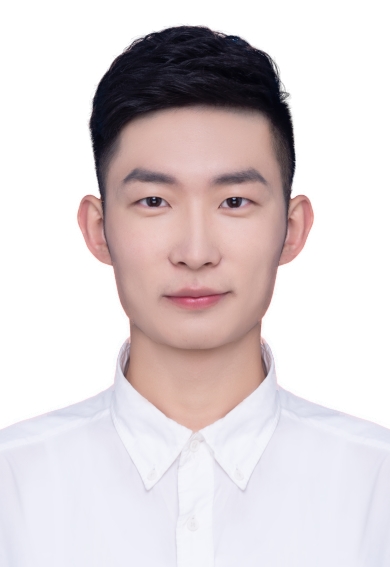 Zehong Ma (马泽红)合作论文数State Key Laboratory of Multimedia Information Processing, School of Computer Science, Peking University;Vision and Media Computing Group, School of Computer Science, Peking University;Seedance Team, ByteDance Seed7Junwei Zhao合作论文数7
 Hao Chen (陈浩)合作论文数School of Computer Science and Technology, Harbin Institute of Technology (Shenzhen)7
 Hui Wang (王晖)合作论文数School of Information and Communication Engineering, Communication University of China7
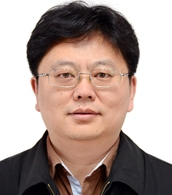 Yongdong Zhang (张勇东)合作论文数Laboratory for Future Networks, University of Science and Technology of China;Department of Electronic Engineering and Information Science, School of Information Science and Technology, University of Science and Technology of China7
 Riping Liu (刘日平)合作论文数State Key Laboratory of Metastable Materials Science and Technology, School of Materials Science and Engineering, Yanshan University7Yue Gu合作论文数6Haoneng Luo合作论文数6
 Yafeng Chen合作论文数6Qingpei Guo合作论文数6
 Junfeng Hou合作论文数Univ Sci & Technol China, Natl Engn Lab Speech & Language Informat Proc, Hefei, Anhui, Peoples R China6
 Chi Su (苏驰)合作论文数SmartMore Co., Ltd6
 Si Wei (魏思)合作论文数IFlytek Research and Development Institute;Anhui Institute of Information Technology6
 Gang Hua (华刚)合作论文数Amazon6
 Shuqiang Jiang (蒋树强)合作论文数Institute of Computing Technology, Chinese Academy of Sciences;University of Chinese Academy of Sciences6Chong Deng合作论文数Chengdu University of Traditional Chinese Medicine6Mohan Shi合作论文数5Keyu An合作论文数5