In this paper, we establish fundamental results concerning non-abelian extensions of Lie rings. Specifically, we demonstrate one-to-one correspondence between the equivalence classes of non-abelian extensions of Lie ring L by Lie ring A and the elements of second cohomology group H-2(L,Z(A)), where L acts on A. Additionally, we provide necessary and sufficient condition under which such extensions exist, particularly when a specific abstract kernel is involved.
Let R be a commutative ring with identity, S subset of R be a multiplicative set and J be an ideal of R. In this paper, we introduce the concept of S-J-Noetherian rings, which generalizes both J-Noetherian rings and S-Noetherian rings. We study several properties and characterizations of this new class of rings. For instance, we prove Cohen's-type theorem for S-J-Noetherian rings. Among other results, we establish the existence of S-primary decomposition in S-J-Noetherian rings as a generalization of classical Lasker-Noether theorem.
Let S subset of R be a multiplicatively closed subset of a ring R. We extend several results on integral domains to their S-versions and establish the S-version of Krull intersection theorem. We also show that if R is an S-field, then the localization of R with respect to S is a phi(S)-field, where phi(S) = {(S)/(1) | s is an element of S} is a multiplicatively closed subset of S-1R, and prove the converse under the condition of finiteness of S. As a consequence, we show that every finite S-integral domain is an S-field. Also, we provide several examples to illustrate the significance of our findings.
We propose the idea of S-nil-clean ideals in this work. We prove that Jacobson's Lemma holds for S-nil-clean elements. Furthermore, we define the S-version of a Boolean ring and prove that every ideal of an S-Boolean ring is an S-nil-clean ideal. In addition, we show that a class of von Neumann regular local rings with maximal ideal M disjoint from S belongs to the class of S-clean rings. Subsequently, we define the concept of a Nil & lowast;-S-Noetherian ring, which serves as a proper generalization of both Nil & lowast;-Noetherian and S-Noetherian rings. Among our main results, we demonstrate the existence of S-primary decomposition in Nil & lowast;-S-Noetherian rings, thereby generalizing the classical Lasker-Noether theorem.
Let R be a commutative ring with identity, S ⊆ R be a multiplicative set. In this paper, we establish that the intersection of all S-prime ideals in an S-reduced ring is S-zero. Also, we show that an S-Artinian reduced ring is isomorphic to the finite direct product of fields. Furthermore, we provide an example of an S-reduced ring which is a uniformly-S-Armendariz ring (in short, u-S-Armendariz) ring. Additionally, we prove that the class of uniformly-S-reduced rings (in short, u-S-reduced rings) belongs to the class of u-S-Armendariz rings. Among other results, we establish the relationship between S-reduced rings and S-strongly Hopfian rings. Finally, we prove the structure theorem for S-reduced rings.
For nonabelian 2^nd-cohomology of multiplicative Lie algebras, we properly generalize from the group case three classic results. We prove a Correspondence theorem which compares 2^nd-cohomology associated to a realized abstract kernel to the abelian 2^nd-cohomology group over the algebraic center. For arbitrary extensions, we prove a Wells's Theorem characterizing ideal-preserving automorphisms and establish the 1-dimensional Lyndon-Hochschild-Serre exact sequence. Several previously established results are recovered when restricted to extensions with group-abelian or Lie-trivial ideals.
We discuss the inducibility problem for automorphisms of multiplicative Lie algebra extensions and show that obstruction to the inducibility of pairs of automorphisms lies in the second cohomology group of multiplicative Lie algebras. We also establish the Wells type exact sequence for multiplicative Lie algebras, which relates automorphism groups with the second cohomology group of multiplicative Lie algebras.
In this paper, we introduce the concept of relative Lie central extension for pair of multiplicative Lie algebras. Then, we discuss the concept of isoclinism for relative Lie central extensions and prove some related results. We also define the Frattini subalgebra for multiplicative Lie algebras and discuss its properties, finally the Schur multiplier for pair of multiplicative Lie algebras is introduced and under certain conditions prove the existence of multiplicative covering pair.
In this paper, we introduce the concept of nonnil-S-Laskerian rings, which generalize both nonnil-Laskerian rings and S-Laskerian rings. A ring R is said to be nonnil-S-Laskerian if every nonnil ideal I (disjoint from S) of R is S-decomposable. As a main result, we prove that the class of nonnil-S-Noetherian rings belongs to the class of nonnil-S-Laskerian rings. Also, we prove that a nonnil-S-Laskerian ring has S-Noetherian spectrum under a mild condition. Among other results, we prove that if the power series ring R[[X]] is nonnil-S-Laskerian with S-decomposable nilradical, then R is S-laskerian and satisfies the S-SFT property.
Let R be a commutative ring with identity, and let S ⊆ R be a multiplicative set. An ideal Q of R (disjoint from S) is said to be S-primary if there exists an s ∈ S such that for all x, y ∈ R with xy ∈ Q, we have sx ∈ Q or sy ∈ rad(Q). Also, we say that an ideal of R is S-primary decomposable or has an S-primary decomposition if it can be written as a finite intersection of S-primary ideals. First we provide an example of an S-Noetherian ring in which an ideal does not have a primary decomposition. Then our main aim is to establish the existence and uniqueness of S-primary decomposition in S-Noetherian rings as an extension of a historical theorem of Lasker-Noether.
Let R be a commutative ring with identity, S subset of R be a multiplicative set, and M be an R-module. We say that a submodule N of M with (N :M-R) boolean AND S = & empty; has an S-primary decomposition if it can be written as a finite intersection of S-primary submodules of M. In this paper, first we provide an example of the S-Noetherian module in which a submodule does not have a primary decomposition. Then our main aim of this paper is to establish the existence and uniqueness of S-primary decomposition in S-Noetherian modules as an extension of a classical Lasker-Noether primary decomposition theorem for Noetherian modules.
In this article, we construct a $16$-dimensional sedenion-like associative algebra, which is an even subalgebra of $2^5$-dimensional Clifford algebra $Cl_{5,0}$. We define the norm on sedenion-like algebra and show that its sixteen-dimensional elements preserves the norm relation $\lVert ST \rVert=\lVert S \rVert \lVert T \rVert$ under the condition $S_rS_d^\dagger + S_r^\dagger S_d=0$, where $S_r,~S_d$ denote the real and dual part of an octonion-like number $S$ respectively and $S^\dagger$ is the transpose of $S$. The elements of this sedenion-like algebra can be written as dual octonion like numbers called split bioctonion-like algebra and $S S^\dagger$ is commutative [i.e. $S S^\dagger=S^\dagger S $ and $(S S^\dagger) T=T(S S^\dagger )$], for any two octonion-like/sedenion-like numbers $S$ and $T$. We define the operations coproduct $\bigtriangleup$, counit $\epsilon $ and antipode $S$ on octonion-like/sedenion-like algebra to construct the Hopf algebra structure on it. We also show that $8$-dimensional octonion-like associative seminormed division algebra is a $\mathbb{Z}_2^4/2$-graded quasialgebra and $16$ dimensional sedenion-like algebra is a $\mathbb{Z}_2^5/2$-graded quasialgebra.
In this paper, we discuss the capable and isoclinic properties of the tensor square in the context of multiplicative Lie algebras. We also developed the concept of isoclinic extensions and proved several results for multiplicative Lie algebras. Consequently, we demonstrate that covers of a multiplicative Lie algebra are mutually isoclinic.
This paper aims to introduce and explore the concept of Lie perfect multiplicative Lie algebras, with a particular focus on their connections to the central extension theory of multiplicative Lie algebras. The primary objective is to establish and provide proof for a range of results derived from Lie perfect multiplicative Lie algebras. Furthermore, the study extends the notion of Lie nilpotency by introducing and examining the concept of local nilpotency within multiplicative Lie algebras. The paper presents an innovative adaptation of the Hirsch-Plotkin theorem specifically tailored for multiplicative Lie algebras.
Let G be a finitely generated abelian group and M be a G-graded A-module.In general, G-associated prime ideals to M may not exist.In this paper, we introduce the concept of G-attached prime ideals to M as a generalization of G-associated prime ideals which gives a connection between certain G-prime ideals and G-graded modules over a (not necessarily G-graded Noetherian) ring.We prove that the Gattached prime ideals exist for every nonzero G-graded module and this generalization is proper.We transfer many results of G-associated prime ideals to G-attached prime ideals and give some applications of it.
This paper presents a new symbolic method for finding an approximate solution of neutral functional-differential equations with proportional delays having variable coefficients in an algebraic setting. In several cases exact solution is obtained. This method is easy to apply for solving the multi-pantograph equations with variable coefficients. We introduce iterative operator. In the proposed method, the given problem is transformed into an operator based notation and again the solution of operator problem is translated into the solution of the given problem. The Maple implementation of the proposed algorithm is presented with sample computations. Various numerical examples are discussed to illustrate the efficiency of the proposed method, and comparisons are made to confirm the reliability of the method.
A new reduction algorithm for differential-algebraic systems with power series coefficients has been presented in this paper. In this algorithm, the given system of differential-algebraic equations is transformed into another simpler system having same properties. Maple implementation of the proposed algorithm is discussed and sample computations are presented to illustrate the proposed algorithm.
In this paper, we present a new symbolic algorithm for finding the Green's function of a given initial value problem for linear partial differential equations of second order with constant coefficients. The proposed algorithm is also applicable for nth order partial differential equations. We employ the integro-differential algebra to express the initial value problems and the Green's function. Some examples are presented to illustrate the proposed method and compared with other existing method. Link for implemented proposed algorithm in Maple is provided and sample computations are shown.
In this paper, we introduce the notion of graded Prufer domain as a generalization of Prufer domain to the graded case. We generalize several types of prime ideals associated to a module over a ring to the graded case and prove that most of them coincide over a graded Prufer domain. Moreover, we investigate the graded primary decomposition of graded ideals in a graded Prufer domain under certain conditions and give some applications of it.
The present study has quantified the economic impact of control of goat pox disease in India using a vaccine developed against the disease at ICAR-IVRI, applying an economic surplus model. The findings of the study have revealed significant benefits of Goat pox control programme using the vaccine. The potential change in total surplus, as a result of Goat pox control programme was ₹ 2.42 crore/annum. The change in total economic surplus and research and delivery cost were projected from 1999 (year of the start of the project) to 2030 after adjusting for the above adoption pattern. Using a long run discount rate of 7.50%, the benefits were compared to research and delivery cost and the NPV, IRR and BCR were calculated. The NPV, IRR and BCR of Goat pox control programme were ₹ 9.25 billion, 38% and 19: 1, respectively. Sensitivity analysis revealed that the benefits are most sensitive to assumptions regarding lower degree of immunity offered by the vaccine and higher discount rate.
 Ajim Uddin Ansari合作论文数6
 Abhishek Juyal合作论文数HBNI, CIT Campus6
 Srinivasarao Thota合作论文数SR University6
 Sumit Kumar Upadhyay合作论文数6Srinivas Behara合作论文数5
 Dev Karan Singh合作论文数4Mamta Balodi合作论文数4Ratnesh Kumar Mishra合作论文数3
 Jyoti Singh合作论文数3Raja Sridharan合作论文数3
 Hua-Lin Huang合作论文数3
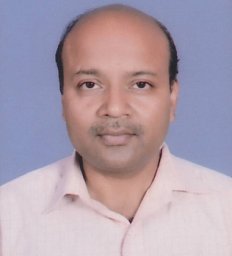 B. K. Sharma合作论文数Dept Math, Univ Allahabad2
 Mani Shankar Pandey合作论文数Dept Appl Sci, Indian Inst Informat Technol Allahabad2Pitam Singh合作论文数2
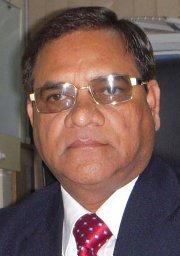 Prati Pal Singh合作论文数Department of Pharmacology and Toxicology, National Institute of Pharmaceutical Education and Research2
 Dustin Moody合作论文数National Institute of Standards and Technology2
 Bibekananda Maji合作论文数1
 Gajendra pratap Singh合作论文数1Rashim Singh合作论文数1
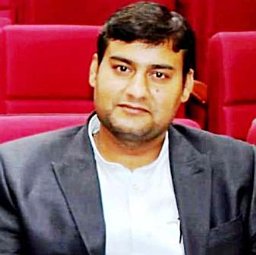 Amit Mishra合作论文数Amity School of Engineering and Technology, Amity University1
 Hitendra Suryavanshi合作论文数1
 Dwaipayan Bardhan合作论文数1
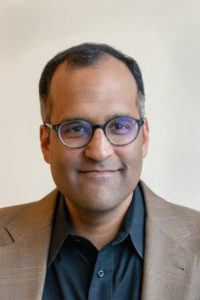 Sanjay Kumar合作论文数Department of Bioengineering and Therapeutic Sciences, University of California, Berkeley;Department of Bioengineering, College of Chemistry, University of California, Berkeley1
 Abdus Salam合作论文数Imperial College1Ramji Lal合作论文数1
 Kalyan Chakraborty合作论文数U.S. Department of Agriculture1
 Mridula Tripathi合作论文数C.M.P. Degree College, University of Allahabad1M. Hosamani合作论文数Indian Veterinary Research Institute1Satya Mandal合作论文数Department of Mathematics;University of Kansas1
 Richa Lal合作论文数Department of Paediatric Surgery, All India Institute of Medical Sciences1
 Kamlesh Pandey合作论文数1
 Markus Perling合作论文数Department of Mathematics;University of Kaiserslautern1
 Gopal Nath Tiwari合作论文数Department of Energy Science and Engineering, Indian Institute of Technology, Delhi1
 Ravindra Kumar Singh合作论文数Samrat Ashok Technological Institute1




