Variational autoencoders (VAE) construct latent space by optimizing the prior distribution and posterior distribution of the model. Existing methods exhibit limited interpretability during the construction of the latent space, which hinders their capacity to effectively capture the disentangled representation of concepts. To construct an interpretable latent space, we propose the Multi-Decoder Concept Embedding Variational Autoencoder (MD-VAE), which enhances latent space interpretability by learning distinct latent variables through multiple decoders. Firstly, the MD-VAE model learns prior concept by training on generated data that represent this concept, thereby embedding the prior into the latent space. Subsequently, we propose a variational inference framework utilizing multiple decoders. In this framework, encoders map multiple latent variables into the latent space, and each corresponding set of latent variables is reconstructed by its dedicated decoder. On the basis of this, a theoretical derivation of variational lower bound of multiple decodes is combined with variation method to obtain the optimal model parameter estimates. Finally, experiments on MNIST, FashionMNIST, COIL20, and USPS datasets show that MD-VAE can improve the prediction performance of VAE while discovering differences between different concepts.
Variational Autoencoder (VAE) has been widely and successfully used in learning coherent latent repre-sentation of data. However, the lack of interpretability in the latent space constructed by the VAE under the prior distribution is still an urgent problem. This paper proposes a VAE with understandable concept embedding named Cloud-VAE, which constructs interpretable latent space by disentangling the latent variables and considering their uncertainty based on cloud model. Firstly, cloud model-based clustering algorithm cast initial constraint of latent space into a prior distribution of concept which can be em-bedded into the latent space of the VAE to disentangle the latent variables. Secondly, reparameterization trick based on forward cloud transformation algorithm is designed to estimate the latent space concept by increasing the randomness of latent variables. Furthermore, variational lower bound of Cloud-VAE is derived to guide the training process to construct concepts of latent space, realizing the mutual mapping between latent space and concept space. Finally, experimental results on 6 benchmark datasets show that Cloud-VAE has good clustering and reconstruction performance, which can explicitly explain the aggre-gation process of the model and discover more interpretable disentangled representations.& COPY; 2023 Elsevier Ltd. All rights reserved.
As a cornerstone of the world, uncertainty embodies the nature of data and knowledge. Existing uncertainty theory-based clustering algorithms learn fuzziness, i.e., the uncertainty of clustering objects belonging to different clusters. However, these algorithms do not refer to the fuzziness of objects themselves, i.e., the randomness of data. Here, we propose a clustering algorithm named Cloud-Cluster, which simultaneously characterizes the fuzziness and randomness of objects to reserve uncertain information, and to describe clusters into concepts. It embeds random uncertainty of concepts to extend the data distribution range for better data partitions and gradually constructs accurate concepts by an improved backward cloud transformation algorithm (MBCT-SR-Ex). Moreover, to ensure that the concept clustering process gradually converges, Cloud-Cluster introduces the Cluster Concept Drift Degree to evaluate the uncertainty of concepts during the clustering process. Experiments on UCI and OpenML clustering datasets show that Cloud-Cluster improves the average clustering accuracy by over 14% compared to K-Means and uncertainty theory-based clustering algorithms. Extensive experimental results on the evaluation of uncertainty show that Cloud-Cluster can handle the uncertainty of datasets in the clustering process well, in addition to exhibiting robustness with unclear clusters.
Automated clustering automatically builds appropriate clustering models. The existing automated clustering methods are widely based on meta-learning. However, it still faces specific challenges: lacking comprehensive meta-features for meta-learning and general clustering validation index (CVI) as objective function. Therefore, we propose a novel automated clustering method named AutoCluster to address these problems, which is mainly composed of Clustering-oriented Meta-feature Extraction (CME) and Multi-CVIs Clustering Ensemble Construction (MC ^2 EC). CME captures the meta-features from spatial randomness and different learning properties of clustering algorithms to enhance meta-learning. MC ^2 EC develops a collaborative mechanism based on clustering ensemble to balance the measuring criterion of different CVIs and construct more appropriate clustering model for given datasets. Extensive experiments are conducted on 150 datasets from OpenML to create meta-data and 33 test datasets from three clustering benchmarks to validate the superiority of AutoCluster. The results show the superiority of AutoCluster for building an appropriate clustering model compared with classical clustering algorithms and CASH method.
Automated machine learning (AutoML) attempts to automatically build appropriate learning model for given dataset. Despite the recent progress of meta-learning to find good instantiations for AutoML framework, it is still difficult and time-consuming to collect sufficient meta-data with high quality. Therefore, we propose a novel method named Meta-data Augmentation based Search Strategy (MDASS) for AutoML model selection, which is mainly composed of Meta-GAN Surrogate model (MetaGAN) and Self-Adaptive Meta-model (SAM). MetaGAN employs Generative Adversarial Network as surrogate model to collect effective meta-data based on the limited meta-data, which can alleviate the dilemma of meta-overfitting in meta-learning. Based on augmented meta-data, SAM self-adaptively builds multi-objective meta-model, which can select the algorithms with proper trade-off between learning performance and computational budget. Furthermore, for new datasets, MDASS combines promising algorithms and hyperparameter optimization to perform automated model selection under time constraint. Finally, the experiments on various classification datasets from OpenML and algorithms from scikit-learn are conducted. The results show that GAN is promising to incorporate with AutoML and MDASS can perform better than the competing approaches with time budget.
XAI (eXplainable Artificial Intelligence) has been an important cross domain topic between social sciences and artificial intelligence. Especially in the field of Legal Judgment Prediction (LJP), the computer systems aim to predict the judgments based on the facts of legal cases. The features of the subject matters, the subjects' behaviors, and the objective results are highly related to the crimes and punishments. Then the results should be coarsely explainable to people. However, many machine learning algorithms cannot make full use of such information and cannot give people the explaination for the results of LJP. In this paper, an Interpretable Conditional Classification Tree model (ICCT) is proposed to study the multi-class problem in LJP. Our model uses the prior information to recursively generate tree nodes. A feature search method for the feature domain construction, a data clustering algorithm and a grouping algorithm for tree node construction are proposed. The growth processes of the conditional classification tree realize the transition from coarse-grained classification to fine-grained classification which is called multi-granularity. The experimental results show the ICCT which has better interpretability achieves better performances over the baselines on the judgment prediction tasks.
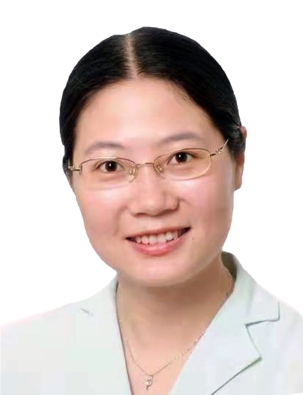 Yue Liu (刘悦)合作论文数School of Computer Engineering and Science, Shanghai University5
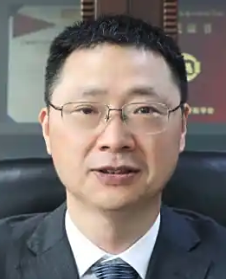 Guoyin Wang (王国胤)合作论文数Chongqing Normal University4
 Zitu Liu (刘子图)合作论文数3
 Qun Liu (刘群)合作论文数重庆邮电大学3
 Wenjie Tian合作论文数Shanghai Univ, Sch Comp Engn & Sci, Shanghai 200444, Peoples R China2Yike Guo (郭毅可)合作论文数2
 Zhenyao Yu合作论文数1Fang Wang合作论文数1邓蔚合作论文数School of Statstics, Southwestern University of Finance and Economics1
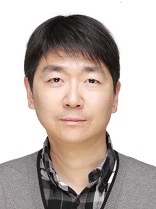 Xing Wu (武星)合作论文数School of Computer Engineering and Science, Shanghai University1




