Invasive meningococcal disease surveillance in Europe combines isolate characterisation and epidemiological data to support public health intervention. A representative European Meningococcal Strain Collection (EMSC) of IMD isolates was obtained, and whole genome sequenced to characterise 799 EMSC isolates from the epidemiological year July 2011–June 2012. To establish a genome library (GL), the isolate information was deposited in the pubMLST.org/neisseria database. Genomes were curated and annotated at 2,429 meningococcal loci, including those defining clonal complex, capsule, antigens, and antimicrobial resistance. Most genomes contained genes encoding B (n = 525; 65.7%) or C (n = 163; 20.4%) capsules; isolates were genetically highly diverse, with >20 genomic lineages, five of which comprising 60.7% (n = 485) of isolates. There were >350 antigenic fine-types: 307 were present once, the most frequent (P1.7-2,4:F5-1) comprised 8% (n = 64) of isolates. Each genome was characterised for Bexsero Antigen Sequence Typing (BAST): 25.5% (n = 204) of isolates contained alleles encoding the fHbp and/or the PorA VR1 vaccine component, but most genomes (n = 513; 64.2%) did not contain the NadA component. EMSC-GL will support an integrated surveillance of disease-associated genotypes in Europe, enabling the monitoring of hyperinvasive lineages, outbreak identification, and supporting vaccine programme implementation.
The evidence underpinning public health policy is often of low quality, leading to inconsistencies in recommended interventions. One example is the divergence in national policies across Europe for managing contacts of invasive meningococcal disease. Aiming to develop consistent guidance at the European level, a group of experts reviewed the literature and formulated recommendations. The group defined eight priority research questions, searched the literature, and formulated recommendations using GRADE methodology. Five of the research questions are discussed in this paper. After taking into account quality of evidence, benefit, harm, value, preference, burden on patient of the intervention, and resource implications, we made four strong recommendations and five weak recommendations for intervention. Strong recommendations related not only to one question with very low quality of evidence as well as to two questions with moderate to high quality of evidence. The weak recommendations related to two questions with low and very low quality of evidence but also to one question with moderate quality of evidence. GRADE methodology ensures a transparent process and explicit recognition of additional factors that should be considered when making recommendations for policy. This approach can be usefully applied to many areas of public health policy where evidence quality is often low.
ABSTRACT New vaccines targeting meningococci expressing serogroup B polysaccharide have been developed, with some being licensed in Europe. Coverage depends on the distribution of disease-associated genotypes, which may vary by age. It is well established that a small number of hyperinvasive lineages account for most disease, and these lineages are associated with particular antigens, including vaccine candidates. A collection of 4,048 representative meningococcal disease isolates from 18 European countries, collected over a 3-year period, were characterized by multilocus sequence typing (MLST). Age data were available for 3,147 isolates. The proportions of hyperinvasive lineages, identified as particular clonal complexes (ccs) by MLST, differed among age groups. Subjects <1 year of age experienced lower risk of sequence type 11 (ST-11) cc, ST-32 cc, and ST-269 cc disease and higher risk of disease due to unassigned STs, 1- to 4-year-olds experienced lower risk of ST-11 cc and ST-32 cc disease, 5- to 14-year-olds were less likely to experience ST-11 cc and ST-269 cc disease, and ≥25-year-olds were more likely to experience disease due to less common ccs and unassigned STs. Younger and older subjects were vulnerable to a more diverse set of genotypes, indicating the more clonal nature of genotypes affecting adolescents and young adults. Knowledge of temporal and spatial diversity and the dynamics of meningococcal populations is essential for disease control by vaccines, as coverage is lineage specific. The nonrandom age distribution of hyperinvasive lineages has consequences for the design and implementation of vaccines, as different variants, or perhaps targets, may be required for different age groups.
Invasive Meningokokkeninfektionen (invasive meningococcal disease = IMD) manifestieren sich meist als bakterielle Meningitis mit oder ohne begleitende Septikämie. Bei etwa jeder fünften IMD fehlen allerdings meningeale Zeichen, und gerade diese isoliert septischen Formen können einen rasch progredienten, häufig therapierefraktären Verlauf nehmen, der sich im Extremfall unter dem klinischen Bild eines Waterhouse Friedrichsen Syndroms mit hoher Letalität präsentiert. Die Lipooligosaccharide der gramnegativen Diplokokken sind hochpotente Endotoxine, die eine disseminierte intravasale Gerinnung auslösen können, woraus sich in der Folge durch die aktivierte Fibrinolyse eine Verbrauchskoagulopathie mit Einblutungen in Haut, Schleimhaut und innere Organe entwickelt.
Invasive disease caused by the encapsulated bacteriaNeisseria meningitidis,Haemophilus influenzaeandStreptococcus pneumoniaeremains an important cause of morbidity and mortality worldwide, despite the introduction of successful conjugate polysaccharide vaccines that target disease-associated strains. In addition, resistance, or more accurately reduced susceptibility, to therapeutic antibiotics is spreading in populations of these organisms. There is therefore a continuing requirement for the surveillance of vaccine and non-vaccine antigens and antibiotic susceptibilities among isolates from invasive disease, which is only partially met by conventional methods. This need can be met with molecular and especially nucleotide sequence-based typing methods, which are fully developed in the case ofN. meningitidisand which could be more widely deployed in clinical laboratories forS. pneumoniaeandH. influenzae.
Introduction: Neisseria meningitidis is a leading cause of meningitis and sepsis worldwide. Thus, monitoring the epidemiology of invasive meningococcal disease (IMD) is an important public health measure. The National Reference Centre for Meningococci at the Austrian Agency for Health and Food Safety is operating the laboratory-based surveillance database.Methods: IMD isolates from all over Austria are collected at the National Reference Centre for Meningococci, where the microorganism is characterised by serological and molecular methods, as well as by antimicrobial susceptibility testing. These laboratory-based surveillance data from 1995 to 2010 were analysed by time, place and person. Long-term and seasonal trends were analysed by log-linear regression, yielding an annual average percentage change (AAPC), and by cyclic regression models, applying either a simple linear or a negative binomial regression, including one sine and one cosine term.Results: Over the past 16 years, IMD incidence ranged between 0.73 and 1.41/100,000 persons, with a decreasing trend in Serogroup B IMD incidence (AAPC: -2.1%; p = 0.0396) and an increasing trend in Serogroup C IMD incidence (AAPC: +4.3%; p = 0.043).In 2010, 80 cases of IMD were recorded, corresponding to an incidence of 0.95/100,000 population. Ten deaths were registered, which results in a case-fatality of 12.5% and a mortality incidence of 0.12/100,000 population. The predominant serogroup in Austria was serogroup B, followed by serogroups C, Y and W-135.Discussion: Although the incidence of IMD in 2010 is below the average incidence rate over the last 15 years, serogroup C IMD in Austria is increasing. Within the previous 10 years two provinces initiated vaccination campaigns for a monovalent meningococcal conjugate vaccine, following the increasing trend of Sg C IMD incidence. An ongoing study on the impact of these vaccination campaigns on the IMD burden will yield further scientific evidence for supporting the introduction of this vaccine into the publicly funded childhood immunisation program.
Identification of clinical isolates of Neisseria meningitidis that are resistant to rifampin is important to avoid prophylaxis failure in contacts of patients, but it is hindered by the absence of a breakpoint for resistance, despite many efforts toward standardization. We examined a large number (n = 392) of clinical meningococcal isolates, spanning 25 years (1984 to 2009), that were collected in 11 European countries, Argentina, and the Central African Republic. The collection comprises all clinical isolates with MICs of > or = 0.25 mg/liter (n = 161) received by the national reference laboratories for meningococci in the participating countries. Representative isolates displaying rifampin MICs of < 0.25 mg/liter were also examined (n = 231). Typing of isolates was performed, and a 660-bp DNA fragment of the rpoB gene was sequenced. Sequences differing by at least one nucleotide were defined as unique rpoB alleles. The geometric mean of the MICs was calculated for isolates displaying the same allele. The clinical isolates displaying rifampin MICs of > 1 mg/liter possessed rpoB alleles with nonsynonymous mutations at four critical amino acid residues, D542, H552, S548, and S557, that were absent in the alleles found in all isolates with MICs of < or = 1 mg/liter. Rifampin-susceptible isolates could be defined as those with MICs of < or = 1 mg/liter. The rpoB allele sequence and isolate data have been incorporated into the PubMLST Neisseria database (http://pubmlst.org/neisseria/). The rifampin-resistant isolates belonged to diverse genetic lineages and were associated with lower levels of bacteremia and inflammatory cytokines in mice. This biological cost may explain the lack of clonal expansion of these isolates.
In this era of new pneumococcal conjugate vaccines (PCV), we described and compared surveillance of invasive pneumococcal disease (IPD) and PCV policies in 30 European countries to provide guidance for Europe-wide surveillance. We confirmed the heterogeneity of surveillance systems and case definitions across countries but identified elements common to all countries, such as the availability of serotyping and the surveillance of pneumococcal meningitis. PCV impact was monitored in 11/15 countries using it. We propose steps for the monitoring of incidence rates and serotype distribution at EU level, to assess the need to introduce PCV and monitor its impact once introduced.
BACKGROUND:Carriage of Neisseria meningitidis occurs approximately in 10% of the population, onset of invasive meningococcal disease (IMD) cannot be predicted and differs between ages. It remains unclear, which host factors determine invasion of the bloodstream by the bacteria. Innate immunity has a very important role in the first recognition of invading pathogens. The functional single nucleotide polymorphisms (SNPs) CD14 C-159T and toll-like receptor 4 (TLR4) Asp299Gly have been associated with the risk of gram-negative infections. However, their role in development of IMD still remains unclear. Our aim was to investigate the influence of CD14 C-159T and TLR4 Asp299Gly polymorphisms on the risk of IMD. METHODOLOGY/PRINCIPAL FINDINGS:It was a retrospective case control study. Surviving Austrian meningococcal disease patients were enrolled by sending buccal swabs for DNA analysis. 185 cases with a proven meningococcal infection and 770 healthy controls were enrolled. In surviving meningococcal disease patients DNA analysis of CD14 C-159T and TLR 4 Asp299Gly polymorphisms was performed, as they are part of the innate immune response to bacterial determinants. CD14 C-159T and TLR4 Asp299Gly SNPs were not significantly associated with the presence of IMD when compared to healthy controls. The odds ratio for CD14 C-159T SNP was 1.14 (95% confidence interval (CI) 0.91-1.43; p = 0.266). In TLR4 Asp 299 Gly SNP the odds ratio was 0.78 (CI 0.47-1.43; p = 0.359). CONCLUSION/SIGNIFICANCE:We could not observe a significant influence of CD14 C-159T and TLR4 Asp299Gly polymorphisms on the risk of developing IMD in surviving meningococcal disease patients. To our knowledge, this is the first study investigating the influence of the CD14 C-159T SNP on the susceptibility to IMD.
Clinical isolates of Neisseria meningitidis with reduced susceptibility to penicillin G (intermediate isolates, Pen(I)) harbor alterations in the penA gene encoding the penicillin binding protein 2 (PBP2). A 402-bp DNA fragment in the 3' half of penA was sequenced from a collection of 1,670 meningococcal clinical isolates from 22 countries that spanned 60 years. Phenotyping, genotyping, and the determination of MICs of penicillin G were also performed. A total of 139 different penA alleles were detected with 38 alleles that were highly related, clustered together in maximum-likelihood analysis and corresponded to the penicillin G-susceptible isolates. The remaining 101 penA alleles were highly diverse, corresponded to different genotypes or phenotypes, and accounted for 38% of isolates, but no clonal expansion was detected. Analysis of the altered alleles that were represented by at least five isolates showed high correlation with the Pen(I) phenotype. The deduced amino acid sequence of the corresponding PBP2 comprised five amino acid residues that were always altered. This correlation was not complete for rare alleles, suggesting that other mechanisms may also be involved in conferring reduced susceptibility to penicillin. Evidence of mosaic structures through events of interspecies recombination was also detected in altered alleles. A new website was created based on the data from this work (http://neisseria.org/nm/typing/penA). These data argue for the use of penA sequencing to identify isolates with reduced susceptibility to penicillin G and as a tool to improve typing of meningococcal isolates, as well as to analyze DNA exchange among Neisseria species.
Between 1999 and 2004, the European Union Invasive Bacterial Infections Surveillance Network (EU-IBIS) received c. 50,000 reports of meningococcal disease from 27 participating countries. Analysis has demonstrated a major decline in the incidence of invasive disease in those countries that have introduced routine vaccination against serogroup C infection. The establishment of rapid reporting of W135 and B2a/B2b strains has been able to provide early reassurance that these strains are not emerging as major public health problems in Europe. Between September 2001 and February 2005, the EU-MenNet project offered further opportunities for enhancing this data resource. Collaborative projects included: improving the EU-IBIS website; reviewing case ascertainment in Europe; reviewing cost-effectiveness studies for meningococcal serogroup C conjugate (MCC) vaccination; international comparisons of MCC vaccine efficacy; and mathematical modelling studies. In addition, linking of data from the European Meningococcal Multi-locus Sequence Type Centre to epidemiological data was performed. Particular clonal complexes were found to be preferentially associated with certain serogroups. Case fatality was also found to vary with clonal complex, suggesting that genotype can be a marker for hypervirulence. The importance of close collaboration between networks of epidemiologists, microbiologists, and the wider scientific and public health community is demonstrated.
En septiembre de 2006 se declaro un brote de gastroenteritis aguda en un internado de la region oriental de Austria. De los 113 afectados, 101 tuvieron que ser hospitalizados. Para identificar el origen del brote se llevo a cabo un estudio retrospectivo de cohortes en el grupo de riesgo, formado por 222 alumnos y 30 trabajadores. Se identifico que la exposicion alimentaria en el comedor del colegio era el nexo mas relevante y frecuente entre los afectados que se investigaron en la serie de casos.
AIM OF THE STUDY: The notified incidence of meningococcal disease in European countries varies from <1 case per 100,000 inhabitants to approximately 7 cases per 100,000. Assessing the true burden of disease is important for setting priorities in health services and for estimating the benefit of interventions such as vaccination. Completeness and timeliness of reporting is also essential for the early recognition of outbreaks. The objective of this study was to assess the completeness of surveillance data on invasive meningococcal disease in Austria at the National Reference Center for Meningococci for the year 2002. METHODS: The data stored at the reference center was compared with an independent database containing the main diagnosis documented in the obligatory hospital discharge dataset of all Austrian hospitals (coded in ICD-10 since 2001). All mismatches were reviewed in order to exclude possible errors and identify true cases of meningococcal disease that had not been reported to the reference center. The number of cases not recorded by either data source was estimated using the capture–recapture method. RESULTS: The first comparison of the two data sources identified 50 cases not registered at the national reference center. Screening of the ICD codes from these 50 patients through the hospitals reduced the number of under-reported cases to 10, of which 6 showed symptoms compatible with meningococcal disease, although microbiological confirmation was missing. Re-evaluation of the case histories of these 6 patients by a clinical expert for meningococcal disease identified them as probable cases. The main reason for correction of the diagnosis in 27 cases was an obvious coding error: these patients had been treated in hospitals for illnesses not related to meningococcal disease. In 72 cases, the two databases were in agreement. Eleven cases of meningococcal disease were notified solely to the national reference center. Addition of the newly recognized cases of invasive meningococcal disease increased the total number of cases from 83 (incidence, 1.03/100,000) to 93 (incidence, 1.16/100,000). Estimation of the "true" number of cases of meningococcal disease, using the capture–recapture method, gave a final total of 95 cases (95% CI, 93–98) and an incidence of 1.18/100,000. The completeness (sensitivity) of the original notification at the national reference center was therefore 87.4% (83 of 95 cases). CONCLUSION: All probable cases of meningococcal disease, even those (still) lacking microbiological confirmation, should be reported to the public health authorities as soon as possible, in order to ensure the necessary prompt prophylactic action (e.g., chemoprophylaxis).
s Translations: Selected Abstracts from the Meeting of the European Society of Paediatric and Neonatal Intensive Care in Association with the UK Paediatric Intensive Care Society: Oral Presentations
Neisseria meningitidis is the most common cause of meningitis and causes epidemic outbreaks. One trait of N. meningitidis, which is associated with most of the currently recognized virulence determinants, is the presence of phase-variable genes that are suspected to enhance its ability to cause an invasive disease. To detect the immune responses to phase-variable expressed proteins, we applied protein microarray technology for the screening of meningitis patient sera. We amplified all 102 known phase-variable genes from N. meningitidis serogroup B strain MC58 by polymerase chain reaction and subcloned them for expression in Escherichia coli. With this approach, we were able to express and purify 67 recombinant proteins representing 66% of the annotated genes. These were spotted robotically onto coated glass slides to generate protein microarrays, which were screened using 20 sera of patients suffering from meningitis, as well as healthy controls. From these screening experiments, 47 proteins emerged as immunogenic, exhibiting a variable degree of seroreactivity with some of the patient sera. Nine proteins elicited an immune response in more than three patients, with one of them, the phase-variable opacity protein OpaV (NMB0442), showing responses in 11 patient sera. This is the first time that protein microarray technology has been applied for the investigation of genetic phase variation in pathogens. The identification of disease-specific proteins is a significant target in biomedical research, as such proteins may have medical, diagnostic, and commercial potential as disease markers.
Na maior parte dos paises, a vigilância das doencas meningococicas esta basada numa combinacao de sistemas de declaracao obrigatoria e de notificacao pelos laboratorios, considerando-se que os dois subestimam o peso da doenca. A incidencia das doencas meningococicas varia entre os paises da Europa, e embora existem muitas razoes para explicar isto, e importante quantificar o grau de sub-avaliacao para poder validar as comparacoes internacionais. Presentamos aqui uma revisao das publicacoes sobre a avaliacao das doencas meningococicas na Europa e sobre os metodos disponiveis para estimar o grau de sub- notificacao. Resulta que a sensibilidade dos sistemas de vigilância e variavel segundo os paises e no tempo, a diferenca vai de 40% a 96%. Foram identificados cinco metodos apropriados para levar a cabo estudos de avaliacao, desde simples inqueritos comparativos ate tecnicas mais complicadas como a captura-recaptura e as analises de regressao. Estes estudos podem ser utilisados para identificar os pontos fracos dos dados de vigilância e melhorar estes sistemas. Estes resultados tambem sao pertinentes para a vigilância de outras doencas transmissiveis, especialmente aquelas com menor mortalidade e menor impacto publico que as doencas meningococicas para as quais uma avaliacao seria util.
En la mayoria de los paises, la vigilancia de las enfermedades meningococicas esta basada en una combinacion de sistemas de declaracion obligatoria y de notificacion por los laboratorios, considerandose que ambos infraestiman el peso de la enfermedad. La incidencia de las enfermedades meningococicas varia entre los paises de Europa, y aunque existen muchas razones para explicar esto, es importante cuantificar el grado de sub-evaluacion para poder validar las comparaciones internacionales. Presentamos aqui una revision de las publicaciones sobre la evaluacion de las enfermedades meningococicas en Europa y sobre los metodos disponibles para estimar el grado de sub-notificacion. Encontramos que la sensibilidad de los sistemas de vigilancia varia entre los paises y en el tiempo, con rangos entre el 40% hasta el 96%. Se identificaron cinco metodos apropiados para llevar a cabo estudios de evaluacion, desde simples encuestas comparativas hasta tecnicas mas complicadas como la captura-recaptura y los analisis de regresion. Estos estudios pueden ser utilizados para identificar los puntos debiles y los sesgos de los datos de vigilancia y facilitar la mejora de estos sistemas. Tambien estos resultados son relevantes para la vigilancia de otras enfermedades trasmisibles, particularmente aquellas con menos mortalidad y mas escaso impacto publico que las enfermedades meningococicas y para las cuales seria util una evaluacion.
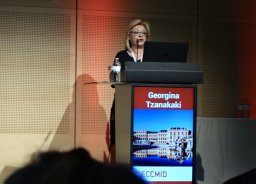 Georgina Tzanakaki合作论文数National Meningitis Reference Laboratory, National School of Public Health8
 Paula Kriz合作论文数7
 Muhamed Kheir Taha合作论文数Department of Infection and Epidemiology, Institut Pasteur6
 Paola Stefanelli合作论文数5Julio A Vázquez合作论文数5
 Mary Ramsay合作论文数Immunisation, Hepatitis and Blood Safety Department, UK Health Security Agency;Department of Infectious Disease Epidemiology, London School of Hygiene & Tropical Medicine5
 Dominique Andree Yvette Caugant合作论文数Department of Method Development and Analytics, Norwegian Institute of Public Health;Department of Community Medicine and Global Health, University of Oslo;Institute of Health and Society, University of Oslo5Anna Skoczynska合作论文数5
 Caroline Trotter合作论文数Department of Veterinary Medicine, Cambridge Veterinary School, University of Cambridge5
 Matthias Frosch合作论文数Comprehensive Anxiety Center, Universitätsklinikum Würzburg5
 Keith Jolley合作论文数Maiden Lab, Department of Biology, University of Oxford;Department of Zoology, University of Oxford5Per Olcen合作论文数5Heike Claus合作论文数5
 Marina Pana合作论文数4Françoise Carion合作论文数4A Perrocheau合作论文数Health Emergencies Programme, World Health Organization4Steve Gray合作论文数4Hoffmann Steen合作论文数4
 Arie Van Der Ende合作论文数Amsterdam UMC4
 Martin C. J. Maiden合作论文数Microbiology and Infectious Diseases Section, Department of Biology, Sir William Dunn School of Pathology, University of Oxford4
 Ulrich Vogel合作论文数4
 Carina Brehony合作论文数4Rocío Enríquez合作论文数3Samuelsson Susanne合作论文数3Martin Musilek合作论文数3
 Maija Toropainen合作论文数3
 Sophie Bertrand合作论文数School of Fisheries, University of Washington3Sara Thulin Hedberg合作论文数3Burkhard Simma合作论文数3
 Metka Paragi合作论文数3Eva Hong合作论文数3
 Magnus Unemo合作论文数Institutionen for Medicinska Vetenskaper, Orebro Universitet3Giles F Edwards合作论文数2Jelena Galajeva合作论文数2M-K Taha合作论文数2Raquel Abad合作论文数Instituto de Salud Carlos III2Mathew Diggle合作论文数2
 Paweł Stefanoff合作论文数Dept Zoonot Food & Waterborne Infect, Norwegian Inst Publ Hlth2
 Bratcher Holly B合作论文数Dept Zool, Univ Oxford2Bagatzouni Despo Pieridou合作论文数2Chandra Manosree合作论文数2Erdősi Tímea合作论文数2Krízová P合作论文数2Karen Murphy合作论文数2Corinne Ruckly合作论文数2Arianna Neri合作论文数2
 Izabela Wasko合作论文数2Ariane Biebl合作论文数2Marek Szatanik合作论文数2




