Gaia astrometry of nearby stars is precise enough to detect the tiny displacements induced by substellar companions, but radial velocity (RV) data are needed for definitive confirmation. Here we present RV follow-up observations of 28 M and K stars with candidate astrometric substellar companions, which led to the confirmation of two systems, Gaia-4b and Gaia-5b, identification of five systems that are single lined but require additional data to confirm as substellar companions, and the refutation of 21 systems as stellar binaries. Gaia-4b is a massive planet (M = 11.8 ± 0.7 MJ) in a P = 571.3 ± 1.4 day orbit with a projected semimajor axis a0 = 0.312 ± 0.040 mas orbiting a 0.644 ± 0.02M⊙ star. Gaia-5b is a brown dwarf (M = 20.9 ± 0.5MJ) in a P = 358.62 ± 0.20 days eccentric e = 0.6423 ± 0.0026 orbit with a projected angular semimajor axis of a0 = 0.947 ± 0.038 mas around a 0.34 ± 0.03M⊙ star. Gaia-4b is one of the first exoplanets discovered via the astrometric technique, and is one of the most massive planets known to orbit a low-mass star.
Context. From a long-term Doppler monitoring campaign of 373 giant stars, we have identified ten giants with periodic radial velocity variations that are challenging to associate with planets. Similar cases in the literature are attributed to poorly understood intrinsic processes. Aims. Our goal is to confirm or refute the presence of planets around these ten evolved stars. Additionally, we evaluate the reliability and sensitivity of planet-confirmation metrics when applied to giant stars and present cases of intrinsically induced radial velocity variations, aiming to enhance the physical understanding of the phenomenon. Methods. We combined 25 years of radial velocity data from the Hamilton/Lick, SONG, and CARMENES spectrographs. To assess consistency with Keplerian models, we examined the residuals and tracked changes in statistical significance as new data were incorporated. Additionally, we compared radial velocity amplitudes across optical and infrared wavelengths, searched for periodic variations of activity indicators, and examined their correlations with radial velocities. Results. Seven of the ten giants exhibit intrinsically induced radial velocity variations. The strongest arguments against planets orbiting the giants are guided by long-term radial velocity monitoring that detects changing periodicity on long timescales or detects systematics close to the original period in the radial velocity residuals. While activity indicators offer some support, their signals are generally weak. Comparing optical and infrared radial velocity amplitudes also proves insufficient for confirming or refuting planets. We find HIP 64823 remains a promising candidate for hosting a giant exoplanet with orbital period P ∼ 7.75 yr. For two stars, the evidence remains inconclusive. Conclusions. Long-term radial velocity monitoring is essential for distinguishing planetary companions from intrinsic variations in evolved stars.
In the past decade the study of exoplanet atmospheres at high-spectral resolution, via transmission/emission spectroscopy and cross-correlation techniques for atomic/molecular mapping, has become a powerful and consolidated methodology. The current limitation is the signal-to-noise ratio that one can obtain during a planetary transit, which is in turn ultimately limited by telescope size. This limitation will be overcome by ANDES, an optical and near-infrared high-resolution spectrograph for the Extremely Large Telescope, which is currently in Phase B development. ANDES will be a powerful transformational instrument for exoplanet science. It will enable the study of giant planet atmospheres, allowing not only an exquisite determination of atmospheric composition, but also the study of isotopic compositions, dynamics and weather patterns, mapping the planetary atmospheres and probing atmospheric formation and evolution models. The unprecedented angular resolution of ANDES, will also allow us to explore the initial conditions in which planets form in proto-planetary disks. The main science case of ANDES, however, is the study of small, rocky exoplanet atmospheres, including the potential for biomarker detections, and the ability to reach this science case is driving its instrumental design. Here we discuss our simulations and the observing strategies to achieve this specific science goal. Since ANDES will be operational at the same time as NASA’s JWST and ESA’s ARIEL missions, it will provide enormous synergies in the characterization of planetary atmospheres at high and low spectral resolution. Moreover, ANDES will be able to probe for the first time the atmospheres of several giant and small planets in reflected light. In particular, we show how ANDES will be able to unlock the reflected light atmospheric signal of a golden sample of nearby non-transiting habitable zone earth-sized planets within a few tenths of nights, a scientific objective that no other currently approved astronomical facility will be able to reach.
From a long-term Doppler monitoring campaign of 373 giant stars, we have identified ten giants with periodic radial velocity variations that are challenging to associate with planets. Similar cases in the literature are attributed to poorly understood intrinsic processes. Our goal is to confirm or refute the presence of planets around these ten evolved stars. Additionally, we evaluate the reliability and sensitivity of planet-confirmation metrics when applied to giant stars and present cases of intrinsically induced radial velocity variations, aiming to enhance the physical understanding of the phenomenon. We combined 25 years of radial velocity data from the Hamilton/Lick, SONG, and CARMENES spectrographs. To assess consistency with Keplerian models, we examined the residuals and tracked changes in statistical significance as new data were incorporated. Additionally, we compared radial velocity amplitudes across optical and infrared wavelengths, searched for periodic variations of activity indicators, and examined their correlations with radial velocities. Seven of the ten giants exhibit intrinsically induced radial velocity variations. The strongest arguments against planets orbiting the giants are guided by long-term radial velocity monitoring that detects changing periodicity on long timescales or detects systematics close to the original period in the radial velocity residuals. While activity indicators offer some support, their signals are generally weak. Comparing optical and infrared radial velocity amplitudes also proves insufficient for confirming or refuting planets. We find HIP 64823 remains a promising candidate for hosting a giant exoplanet with orbital period P∼ 7.75 yr. For two stars, the evidence remains inconclusive. Long-term radial velocity monitoring is essential for distinguishing planetary companions from intrinsic variations in evolved stars.
The degree of spin-orbit alignment in a population of binary stars can be determined from measurements of their orbital inclinations and rotational broadening of their spectral lines. Alignment in a face-on binary guarantees low rotational broadening, while alignment in an edge-on binary maximizes the rotational broadening. In contrast, if spin-orbit angles (psi) are random, rotational broadening should not depend on orbital inclination. Using this technique, we investigated a sample of 2727 astrometric binaries from Gaia DR3 with F-type primaries and orbital periods between 50 and 1000 days (separations 0.3-2.7 au). We found that psi is strongly associated with e, the orbital eccentricity. When e < 0.15, the mean spin-orbit angle is =6.9(-4.1)(+5.4) degrees, while for e > 0.7, it rises to =46(-24)(+26) degrees. These results suggest that some binaries are affected by processes during their formation or evolution that excite both orbital eccentricity and inclination.
Measurements of the obliquities in exoplanet systems have revealed some remarkable architectures, some of which are very different from the Solar System. Nearly 200 obliquity measurements have been obtained through observations of the Rossiter-McLaughlin (RM) effect. Here, we report on observations of 19 planetary systems that led to 17 clear detections of the RM effect and 2 less secure detections. After adding the new measurements to the tally, we used the entire collection of RM measurements to investigate four issues that have arisen in the literature. i) Does the obliquity distribution show a peak at approximately 90 degrees? We find tentative evidence that such a peak does exist when restricting attention to the sample of sub-Saturn planets and hot Jupiters orbiting F stars. ii) Are high obliquities associated with high eccentricities? We find the association to be weaker than previously reported, and that a stronger association exists between obliquity and orbital separation, possibly due to tidal obliquity damping at small separations. iii) How low are the lowest known obliquities? Among hot Jupiters around cool stars, we find the dispersion to be 1.4 +/- 0.7 degrees, smaller than the 6 degrees obliquity of the Sun, which serves as additional evidence for tidal damping. iv) What are the obliquities of stars with compact and flat systems of multiple planets? We find that they generally have obliquities lower than 10 degrees, with several remarkable exceptions possibly caused by wide-orbiting stellar or planetary companions.
Abstract We present the discovery and characterization of a new multi-planetary system around the Sun-like star K2-360 (EPIC 201595106). K2-360 was first identified in K2 photometry as the host of an ultra-short-period (USP) planet candidate with a period of 0.88 d. We obtained follow-up transit photometry, confirming the star as the host of the signal. High precision radial velocity measurements from HARPS and HARPS-N confirm the transiting USP planet and reveal the existence of an outer (non-transiting) planet with an orbital period of $$\sim$$ ∼ 10 d. We measure a mass of $$7.67 \pm 0.75$$ 7.67 ± 0.75 $$M_{\oplus }$$ M ⊕ and a radius of $$1.57 \pm 0.08$$ 1.57 ± 0.08 $$R_{\oplus }$$ R ⊕ for the transiting planet, yielding a high mean density of $$11 \pm 2$$ 11 ± 2 g $$\hbox {cm}^{-3}$$ cm - 3 , making it the densest well-characterized USP super-Earth discovered to date. We measure a minimum mass of $$15.2 \pm 1.8$$ 15.2 ± 1.8 $$M_{\oplus }$$ M ⊕ for the outer planet, and explore a migration formation pathway via the von Zeipel–Kozai–Lidov (ZKL) mechanism and tidal dissipation.
The first generation of ELT instruments includes an optical-infrared high resolution spectrograph, indicated as ELT-HIRES and recently christened ANDES (ArmazoNes high Dispersion Echelle Spectrograph). ANDES consists of three fibre-fed spectrographs ([U]BV, RIZ, YJH) providing a spectral resolution of similar to 100,000 with a minimum simultaneous wavelength coverage of 0.4-1.8 mu m with the goal of extending it to 0.35-2.4 mu m with the addition of an U arm to the BV spectrograph and a separate K band spectrograph. It operates both in seeing- and diffraction-limited conditions and the fibre-feeding allows several, interchangeable observing modes including a single conjugated adaptive optics module and a small diffraction-limited integral field unit in the NIR. Modularity and fibre-feeding allows ANDES to be placed partly on the ELT Nasmyth platform and partly in the Coude room. ANDES has a wide range of groundbreaking science cases spanning nearly all areas of research in astrophysics and even fundamental physics. Among the top science cases there are the detection of biosignatures from exoplanet atmospheres, finding the fingerprints of the first generation of stars, tests on the stability of Nature's fundamental couplings, and the direct detection of the cosmic acceleration. The ANDES project is carried forward by a large international consortium, composed of 35 Institutes from 13 countries, forming a team of almost 300 scientists and engineers which include the majority of the scientific and technical expertise in the field that can be found in ESO member states.
We characterize the LHS 1610 system, a nearby ($d=9.7$ pc) M5 dwarf hosting a brown dwarf in a $10.6$ day, eccentric ($e \sim 0.37$) orbit. A joint fit of the available Gaia two-body solution, discovery radial velocities (RVs) from TRES, and new RVs obtained with the Habitable-zone Planet Finder, yields an orbital inclination of $117.2\pm0.9^\circ$ and a mass constraint of $50.9\pm0.9$ M$_J$. This gives LHS 1610 b the second most precise mass of brown dwarfs orbiting M stars within 25pc. We highlight a discrepancy between the Gaia two-body solution eccentricity ($e=0.52 \pm 0.03$) and that from the RVs ($e=0.3702\pm0.0003$), which requires the astrometric time-series release (Gaia DR4) for further diagnostics. With a flare rate of $0.28\pm 0.07$ flares/day from TESS photometry, and a rotation period of $84 \pm 8$ days, LHS 1610 joins other mid M stars -- including Proxima Centauri and YZ Ceti -- as nearby mid M dwarfs with flare rates on the higher end for their long rotation periods. These stars are promising candidates for searching for sub-Alfv\'enic star-companion interactions, raising the question whether LHS 1610 b could be driving the flares on its host star. However, the available TESS photometry is insufficient to confirm or rule out any orbital phase-dependence of the flares. We show that the LHS 1610 system, as a nearby mid M star with a large, short-period companion, is a promising target to look for evidence of star-companion interactions or aural emission from the brown dwarf at radio wavelengths.
We report the discovery and characterization of a small planet, TOI-1408 c, on a 2.2 day orbit located interior to a previously known hot Jupiter, TOI-1408 b ( P = 4.42 days, M = 1.86 ± 0.02 M Jup , R = 2.4 ± 0.5 R Jup ) that exhibits grazing transits. The two planets are near 2:1 period commensurability, resulting in significant transit timing variations (TTVs) for both planets and transit duration variations for the inner planet. The TTV amplitude for TOI-1408 c is 15% of the planet’s orbital period, marking the largest TTV amplitude relative to the orbital period measured to date. Photodynamical modeling of ground-based radial velocity (RV) observations and transit light curves obtained with the Transiting Exoplanet Survey Satellite and ground-based facilities leads to an inner planet radius of 2.22 ± 0.06 R ⊕ and mass of 7.6 ± 0.2 M ⊕ that locates the planet into the sub-Neptune regime. The proximity to the 2:1 period commensurability leads to the libration of the resonant argument of the inner planet. The RV measurements support the existence of a third body with an orbital period of several thousand days. This discovery places the system among the rare systems featuring a hot Jupiter accompanied by an inner low-mass planet.
Precise space-based photometry from the Transiting Exoplanet Survey Satellite results in a huge number of exoplanetary candidates. However, the masses of these objects are unknown and must be determined by ground-based spectroscopic follow-up observations, frequently revealing the companions to be low-mass stars rather than exoplanets. We present the first orbital and stellar parameter solutions for five such eclipsing binary-star systems using radial-velocity follow-up measurements together with spectral-energy-distribution solutions. TOI-416 and TOI-1143 are totally eclipsing F+M star systems with well-determined secondary masses, radii, and temperatures. TOI-416 is a circular system with an F6 primary and a secondary with a mass of M-2 = 0.131(8) M-circle dot. TOI-1143 consists of an F6 primary with an M-2 = 0.142(3) M-circle dot secondary on an eccentric orbit with a third companion. With respect to the other systems, TOI-1153 shows ellipsoidal variations, TOI-1615 contains a pulsating primary, and TOI-1788 has a spotted primary, while all have moderate mass ratios of 0.2-0.4. However, these systems are in a grazing configuration, which limits their full description. The parameters of TOI-416B and TOI-1143B are suitable for the calibration of the radius-mass relation for dwarf stars.
Measurements of the obliquities in exoplanet systems have revealed certain remarkable architectures, some of which are very different from those seen in the Solar System. Nearly 200 obliquity measurements have been obtained based on observations of the Rossiter-McLaughlin (RM) effect. Here, we report on observations of 19 planetary systems, which previously led to 17 clear detections of the RM effect and 2 less secure detections. After adding the new measurements to the tally, we used the entire collection of RM measurements to investigate four issues that have arisen in the literature. Here we consider whether: i) the obliquity distribution shows a peak at approximately 90$^ and ii) the high obliquities are associated with high eccentricities. For the first question, we found tentative evidence that such a peak does exist when restricting attention to the sample of sub-Saturn planets and hot Jupiters orbiting F stars. We find the association to be weaker than previously reported and a stronger association must exist between obliquity and orbital separation, possibly due to tidal obliquity damping at small separations. We also consider iii) how low the lowest known obliquities are; among hot Jupiters around cool stars, we find the dispersion to be $1.4 smaller than the 6$^ obliquity of the Sun, which serves as additional evidence for tidal damping. Finally, we investigate iv) how low the obliquities of stars with compact and flat systems of multiple planets are. We find that they generally have obliquities lower than $10^ with several remarkable exceptions possibly caused by wide-orbiting stellar or planetary companions.
We present a dedicated transit and radial velocity survey of planets orbiting subgiant stars observed by the TESS Mission. Using ∼16 nights on Keck/HIRES, we confirm and characterize 12 new transiting planets – TOI-329 b, HD 39688 b (TOI-480), TOI-603 b, TOI-1199 b, TOI-1294 b, TOI-1439 b, TOI-1605 b, TOI-1828 b, HD 148193 b (TOI-1836), TOI-1885 b, HD 83342 b (TOI-1898), TOI-2019 b – and provide updated properties for 9 previously confirmed TESS subgiant systems (TOI-197, TOI-954, TOI-1181, TOI-1296, TOI-1298, TOI-1601, TOI-1736, TOI-1842, TOI-2145). We also report the discovery of an outer, non-transiting planet, TOI-1294 c (P=160.1±2.5 days, M_p=148.3^+18.2_-16.4 M_⊕), and three additional stars with long-term RV trends. We find that at least 19±8% of subgiants in our sample of 21 stars have outer companions, comparable to main-sequence stars. We perform a homogeneous analysis of the stars and planets in the sample, with median uncertainties of 3%, 8% and 15% for planet radii, masses and ages, doubling the number of known planets orbiting subgiant stars with bulk densities measured to better than 10%. We observe a dearth of giant planets around evolved stars with short orbital periods, consistent with tidal dissipation theories that predict the rapid inspiral of planets as their host stars leave the main sequence. We note the possible evidence for two distinct classes of hot Jupiter populations, indicating multiple formation channels to explain the observed distributions around evolved stars. Finally, continued RV monitoring of planets in this sample will provide a more comprehensive understanding of demographics for evolved planetary systems.
ABSTRACT We report the spectroscopic confirmation and fundamental properties of TOI$-$757 b, a mini$-$Neptune on a 17.5$-$d orbit transiting a bright star ($V\, =\, 9.7$ mag) discovered by the TESS mission. We acquired high$-$precision radial velocity measurements with the HARPS, ESPRESSO, and PFS spectrographs to confirm the planet detection and determine its mass. We also acquired space$-$borne transit photometry with the CHEOPS space telescope to place stronger constraints on the planet radius, supported with ground$-$based LCOGT photometry. WASP and KELT photometry were used to help constrain the stellar rotation period. We also determined the fundamental parameters of the host star. We find that TOI$-$757 b has a radius of $R_{\mathrm{p}} = 2.5 \pm 0.1 R_{\oplus }$ and a mass of $M_{\mathrm{p}} = 10.5^{+2.2}_{-2.1} M_{\oplus }$, implying a bulk density of $\rho _{\text{p}} = 3.6 \pm 0.8$ g cm$^{-3}$. Our internal composition modelling was unable to constrain the composition of TOI$-$757 b, highlighting the importance of atmospheric observations for the system. We also find the planet to be highly eccentric with e = 0.39$^{+0.08}_{-0.07}$, making it one of the very few highly eccentric planets among precisely characterized mini$-$Neptunes. Based on comparisons to other similar eccentric systems, we find a likely scenario for TOI$-$757 b’s formation to be high eccentricity migration due to a distant outer companion. We additionally propose the possibility of a more intrinsic explanation for the high eccentricity due to star$-$star interactions during the earlier epoch of the Galactic disc formation, given the low metallicity and older age of TOI$-$757.
Measurements of the obliquities in exoplanet systems have revealed some remarkable architectures, some of which are very different from the Solar System. Nearly 200 obliquity measurements have been obtained through observations of the Rossiter-McLaughlin (RM) effect. Here we report on observations of 19 planetary systems that led to 17 clear detections of the RM effect and 2 less secure detections. After adding the new measurements to the tally, we use the entire collection of RM measurements to investigate four issues that have arisen in the literature. i) Does the obliquity distribution show a peak at approximately 90^∘? We find tentative evidence that such a peak does exist when restricting attention to the sample of sub-Saturn planets and hot Jupiters orbiting F stars. ii) Are high obliquities associated with high eccentricities? We find the association to be weaker than previously reported, and that a stronger association exists between obliquity and orbital separation, possibly due to tidal obliquity damping at small separations. iii) How low are the lowest known obliquities? Among hot Jupiters around cool stars, we find the dispersion to be 1.4±0.7^∘, smaller than the 6^∘ obliquity of the Sun, which serves as additional evidence for tidal damping. iv) What are the obliquities of stars with compact and flat systems of multiple planets? We find that they generally have obliquities lower than 10^∘, with several remarkable exceptions possibly caused by wide-orbiting stellar or planetary companions.
During the first Gyr of their life, exoplanet atmospheres suffer from different atmospheric escape phenomena that can strongly affect the shape and morphology of the exoplanet itself. These processes can be studied with Ly$\alpha$, H$\alpha$ and/or He I triplet observations. We present high-resolution spectroscopy observations from CARMENES and GIARPS checking for He I and H$\alpha$ signals in 20 exoplanetary atmospheres: V1298Tau c, K2-100b, HD63433b, HD63433c, HD73583b, HD73583c, K2-77b, TOI-2076b, TOI-2048b, HD235088b, TOI-1807b, TOI-1136d, TOI-1268b, TOI-1683b, TOI-2018b, MASCARA-2b, WASP-189b, TOI-2046b, TOI-1431b, and HAT-P-57b. We report two new high-resolution spectroscopy He I detections for TOI-1268b and TOI-2018b, and an H$\alpha$ detection for TOI-1136d. The MOPYS (Measuring Out-flows in Planets orbiting Young Stars) project aims to understand the evaporating phenomena and test their predictions from the current observations. We compiled a list of 70 exoplanets with He I and/or H$\alpha$ observations, from this work and the literature, and we considered the He I and H$\alpha$ results as proxy for atmospheric escape. Our principal results are that 0.1-1Gyr-old planets do not exhibit more He I or H$\alpha$ detections than older planets, and evaporation signals are more frequent for planets orbiting $\sim$1-3Gyr-old stars. We provide new constrains to the cosmic shoreline, the empirical division between rocky planets and planets with atmosphere, by using the evaporation detections and explore the capabilities of a new dimensionless parameter, $R_{\rm He}/R_{\rm Hill}$, to explain the He I triplet detections. Furthermore, we present a statistically significant upper boundary for the He I triplet detections in the $T_{\rm eq}$ vs $\rho_{\rm p}$ parameter space. Planets located above that boundary are unlikely to show He I absorption signals.
GJ 367 is a bright ( V ≈ 10.2) M1 V star that has been recently found to host a transiting ultra-short period sub-Earth on a 7.7 hr orbit. With the aim of improving the planetary mass and radius and unveiling the inner architecture of the system, we performed an intensive radial velocity follow-up campaign with the HARPS spectrograph—collecting 371 high-precision measurements over a baseline of nearly 3 yr—and combined our Doppler measurements with new TESS observations from sectors 35 and 36. We found that GJ 367 b has a mass of M b = 0.633 ± 0.050 M ⊕ and a radius of R b = 0.699 ± 0.024 R ⊕ , corresponding to precisions of 8% and 3.4%, respectively. This implies a planetary bulk density of ρ b = 10.2 ± 1.3 g cm −3 , i.e., 85% higher than Earth’s density. We revealed the presence of two additional non-transiting low-mass companions with orbital periods of ∼11.5 and 34 days and minimum masses of M c sin i c = 4.13 ± 0.36 M ⊕ and M d sin i d = 6.03 ± 0.49 M ⊕ , respectively, which lie close to the 3:1 mean motion commensurability. GJ 367 b joins the small class of high-density planets, namely the class of super-Mercuries, being the densest ultra-short period small planet known to date. Thanks to our precise mass and radius estimates, we explored the potential internal composition and structure of GJ 367 b, and found that it is expected to have an iron core with a mass fraction of 0.91 − 0.23 + 0.07 . How this iron core is formed and how such a high density is reached is still not clear, and we discuss the possible pathways of formation of such a small ultra-dense planet.
TOI-640 b is a hot, puffy Jupiter with a mass of $0.57 \pm 0.02$ M$_{\rm J}$ and radius of $1.72 \pm 0.05$ R$_{\rm J}$, orbiting a slightly evolved F-type star with a separation of $6.33^{+0.07}_{-0.06}$ R$_\star$. Through spectroscopic in-transit observations made with the HARPS spectrograph, we measured the Rossiter-McLaughlin effect, analysing both in-transit radial velocities and the distortion of the stellar spectral lines. From these observations, we find the host star to have a projected obliquity of $\lambda=184\pm3^\circ$. From the TESS light curve, we measured the stellar rotation period, allowing us to determine the stellar inclination, $i_\star=23^{+3\circ}_{-2}$, meaning we are viewing the star pole-on. Combining this with the orbital inclination allowed us to calculate the host star obliquity, $\psi=104\pm2^\circ$. TOI-640 b joins a group of planets orbiting over stellar poles within the range $80^\circ-125^\circ$. The origin of this orbital configuration is not well understood.
We report the discovery and confirmation of the planetary system TOI-1288. This late G dwarf harbours two planets: TOI-1288 b and TOI-1288 c. We combine TESS space-borne and ground-based transit photometry with HARPS-N and HIRES high-precision Doppler measurements, which we use to constrain the masses of both planets in the system and the radius of planet b. TOI-1288~b has a period of $2.699835^{+0.000004}_{-0.000003}$ d, a radius of $5.24 \pm 0.09$ R$_\oplus$, and a mass of $42 \pm 3$ M$_\oplus$, making this planet a hot transiting super-Neptune situated right in the Neptunian desert. This desert refers to a paucity of Neptune-sized planets on short period orbits. Our 2.4-year-long Doppler monitoring of TOI-1288 revealed the presence of a Saturn-mass planet on a moderately eccentric orbit ($0.13^{+0.07}_{-0.09}$) with a minimum mass of $84 \pm 7$ M$_\oplus$ and a period of $443^{+11}_{-13}$ d. The 5 sectors worth of TESS data do not cover our expected mid-transit time for TOI-1288 c, and we do not detect a transit for this planet in these sectors.
The TOI-1130 is a known planetary system around a K-dwarf consisting of a gas giant planet, TOI-1130 c on an 8.4-day orbit that is accompanied by an inner Neptune-sized planet, TOI-1130 b, with an orbital period of 4.1 days. We collected precise radial velocity (RV) measurements of TOI-1130 with the HARPS and PFS spectrographs as part of our ongoing RV follow-up program. We performed a photodynamical modeling of the HARPS and PFS RVs, along with transit photometry from the Transiting Exoplanet Survey Satellite (TESS) and the TESS Follow-up Observing Program (TFOP). We determined the planet masses and radii of TOI-1130 b and TOI-1130 c to be Mb = 19.28 ± 0.97M⊕ and Rb = 3.56 ± 0.13 R⊕, and Mc = 325.59 ± 5.59M⊕ and Rc = 13.32−1.41+1.55 R⊕, respectively. We have spectroscopically confirmed the existence of TOI-1130 b, which had previously only been validated. We find that the two planets have orbits with small eccentricities in a 2:1 resonant configuration. This is the first known system with a hot Jupiter and an inner lower mass planet locked in a mean-motion resonance. TOI-1130 belongs to the small, yet growing population of hot Jupiters with an inner low-mass planet that poses a challenge to the pathway scenario for hot Jupiter formation. We also detected a linear RV trend that is possibly due to the presence of an outer massive companion.
 Josh Winn合作论文数Department of Astrophysical Sciences, Princeton University121
 Vincent Van Eylen合作论文数Department of Space and Climate Physics, Faculty of Mathematical & Physical Sciences, University College London111
 Enric Pallé合作论文数Research Division, Instituto de Astrofisica de Canarias108
 Davide Gandolfi合作论文数94
 Fei Dai (戴飞)合作论文数Institute for Astronomy, University of Hawaiʻi91
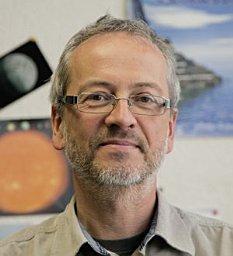 H. J. Deeg合作论文数Instituto de Astrof ´ isica de Canarias89
 Artie Hatzes合作论文数Thuringer Landessternwarte Tautenburg84
 William D Cochran合作论文数Department of Astronomy, College of Natural Sciences, University of Texas at Austin82
 J. Korth合作论文数Department of Space, Earth and Environment, Chalmers University of Technology82
 Malcolm Fridlund合作论文数Scientific Support Department81
 C. M. Persson合作论文数81
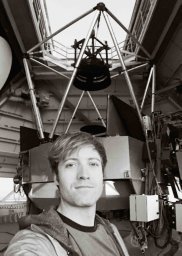 John H. Livingston合作论文数Astrobiology Center;hd17156b@gmail.com;National Astronomical Observatory of Japan;School of Physical Sciences, The Graduate University for Advanced Studies (SOKENDAI);School of Physical Sciences, The Graduate University for Advanced Studies (SOKENDAI)80
 Sascha Grziwa合作论文数76
 Eike W. Guenther合作论文数TLS - Thüringer Landessternwarte75
 O. Barragán合作论文数Dept Phys, Univ Oxford73
 J. Cabrera合作论文数Institute of Planetary Research;German Aerospace Center;Institute of Planetary Research, German Aerospace Center72
 Teruyuki Hirano合作论文数Department of Stroke and Cerebrovascular Medicine, Kyorin University;Stroke Center, Kyorin University Hospital;School of Medicine, Kyorin University66D. Nespral合作论文数64
 Michael Endl合作论文数McDonald Observatory, The University of Texas at Austin;Department of Astronomy, College of Natural Sciences, The University of Texas at Austin64
 Gabriel Nowak合作论文数High Pressure Research Institute, Polish Academy of Sciences60Norio Narita合作论文数56
 Heike Rauer合作论文数56
 Ignasi Ribas合作论文数Instituto de Estudios Espaciales de Cataluna, Institute of Space Studies of Catalonia, Consejo Superior de Investigaciones Cientificas, Universitat de Barcelona50A Erikson合作论文数49Seth Redfield合作论文数49
 Sz. Csizmadia合作论文数48A. M. S. Smith合作论文数47Emil Knudstrup合作论文数42A. B. Justesen合作论文数42
 Andrew W. Howard合作论文数The Division of Physics, Mathematics and Astronomy, California Institute of Technology41
 Ignas Snellen合作论文数Leiden University41
 Philipp Eigmüller合作论文数Institute for Planetary Research, Department for Exoplanets and Atmospheres, Deutsches Zentrum für Luft und Raumfahrt;German Aerospace Centre, Deutsches Zentrum für Luft und Raumfahrt40
 Howard Isaacson合作论文数Department of Astronomy, University of California, Berkeley;Institute for Astronomy, University of Hawaiʻi at Mānoa37N. Narita合作论文数36A. Fukui合作论文数35D. Hidalgo合作论文数ULL, fis35
 F. Murgas合作论文数Instituto de Astrofísica de Canarias (IAC),;Departamento de Astrofísica, Universidad de La Laguna (ULL);Instituto de Astrofísica de Canarias (IAC),, Universidad de La Laguna (ULL)34
 David Latham合作论文数Department of Astronomy, Faculty of Arts and Sciences, Harvard University;Harvard-Smithsonian Center for Astrophysics;Smithsonian Astrophysical Observatory34R. Alonso合作论文数34
 M. Patzold合作论文数34G. Nowak合作论文数31J. Prieto-Arranz合作论文数30
 Mikkel Nørup Lund合作论文数Department of Physics and Astronomy, Aarhus University;School of Physics and Astronomy, University of Birmingham29R. Luque合作论文数28Szilard Csizmadia合作论文数28
 Prajwal Niraula合作论文数Dept Earth Atmospher & Planetary Sci, MIT27
 Petr Kabath合作论文数27
 Sara Seager合作论文数Department of Physics, Massachusetts Institute of Technology;Department of Aeronautics and Astronautics, Massachusetts Institute of Technology;Department of Planetary Science, Massachusetts Institute of Technology25
 Jon Jenkins合作论文数Ames Reseach Center, National Aeronautics and Space Administration25




