Background: Over 35 years ago, the Brundtland Report entitled Our Common Future shed light on the impacts of human behavior on the environment and raised global awareness about sustainability. Since then, sustainability has become a prominent issue influencing most spheres of life including outdoor education (OE). Purpose: This inquiry seeks to identify the necessary conditions for justifying OE travel to far-away places. Methodology: We investigated this question using practitioner inquiry and thematic analysis. Findings: The authors believe some far-away journeys can be justified and recommend that these journeys are guided by featuring learning objectives that are best learned in specific far-away places; maintaining strong connections to the students’ everyday lives; including high levels of student involvement in sustainability-related decisions; and through providing novel and unexpected experiences that are unlikely to occur locally. Finally, we believe there is a case to be made for longer rather than shorter journeys. Implications: We caution against developing a binary which pits local OE against journeys to far-away places. Rather, both local and far-away journeys have an important role to play in OE programs that aim to build a world that is more socially and environmentally just.
This paper presents key findings from a study that aimed to critically examine the practice of outdoor education in the Republic of Ireland. It consisted of 10 months of fieldwork across four public Outdoor Education and Training Centres (OETCs). Data were generated through participant observation, informal conversation, as well as centre websites. Findings from the thematic analysis are presented in the form of a creative non-fiction story—principally to protect the identities and centres involved. The findings were then interpreted through the theoretical lens of McDonaldization. Considering the dearth of outdoor education research in Ireland, McDonaldization provided a lens through which it was possible to more deeply understand how rationalisation has affected Irish public outdoor education practices. The discussion explores practices inconsistent with the stated Irish definitions of public outdoor education and the paper concludes with suggestions as to how the McDonaldization of outdoor education may be countered.
Interactions between students and nature and students and their peers are central to learning processes in outdoor studies programs. This paper draws on symbolic interactionist social theory to interpret participants’ experiences of smartphone usage and its impact on human–nature and human–human interactions. The findings are derived from a collective case study using semi-structured interviews with educators and focus group interviews with students enrolled in outdoor studies programs in Norway. Two primary themes were identified through reflexive thematic analysis: perceptions of nature and attentiveness to peers. Each of these themes illustrates the fluctuating presence and (dis) connectedness of students and the implications of this for learning out-of-doors. On the one hand, the findings suggest that the use of smartphones reduces students’ sensory perception of nature and their attentiveness to interactions with their peers. On the other hand, smartphones and their access to online networks can contribute to the continuity of learning experiences between indoor and outdoor learning, as well as beyond the formal learning environment. Taken together, this inquiry offers new insights into the challenges of tertiary level teaching and learning outdoors in spaces that are mediated (at times) by interactions with smartphones and associated media infrastructures.
This paper draws on a webinar on digital technology and networked spaces in outdoor education, where three researchers presented their work through responses to two discussion statements: First, ‘the use of digital technology in outdoor education is fundamentally contrary to all its values.’ Second, ‘if we accept that digital technology is embedded in outdoor education, what do we know about its potential? And what are key areas to explore more deeply?.’ Despite there being no advance planning to produce a research output from the webinar, the organisers’ basic analysis of the webinar’s frontchannel and backchannel revealed areas of the conversation that may merit targeted empirical attention. Three principal themes emerged from participants' responses during the webinar: the need to move beyond binary thinking; the importance of considering digital technology in regard to specific learning objectives and contexts; and to inform oneself about the affordances of digital technology, while thinking critically about its applications.
Very little empirical research has been conducted on Irish outdoor education practice(s). This inquiry aims to critically explore outdoor education practices in public Outdoor Education and Training Centres in the Republic of Ireland. First, an overview of the development of Irish outdoor education from the mid-twentieth century onwards is provided to locate the study within its unique cultural and historical background. Data were generated through document analysis, participant observation, and informal conversation with practitioners and management through multiple field visits. Creative non-fiction was used as a method to organise and present the data in a coherent and anonymised manner. Thematic analysis revealed three principal findings: a lack of engagement with theory, programming by logistics, and ideological dissonance. How these findings affect practice are discussed in terms of a place-based focus to practice as well as a need for more direction for practice to be informed by research and theory.
Virtual environments as spaces for leisure are rapidly emerging within the zeitgeist of 21st century leisure practices. One such environment is the Zwift cycling and running app which provides a series of virtual worlds where cyclists and runners can train, race, and socialise with a global community from their own home. As four authors, we are all in some way curious or engaged with Zwift as a platform for our own leisure. We therefore developed a 'community of inquiry' to provide an initial foray into Zwift as a virtual leisure space. We each produced a section of the paper which focused respectively on assemblage theory, micro-sociology, gender, and morality. Through critique and the spirit of collegiality, these texts were refined and are presented in the paper as separate yet interlinked narratives. Our community of inquiry then reconvened to consider the mechanics of game design and to present Zwift as exhibiting the components of an interreality. The paper concludes with implications for further research which includes considering Zwift as a third space and as a panopticon.
 Peter Higgins合作论文数Moray House School of Education and Sport, The University of Edinburgh19
 Robbie Nicol合作论文数Moray House School of Education and Sport, The University of Edinburgh17
 Heidi Smith合作论文数House Sch Educ, Univ Edinburgh13
 Matthew Atencio合作论文数Dept Kinesiol, Calif State Univ East Bay13
 Morten Asfeldt合作论文数Dept Social Sci, Univ Alberta5
 Beth Christie合作论文数Moray House School of Education and Sport, The University of Edinburgh5
 Pete Allison合作论文数5
 Elizabeth C. J. Pike合作论文数4Mike Brown合作论文数4
 Søren Andkjær合作论文数4Hamish Ross合作论文数4
 Takako Takano合作论文数3Chris North合作论文数3
 Jack Reed合作论文数Moray House Sch Educ & Sport, Univ Edinburgh3
 Denise Mitten合作论文数Prescott Coll, Fac Sustainable Educ, Prescott, AZ USA3
 John Telford合作论文数Outdoor & Environm Educ, Univ Edinburgh3
 Alistair Stewart合作论文数3
 Peter Varley合作论文数3
 Sue Waite合作论文数University of Plymouth3
 Roger A. Scrutton合作论文数3Pete Higgins合作论文数2
 Alessandro Bortolotti合作论文数2
 Sandy Allen-Craig合作论文数2Dorothy Foley合作论文数2johannes felter合作论文数2John Pierce合作论文数2Scott Polley合作论文数Univ South Australia2Imre van Kraalingen合作论文数2Susanna Ho合作论文数2
 Mark F Leather合作论文数Plymouth Marjon University2Marcus Morse合作论文数La Trobe Univ2
 Glyn Thomas合作论文数The University of the Sunshine Coast2Sarah MacQuarrie合作论文数Manchester Institute of Education, School of Environment, Education and Development, Faculty of Humanities, The University of Manchester2
 Linda Allin合作论文数2Janet E. Dyment合作论文数Faculty of Education, University of Tasmania2Marg Cosgriff合作论文数2Rowena Passy合作论文数2
 James Neill合作论文数University of New Hampshire2
 Tonia Gray合作论文数Western, Sydney University2
 Barbara Jean Humberstone合作论文数School of Sport, Leisure and Travel, Buckinghamshire New University2
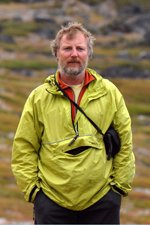 Tim Stott合作论文数School of Education and Community Studies, Liverpool John Moores University2
 John Quay合作论文数University of Melbourne2
 Susan Houge Mackenzie合作论文数1Dave Hills合作论文数1Robyn Zink合作论文数1Bacon Chan合作论文数1Kaye Richards合作论文数1cathryn carpenter合作论文数1Joe Gibson合作论文数1




