Sea ice plays a critical role in regulating Earth’s climate and marine productivity. Reconstruction of sea ice and productivity is generally achieved using biotic or geochemical proxies, although methods targeting the late-season sea-ice minimum and associated productivity remain elusive. Here, we identified extreme sedimentary enhancements of two diatom biomarker lipids (HBI III, HBI IV) in a high-resolution core from the northern Barents Sea at a time during the mid to late 19th century when the summer sea-ice minimum was located directly over the core site. We attribute this enhancement to a late-summer ice-edge diatom bloom, an interpretation supported by other biomarker, geochemical and ocean temperature data. Such blooms were likely dominated by diatoms (Rhizosolenia spp.), which can access nutrients below the nutricline via vertical migration. Our findings provide insights into the role of sea ice on marine productivity and a potential means of identifying the sea-ice minimum in palaeo records. Intense diatom blooms indicate late-season sea-ice edges in sedimentary records, according to biomarker analysis of a high-resolution core from the northern Barents Sea.
Sea surface temperature is a key indicator of climate change on Earth and is central to all related modelling endeavours. However, sea surface temperature is notoriously difficult to reconstruct accurately in the geological record, especially for the low temperatures of the polar regions, which occupy one-third of the world’s oceans. Here we show that a sea surface temperature proxy based on two isomeric diatom lipid biomarkers can be applied to marine sediment archives to reconstruct temperatures in the range −1 to 14 °C for the Arctic and Antarctic using a single calibration. For both regions, our datasets span timeframes from recent decades to the Younger Dryas/Holocene, and we also showcase a 750 kyr record from the Fram Strait, the major gateway between the North Atlantic and the Arctic Ocean. We anticipate that this lipid biomarker-based proxy may become a standard component of the palaeoclimate toolkit, especially for the polar regions. A biomarker sea surface temperature proxy based on two isomeric diatom lipids can reconstruct a range of sea surface temperatures for both the Arctic and Antarctic Oceans, according to analyses of sea surface temperature reconstructions across polar seas
Abstract. The Arctic Ocean rapidly transitions towards ice-free summers, a "blue" (i.e., summer sea ice-free) state driven by Arctic amplification of abrupt global warming. To improve climate projections and better understand the consequences of reduced Arctic sea ice in a warming climate, it is essential to examine past warm intervals such as the Early Pliocene (~5–4 Ma), when diminished Arctic sea ice coincided with higher global temperatures. Proxy records from the Arctic-Atlantic Gateway (AAG) (~70–80° N), combined with climate model simulations, indicate periodically ice-free summers during this time. Yet, model-data comparisons for the central Arctic Ocean (>80° N) reveal winter sea ice as a persistent feature. Here, we show that proxy evidence for a "blue" Arctic is best reproduced when enhanced vertical ocean mixing is integrated into climate models. Under enhanced mixing, Arctic warming occurs through different mechanisms depending on the model geography, whereas simulations with standard mixing show substantially weaker agreement with proxy evidence. We do not interpret enhanced mixing as the unique solution but rather as a physically motivated sensitivity test that represents unresolved ocean processes. Our results demonstrate that modifying a single ocean parameterization within physically plausible boundaries substantially improves proxy-model agreement for a warmer than modern Early Pliocene, both at the AAG and for the wider Arctic. Combined with published proxy evidence for a warmer Arctic Ocean interior, our findings underscore the need for improved representation of ocean dynamics in paleoclimate simulations. Next-generation climate models should evaluate the sensitivity of simulated "blue" Arctic climates to ocean mixing alongside other key processes, including cloud microphysics and radiative feedbacks, to increase confidence in projections of seasonally ice-free Arctic conditions
A recently proposed sea surface temperature proxy, EZ(25), based on the distributions of two tri-unsaturated highly branched isoprenoid (HBI) alkene biomarkers, has been suggested to be suitable for determining ocean temperatures for the polar regions when measured in marine sediment archives. To assess the viability of EZ(25) as a SST proxy further, we measured it in >1000 surface sediments from the polar regions using a combination of previously reported or newly measured HBI data, and compared the corresponding SST data with overlying mean surface ocean temperatures derived from satellite records. Overall, we find that EZ(25)- and satellite-derived SSTs do not exhibit a clear relationship, and the majority of the proxy values exhibit a warm bias; that is, they are warmer than the standard error for the EZ(25) SST proxy (i.e., 2.8 degrees C) derived from a previous water column calibration. This finding contradicts that found from previously published paleo SST reconstructions from both the Arctic and the Antarctic, which exhibited good agreement with other temperature and related proxy records over decadal, centennial and sub-orbital timeframes. We discuss several possible reasons for the warm bias in many of the surface sediment data including the appropriateness of surface sediments for calibration purposes, non-thermal factors, seasonal or depth bias, HBI degradation, and accuracy in identifying and quantifying HBIs. However, a definitive explanation is not possible at this point and all factors are in need of further investigation. Finally, we provide suggestions for further testing of EZ(25) for past SST reconstruction purposes.
The Ross Ice Shelf, Antarctica's largest by area, may face increased instability under future warming, threatening the Antarctic Ice Sheet. Understanding its past response to climate change is critical for anticipating future sea-level rise. We present a multi-proxy reconstruction of ocean and cryosphere conditions in the Ross Sea over the past 40,000 years. Our data show that warm Circumpolar Deep Water reached the JOIDES Trough in the western Ross Sea shortly after the Last Glacial Maximum, coinciding with the retreat of an ancestral ice shelf. This oceanic warming aligns with a southward shift of both the westerly and easterly wind belts, indicating a large-scale atmospheric mechanism driving regional ocean changes. The timing and nature of these processes reveal the tight coupling between atmospheric circulation, ocean heat transport, and ice shelf dynamics. These interactions led to reduced ice shelf extent, highlighting the role of ocean-atmosphere coupling in the Pacific sector of the Southern Ocean during deglaciation.
Seasonal vertical migration of large lipid-rich copepods is often described as a mass descent of animals when primary production ceases, with important implications for mesopelagic food webs and global carbon sequestration. This view ignores the existence of surface-resident individuals, but here we show that non-migrants can form a substantial part of the populations of polar migrant species. In the Central Arctic Ocean, the biomass-dominant Calanus hyperboreus was evenly distributed throughout the water column from November 2019 to March 2020, with ~20% of subadults and adult females remaining in the upper 200 m and ~41% migrating to 1000-2000 m. These vertical positions aligned with differences in the copepods' cholesterol content, which can enhance the tissue density at higher temperatures. Gonad development and the vertical distribution of their offspring indicate that both non-migrant and migrant females contribute to the population recruitment. We reinterpret copepod seasonal migration as a bet-hedging strategy that balances nutritional benefits near the surface with survival benefits at depth, and thereby contributes to the species' resilience under climatic change.
Two tri-unsaturated and isomeric (E/Z) highly branched isoprenoid (HBI) diatom lipid biomarkers were quantified in 228 water column samples collected from the English Channel, West Svalbard (Arctic), the Scotia Sea (Southern Ocean) and East Antarctica. We found that the relative amounts of the two HBIs correlate well with water temperatures taken at the time of sampling. Based on these findings and some other HBI data reported previously, we suggest that the proportion of the HBI E-isomer (termed EZ(25)) may serve as a new proxy for palaeo sea surface temperatures, including in the polar regions. Next steps will involve determination of EZ(25) in surface and downcore sediments to ascertain whether the temperature response described herein translates well to the geological record.
The Arctic cryosphere is the epicentre of acute global change impact, with abrupt warming and amplification driving rapid sea ice decline and irreversible glacial ice loss. A key challenge is understanding how the cryosphere meltdown will impact Arctic marine carbon cycles and ecosystems. Here, we use organic geochemical biomarkers to trace the contribution of different planktonic groups to organic carbon in Arctic fjord sediments (Kongsfjorden, Svalbard) during past warmer and colder (than present) climate states. We show that phytoplankton community structures changed abruptly with variable sea ice cover and glacial ice loss. Our results imply that future deglaciation of Svalbard fjords will likely increase primary productivity in a "blue" (summer ice-free) scenario; however, the potential for fjords to serve as hotspots of marine organic carbon burial will likely be constrained due to warmer, stratified waters and reduced meltwater-induced supply of critical nutrients.
Biological productivity, shaped by climate and environmental factors, is critical to climate feedback mechanisms and the global carbon cycle. This study investigates the measurement of six phytosterols (β‐sitosterol, stigmasterol, campesterol, dinosterol, epi‐brassicasterol, and 24‐methylene cholesterol) from core MD01‐2414 in the central Okhotsk Sea, covering the past 1.5 million years (Ma). These sterols serve as proxies for terrestrial and marine productivity in the central Okhotsk Sea and northeast Siberia. Sterol concentrations reflect global glacial/interglacial cycles between 1.2 and 0.6 Ma, with higher and lower values during interglacial and glacials intervals, respectively. X‐ray fluorescence (Ba/Ti) and total organic carbon/total nitrogen (TOC/TN) ratios indicate shifts in marine and terrestrial sources, confirming biological productivity as a key driver of sterol deposition. Sterol fluxes, combined with sea surface temperature records from the northwest Pacific and sea ice proxies from the Bering Sea, reveal an extreme cold interglacial (Marine Isotope Stage, MIS 23) and prolonged glacial conditions during MIS 22, which stressed both terrestrial and marine ecosystems. Increased sea ice expansion during this period likely fostered North Pacific Intermediate Water formation, reducing upwelling and CO 2 exchange between bottom waters and the atmosphere. Integration of sterol data with regional records, including pollen, temperature, and sedimentary facies from Lake El'gygytgyn, highlights a warming event at the onset of MIS 32, peaking in late MIS 32. This warming precedes the “super‐interglacial” MIS 31 and coincides with maxima in boreal and austral summer insolation, underscoring its significance in regional climate evolution.
The past occurrence of an extreme ~1-kilometer-thick Arctic Ocean-Nordic Seas ice shelf has been inferred from submarine landscape features and geochemical records, although fundamental aspects of its characteristics, impacts, and timing remain highly debated. Here, we challenge this pan-Arctic glaciation hypothesis by investigating two sites from the Arctic-Atlantic gateway (AAG) and the Nordic Seas. Suborbital to millennial-scale surface water bioproductivity changes provide no evidence for a continuous ice shelf in the AAG and the Nordic Seas over the past ~750,000 years. Instead, proxy data and model simulations reveal the persistent presence of seasonal sea ice cover and open water phytoplankton blooms during both glacial and interglacial times. If the AAG and Nordic Seas were ever covered by an ice shelf during these times, then it must have been a partial, or at best, a very short-lived glacial phenomenon.
The variability of Arctic sea-ice during abrupt stadial-interstadial shifts in the last glacial period remain poorly understood. Here, we investigated the millennial-scale relationship, with a focus on Heinrich Stadials (HS), between sea-ice cover and bottom water temperature (BWT) during Marine Isotope Stages (MIS) 3 and 2 (64–13 ka) in the Fram Strait using new molecular sea ice biomarker data and published benthic foraminiferal BWT records. Widespread spring sea-ice cover (SpSIC) dominated the studied interval, especially in mid-late MIS 3 (45–29 ka). Yet, warm interstadials were characterized by relatively more open-ocean conditions compared to cold stadials. At the transition between a HS and the subsequent interstadial, sea ice was tightly linked to BWT with rapid reductions in SpSIC coinciding with lower BWT at the end of HS. The relative timing of the events, especially during HS 1, points to ocean warming as the key controlling factor for sea ice reduction at millennial timescales.
The Barents Sea is a hotspot for environmental change due to global warming. These changes impact the structure and functioning of the marine ecosystem year-round, and it is therefore important to gain knowledge on trophic relationships and the energy flow from primary producers, i.e., ice algae (sympagic algae) and phytoplankton (pelagic algae) to consumers over the entire seasonal cycle. By using different lipid components as trophic markers, we provide seasonal coverage of the carbon and food-source composition of five of the most abundant and ecologically important zooplankton taxa inhabiting the Barents Sea: copepods, krill, amphipods, pteropods and chaetognaths. Based on the composition of algal-produced fatty acid (FA) markers, carbon-source composition of the zooplankton species reflected changes in the production and availability of food resources during different periods of the year. For example, relative proportions of the dinoflagellate/Phaeocystis FA marker 18:4(n-3) peaked during summer in Calanus copepods, the amphipod Themisto abyssorum and the chaetognath Pseudosagitta maxima, when the production of this FA reached maximum concentrations in phytoplankton. The composition of carnivory FAs (relative contribution of copepod-associated FAs, ratio 18:1(n-9)/18:1(n-7)) and the ratio of zoo- to phytosterols indicated that most grazers relied more on heterotrophic prey during polar night and spring while switching to a more algae-based diet during the summer. Based on source-specific highly branched isoprenoids (HBIs), sympagic carbon had generally a minor contribution to the nutrition of the zooplankton community, particularly during winter and spring when sympagic HBIs were virtually undetected in the animals. In contrast, sympagic HBI metabolites were detected in krill, amphipods and the pteropod Clione limacina during summer and autumn. The krill Meganyctiphanes norvegica was unique in terms of its HBI composition as the only species containing both sympagic and pelagic HBIs during spring. Our results indicate that the Barents Sea zooplankton community is largely based on pelagic carbon, while sympagic carbon is only supplementing species-specific diets, mostly during the second half of the year. This relatively low trophic dependency on sea-ice algae might be an indication of the resilience of this food web towards ongoing sea-ice decline that causes changes to the timing and availability of sympagic and pelagic carbon and food sources.
Microalgae are the main source of the omega-3 fatty acids eicosapentaenoic acid (EPA) and docosahexaenoic acid (DHA), essential for the healthy development of most marine and terrestrial fauna including humans. Inverse correlations of algal EPA and DHA proportions (% of total fatty acids) with temperature have led to suggestions of a warming-induced decline in the global production of these biomolecules and an enhanced importance of high latitude organisms for their provision. The cold Arctic Ocean is a potential hotspot of EPA and DHA production, but consequences of global warming are unknown. Here, we combine a full-seasonal EPA and DHA dataset from the Central Arctic Ocean (CAO), with results from 13 previous field studies and 32 cultured algal strains to examine five potential climate change effects; ice algae loss, community shifts, increase in light, nutrients, and temperature. The algal EPA and DHA proportions were lower in the ice-covered CAO than in warmer peripheral shelf seas, which indicates that the paradigm of an inverse correlation of EPA and DHA proportions with temperature may not hold in the Arctic. We found no systematic differences in the summed EPA and DHA proportions of sea ice versus pelagic algae, and in diatoms versus non-diatoms. Overall, the algal EPA and DHA proportions varied up to four-fold seasonally and 10-fold regionally, pointing to strong light and nutrient limitations in the CAO. Where these limitations ease in a warming Arctic, EPA and DHA proportions are likely to increase alongside increasing primary production, with nutritional benefits for a non-ice-associated food web.
RationaleThe efficiency of selected ion monitoring (SIM) and selected reaction monitoring (SRM) analyses for the quantification of three mono‐, di‐ and tri‐unsaturated highly branched isoprenoid (HBI) alkenes (IP25, IPSO25 and HBI III, respectively), often used as proxies for the occurrence of Arctic and Antarctic sea ice or the adjacent open waters, was compared.MethodsGas chromatography (GC)–mass spectrometry (MS)/SIM and GC/MS/MS/SRM analyses were carried out on dilute solutions made from purified standards of these three HBIs, and then on hydrocarbon fractions of several sediment and sea ice sample extracts. More efficient and specific SRM transitions were selected after collision‐induced dissociation of each precursor ion at different collision energies.ResultsSRM analysis avoided any overestimation of IP25 resulting from the contribution of the coeluting 13C mass isotopomer of IPSO25 (M+˙ + 2) to the SIM target ion. In contrast, SRM analysis is less reliable for IPSO25 quantification in cases where several regio‐isomers are present, likely due to intense double bond migrations following electron impact. In the case of HBI III, SRM analysis constitutes a potentially suitable alternative to SIM analysis, especially in terms of improving limit of detection.ConclusionsDespite the intense migrations of HBI double bonds under electron ionization, the selected SRM transitions should be more suitable than SIM target ions for IP25 and HBI III quantification in complex hydrocarbon fractions of natural samples. However, the advantage is less evident for IPSO25 due to the presence of numerous regio‐isomers.
AbstractReliable high‐resolution, pre‐observational‐period sea‐ice datasets are rare but critical for contextualizing recent sea‐ice declines and future scenarios. We combine sedimentary ancient DNA of the sea‐ice dinoflagellate Polarella glacialis (Pgla‐sedaDNA) with selected highly branched isoprenoid (HBI) biomarkers alongside other indicators to reconstruct sub‐decadal sea‐ice changes in a marine archive from the Antarctic Peninsula that extends to ~ 1900 CE. Pre‐1940 CE, the continuously present sea‐ice biomarker IPSO25 yet absent Pgla‐sedaDNA, along with low open‐water biomarkers and total organic carbon (TOC), imply more prominent seasonal sea ice and lower productivity under cooler climate. Post‐1940 CE, rising Pgla‐sedaDNA and open‐water HBIs under climate warming reflect young ice with a retreating sea‐ice edge. Over the last two decades, lower Pgla‐sedaDNA, higher open‐water HBIs and TOC infer known warming, sea‐ice reduction, and increased productivity. Our multiproxy‐based palaeo‐histories agree well with observational data, highlighting the potential of this combination of proxies for nuanced and long‐term sea‐ice reconstructions.
The Bølling-Allerød interstadial (14,700–12,900 years before present), during the last deglaciation, was characterized by rapid warming and sea level rise. Yet, the response of the Arctic terrestrial cryosphere during this abrupt climate change remains thus far elusive. Here we present a multi-proxy analysis of a sediment record from the northern Svalbard continental margin, an area strongly influenced by sea ice export from the Arctic, to elucidate sea level - permafrost erosion connections. We show that permafrost-derived material rich in biospheric carbon became the dominant source of sediments at the onset of the Bølling-Allerød, despite the lack of direct connections with permafrost deposits. Our results suggest that the abrupt temperature and sea level rise triggered massive erosion of coastal ice-rich Yedoma permafrost, possibly from Siberian and Alaskan coasts, followed by long-range sea ice transport towards the Fram Strait and the Arctic Ocean gateway. Overall, we show how coastal permafrost is susceptible to large-scale remobilization in a scenario of rapid climate variability.
While climate model simulations provide valuable insight into potential future Arctic sea-ice scenarios, marine geological archives offer key information on how sea ice responded to substantial climatic warming in the past, particularly during periods characterized by warmer-than-present conditions. The HTM (Holocene Thermal Maximum), ~10.0-6.0 cal ka BP, was expressed in warmer air and ocean temperatures across the globe. Although a result of orbitally-forced summer insolation, the HTM constitutes a valuable parallel to the greenhouse-gas-driven setting of a current (and near-future) warmer world. At higher latitudes in the Northern hemisphere, the HTM has been proposed as an interval of reduced sea ice and increased Atlantic water inflow, similar to a projected future warmer Arctic Ocean. Two sediment archives elucidate the early Holocene HTM evolution of high Arctic seasonal sea ice in the northern Barents Sea (>80°N), a key area for Atlantic-Arctic Ocean water interaction in a hotspot of current climate warming. HBI (highly-branched) biomarkers (IP25, IPSO25, HBI III, HBI IV) unequivocally demonstrate the persistence of spring seasonal sea-ice as high as 55% between 11.7 and 9.1 cal ka BP. Concomitant high δ18O in benthic foraminifera and elevated phytoplankton biomarker (HBI III, HBI IV) concentrations indicate the influence of warm Atlantic-derived bottom water and peak bioproductivity, respectively. Our results highlight the nuanced and complex cryospheric response to climate warming, showing High Arctic sea ice persisting in a setting of warmer-than-present spring and summer conditions under a concomitant increased inflow of subsurface Atlantic Water. This raises important questions about the fate of Arctic sea ice, oceanography, and ecosystems (including commercially important fisheries) in an increasingly warmer climate driven by anthropogenic factors.
Microalgae growing within and attached to the bottom of Arctic sea ice (sympagic algae) can serve as a nutritious food resource for animals inhabiting the sea-ice water interface (under-ice fauna), particularly during the bottom ice-algal bloom in spring. As a consequence, under-ice fauna is likely impacted by sea-ice decline and changes in ice-algal primary production. To investigate this, samples of pelagic (=PPOM) and ice-associated particulate organic matter (=IPOM) and the ice-associated amphipods Apherusa glacialis and Eusirus holmii, and polar cod (Boreogadus saida), collected below ridged sea ice at two locations with pronounced differences in productivity in the northern Barents Sea during May 2021, were assessed for their trophic marker content. Specifically, we investigated the composition of diatom- and dinoflagellate-produced fatty acids (FAs), pelagic and sympagic highly branched isoprenoid (HBI) lipids as well as sterols to determine the animals’ dietary preferences and trophic association to the sea-ice habitat during spring. Relative proportions of FAs differed strongly between PPOM and IPOM, indicating differences in species composition and degradation state between pelagic and sympagic habitats, respectively. FA signatures and sterol content of the consumers largely resembled known diet compositions with a strong reliance on diatom-derived carbon in A. glacialis, a higher degree of carnivory in E. holmii and evidence of Calanus-feeding in polar cod. Sympagic HBIs were detected at either low concentrations or not at all, in both producers and consumers, likely as a result of the very low abundance of their source diatoms. Pronounced trophic marker variability in A. glacialis collected at the highly productive shelf slope station versus the less productive central Arctic Basin station suggests a surprisingly high flexibility in carbon-source composition with a stronger reliance on pelagic food when available versus a higher importance of ice algal carbon when pelagic production is low. Nevertheless and despite the general lack (below detection limit) of sympagic HBIs in our dataset, high ice-algal biomass and elevated proportions of polyunsaturated FAs in IPOM compared to other seasons indicate that ice algae constitute a valuable nutritional carbon source as alternative to pelagic carbon during spring.
Here we present preliminary results from the Joides Basin, one of the depressions placed on the continental shelf adjacent to the Ross Ice Shelf (RIS) edge during the Last Glacial Maximum (LGM). We studied a south west – north east transect composed of four gravity cores and one piston core collected along the axis of the Joides Basin in order to reconstruct the past-LGM glacial sedimentary facies and provide new stratigraphic information. A suite of organic biomarkers were used to reconstruct sea-ice conditions and retreat of the RIS during the last termination. The last glacial termination has been broadly targeted as a potential analogue to current/future global warming, and many studies on this timeframe have been conducted in the RIS, which, with its buttressing effect on continental ice, and its connection to the surrounding marine environment, represents a key element in bridging atmosphere and ocean. The RIS balance and behavior, during rapid climate change, however, is still poorly understood. Many questions are still open regarding the RIS retreat and warming effects on both the atmosphere and ocean, and concerns remain about the reliability of the chronology of marine sediments recovered from this region. Based on radiocarbon dates of bulk organic carbon and foraminifera, our proposed age model provides new results on the paleo-environmental changes in the Joides Basin as the system moved from an ice-sheet dominated environment to a distal ice-sheet-system. Our preliminary results provide new information to better improve our understanding of the RIS modalities of retreat and the related effects to the surrounding marine and glacio-marine environment during the last deglaciation and Holocene.
 Lukas Smik合作论文数Sch Geog Earth & Environm Sci, Univ Plymouth61
 Patricia Cabedo-Sanz合作论文数University of Plymouth, University of Plymouth41
 Steven Rowland合作论文数Faculty of Science and Engineering, Plymouth University38
 Thomas a Brown合作论文数35
 Katrine Husum合作论文数Department of Geology, University of Tromsø27
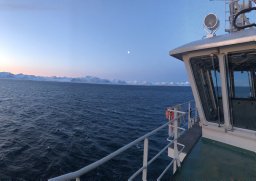 Jochen Knies合作论文数Alfred Wegener Institute for Polar and Marine Research24
 John T. Andrews合作论文数Institute of Arctic and Alpine Research, University of Colorado Boulder20Guillaume Massé合作论文数19Jean-François Rontani合作论文数16J.-M. Robert合作论文数15
 Denizcan Köseoğlu合作论文数Biogeochemistry Research Centre, School of Geography, Earth and Environmental Sciences, Plymouth University, Plymouth PL4 8AA, UK13W.Guy Allard合作论文数12
 Peter C. Ford合作论文数Department of Chemistry & Biochemistry, College of Letters and Science, University of California Santa Barbara11Lindsay L. Vare合作论文数11
 Robin Perutz合作论文数Department of Chemistry, University of York10
 Frederic Vaultier合作论文数9
 Remi Amiraux合作论文数8
 Áslaug Geirsdóttir合作论文数Department of Earth Sciences, School of Engineering and Natural Sciences, Faculty of Earth Sciences, University of Iceland8
 Anne Jennings合作论文数Institute of Arctic and Alpine Research, University of Colorado Boulder8
 Lucilla Capotondi合作论文数Istituto di Scienze Marine, CNR8Christopher J Mundy合作论文数8
 Jacques Giraudeau合作论文数University of Bordeaux8
 Katrin Schmidt合作论文数7
 Francesco Muschitiello合作论文数Department of Geography, University of Cambridge7
 Alba Navarro-Rodriguez合作论文数7E. Hywel Evans合作论文数7
 Philipp Assmy合作论文数Department of Ecotoxicology, Norwegian Polar Institute;Fram Centre, Norwegian Polar Institute7
 Riko Noormets合作论文数University of Cambridge Scott Polar Research Institute7
 Robert Clough合作论文数7Tim Catterick合作论文数7Jean François Rontani合作论文数Centre d'Oceanologie de MarseilleMarseille, Aix-Marseille Universite7Ben Fairman合作论文数7
 Tommaso Tesi合作论文数Istituto di Scienze Marine, CNR7Dw Ryba合作论文数6Alessio Nogarotto合作论文数6
 Jong-Ku Gal合作论文数Division of Ocean Sciences, Korea Polar Research Institute6
 Angus Atkinson合作论文数Plymouth Marine Laboratory6
 Pearce Christof合作论文数Centre for Past Climate Studies, Aarhus University6Ruediger Stein合作论文数Faculty of Geosciences, Universitat Bremen6
 Anne de Vernal合作论文数Département des Sciences de La Terre et de l'atmosphère, Université du Québec à Montréal6Michel Gosselin合作论文数Institut des sciences de la mer (ISMER),, Université du Québec à Rimouski6Lesley Johns合作论文数6
 Guillaume St-Onge合作论文数6
 Marie-Alexandrine Sicre合作论文数Centre National de la Recherche Scientifique, Laboratoire d’Océanographie et du Climat: Expérimentation et Approches Numériques6
 Martin Graeve合作论文数Alfred Wegener Institute for Polar and Marine Research Am Handelshafen6
 Christian Zeeden合作论文数5
 Doreen Kohlbach合作论文数Corresponding author.5
 Julie Lattaud合作论文数Biogeosci Grp, Swiss Fed Inst Technol Zurich ETHZ5




