Artificial intelligence is reshaping the organization and practice of research in ways that extend far beyond gains in productivity. AI systems now accelerate discovery, reorganize scholarly labour, and mediate access to expanding scientific literatures. At the same time, generative models capable of producing text, images, and data at scale introduce new epistemic and institutional vulnerabilities. They exacerbate challenges of reproducibility, blur lines of authorship and accountability, and place unprecedented pressure on peer review and editorial systems. These risks coincide with a deeper political-economic shift: the centre of gravity in AI research has moved decisively from universities to private laboratories with privileged access to data, compute, and engineering talent. As frontier models become increasingly proprietary and opaque, universities face growing difficulty interrogating, reproducing, or contesting the systems on which scientific inquiry increasingly depends. This article argues that these developments challenge research integrity and erode traditional bases of academic authority, understood as the institutional capacity to render knowledge credible, contestable, and independent of concentrated power. Rather than competing with corporate laboratories at the technological frontier, universities can sustain their legitimacy by strengthening roles that cannot be readily automated or commercialized: exercising judgement over research quality in an environment saturated with synthetic outputs; curating the provenance, transparency, and reproducibility of knowledge; and acting as ethical and epistemic counterweights to private interests. In an era of informational abundance, the future authority of universities lies less in maximizing discovery alone than in sustaining the institutional conditions under which knowledge can be trusted and publicly valued.
This essay examines the evolving concept of legal personality through the lens of recent developments in artificial intelligence and the possible emergence of superintelligence. Legal systems have long been open to extending personhood to non-human entities, most prominently corporations, for instrumental or inherent reasons. Instrumental rationales emphasize accountability and administrative efficiency, whereas inherent ones appeal to moral worth and autonomy. Neither is yet sufficient to justify conferring personhood on AI. Nevertheless, the acceleration of technological autonomy may lead us to reconsider how law conceptualizes agency and responsibility. Drawing on comparative jurisprudence, corporate theory, and the emerging literature on AI governance, the paper argues that existing frameworks can address short-term accountability gaps, but the eventual development of superintelligence may force a paradigmatic shift in our understanding of law itself. In such a speculative future, legal personality may depend less on the cognitive sophistication of machines than on humanity's ability to preserve our own moral and institutional sovereignty.
Abstract The words peacekeeping and peace operations do not appear in the UN Charter. Described by Secretary-General Dag Hammarskjöld as falling within Chapter VI and a half, peacekeeping was invented by the United Nations and has been in constant evolution. The first section of this chapter looks at how Chapters VI, VII, and VIII apply to peace operations. The following section examines peacekeeping doctrine as embodied in a series of landmark reports, the so-called “holy trinity” of principles: consent, impartiality, and the nonuse of force except in self-defense or defense of the mandate. After a brief section on peacebuilding policy, the chapter turns to five different types of operation: traditional peacekeeping, multidimensional peacekeeping, stabilization operations, international transitional administrations, and political missions. The main characteristics of each are described, with illustrative examples to show how the law, practice, and doctrine of peacekeeping have evolved.
Artificial intelligence is reshaping science, society, and power. Yet many debates over its likely impact remain fixated on extremes: utopian visions of universal benefit and dystopian fears of existential doom, or an arms race between the U.S. and China, or the Global North and Global South. What's missing is a serious conversation about distribution - who gains, who loses, and who decides. The global AI landscape is increasingly defined not just by geopolitical divides, but by the deepening imbalance between public governance and private control. As governments struggle to keep up, power is consolidating in the hands of a few tech firms whose influence now rivals that of states. If the twentieth century saw the rise of international institutions, the twenty-first may be witnessing their eclipse - replaced not by a new world order, but by a digital oligarchy. This essay explores what that shift means for international law, global equity, and the future of democratic oversight in an age of silicon sovereignty.
The rapid evolution of generative artificial intelligence (genAI) technologies such as ChatGPT, DeepSeek, Gemini, and Stable Diffusion offers transformative opportunities while also raising profound ethical, societal, and governance challenges. As these tools become increasingly integrated into digital and social infrastructures, it is vital to understand their potential impact on consumer behavior, trust, information consumption, and societal well-being. Understanding how individuals interact with AI-enhanced content is, in turn, necessary for developing operative regulatory policies to address the growing challenges of mis-, dis-, and mal-information (MDM) on digital platforms. In this study, we systematically analyze global regulatory and policy frameworks as well as AI-driven tools to address the growing risks of MDM on digital platforms and optimize the interplay between humans and genAI moderation. The study highlights the need to balance technological innovation with societal protection and freedom of expression by identifying evolving trends and critical gaps in global policy coherence. We examine how the proliferation of MDM—often accelerated by genAI—distorts the information landscape, induces cognitive biases, and undermines informed decision-making. Our study proposes an integrative strategy that combines technical detection methods with actionable policy recommendations to mitigate MDM risks, reinforce digital resilience, and foster trustworthy genAI governance. The study also explores the potential role of AI itself in combating MDM risks.
The United Nations Security Council is often criticized for being unrepresentative, paralysed by the veto and impotent in the face of major conflicts. Yet, beneath these familiar complaints lies a more profound dilemma: whether international society still believes in the desirability, let al.ne the possibility, of a global legal order anchored in the Security Council. This review essay situates contemporary reform debates against that larger question. It explores how proposals for modest procedural and working-method reforms collide with the political reality of entrenched permanent members; how expansion schemes risk draining attention from more feasible fixes; and how normative disagreements expose the fissure between Kelsenian faith in rules and Schmittian insistence on power. Alongside geopolitical tension, the Security Council must now contend with new existential threats – from climate change to artificial intelligence – that will test its mandate and legitimacy. The deeper problem, however, may not be the Security Council’s structure or procedures but, rather, the mismatch between the expectations placed upon it and what member states are prepared to deliver.
Many companies and a growing number of governments now have guides, frameworks, or principles claiming to govern their use of AI. Seven years ago, virtually none did. This article presents original research on documents produced by 193 countries and the top 100 companies by market capitalization. A key shift occurred in 2016 when the Cambridge Analytica scandal showed the potential harms of misused AI. The widespread use of large language models such as ChatGPT beginning in late 2022 is further increasing calls for governance of the AI space. Analyzing the evolving practice of releasing such documents and the language that they use offers important insights into how norms around AI are spreading and changing — and where they might go next.
Abstract This chapter examines the provisions of Art 98 of the UN Charter. It notes that Art 98 outlines what may be conceived as the administrative functions of the Secretary-General, most of which are highly political in nature. Additionally, the Secretary-General also represents the Organization and may enter into agreements that bind the UN. The general administrative and executive functions of the Secretary-General in supporting the principal organs include conducting meetings, managing communications, and monitoring the implementation of and coordinating work across the UN’s various organs. The chapter also explains that the Secretary-General presents an annual report to the General Assembly regarding the Organization’s activities.
The emergence of generative artificial intelligence (GenAI) has exacerbated the challenges of Misinformation, Disinformation, and Mal-information (MDM) within digital ecosystems. These multifaceted challenges demand a re-evaluation of the digital information lifecycle and a deep understanding of its social impact. An interdisciplinary strategy integrating insights from technology, social sciences, and policy analysis is crucial to address these issues effectively. This paper introduces a three-tiered framework to scrutinize the lifecycle of GenAI-driven content from creation to consumption, emphasizing the consumer perspective. We examine the dynamics of consumer behavior that drive interactions with MDM, pinpoints vulnerabilities in the information dissemination process, and advocates for adaptive, evidence-based policies. Our interdisciplinary methodology aims to bolster information integrity and fortify public trust, equipping digital societies to manage the complexities of GenAI and proactively address the evolving challenges of digital misinformation. We conclude by discussing how GenAI can be leveraged to combat MDM, thereby creating a reflective cycle of technological advancement and mitigation.
Abstract This chapter provides an overview of Art 99 of the UN Charter. It explains that even though the provision is rarely invoked explicitly, Art 99 most clearly articulates the political role that the Secretary-General is expected to play. Article 99 is the legal basis of all political activities carried out by the Secretary-General which are not assigned under Art 98. The chapter then examines the ancillary powers and direct exercise of the power contain in Art 99. The chapter also looks into the actions of several Secretaries-General exercised under the provision’s implicit authority and ancillary powers, including Trygve Lie and António Guterres.
The past decade has seen a proliferation of guides, frameworks, and principles put forward by states, industry, inter- and non-governmental organizations to address matters of AI ethics. These diverse efforts have led to a broad consensus on what norms might govern AI. Far less energy has gone into determining how these might be implemented — or if they are even necessary. This chapter focuses on the intersection of ethics and law, in particular discussing why regulation is necessary, when regulatory changes should be made, and how it might work in practice. Two specific areas for law reform address the weaponization and victimization of AI. Regulations aimed at general AI are particularly difficult in that they confront many ‘unknown unknowns’, but the threat of uncontrollable or uncontainable AI became more widely discussed with the spread of large language models such as ChatGPT in 2023. Additionally, however, there will be a need to prohibit some conduct in which increasingly lifelike machines are the victims — comparable, perhaps, to animal cruelty laws.
Two critical policy questions will determine the impact of generative artificial intelligence (AI) on the knowledge economy and the creative sector. The first concerns how we think about the training of such models-in particular, whether the creators or owners of the data that are "scraped" (lawfully or unlawfully, with or without permission) should be compensated for that use. The second question revolves around the ownership of the output generated by AI, which is continually improving in quality and scale. These topics fall in the realm of intellectual property, a legal framework designed to incentivize and reward only human creativity and innovation. For some years, however, Britain has maintained a distinct category for "computer-generated" outputs; on the input issue, the EU and Singapore have recently introduced exceptions allowing for text and data mining or computational data analysis of existing works. This article explores the broader implications of these policy choices, weighing the advantages of reducing the cost of content creation and the value of expertise against the potential risk to various careers and sectors of the economy, which might be rendered unsustainable. Lessons may be found in the music industry, which also went through a period of unrestrained piracy in the early digital era, epitomized by the rise and fall of the file-sharing service Napster. Similar litigation and legislation may help navigate the present uncertainty, along with an emerging market for "legitimate" models that respect the copyright of humans and are clear about the provenance of their own creations.
"Fake news" is an old problem. In recent years, however, increasing usage of social media as a source of information, the spread of unverified medical advice during the COVID-19 pandemic, and the rise of generative artificial intelligence have seen a rush of legislative proposals seeking to minimize or mitigate the impact of false or malicious information spread online that is not covered by existing laws. Drawing on a novel dataset of statutes and other instruments, this Article analyzes changing perceptions about the potential harms caused by misinformation, disinformation, and mal-information. The turn to legislation began in countries that were less free, in terms of civil liberties, and poorer, as measured by GDP per capita. Internet penetration does not seem to have been a driving factor. The focus of such laws is most frequently on national security broadly construed, though 2020 saw a spike in laws addressing public health. Unsurprisingly, governments with fewer legal constraints on their action have generally adopted more robust positions in dealing with false information. Despite early reservations, however, growth in such laws is now steepest in Western states. Though there are diverse views on the appropriate response to false or malicious information, the need for legislation of some kind appears now to be global. The question is no longer whether to regulate "lawful but awful" content, but how.
“Fake news” is an old problem. In recent years, however, increasing usage of social media as a source of information, the spread of unverified medical advice during the Covid-19 pandemic, and the rise of generative artificial intelligence have seen a rush of legislative proposals seeking to minimize or mitigate the impact of false information spread online. Drawing on a novel dataset of statutes and other instruments, this article analyses changing perceptions about the potential harms caused by misinformation, disinformation, and “mal-information”. The turn to legislation began in countries that were less free, in terms of civil liberties, and poorer, as measured by GDP per capita. Internet penetration does not seem to have been a driving factor. The focus of such laws is most frequently on national security broadly construed, though 2020 saw a spike in laws addressing public health. Unsurprisingly, governments with fewer legal constraints on government action have generally adopted more robust positions in dealing with false information. Despite early reservations, however, growth in such laws is now steepest in Western states. Though there are diverse views on the appropriate response to false information online, the need for legislation of some kind appears now to be global. The question is no longer whether to regulate “lawful but awful” speech online, but how.
When artificial intelligence (AI) produces artwork and text indistinguishable from human creations, are the economic foundations of creativity under threat? This paper considers the rise of tools such as Stable Diffusion and ChatGPT and their impact on the knowledge economy. “Knowledge workers” was the term introduced in 1959 by management consultant Peter Drucker for non-routine problem solvers. People who “think for a living” earn through their ability to analyse and write — something that ChatGPT can replicate in almost no time and at almost no cost. The paper argues in particular that there needs to be a clearer position on (i) who owns the content produced by generative AI; and (ii) requirements that that such content be identifiable as produced by AI rather than a human.
University admissions processes typically seek to admit the best students into a given institution's programmes. But what does “best” mean? A century ago, it would have had more to do with breeding and gender than brains. In recent decades, the focus shifted to measurable qualities like IQ and standardised tests, such as A-levels and the International Baccalaureate. Today, there is a growing realisation that more diverse factors should be considered. That includes controlling for the impact that wealth has on the accumulation of academic and other credentials, as well as shifting the focus from past achievement to future potential. In the process, we are redefining “merit”. This affects not just who gets to attend university, but the significance those opportunities have for one’s role in society.
When a government attacks its own people, or is unable or unwilling to protect them, should the international community of states merely stand by and watch? When can a threat to human rights be said to reach the level of a threat to the peace? This chapter first sets out the international rules governing the use of force and the attempts—largely unsuccessful—to fit humanitarian intervention into those rules. It then examines the claim that certain cases of alleged humanitarian intervention might best be seen as “exceptions” to the rule, or situations in which the rule can be disregarded. Third, it considers the emergence of the doctrine of Responsibility to Protect (R2P) as an attempt at a new framing of these old questions.
 Clare Rhoden合作论文数17Ian Johnstone合作论文数13David M. Malone合作论文数12chia lehnardt合作论文数3
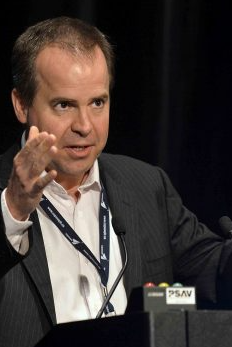 Michael Byers合作论文数Department of Political Science, Faculty of Arts, The University of British Columbia3Angelina Fisher合作论文数2
 Araz Taeihagh合作论文数Lee Kuan Yew School of Public Policy, National University of Singapore2David M Malone合作论文数2clemens feinaugle合作论文数1
 Gyula Seres合作论文数1
 Daniel Shu Wei Ting合作论文数Surgical Retina Department, Singapore National Eye Centre1Zhen Ling Teo合作论文数1
 Valerie Sticher合作论文数Fac Governance & Global Affairs, Leiden Univ1S. Wong合作论文数1
 Ben Saul合作论文数Sydney Law School, The University of Sydney1
 Dean Ho合作论文数Department of Biomedical Engineering, College of Design and Engineering, National University of Singapore;The N.1 Institute for Health, National University of Singapore;The Institute For Digital Medicine, National University of Singapore1
 Lim Chien Wei John合作论文数Centre of Regulatory Excellence, Duke-NUS Medical School1
 Ing-Sun Audrey Yue合作论文数Department of Communications and New Media, National University of Singapore1
 Maurer-Stroh Sebastian合作论文数ASTAR, Bioinformat Inst BII1
 Tan Cher Heng合作论文数Department of Diagnostic Radiology, The University of Texas M.D. Anderson Cancer Center1
 Kokil Jaidka合作论文数Department of Communications and New Media, National University of Singapore;Institute of Data Science, National University of Singapore1
 Kee Yuan Ngiam合作论文数Health System Singapore Singapore, National University1Kwee Ann K合作论文数1
 Min-Yen Kan (靳民彦)合作论文数School of Computing, National University of Singapore;Entrepreneur First;Pencil1
 Christopher J. Neely合作论文数Federal Reserve Bank of St1
 Tien Yin Wong (黄天荫)合作论文数School of Clinical Medicine, Tsinghua University1
 Anthony K. H. Tung (鄧锦浩)合作论文数Department of Computer Science, School of Computing, National University of Singapore1
 Xiaokui Xiao (萧小奎)合作论文数Department of Computer Science, School of Computing, National University of Singapore1
 Terence Sim合作论文数Department of Computer Science, School of Computing, National University of Singapore1
 Mong Li Lee (Janice)合作论文数Department of Computer Science, School of Computing, National University of Singapore1Erika De Wet合作论文数1Beatrice Pouligny合作论文数1
 Ramesh Thakur合作论文数Department of Cardiology, K.G.'s Medical College1Chorh Chuan Tan合作论文数1Albrecht Schnabel合作论文数1
 Wynne Hsu合作论文数Department of Computer Science, School of Computing, National University of Singapore;Institute of Data Science, National University of Singapore1
 Hisashi Owada合作论文数Leiden Institute for Area Studies, Faculty of Humanities, Leiden University1
 Michael Ignatieff合作论文数1Edited Be Atrice Pouligny合作论文数1
 Jungpil Hahn合作论文数Carlson School of Management, University of Minnesota1
 Carolyn Lam合作论文数Baim Institute for Clinical Research;Duke-NUS Graduate Medical School;Department of Cardiology, National Heart Centre Singapore;SingHealth Duke-NUS Global Health Institute;Clinical Trials Coordinating Centre, SingHealth Scientific;National University Hospital (S) Pte Ltd1
 Mohan Kankanhalli合作论文数Department of Computer Science, School of Computing, National University of Singapore;AI Singapore1Kishore Mahbubani合作论文数1




