Untargeted metabolomics is a non- a priori analysis of biomolecules that characterizes the metabolome variations induced by short- and long-term exposures to stressors. Even if the metabolite annotation remains lacunar due to database gaps, the global metabolomic fingerprint allows for trend analyses of dose-response curves for hundreds of cellular metabolites. The combination of untargeted metabolomic features and benchmark-dose (BMD) calculations then makes it possible to determine concentration range inducing defense responses (CRIDeR) and concentration range inducing damage responses (CRIDaR). To develop this approach in a context of time-dependent microbial community changes, mature river biofilms were exposed for 1 month to four cobalt (Co) concentrations (background concentration, 1 x 10 -7 , 5 x 10 -7 and 1 x 10 - 6 M) in an open system of artificial streams. The meta-metabolomic response of biofilms was compared against a multitude of biological parameters (including bioaccumulation, biomass, chlorophyll a content, composition and structure of prokaryotic and eukaryotic communities) monitored at set exposure times (from 1 hour to 28 days). Cobalt exposure induced extremely rapid responses of the meta-metabolome, with time range inducing defense responses (TRIDeR) of around ten seconds, and time range inducing damage responses (TRIDaR) of several hours. Even in biofilms whose structure had been altered by Co bioaccumulation (reduced biomass, chlorophyll a contents and changes in the composition and diversity of prokaryotic and eukaryotic communities), CRIDeRs with similar initiation thresholds (1.41 ± 0.77 x 10 -10 M Co 2+ added in the exposure medium) were set up at the meta-metabolome level at every time point. In contrast, the CRIDaR initiation thresholds increased by 10 times in long-term Co exposed biofilms. The present study demonstrates that defense and damage responses of biofilm meta-metabolome exposed to Co are rapidly and sustainably impacted, even within tolerant and resistant microbial communities. Graphical abstract Highlights Prokaryotic community structures were impacted after 1 h of exposure to Co Biofilm meta-metabolome was impacted after 36 s of exposure to Co Biofilm meta-metabolome response was faster than changes in biofilm communities Short- and long-term exposed biofilms have similar CRIDeR initiation thresholds Long-term exposed biofilms have higher CRIDaR initiation thresholds
The response of the meta-metabolome is rarely used to characterize the effects of contaminants on a whole community. Here, the meta-metabolomic fingerprints of biofilms were examined after 1, 3 and 7 days of exposure to five concentrations of cobalt (from background concentration to 1 x 10 -5 M) in aquatic microcosms. The untargeted metabolomic data were processed using the DRomics tool to build dose -response models and to calculate benchmark -doses. This approach made it possible to use 100% of the chemical signal instead of being limited to the very few annotated metabolites (7%). These benchmark -doses were further aggregated into an empirical cumulative density function. A trend analysis of the untargeted meta-metabolomic feature doseresponse curves after 7 days of exposure suggested the presence of a concentration range inducing defense responses between 1.7 x 10 -9 and 2.7 x 10 -6 M, and of a concentration range inducing damage responses from 2.7 x 10 -6 M and above. This distinction was in good agreement with changes in the other biological parameters studied (biomass and chlorophyll content). This study demonstrated that the molecular defense and damage responses can be related to contaminant concentrations and represents a promising approach for environmental risk assessment of metals.
Massive sequencing of the 16S rRNA gene has become a standard first step to describe and compare microbial communities from various samples. Parallel analysis of high numbers of samples makes it relevant to the statistical testing of the influence of natural or experimental factors and variables. However, these descriptions fail to document changes in community or ecosystem functioning. Non-targeted metabolomics are a suitable tool to bridge this gap, yet extractions protocols are different. In this study, prokaryotic community compositions are documented by 16S rRNA sequencing after direct DNA extraction, or after metabolites extraction followed by DNA extraction. Results obtained using the V3-V4 region on non-axenic cultures of cyanobacteria, lake water column, biofilm, gut of wild and lab-reared fish, indicate that prior extraction of metabolites does not influence the obtained image of prokaryotic communities. This validates sequential extraction of metabolites followed by DNA as a way to combine 16S rRNA sequencing with metabolome characterization from a single sample. This approach has the potential to complement community structure characterization with a proxy of their functioning, without the uncertainties associated with the use of separate samples.
Omics studies are currently increasingly used in ecotoxicology to highlight the induction of known or novel biomarkers when organisms are exposed to contaminants. Although it is virtually impossible to identify all biomarkers from all organisms, biomarkers can be grouped as defense or damage biomarkers, exhibiting a limited number of response trends. Our working hypothesis is that defense and damage biomarkers follow different dose-response patterns. A meta-analysis of 156 articles and 2595 observations of dose-response curves of defense and damage biomarkers was carried out in order to characterize the response trends of these biological parameters in a large panel of living organisms (18 phyla) exposed to inorganic or organic contaminants (176 in total). Using multinomial logistic regression models, defense biomarkers were found to describe biphasic responses (bell- and U-shaped) to a greater extent (2.5 times) than damage biomarkers. In contrast, damage biomarkers varied mainly monotonically (decreasing or increasing), representing 85% of the observations. Neither the nature of the contaminant nor the type of organisms belonging to 4 kingdoms, influence these specific responses. This result suggests that cellular defense and damage mechanisms are not specific to stressors and are conserved throughout life. Trend analysis of dose-response models as a biological interpretation of biomarkers could thus be a valuable way to exploit large omics datasets.
Abstract Environmental pollution is one of the main challenges faced by humanity. By their ubiquity and vast range of metabolic capabilities, microorganisms are affected by pollution with consequences on their host organisms and on the functioning of their environment. They also play key roles in the fate of pollutants through the degradation, transformation, and transfer of organic or inorganic compounds. Thus, they are crucial for the development of nature-based solutions to reduce pollution and of bio-based solutions for environmental risk assessment of chemicals. At the intersection between microbial ecology, toxicology, and biogeochemistry, microbial ecotoxicology is a fast-expanding research area aiming to decipher the interactions between pollutants and microorganisms. This perspective paper gives an overview of the main research challenges identified by the Ecotoxicomic network within the emerging One Health framework and in the light of ongoing interest in biological approaches to environmental remediation and of the current state of the art in microbial ecology. We highlight prevailing knowledge gaps and pitfalls in exploring complex interactions among microorganisms and their environment in the context of chemical pollution and pinpoint areas of research where future efforts are needed.
ABSTRACT Metabolites are low molecular-weight molecules produced during cellular metabolism. The global expression of the meta-metabolome (metabolomics at the community level) could thus potentially be used to characterize the exposure of an organism or a community to a specific stressor. Here, the meta-metabolomic fingerprints of mature biofilms were examined after 1, 3 and 7 days of exposure to five concentrations of cobalt (0, 1 x 10 - 7 , 1 x 10 - 6 , 5 x 10 - 6 and 1 x 10 - 5 M) in aquatic microcosms. The global changes in meta-metabolomic fingerprints were in good agreement with those of the other biological parameters studied (cobalt bioaccumulation, biomass, chlorophyll content). To better understand the dose-responses of the biofilm meta-metabolome, the untargeted LC-HRMS metabolomic data were further processed using the DRomics tool to build dose-response model curves and to calculate benchmark doses (BMD). These BMDs were aggregated into an empirical cumulative density function. A trend analysis of the metabolite dose-response curves suggests the presence of a concentration range inducing defense mechanisms (CRIDeM) between 4.7 x 10 - 7 and 2.7 x 10 - 6 M, and of a concentration range inducing damage mechanisms (CRIDaM) from 2.7 x 10 - 6 M to the highest Co concentration. The present study demonstrates that the molecular defense and damage mechanisms can be related to contaminant concentrations and represent a promising approach for environmental risk assessment of metals. SYNOPSIS This study focuses on the interpretation of the metabolite dose-response trends in river biofilms exposed to cobalt to identify concentration range inducing cellular mechanisms and improve the environmental risk assessment of metals.
Anatoxin-a (ATX-a) is a neurotoxic alkaloid, produced by several freshwater planktonic and benthic cyanobacteria (CB). Such CB have posed human and animal health issues for several years, as this toxin is able to cause neurologic symptoms in humans following food poisoning and death in wild and domestic animals. Different episodes of animal intoxication have incriminated ATX-a worldwide, as confirmed by the presence of ATX-a-producing CB in the consumed water or biofilm, or the observation of neurotoxic symptoms, which match experimental toxicity in vivo. Regarding toxicity parameters, toxicokinetics knowledge is currently incomplete and needs to be improved. The toxin can passively cross biological membranes and act rapidly on nicotinic receptors, its main molecular target. In vivo and in vitro acute effects of ATX-a have been studied and make possible to draw its mode of action, highlighting its deleterious effects on the nervous systems and its effectors, namely muscles, heart and vessels, and the respiratory apparatus. However, very little is known about its putative chronic toxicity. This review updates available data on ATX-a, from the ecodynamic of the toxin to its physiological and molecular targets.
Anatoxin-a (ATX-a) is a neurotoxic alkaloid, produced by several freshwater planktonic and benthic cyanobacteria (CB). Such CB have posed human and animal health issues for several years, as this toxin is able to cause neurologic symptoms in humans following food poisoning and death in wild and domestic animals. Different episodes of animal intoxication have incriminated ATX-a worldwide, as confirmed by the presence of ATX-a-producing CB in the consumed water or biofilm, or the observation of neurotoxic symptoms, which match experimental toxicity in vivo. Regarding toxicity parameters, toxicokinetics knowledge is currently incomplete and needs to be improved. The toxin can passively cross biological membranes and act rapidly on nicotinic receptors, its main molecular target. In vivo and in vitro acute effects of ATX-a have been studied and make possible to draw its mode of action, highlighting its deleterious effects on the nervous systems and its effectors, namely muscles, heart and vessels, and the respiratory apparatus. However, very little is known about its putative chronic toxicity. This review updates available data on ATX-a, from the ecodynamic of the toxin to its physiological and molecular targets.
The proliferations of cyanobacteria are increasingly prevalent in warm and nutrient-enriched waters and occur in many rivers and water bodies due especially to eutrophication. The aim of this work is to study in female medaka fish the toxicity, the transfer and the depuration of the anatoxin-a, a neurotoxin produced by benthic cyanobacterial biofilms. This work will provide answers regarding acute toxicity induced by single gavage by anatoxin-a and to the risks of exposure by ingestion of contaminated fish flesh, considering that data on these aspects remain particularly limited. The oral LD50 of a single dose of (±)-anatoxin-a was determined at 11.50 µg.g−1. First of all, lethal dose (100% from 20 µg.g−1) provokes rapid respiratory paralysis (in 1-2 min) of the fish inducing the death by asphyxia. Noticeably, no death nor apparent neurotoxicologic effect occurred during the experimentation period for the 45 fish exposed to a single sub-acute dose of (±)-anatoxin-a corresponding to the no observable adverse effect level (NOAEL = 6.67 µg.g−1). Subsequently, the toxico-kinetics of the (±)-anatoxin-a was observed in the guts, the livers and the muscles of female medaka fish for 10 days. In parallel, a protocol for extraction of anatoxin-a has been optimized beforehand by testing 3 different solvents on several matrices, the extraction with 75% methanol + 0.1% formic acid appearing to be the most efficient. Anatoxin-a was quantified by high-resolution qTOF mass spectrometry coupled upstream to a UHPLC chromatographic chain. The toxin could not be detected in the liver after 12 h, and in the gut and muscle after 3 days. The mean clearance rates of (±)-anatoxin-a calculated after 12 h are above 58%, 100% and 90% for the guts, the livers and the muscles, respectively. Non-targeted metabolomics investigations performed on the fish liver indicates that the single sub-acute exposure by gavage induces noticeable metabolome dysregulations, including important phospholipid decreases, with an organism recovery period of above 12-24h. Overall, the medaka fish do not appear to accumulate (±)-anatoxin-a and to largely recover after 24h following a single sub-acute oral liquid exposure at the NOAEL.
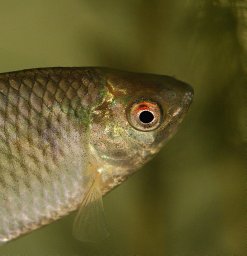 Benjamin Marie合作论文数UMR 5561 CNRS Biogéosciences, Université de Bourgogne10
 Severine Le Faucheur合作论文数Swiss Federal Institute for Environmental Science and Technology9
 Mathieu Milhe-Poutingon合作论文数8
 Claude Fortin合作论文数Simon Fraser University8
 Patrick Baldoni-Andrey合作论文数6Amiel Boullemant合作论文数6Clémentine Gelber合作论文数4
 Marie-Claire Lot合作论文数4Soizic Morin合作论文数Cemagref, UR REBX3
 Pierre Foucault合作论文数Muséum National d'Histoire Naturelle, CNRS;UMR7618 iEES-Paris, Sorbonne Université;CNRS, Sorbonne Université2
 Cesar Mattei合作论文数2Helene Tricoire-Leignel合作论文数2Charlotte Duval合作论文数2
 Emilie Lance合作论文数UMR Ecobio 6553, Université de Rennes I2
 Catherine Quiblier合作论文数Université Paris;Ecotoxicologie des Micro - Algues2Lise Barthelmebs合作论文数1
 Alison Gallet合作论文数1
 Nicolas Gallois合作论文数Aix Marseille Univ1
 Marina Hery合作论文数1
 Cébron Aurélie合作论文数Department of Biological Sciences, University of Warwick1Cravo-Laureau Cristiana合作论文数MELODY group, Université de Pau et des Pays de l'Adour1
 Giulia Cheloni合作论文数Beth Israel Deaconess Medical Center, Harvard Medical School1
 Jennifer Hellal合作论文数1
 Caroline de Clerck合作论文数1
 Fabrice Martin-Laurent合作论文数National Research Institute for Agriculture, Food and Environment;Institut National de la Recherche Agronomique;UMR Agroécologie1
 Stéphane Pesce合作论文数Laboratoire de Biologie des Protistes, Université Blaise Pascal1
 Sebastien Duperron合作论文数Université Pierre et Marie Curie, UMR 7138 Systématique Adaptation Evolution, Paris, France1
 Agnes Richaume合作论文数1
 Carmen Palacios合作论文数Max Planck;Institute for Marine Microbiology;Max Planck, Institute for Marine Microbiology1Stéphane Vuilleumier合作论文数1Annette Berard合作论文数1
 Jean M. F. Martins合作论文数1




