Since the early eighteenth century, the printed editions of all Sweelinck’s psalm compositions are present in the municipal archives of Zuoz, Oberengadin. A number of these compositions have become part of the local musical culture and have been preserved in dozens of manuscript copies. The original prints of Sweelinck’s psalms appear twice, both times as part of an extensive convolute. One was purchased in Amsterdam in 1707 by the Swiss nobleman Balthasar Planta. The other was in the possession of the same Balthasar Planta in 1741. Already before 1832, the books were dispersed: a part remained in Zuoz, a part ended up in the Library of Congress in Washington, and a third part is untraceable.
Recent studies have demonstrated that projected climate change will likely enhance nitrogen (N) and phosphorus (P) loss from farms and farmland, with the potential to worsen freshwater eutrophication. Here, we investigate the relative importance of the climate and land use drivers of nutrient loss in nine study catchments in Europe and a neighboring country (Turkey), ranging in area from 50 to 12,000 km2. The aim was to quantify whether planned large-scale, land use change aimed at N and P loss reduction would be effective given projected climate change. To this end, catchment-scale biophysical models were applied within a common framework to quantify the integrated effects of projected changes in climate, land use (including wastewater inputs), N deposition, and water use on river and lake water quantity and quality for the mid-21st century. The proposed land use changes were derived from catchment stakeholder workshops, and the assessment quantified changes in mean annual N and P concentrations and loads. At most of the sites, the projected effects of climate change alone on nutrient concentrations and loads were small, whilst land use changes had a larger effect and were of sufficient magnitude that, overall, a move to more environmentally focused farming achieved a reduction in N and P concentrations and loads despite projected climate change. However, at Beyşehir lake in Turkey, increased temperatures and lower precipitation reduced water flows considerably, making climate change, rather than more intensive nutrient usage, the greatest threat to the freshwater ecosystem. Individual site responses did however vary and were dependent on the balance of diffuse and point source inputs. Simulated lake chlorophyll-a changes were not generally proportional to changes in nutrient loading. Further work is required to accurately simulate the flow and water quality extremes and determine how reductions in freshwater N and P translate into an aquatic ecosystem response.
Two editions of psalm arrangements by the Amsterdam musician Jan Pieterszoon Sweelinck (1562-1621) appeared in Berlin in 1616 and 1618. A selection of his compositions was accompanied by Ambrosius Lobwasser's German translations. To ensure that the translated texts matched the music, occasional rhythmic changes were made, while the pitches were kept in tact. In the nineteenth-century search for Sweelinck's musical heritage, the Berlin editions were found earlier than the original ones; therefore, the two new reconstructions of Sweelinck's psalm arrangements published in 1876 and 1883 were based on these Berlin editions. Shortly thereafter, the part-books with the original texts were found in England. Since then, little note has been taken of the Berlin editions, but their history deserves our attention.
Two editions of psalm arrangements by the Amsterdam musician Jan Pieterszoon Sweelinck (1562-1621) appeared in Berlin in 1616 and 1618. A selection of his compositions was accompanied by Ambrosius Lobwasser’s German translations. To ensure that the translated texts matched the music, occasional rhythmic changes were made, while the pitches were kept in tact. In the nineteenth-century search for Sweelinck’s musical heritage, the Berlin editions were found earlier than the original ones; therefore, the two new reconstructions of Sweelinck’s psalm arrangements published in 1876 and 1883 were based on these Berlin editions. Shortly thereafter, the part-books with the original texts were found in England. Since then, little note has been taken of the Berlin editions, but their history deserves our attention.
Citation for published version (APA): Wade, A., Skeffington, R., Couture, R., Erlandsson, M., Groot, S., Halliday, S., Harezlak, V., Hejzlar, J., Jackson-Blake, L., Lepistö, A., Papastergiadou, E., Psaltopoulos, D., Riera, J., Rankinen, K., Skuras, D., Trolle, D., Whitehead, P., Dunn, S., & Bucak, T. (2016). Nutrient pollution mitigation measures across Europe are resilient under future climate. Geophysical Research Abstracts, 18, [EGU2016-9979].
Examples of modelling projects in the field of water management in which the guidelines and recommendations for Good Modelling Practice (GMP) have been used to the full extent are scarce. In order to gain practical experience with the use of the existing guidelines, the authors have used two existing projects in the Danube river basin that are already finalised. The two Danube projects have been analysed using the guidelines as described in the Dutch GMP Handbook [van Waveren, 1999]. Although this exercise can not illustrate the real influence that the application of modelling guidelines would have had, it can certainly highlight the critical choices and aspects within these projects. One can then judge the effects of the formulated guidelines for the modelling process in these and other projects.
 Valesca Harezlak合作论文数4
 Joan Lluís Riera合作论文数4
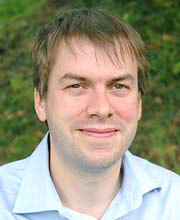 Andrew Wade合作论文数Department for Geography and Environmental Science, University of Reading4
 Sarah Halliday合作论文数Department of Geography and Environmental Science, University of Reading4L.A. Jackson-Blake合作论文数The James Hutton Institute4
 Eva Papastergiadou合作论文数Water Development Department, Ministry of Agriculture, Natural Resources and Environment;University of Patras;Water Development Department, University of Patras4
 Paul Whitehead合作论文数Oxford Molecular Biosensors Ltd;School of Geography and the Environment, University of Oxford4
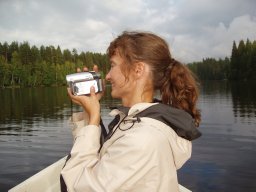 Katri Rankinen合作论文数Finnish Environment Institute4
 Ahti Lepistö合作论文数Finnish Environment Institute4
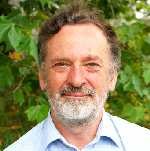 Richard A. Skeffington合作论文数Aquatic Environments Research Centre;Department of Geography;University of Reading;Aquatic Environments Research Centre, University of Reading4
 Raoul-Marie Couture合作论文数INRS-ETE, Université du Québec4
 Dennis Trolle合作论文数National Environmental Research Institute, Aarhus University4
 Martin Erlandsson合作论文数IVL Swedish Environmental Research Institute Ltd.3Joseph Hejzlar合作论文数2
 Tuba Bucak合作论文数Nat Conservat Ctr DKM2
 Sarah M Dunn合作论文数2Delft Hydraulics合作论文数2
 M. Shahgedanova合作论文数the School of Geography, University of Oxford2
 Dimitris Skuras合作论文数Department of Economics;University of Patras;University Campus - Rio;University of Patras, University Campus - Rio2
 Demetrios Psaltopoulos合作论文数2
 Josef Hejzlar合作论文数Hydrobiological Institute and Faculty of Biological Sciences, University of South Bohemia2Martin Erlandsson Lampa合作论文数1
 Huub Scholten合作论文数Wageningen University1
 Tor Haakon Bakken合作论文数SINTEF Energy Research1
 Tuomo M. Saloranta合作论文数Norwegian Institute for Water Research (NIVA), P.O. Box 173 Kjelsås, N-0411 Oslo Norway1
 J. Icke合作论文数WL\Delft Hydraulics1
 W. Ellis Penning合作论文数Centre for Limnology, Netherlands Institute of Ecology (NIOO-KNAW),1




