More and larger data centres are being built around the world. The rated electrical power of a single large data centre campus is often in the three-digit megawatt range nowadays. Such a data centre has the power consumption of a large city. But what is the total power consumption of all data centres worldwide? How high is the demand for other resources such as water and materials? And what future developments can be expected? A powerful and promising approach to answering these questions is the use of bottom-up models, which determine the energy and resource requirements based on the inventory figures of the devices and systems present in the data centres. Unfortunately, there is little available and reliable data on such inventory figures. This paper aims to make a contribution to reducing this lack of information. To this end, it focuses on the server equipment category, which clearly accounts for the highest proportion of the energy and resource requirements of data centres. Based on available information in scientific publications and data from market analysts, we estimate the total number of existing servers. We come to the conclusion that around 80 million servers will probably be in operation worldwide in 2024.
Innovations and efficiencies in digital technology have lately been depicted as paramount in the green transition to enable the reduction of greenhouse gas emissions, both in the information and communication technology (ICT) sector and the wider economy. This, however, fails to adequately account for rebound effects that can offset emission savings and, in the worst case, increase emissions. In this perspective, we draw on a transdisciplinary workshop with 19 experts from carbon accounting, digital sustainability research, ethics, sociology, public policy, and sustainable business to expose the challenges of addressing rebound effects in digital innovation processes and associated policy. We utilize a responsible innovation approach to uncover potential ways forward for incorporating rebound effects in these domains, concluding that addressing ICT-related rebound effects ultimately requires a shift from an ICT efficiency-centered perspective to a "systems thinking" model, which aims to understand efficiency as one solution among others that requires constraints on emissions for ICT environmental savings to be realized.
Energy consumption for heating, cooling, and warm water production in the building sector is a major source of CO 2 emissions in Europe. Building automation and control systems (BACS), using ICT-based monitoring and management applications to reduce energy consumption, have long been considered a key technology to improve efficiency in the building sector but CO 2 abatement potential is unclear. Most studies on the technology either use a vague definition of BACS or calculate on the basis of insufficiently evaluated applications and efficiency potential. This paper builds on a study previously conducted by the authors that analyzed CO 2 reduction potential (Mt CO 2 emissions saved) from clearly defined application scenarios of BACS in the residential and non-residential building sectors in Germany. Effects were calculated using secured efficiency factors derived from standards (EN ISO 15232, etc.). The methodological approach and the results of this study were subsequently used to apply the ETSI/ITU framework, in particular to evaluate application scenarios of building automation. Through application of the ETSI/ITU framework, the authors also draw preliminary conclusions for CO 2 mitigation strategies in the building sectors of other European member states by discussing possible use of the framework for other housing and heating structures.
Der steigende Energiebedarf der Rechenzentren stellt eine Herausforderung bei der Erreichung der Klimaschutzziele sowie der Realisierung der Energiewende dar. Auch die sogenannte graue Energie – also die Energie, die für Herstellung, Transport, Lagerung und Entsorgung der Komponenten benötigt wird – kann ganz erhebliche Anteile am Gesamtenergiebedarf ausmachen. Dieser Artikel stellt eine selbstentwickelte Modellstruktur vor, welche die graue Energie in Rechenzentren erstmalig berechnet.
Renewable electricity from wind and solar is on the rise and, consequently, flexible energy consumption and the conversion of electricity into heat or mobility are becoming valid options for integrating fluctuating energy production into the grid. This is a particular challenge for the building sector since it has a high energy demand but often steady and predictable consumption patterns. The authors present results from a case study in Germany in which flexible consumption of energy and the conversion of renewable electricity into heat were tested and evaluated in a smart residential neighborhood. A prerequisite for the study is an interoperable ICT infrastructure that connects smart buildings to flexible energy markets. The case study allows conclusions to be drawn about the technical applicability and economic viability of these solutions as well as about the CO2 emissions saved as a result of flexible energy consumption. Finally, a brief analysis of a large-scale application of flexibility in the building sector is included.
Data centers are responsible for a constantly growing demand for energy and resources. Numerous studies show that there is still considerable potential for improving the energy and resource efficiency of data centers. Against this background, it is of great importance that existing efficiency technologies be applied to a greater extent and new technologies put into practice. One instrument to support this development is a technology radar for energy efficiency technologies in data centers. A technology radar is an instrument for monitoring technology that supports the identification, evaluation and observation of relevant technologies in specific areas. This paper describes how such technology radars are developed in a transdisciplinary process and presents current and future efficiency technologies for data centers. Keywordsdata center, energy efficiency, technology radar, transdisciplinary approach, energy, cooling, power supply, IT management)
Digitalization is driving the increasing energy and resource needs of ICT. In Ger- many, ICT accounts for eight percent of electricity consumption. Data centers alone cur- rently consume 2.3% of the electricity in Germany, with an upwardtrend.Although the ICT sector is generally considered to be very innovative and new solu- tions are often implemented very quickly, deployment of energy- and resource-efficient innovations is frequently confronted with considerable obstacles and barriers.Innovation alliances of companies are a promising instrument of governmental sup- port for new environmental technologies in the fast-paced ICT sector. In the past ten years, several initiatives of this kind have been launched, e.g., the consortium GreenIT Amsterdam, the Innovationsallianz Rechenzentren (Innovation Alliance Data Centers) in Hesse, Germany, and the Netzwerk energieeffiziente Rechenzentren (Network Energy- Efficient Data Centers). Some of these initiatives have achieved remarkable successes.The present paper analyzes such innovation alliances using the example of energy efficiency in data centers as the field of application. Three good-practice examples from Germany are presented. The paper shows what these innovation alliances can achieve and analyzes the factors contributing to their successful implementation. It concludes with concrete recommendations for practical implementation of such initiatives.
 Ralph Hintemann合作论文数5
 Severin Beucker合作论文数Borderstep Institute for Innovation and Sustainability, Clayallee 323, D-14169 Berlin, Germany5
 Bran Knowles合作论文数School of Computing and Communications, Faculty of Science and Technology, Lancaster University;Centre of Excellence in Environmental Data Science, Faculty of Science and Technology, Lancaster University2
 Mike Berners-Lee合作论文数2
 Birgit Penzenstadler合作论文数Gothenburg University2
 Bjorn Koch合作论文数1Oliver Zernahle合作论文数1Fernando Penaherrera合作论文数1
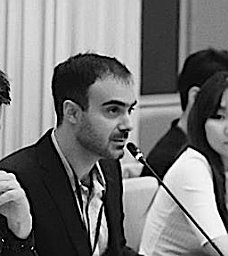 Lucas Somavilla Croxatto合作论文数Dept Comp Sci, Univ Oxford1
 Carolyn Ten Holter合作论文数Department of Computer Science, University of Oxford, Wolfson Building, Parks Rd, Oxford, OX1 3QD, UK1
 Lynn H. Kaack合作论文数1
 Kelly Widdicks合作论文数School of Computing and Communications, Lancaster University1
 Christoph Becker合作论文数Just Sustainability Design Lab, Faculty of of Information, University of Toronto;School of the Environment, University of Toronto1
 Gabrielle Samuel合作论文数Department of Global Health & Social Medicine, School of Global Affairs, Faculty of Social Science & Public Policy, King’s College London1
 Marcia Tavares Smith合作论文数Lancaster University1
 Miriam Borjesson Rivera合作论文数1
 Emma Strubell合作论文数Language Technologies Institute, School of Computer Science, Carnegie Mellon University;Department of Materials Science and Engineering, Carnegie Mellon University1
 Marina Jirotka合作论文数Department of Computer Science, University of Oxford;St Cross College, University of Oxford1
 Anne-Cécile Orgerie合作论文数IRISA, CNRS1Lorenz M. Hilty合作论文数Technology and Society Lab (TSL)1
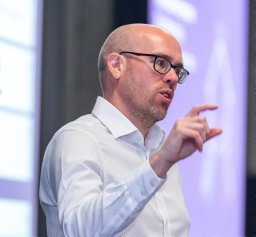 Jeffrey J. E. Hardy合作论文数Clean Technology Centre;Chemistry Department;University of York;Clean Technology Centre, University of York1
 Tim Foxon合作论文数Science Policy Research Unit, Business School, University of Sussex1
 Colin C. Venters合作论文数Department of Computer Science, School of Computing and Engineering, The University of Huddersfield;Centre for Sustainable Software Engineering, The University of Huddersfield;CERN1
 Alexandra Pehlken合作论文数Institute for Integrated Product Development, Bremen University1
 Gordon Blair合作论文数School of Computing & Communications, Lancaster University1
 Andrew A. Chien合作论文数 Department of Computer Science, University of Illinois at Urbana-Champaign;Department of Computer Science, The University of Chicago;Department of Computer Science and Engineering, University of California, San Diego1
 Steve Sorrell合作论文数Sussex Energy Group, SPRU, University of Sussex1
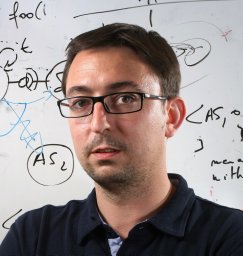 Benoît Combemale合作论文数IRISA, University of Rennes 11
 Daniel Pargman合作论文数Division of Media Technology and Interaction Design, Department of Human Centered Technology, School of Electrical Engineering and Computer Science, KTH Royal Institute of Technology1
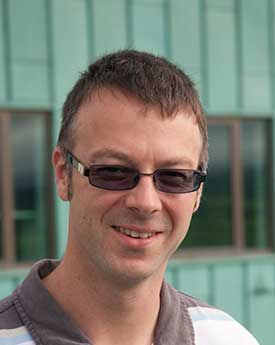 Adrian Friday合作论文数Lancaster University Computing and Communications1
 Mattias Höjer合作论文数Division of Strategic Sustainability Studies, Department of Sustainable Development, Environmental Science and Engineering, School of Architecture and the Built Environment, KTH Royal Institute of Technology1
 Vlad Coroama合作论文数Institute for Pervasive Computing1
 Federica Lucivero合作论文数Nuffield Department of Population Health, University of Oxford1




