Western Melanesia sits at the junction of three major tectonic plates, characterised by dynamic plate interactions and geological diversity. Tectonic activity in this region has given rise to modern New Guinea, a relatively young island with extreme topographic heterogeneity and evolutionarily complex biota. New Guinea-particularly the East Papuan Composite Terrane (EPCT)-supports exceptional frog diversity; however, evolutionary histories of many frogs of the EPCT are poorly understood. The microhylid frog genus Mantophryne currently includes five described species (M. axanthogaster, M. insignis, M. louisiadensis, M. menziesi and M. lateralis), with the first four confined to small portions of the EPCT and the last distributed across the eastern half of New Guinea. The biogeographic history of these frogs remained incompletely resolved at the time of our study. We estimate that Mantophryne diverged from other microhylid genera approximately 14.4 million years ago (MYA) and began to speciate ca. 8.5 MYA. We recover eight distinct lineages within frogs assigned to M. lateralis, which started to diverge ca. 5.5 MYA. Dispersal of Mantophryne out of the EPCT occurred in the late Pliocene, around the time the Central Highlands expanded eastward to connect with the EPCT. Six pairs of sister lineages arose during a time of significant climate reorganisation in the Late Pliocene-Early Pleistocene when it is possible that areas to the north of the Central Highlands experienced increased precipitation, while areas south of the Central Highlands experienced lower rainfall, resulting in contraction of rainforests and expansion of savannahs. We did not identify any significant differences in habitus between lineages, other than M. louisiadensis which is much larger than all other Mantophryne, and has exceptionally high sexual-size dimorphism. While an interrogation of the putative cryptic species complex within the M. lateralis clade is beyond the scope of our study, we find that a combination of tectonic rearrangement and climatic history are likely responsible for most of the diversity within the genus that we see today.
The clade of blindsnakes historically placed into Ramphotyphlops Fitzinger was divided into several genera in 2014 based on the topology of a molecular phylogeny. We examine the molecular and morphological evidence used for recognizing two of those genera (the diverse Australian Anilios Fitzinger, and the monotypic Lesser Sundan Sundatyphlops Hedges, Marion, Lipp, Marin & Vidal) and find the evidence insufficient to support their distinction. Post hoc attempts at that time to define Anilios and Sundatyphlops using morphological data relied on using among-species averages of within-species means, an arbitrary approach largely driven by pooling species on geographic grounds, which ignored tremendous ranges of overlap in all morphological features claimed to be diagnostic. Three New Guinean species were also arbitrarily assigned to Anilios in the absence of any molecular or morphological evidence. The sole subsequent molecular study that has included the type species of Ramphotyphlops showed it to be sister to but virtually indistinguishable from Anilios. Lastly, all later molecular studies involving these snakes have consistently found the few species of Ramphotyphlops sensu stricto sampled (n = 1-3) to be paraphyletic whenAnilios and Sundatyphlops are recognized. Consequently, we find there is no evidentiary basis for recognizing Anilios or Sundatyphlops as valid lineages distinct from Ramphotyphlops, and continuing to do so renders the latter paraphyletic; thus, we synonymize Anilios and Sundatyphlops with Ramphotyphlops. The taxonomic muddling created by recognizing these genera has persisted because consistently poor sampling of non-Australian members of Ramphotyphlops has not allowed for well-supported clarification of relationships among those lineages
Many island archipelagos sit on shallow continental shelves, and during the Pleistocene, these islands were often connected as global sea levels dropped following glaciation. Given a continental shelf only 30-60 m below sea level, the terrestrial biota of the Seychelles Archipelago likely dispersed amongst now isolated islands during the Pleistocene. Hypogeophis rostratus is an egg-laying, direct-developing caecilian amphibian found on 10 islands in the granitic Seychelles. Despite the seemingly limited dispersal abilities of this salt-intolerant amphibian, its distribution on multiple islands suggests likely historic dispersal across now submerged continental shelf corridors. We tested for the genetic signature of these historic corridors using fine-scale genomic data (ddRADseq). We found that genomic clusters often did not correspond to islands in the archipelago and that isolation-by-distance patterns were more consistent with gene flow across a continuous landscape than with isolated island populations. Using effective migration surfaces and ancestral range expansion prediction, we found support for contemporary populations originating near the large southern island of Mahé and dispersing to northern islands via the isolated Frégate island, with additional historic migration across the flat expanse of the Seychelles bank. Collectively, our results suggest that biogeographic patterns can retain signals from Pleistocene 'palaeo-islands' and that present-day islands can be thought of as hosting bottlenecks or transient refugia rather than discrete genetic units. Thus, the signatures of gene flow associated with palaeo-islands may be stronger than the isolating effects of contemporary islands in terrestrial species distributed on continental shelf islands.
Examining diversification patterns associated with dispersal, vicariance, and local adaptation is critical in elucidating drivers of speciation. Frogs of the family Ceratobatrachidae are a widely distributed, largely insular, lineage occurring from Indo-Burma to Fiji with their highest diversity in Melanesia and the Philippines. We estimate evolutionary relationships among ceratobatrachids to test hypotheses about diversification dynamics. Ancestral-state estimates indicate that the basal ecotype of these direct-developing frogs was most likely terrestrial, with semi-aquatic, arboreal, and scansorial ecotypes evolving multiple times within Cornufer (N = 4) and Platymantis (N = 5). Divergence between Cornufer and Platymantis, and divergences within Cornufer during the past 35 Myr, occurred under conditions in which the geological terranes inhabited by these frogs formed a string of islands extending from near present-day Palau far out into the Pacific. Placement of these islands during that time would have provided ideal conditions for frogs to island hop far out into the Pacific with the North Equatorial Countercurrent (NECC) c. 25-12 Mya. Subsequent rearrangement of the underlying tectonic plates moved the islands colonized by Cornufer out of the NECC, with most subsequent diversification occurring within present-day archipelagos. Our findings corroborate a growing body of evidence that these ancient island-arc systems have been an important source of diversification within the Southwest Pacific.
Context. In the complex balance between the landscapes of energy and fear, urban artefacts impact the routes taken by commuting bats. Little is known about the movements of urban bats, with mitigation efforts seldom being evidence-based. Knowledge of existing bat movements to inform urban sustainability is crucial. Objectives. We applied the Multi-Point Activity Survey (MultiPAS) method in two case studies to quantify the use of nightly commuting routes used by bats in an urban landscape and to use those data to select candidate dark corridor sites and key points for retention of vegetation at crossing points. Methods. Two models of MultiPAS were tested on urban canals, comprising one 2.8 km linear site and five canal junctions in the West Midlands, UK. Results. The linear model identified important bat ingress and egress points, and a key candidate dark corridor site through a residential area. The junction survey model yielded candidate dark corridors at three junctions, and a crossing point for the retention of vegetation. The combined data also identified two major feeding areas for bats. Conclusions. The knowledge of existing commuting routes and crossing points is invaluable in urban planning for bat conservation. The knowledge gained by using MultiPAS methods would allow local authorities to select appropriate dark corridor sites in effective, evidence-based and landscape-scale conservation efforts.
Studies related to herpetofauna diversity in the Bukit Baka Bukit Raya National Park (Tanakaya), West Kalimantan are very limited. Data related to the richness of amphibians and reptiles in this area are important for the management of the area in the future. We conducted amphibian and reptile surveys in Tanakaya in July-August 2019 using Visual Encounter Survey methods at five sites (Belaban Resort: Km 37 & 39; Resort Rantau Malam: Batu Lintang, Sungai Mangan, and Hulu Rabang). We recorded 50 amphibian species from nine families and 25 reptile species from seven different families. Twenty of these species are new records for Tanakaya. The highest diversity (H' = 2.94) was found in Batu Lintang, while the highest evenness (E = 0.55) was in Sungai Mangan, and the highest community similarity index (IS = 0.6) was in Batu Lintang with Km 37. Combined with previous studies, there have been 142 species (78 species of amphibians and 64 species of reptiles) recorded from Tanakaya. Further study is needed to fully understand the herpetofauna in Tanakaya, but our data highlights the importance of the national park for preserving global biodiversity.
Amphibians represent a diverse group of tetrapods, marked by deep divergence times between their three systematic orders and families. Studying amphibian biology through the genomics lens increases our understanding of the features of this animal class and that of other terrestrial vertebrates. The need for amphibian genomic resources is more urgent than ever due to the increasing threats to this group. Amphibians are one of the most imperiled taxonomic groups, with approximately 41% of species threatened with extinction due to habitat loss, changes in land use patterns, disease, climate change, and their synergistic effects. Amphibian genomic resources have provided a better understanding of ontogenetic diversity, tissue regeneration, diverse life history and reproductive modes, antipredator strategies, and resilience and adaptive responses. They also serve as essential models for studying broad genomic traits, such as evolutionary genome expansions and contractions, as they exhibit the widest range of genome sizes among all animal taxa and possess multiple mechanisms of genetic sex determination. Despite these features, genome sequencing of amphibians has significantly lagged behind that of other vertebrates, primarily due to the challenges of assembling their large, repeat-rich genomes and the relative lack of societal support. The emergence of long-read sequencing technologies, combined with advanced molecular and computational techniques that improve scaffolding and reduce computational workloads, is now making it possible to address some of these challenges. To promote and accelerate the production and use of amphibian genomics research through international coordination and collaboration, we launched the Amphibian Genomics Consortium (AGC, https://mvs.unimelb.edu.au/amphibian-genomics-consortium) in early 2023. This burgeoning community already has more than 282 members from 41 countries. The AGC aims to leverage the diverse capabilities of its members to advance genomic resources for amphibians and bridge the implementation gap between biologists, bioinformaticians, and conservation practitioners. Here we evaluate the state of the field of amphibian genomics, highlight previous studies, present challenges to overcome, and call on the research and conservation communities to unite as part of the AGC to enable amphibian genomics research to "leap" to the next level.
Unusually for oceanic islands, the granitic Seychelles host multiple lineages of endemic amphibians. This includes an ancient (likely ca. 60 million years) radiation of eight caecilian species, most of which occur on multiple islands. These caecilians have a complicated taxonomic history and their phylogenetic inter-species relationships have been difficult to resolve. Double-digest RAD sequencing (ddRADseq) has been applied extensively to phylogeography and increasingly to phylogenetics but its utility for resolving ancient divergences is less well established. To address this, we applied ddRADseq to generate a genome-wide SNP panel for phylogenomic analyses of the Seychelles caecilians, whose phylogeny has so far not been satisfactorily resolved with traditional DNA markers. Based on 129,154 SNPs, we resolved deep and shallow splits, with strong support. Our findings demonstrate the capability of genome-wide SNPs for evolutionary inference at multiple taxonomic levels and support the recently proposed synonymy of Grandisonia Taylor, 1968 with Hypogeophis Peters, 1879. We revealed three clades of Hypogeophis (large-, medium- and short-bodied) and identify a single origin of the diminutive, stocky-bodied and pointy-snouted phenotype.
Mesoamerican cloud forests support a rich and unique biodiversity but face severe threats from increasing habitat degradation and climate change. Here, we present an updated overview of the amphibians and reptiles of Cusuco National Park (CNP), an isolated cloud forest in the Sierra de Omoa, Northwest Honduras. Based on surveys conducted over a 17-year period, we report the presence of 105 confirmed species of amphibians (30) and reptiles (75) within the reserve. This includes numerous threatened and regionally endemic amphibian species, as well as several reptile species previously unrecorded within the park. Given that it harbours approximately 26% of all recorded Honduran herpetofauna, our study highlights CNP as the most diverse forest region in Honduras with respect to the reptile and amphibian diversity documented to date. Our findings reinforce the plea to actively protect CNP as a globally valuable biodiversity hotspot and a centre of herpetofaunal endemicity. Furthermore, in the face of rapid deforestation across Mesoamerica, our findings highlight the need for expanded biodiversity studies across extant forest regions in Honduras to refine species distribution ranges and facilitate timely and effective conservation measures.
Acquiring DNA from wild bats (Mammalia: Chiroptera) is typically undertaken utilizing highly invasive (but non-lethal) sampling techniques comprising wing biopsies and occasional blood samples. While non-invasive sampling is possible through the extraction of DNA from faecal samples, it is not always possible to acquire samples from individual bats whilst conducting fieldwork, and as such, this method is primarily applicable to roost occupancy identification. Similarly, wing swabbing is liable to cross-contamination from roost mates. Here we present the first use of oral (buccal) swabbing for successful, species-resolution DNA sequencing of Vespertilionidae and Rhinolophidae in 10 bat species (nine Vespertilionidae and one Rhinolophidae) from the UK.
Visual systems adapt to different light environments through several avenues including optical changes to the eye and neurological changes in how light signals are processed and interpreted. Spectral sensitivity can evolve via changes to visual pigments housed in the retinal photoreceptors through gene duplication and loss, differential and coexpression, and sequence evolution. Frogs provide an excellent, yet understudied, system for visual evolution research due to their diversity of ecologies (including biphasic aquatic-terrestrial life cycles) that we hypothesize imposed different selective pressures leading to adaptive evolution of the visual system, notably the opsins that encode the protein component of the visual pigments responsible for the first step in visual perception. Here, we analyze the diversity and evolution of visual opsin genes from 93 new eye transcriptomes plus published data for a combined dataset spanning 122 frog species and 34 families. We find that most species express the four visual opsins previously identified in frogs but show evidence for gene loss in two lineages. Further, we present evidence of positive selection in three opsins and shifts in selective pressures associated with differences in habitat and life history, but not activity pattern. We identify substantial novel variation in the visual opsins and, using microspectrophotometry, find highly variable spectral sensitivities, expanding known ranges for all frog visual pigments. Mutations at spectral-tuning sites only partially account for this variation, suggesting that frogs have used tuning pathways that are unique among vertebrates. These results support the hypothesis of adaptive evolution in photoreceptor physiology across the frog tree of life in response to varying environmental and ecological factors and further our growing understanding of vertebrate visual evolution.
New Guinea and surrounding islands are home to some of the richest assemblages of insular biodiversity in the world. The key geological drivers of species richness in this region are largely considered to be mountain uplift and development of offshore archipelagos—some of which have accreted onto New Guinea—with the role of mountain uplift and elevational gradients receiving more attention than the role of isolation on islands. Here, we examine the distribution of lineage richness and body-size diversity in a radiation of Melanesian lizards that is almost entirely absent from montane habitats but closely associated with islands—the geckos of the genus Nactus. Our data indicate that eastern New Guinea—centred on the East Papuan Composite Terrane (EPCT)—shows particularly high levels of endemism and body-size diversity and is also inferred to be a source area for multiple independent colonisations elsewhere in New Guinea, the Pacific and Australia. Two Nactus lineages in Australia have closest relatives occurring to the north of New Guinea’s Central Cordillera, suggesting dispersal through this area in the mid-Miocene, possibly via seaways that would have isolated the islands to the east and west of the proto-Papuan region. Syntopic species tend to differ in body length; however, at a phylogenetic scale, this trait appears to be conservative, with small-sized and large-sized species clustered into separate lineages. These data suggest that species richness in Melanesian Nactus is in part explained by morphological diversification enabling the presence of sympatric communities to exist, but to a greater extent by multiple instances of dispersal and extensive allopatric and parapatric speciation, especially in and around the islands of the EPCT.
The effect of urbanisation on size and fat stores in bats has been poorly studied. We compare morphometric data in bats from two areas in the West Midlands, UK: one predominantly agricultural and one built-up. We examined forearm length and fat stores in 1,102 bats of five species (Myotis daubentonii, M. nattereri, Pipistrellus pipistrellus, P. pygmaeus, Plecotus auritus). All except M. daubentoniid were significantly larger in the urban area; fat stores were greater in rural M. nattereri and P. auritus, and in urban M. daubentonii and P. pygmaeus. For P. auritus, the differences were only significant in males.
Predatory innovations impose reciprocal selection pressures upon prey. The evolution of snake venom alpha-neurotoxins has triggered the corresponding evolution of resistance in the post-synaptic nicotinic acetylcholine receptors of prey in a complex chemical arms race. All other things being equal, animals like caecilians (an Order of legless amphibians) are quite vulnerable to predation by fossorial elapid snakes and their powerful alpha-neurotoxic venoms; thus, they are under strong selective pressure. Here, we sequenced the nicotinic acetylcholine receptor alpha-1 subunit of 37 caecilian species, representing all currently known families of caecilians from across the Americas, Africa, and Asia, including species endemic to the Seychelles. Three types of resistance were identified: (1) steric hindrance from N-glycosylated asparagines; (2) secondary structural changes due to the replacement of proline by another amino acid; and (3) electrostatic charge repulsion of the positively charged neurotoxins, through the introduction of a positively charged amino acid into the toxin-binding site. We demonstrated that resistance to alpha-neurotoxins convergently evolved at least fifteen times across the caecilian tree (three times in Africa, seven times in the Americas, and five times in Asia). Additionally, as several species were shown to possess multiple resistance modifications acting synergistically, caecilians must have undergone at least 20 separate events involving the origin of toxin resistance. On the other hand, resistance in non-caecilian amphibians was found to be limited to five origins. Together, the mutations underlying resistance in caecilians constitute a robust signature of positive selection which strongly correlates with elapid presence through both space (sympatry with caecilian-eating elapids) and time (Cenozoic radiation of elapids). Our study demonstrates the extent of convergent evolution that can be expected when a single widespread predatory adaptation triggers parallel evolutionary arms races at a global scale.
There is a lack of precise guidelines concerning the survey effort required for advanced bat surveys in temperate European woodlands, resulting in a lack of standardisation in survey methods. In this study we assess catch data from 56 bat trapping surveys at 11 UK woodland sites in order to provide recommendations for mist net survey effort required to gain meaningful bat assemblage data in temperate woodlands. Species accumulation curves were produced and were used to develop two novel values for survey effort: the minimum survey threshold (MST), whereby surveyors are more likely than not to encounter less dominant species; and the known species threshold (KST), the point where a given percentage (in our case, 75%) of the known species assemblage for a site is likely to be reached and beyond which there are diminishing returns for survey effort. For our data, the mean of MST was 17.4 net hours, and for KST, the mean was 29.8 net hours. The MST and KST values were reached during the second and third surveys, respectively. These proposed values are adaptable based on location and known species assemblage and may be used for planning advanced bat surveys in temperate woodlands not only to maximise survey efficacy and use of limited resources but to ensure ethical viability of undertaking advanced surveys in the first place.
© 2021 The Authors. Published by Bat Conservation Trust. The published version can be accessed at the following link on the publisher’s website: https://cdn.bats.org.uk/uploads/pdf/Resources/Bat-Groups/Accessing-journals/BritishIslandsBats_VolTwo_2021.pdf?v=1625915928
Whole mitochondrial genomes have been helpful in estimating phylogenetic relationships in many organismal groups, including caecilian amphibians. Despite the increasing ease of obtaining mitochondrial genome sequences from high-throughput sequencing, several species of caecilian lack this important molecular resource. As part of a targeted-sequence capture project of nuclear ultraconserved elements for a small but substantially diverse radiation of caecilian amphibians found on the granitic Seychelles, we examined off-target sequences to determine if we captured enough mitochondrial fragments to reconstruct mitogenomes. We reconstructed (near-)complete mitogenomes for six of the eight species of Seychelles caecilians and completed 14 independent phylogenetic analyses (Bayesian inference and maximum likelihood) on different mitochondrial datasets assembled using different alignment techniques. As with other studies, we were unable to fully resolve internal phylogenetic relationships of the group. However, we found strong support in most analyses that a recently described miniaturized species, Hypogeophis pti, and another similarly-sized miniaturized species, H. brevis are not sister taxa. Our study suggests that miniature species of caecilians likely evolved at least twice on the Seychelles and highlights the need to revise genus-level taxonomy of Seychelles caecilians while providing further evidence that off-target sequences often contain enough mitochondrial fragments to reconstruct mitogenomes.
We assess the availability of four names proposed by Wells & Wellington (1985) for Australian death adders (Acanthophis). In agreement with previous literature, A. hawkei is an available name, whereas A. armstrongi, A. lancasteri, and A. schistos are not described in conformity with the requirements of Articles 13.1.1 or 13.1.2 of the International Code of Zoological Nomenclature and are therefore considered nomina nuda. Consequently, A. cryptamydros Maddock et al., 2015, is confirmed as the valid name for the Kimberley death adder of Western Australia. We comment on the need for greater clarity in the Code, and emphasise that the responsibility for establishing the availability of new nomina rests with their authors, not subsequent researchers.
Phylogenetic relationships of sub-Saharan African natricine snakes are understudied and poorly understood, which in turn has precluded analyses of the historical biogeography of the Seychelles endemic Lycognathophis seychellensis. We inferred the phylogenetic relationships of Seychelles and mainland sub-Saharan natricines by analysing a multilocus DNA sequence dataset for three mitochondrial (mt) and four nuclear (nu) genes. The mainland sub-Saharan natricines and L. seychellensis comprise a well-supported clade. Two maximally supported sets of relationships within this clade are (Limnophis,Natriciteres) and (Afronatrix,(Hydraethiops,Helophis)). The relationships of L. seychellensis with respect to these two lineages are not clearly resolved by analysing concatenated mt and nu data. Analysed separately, nu data best support a sister relationship of L. seychellensis with (Afronatrix,(Hydraethiops,Helophis)) and mt data best support a sister relationship with all mainland sub-Saharan natricines. Methods designed to cope with incomplete lineage sorting strongly favour the former hypothesis. Genetic variation among up to 33 L. seychellensis from five Seychelles islands is low. Fossil calibrated divergence time estimates support an overseas dispersal of the L. seychellensis lineage to the Seychelles from mainland Africa ca. 43-25 million years before present (Ma), rather than this taxon being a Gondwanan relic.
 David Gower合作论文数LS Vertebrates Division, Department of Life Sciences, The Natural History Museum17
 Mark Wilkinson合作论文数LS Vertebrates Division, Department of Life Sciences, The Natural History Museum14
 Ronald Archie Nussbaum合作论文数College of LSA, University of Michigan12
 Julia Day合作论文数Department of Genetics, Evolution & Environment, University College London11
 Streicher Jeffrey W合作论文数Department of Molecular and Microbiology, George Mason University6
 Mika Peck合作论文数JMS Building, University of Sussex6Vanessa Aguirre-Peñafiel合作论文数5
 Morgan Hughes合作论文数5
 Jim Labisko合作论文数Isiand Biodivers & Conservat Ctr, Univ Seychelles5
 Bryony Tolhurst合作论文数5charles morel合作论文数4Scott K Brown合作论文数4
 Fred Kraus合作论文数Department of Ecology and Evolutionary Biology, College of Literature, Science, and the Arts, University of Michigan4
 Wolfgang Wüster合作论文数Molecular Ecology and Evolution at Bangor, School of Natural Sciences, Bangor University4Mafla-Endara Paola合作论文数4
 Omar Torres-Carvajal合作论文数Natural History Museum;Biodiversity Research Center;,;Department of Ecology and Evolutionary Biology;University of Kansas;Biodiversity Research Center, University of Kansas4Christopher H. Young合作论文数4r j ellis合作论文数3jorge morales合作论文数3
 V. Deepak合作论文数Center for Ecological Sciences, Indian Institute of Science;Email: unknown.;Center for Ecological Sciences, Indian Institute of Science3Cueva-Arroyo Xavier A合作论文数3
 Wilmer E. Pozo-R.合作论文数3Oñate Hugolino合作论文数3
 Paul Doughty合作论文数Department of Terrestrial Zoology, Western Australian Museum3Lindsay Chong-Seng合作论文数2
 Sara Rocha合作论文数2
 Kay Bradfield合作论文数2
 Maria Torres-Sanchez合作论文数Dept Biol, Univ Florida2
 Stephanie Poindexter合作论文数Dept Anthropol, SUNY Buffalo2
 Bryan Fry合作论文数School of Biological Sciences, Faculty of Science, The University of Queensland2
 Kamei Rachunliu G合作论文数Centre for Environmental Management of Degraded Ecosystems, University of Delhi2Kotharambath Ramachandran合作论文数2
 Ishan Agarwal合作论文数Centre for Ecological Sciences, Indian Institute of Science2Morales Jorge Noe合作论文数2
 Pal Saunak合作论文数Centre for Ecological Sciences, Indian Institute of Science;Email: herps.saunak@gmail.com.;Centre for Ecological Sciences, Indian Institute of Science2Vincent Nijman合作论文数School of Law and Social Sciences, Oxford Brookes University2
 Hendrik Müller合作论文数Department of Zoology;Natural History Museum;Department of Zoology, Natural History Museum2
 Peter G. Foster合作论文数Department of Biology, University of Ottawa2Nancy Bunbury合作论文数Centre for Ecology;Evolution and Conservation;School of Biological Sciences;University of East Anglia;School of Biological Sciences, University of East Anglia2
 Kim Roelants合作论文数2
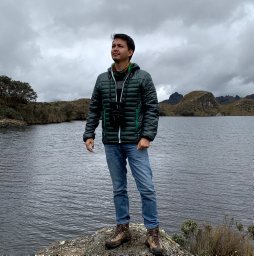 Diego F. Cisneros-Heredia合作论文数College of Biological and Environmental Sciences;Universidad;College of Biological and Environmental Sciences, Universidad San Francisco de Quito2
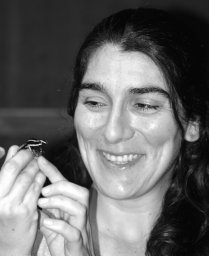 Gabriela Bueno Bittencourt-Silva合作论文数2
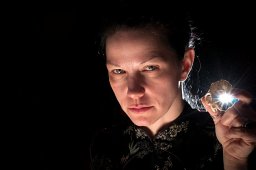 K. Anne Isola Nekaris合作论文数School of Social Science and Law, Oxford Brookes University2Andrew J. Crawford合作论文数1Christopher C. Austin合作论文数1Stephen E.W. Green合作论文数1Averee M. Luhrs合作论文数1
 Marco Mancuso合作论文数1
 Diego Almeida-Reinoso合作论文数1




