AbstractOne of the areas in terrorism research that has not been adequately examined is the geographic concentration of pyro-terrorism (PT) attacks. The literature related to the geographical distribution of terror generally focuses on macro-places (continents, countries and regions) and micro-places – “hot spots”. However, to our knowledge, the geographical distribution of terror in forests has yet to be studied. The findings of “hot spots” studies have great relevance for law enforcement practitioners. This study examines the spatial characteristics of forest PT and whether there is a concentration of PT attacks in a limited number of “hot forests” that are stable over time. This study examined the entire population of suspected forest PT in Israel between 2008 and 2022 (excluding 2016), totalling 2,297 attacks. The research revealed high spatial clustering of forest PT attacks concentrated in specific “hot forests” and that they were stable over time. In conclusion, the concentration of PT attacks calls for a specialized counterterrorism response, equivalent to “hot spots policing”, based on the characteristics of potential terrorist hot forests.
Purpose Previous research has shown that terror attacks affect a variety of outcomes. However, one outcome that has remained relatively neglected is crime. In the current study we examine the immediate effect of terrorism on crime, and discuss several behavioral mechanisms that might explain this effect. Design/methodology/approach We use data from 190 Israeli localities over 12 years (1999–2011). Applying a fixed-effects Poisson regression model, we assess the effect of terror attacks on recorded crimes of three types – property, domestic violence, and fraud – on the days following the attack. We also examine whether the effect is conditioned on geographical proximity to the attack. Findings We find the occurrence of terror attacks has a significant and negative effect on recorded cases of the three crime types. This effect grows stronger as geographical proximity to the attack increases. Originality/value Our results suggest that terrorism has an immediate negative effect on crime. This effect might be explained by changes in the behavior of police officers, offenders, and citizens.
The road to evidence-based policing (EBP) is often difficult, and the Israeli experience has been no different. To overcome barriers and more effectively facilitate and ensure translation of research into practice, Sherman (1998) suggested the role of the “evidence cop.” The evidence cop, whether a sworn officer or an outside academic, is assigned responsibility for overseeing the implementation of EBP. Success in achieving the ambitious objectives of EBP is likely to vary considerably due to the likelihood that the officers will be perceived with suspicion, undermining their authority. Our analysis takes a historical perspective, focusing on two distinct attempts at strategic reform in the Israel Police (IP). The first took place in the mid-1990s under Commissioner Hefetz, while the first author was a senior figure in the IP and benefits from first-hand knowledge of the attempt to integrate EBP. The second attempt took place in the recent years under Commissioner Alsheich. The reason Alsheich was able to achieve considerable success in his substantial EBP reform in the police force, while Hefetz and many commissioners around the world were less successful, lies, in our opinion, in the fact that Alsheich himself was the “evidence cop”, leading the process as a “super evidence cop.”
Objectives Social media platforms such as Facebook are used by both radicals and the security services that keep them under surveillance. However, only a small percentage of radicals go on to become terrorists and there is a worrying lack of evidence as to what types of online behaviors may differentiate terrorists from non-violent radicals. Most of the research to date uses text-based analysis to identify “radicals” only. In this study we sought to identify new social-media level behavioral metrics upon which it is possible to differentiate terrorists from non-violent radicals. Methods: Drawing on an established theoretical framework, Social Learning Theory, this study used a matched case-control design to compare the Facebook activities and interactions of 48 Palestinian terrorists in the 100 days prior to their attack with a 2:1 control group. Conditional-likelihood logistic regression was used to identify precise estimates, and a series of binomial logistic regression models were used to identify how well the variables classified between the groups. Findings: Variables from each of the social learning domains of differential associations, definitions, differential reinforcement, and imitation were found to be significant predictors of being a terrorist compared to a nonviolent radical. Models including these factors had a relatively high classification rate, and significantly reduced error over base-rate classification. Conclusions Behavioral level metrics derived from social learning theory should be considered as metrics upon which it may be possible to differentiate between terrorists and non-violent radicals based on their social media profiles. These metrics may also serve to support textbased analysis and vice versa.
Abstract Over the last few decades, one of the most pressing issues for governments, societies, and the law enforcement agencies that serve and protect them has been the threat of terrorism. Given that these changes represent a relatively new area for police, it is important to understand how terrorism is best policed and what approaches, strategies, and tactics are most effective. While the evidence base is still in its developmental stages, the evidence that does exist suggests that proactive policing strategies already employed against other forms of crime are the most useful and effective for policing terrorism. Policing efforts that focus on high concentrations of crimes at places (“hotspots”), or among the high-risk offenders, and employ problem-solving perspectives and use community-based strategies show consistent evidence of effectiveness and improving relations between the police and the public. Based on this evidence, policing agencies that undertake proven, proactive strategies toward policing terrorism are better able to incorporate their new role and focus within their broader law enforcement functions. By doing so, policing agencies can expand their role and function in a way that draws on their experience and strengths, rather than “reinventing the wheel” and overstretching resources. Additionally, policing agencies from different countries can draw on their own experience and local knowledge in dealing with other forms of crime, as well as the experience of other agencies and countries, in order to develop a comprehensive and multidimensional approach to policing terrorism.
The existence of bias in law enforcement can be difficult to verify or disprove, in part because of the difficulty of finding a benchmark—an objective estimate of actual offenses committed by the studied population—that can be compared with police enforcement. In the current study, we propose and test a method for examining bias in enforcement of speeding offenses. Using all speeding tickets issued in Israel in 2013–2015, we compare speeding tickets generated by stationary automatic traffic cameras, which provide an objective estimate of speed offenses, with speeding tickets issued manually by police officers, based on drivers’ ethnicity with further distribution by gender and age. Initial findings indicate that, overall, speeding tickets issued by police officers in Israel are not biased based on drivers’ ethnicity. This study highlights the importance of distinguishing between overrepresentation and bias in law enforcement, which sometimes seem to be blurred in the literature.
This article compares the ideology of Hilltop Youth in Judea and Samaria to that of Salafi-Jihadis in the West. It first demonstrates that there are significant and far-reaching similarities between the two groups’ world views. It then explains why, despite profound ideological similarities, there are vast differences in the type of violent acts each group commits. The Hilltop Youth primarily commit acts of vandalism with few deliberate murders, while the Salafi-Jihadis in the West engage mainly in acts of murder. The article suggests that countervailing precepts within the Hilltop Youth’s religious thought currently may create a normative balance that restrains their violent conduct, specifically against their co-religionists. This normative balance accounts for the contemporary difference between their violent acts and those of Salafi-Jihadis in the West. As the article suggests, however, this normative balance has been recently challenged by Hilltop Youth who offered innovative legal interpretations that could pave legal way for specifically intra-Jewish violence.
Objectives This study examines the spatial characteristics of vehicular terror attacks in Israel from a "micro place" perspective at the street segment level. Utilizing data obtained from the Israel Security Agency, Israel National police, and open sources, the study analyzes the 71 vehicular attacks carried out in Israel between 2000 and 2017. In addition to examining the hot-spots at which attacks occurred, we also identify "hot routes", estimated journey to attack routes. Methods We move beyond traditional approaches by calculating and comparing generalized Gini coefficients and their Lorenz curves for both the hot spots and hot routes. Results Tight spatial clustering in Jerusalem and the West Bank is found to be characteristic of this type of attack, which is limited by a range geographic constraints. Hot routes are identified as being highly concentrated at the street-segment level, although they are relatively less concentrated than hot-spots. Additionally, the presence of a strong distance decay function is confirmed. Conclusions The findings indicate that the laws of crime concentration are applicable to the case of lone terrorist vehicular attacks. The results demonstrate the utility of the methodological approach to examining specific types of terror attacks. Such approaches may be useful for informing environmental based prevention policies and strategies.
Objectives One of the areas in terrorism that has not been adequately examined, is the geographic concentration of terror attacks in a city's micro places. The literature related to the geographical distribution of terror generally focuses on macro places: continents, countries, and regions. In contrast, in the study of ordinary crime, significant studies have been conducted on the distribution of crime in micro-places "hot spots". The findings of these studies have great significance when adopting models of law enforcement. This study examines whether there is a concentration of terror attacks in a limited number of hot spots that are stable over time. Methods This study examines the entire population of terror attacks in the city of Jerusalem between 2000 and 2017 (249 attacks involving explosives, shootings, stabbings, attacks with a deadly weapon, and run over attacks) as a case study. We investigated and mapped each attack's exact location (for the majority of attacks) and characterized the particular micro places of these terror attacks, as well as the attacks themselves. Results The research revealed that there is a higher frequency of terror attacks concentrated in specific hot spots and that they are stable over time. Conclusions The concentration of terror attacks calls for a specialized counterterrorism response equivalent to "hot spots policing" based on the characteristics of the potential terrorist hot spots.
In the last two decades, democratic countries have had to contend with a growing and evolving terrorist threat. Many of the counter-terrorism policies that have been introduced during this period have been criticized for having been made hastily and without a solid evidentiary basis. Critics argue that as a result, many policies not only fail to guard human rights but impinge on them, all the while also proving ineffectual. By failing to safeguard human and civil rights and liberties, many see that such policies erode legitimacy and trust through discriminatory and alienating practices and thereby contribute to the radicalization that gives rise to the terrorism which they seek to prevent. Striking a balance between security needs and human rights concerns is certainly an important one. Selecting counter-terrorism strategies that limit humanhuman-rights rights impingements may inherently address some of the tests of proportionality. The Israeli case, with its unique set of security challenges, provides an interesting laboratory to examine the relationship between counter-terrorism effectiveness and human rights maintenance. Taking a criminological approach to policing practices, in this chapter we highlight how key Israeli counter-terrorism policies combine situational prevention and focused deterrence approaches to achieve both proportionality and effectiveness.
There is agreement amongst scholars regarding the lack of a unique profile for lone wolf actor terrorists. Therefore, this study focuses on the characteristics of the lone attack, which has rarely been studied. The study seeks to fill these gaps, examining the element of opportunity and situational conditions by focusing on the offence/attack rather than on the offender/attacker in cases of run-over terrorist attacks. In order to shed more light on this dangerous phenomenon of lone-actor terror in general, and lone run-over attacks more specifically, this study examines all 62 run-over attacks carried out in Israel between January 2000 and March 2016. Data for this study were obtained from confidential and open sources. The study’s findings reveal certain characteristics of lone run-over attacks regarding the ‘four pillars of opportunity’ (target, weapon, tools/training and facilitating conditions). These findings suggest that, in order to prevent run-over terrorist attacks or to minimize the damage, one should not concentrate primarily on identifying the profile of the potential attacker. Rather, effective counter-measures should identify the run-over attack elements of situational opportunities and introduce effective situational crime prevention measures that have been found to be effective in preventing non-terrorist crime.
Lone actor terrorism has become a significant challenge for Western democracies. Previous studies have failed to point out a comprehensive profile of lone terrorists, and suggested that examining more specific sub-groups of lone actors, sharing contextual factors or ideology, may produce such a profile. The current study examines the sub-group of vehicle-borne lone terrorists, who committed their attacks in Israel and the West Bank between January 2000 and March 2016. Based on confidential and open-source data, we find that general sociodemographic characteristics did not produce a unique profile of attackers. However, a deeper examination of behavioral factors preceding the attack yields common traits. Specifically, we find that previous experience-both in different forms of unlawful behavior and in training related to the attack method-was significantly related to a successful attack. Similarities in regards to the triggers for the attack and personal motivations also emerge, suggesting that while operating independently, lone actors are very much influenced by ongoing events. We conclude that focusing on a sub-group of lone attackers following a spatio-methodological-oriented approach contributes to the construction of a profile for lone terrorists, and discuss these findings in the context of mitigation.
Informed by situational crime prevention (SCP) this study evaluates the effectiveness of the “West Bank Barrier” that the Israeli government began to construct in 2002 in order to prevent suicide bombing attacks.
This article reviews recent empirical research on policing terrorism and police–community relationships in Israel, for the purpose of drawing lessons for policing in Israel and other democratic societies. The studies in the first section reveal the implications of policing terrorism for crime control and police–community relationships. In the second section, studies show a long-term drop in public support for the police. They also address the implementation of community policing, the relationship between the Israel National Police and the Arab sector, and the importance of procedural justice to Israeli citizens. In our discussion, we take a broad perspective and suggest overall conclusions and implications.
Suicide terrorism is the most violent and horrifying form of terrorism in the world today. This kind of terrorism causes many fatalities and can throw an entire nation into a state of panic. We usually attribute this kind of terrorism to altruistic motivation, assuming that bombers are willing to sacrifice themselves for a higher cause. The current study uses the criminological theory of Rational Choice to analyze the motivation of jihadist suicide terrorism. By reviewing the religious, personal, and social incentives, we demonstrate that even those who kill themselves in suicide attacks, which are seemingly examples of irrational or altruistic behavior, do so while considering future, self-gratifying benefits. Since this self-destructive behavior is mostly driven not by altruistic motivation but by the anticipation of costs and benefits, we find that there is no fundamental difference between the perpetrators’ motivations and those of other criminals; both groups are committed to maximizing self-gratifying, beneficial behavior.
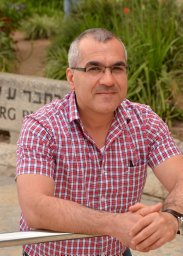 Badi Hasisi合作论文数Institute of Criminology, Hebrew University11
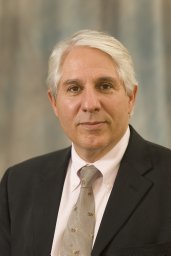 David Weisburd合作论文数Department of Criminology, Law and Society, George Mason University;Institute of Criminology, Faculty of Law, The Hebrew University7
 Michael Wolfowicz合作论文数Inst Criminol, Hebrew Univ Jerusalem5
 Idit Hakimi合作论文数3
 Gali Perry合作论文数Inst Criminol, Hebrew Univ Jerusalem2
 Tal Jonathan-Zamir合作论文数Inst Criminol, Hebrew Univ Jerusalem2Thomas E. Feucht合作论文数2
 Roni Factor合作论文数2Lois Felson Mock合作论文数2Yonatan Ilan合作论文数1
 Eran Itskovich合作论文数1
 Shai Amram合作论文数Fac Law, Hebrew Univ Jerusalem1
 Robert Apel合作论文数University at Albany School of Criminal Justice1
 Ronald V. Clarke合作论文数University of Wisconsin1Graeme R Newman合作论文数Criminal Justice, State University of New York at Albany1




