We present a study of cubic surfaces from the novel perspective of positive geometry. Our positive geometries have dimension two (the surface minus its 27 lines), dimension three (its complement in 3-space), and dimension four (the moduli space). In each case we explore the positive arrangement, its combinatorial rank, and the canonical forms.
We develop a theory of principal determinants and hypergeometric systems for realizable matroids. Our framework parallels the toric theory of Gel'fand, Kapranov, and Zelevinsky (GKZ), but with the combinatorics of matroids and their flats replacing the usual role of polytopes and their faces. In this analogy, the toric variety is replaced by a reciprocal linear space. The principal A-determinant is replaced by the principal matroid determinant, defined as a specialization of a resultant. The GKZ hypergeometric system is replaced by the matroid hypergeometric system, a holonomic D-module of combinatorial nature whose singular locus is conjectured to be the principal matroid determinant.
A toric amplitude is a rational function associated with a simplicial polyhedral fan. The definition is inspired by scattering amplitudes in particle physics. We prove algebraic properties of such amplitudes and study the geometry of their zero loci. These hypersurfaces play the role of Warren's adjoint via a dual volume interpretation. We investigate their Fano schemes and singular loci using the nef cone and toric irrelevant ideal of the fan.
We construct affine charts of a smooth projective toric variety which contain its nonnegative points, and which admit a closed embedding into the total coordinate space of Cox's quotient construction. We show that such positive charts arise from smooth subcones of the nef cone. To each positive chart we associate an algebraic moment map, the fibers of which are the critical points of a monomial function in Cox coordinates. This work provides a toric framework for the theory of u-equations in positive geometry.
Chebyshev varieties are algebraic varieties parametrized by Chebyshev polynomials or their multivariate generalizations. We determine the dimension, degree, singular locus and defining equations of these varieties. We explain how they play the role of toric varieties in sparse polynomial root finding, when monomials are replaced by Chebyshev polynomials. We present numerical root finding algorithms that exploit our results.
The Santalo'\ point of a convex polytope is the interior point which leads to a polar dual of minimal volume. This minimization problem is relevant in interior point methods for convex optimization, where the logarithm of the dual volume is known as the universal barrier function. When translating the facet hyperplanes, the Santalo'\ point traces out a semialgebraic set. We describe and compute this geometry using algebraic and numerical techniques. We exploit connections with statistics, optimization, and physics.
A recurring task in particle physics and statistics is to compute the complex critical points of a product of powers of affine-linear functions. The logarithmic discriminant characterizes exponents for which such a function has a degenerate critical point in the corresponding hyperplane arrangement complement. We study properties of this discriminant, exploiting its connection with the Hurwitz form of a reciprocal linear space.
We study scattering equations of hyperplane arrangements from the perspective of combinatorial commutative algebra and numerical algebraic geometry. We formulate the problem as linear equations on a reciprocal linear space and develop a degeneration-based homotopy algorithm for solving them. We investigate the Hilbert regularity of the corresponding homogeneous ideal and apply our methods to CHY scattering equations.
We develop a new eigenvalue method for solving structured polynomial equations over any field. The equations are defined on a projective algebraic variety which admits a rational parameterization by a Khovanskii basis, e.g., a Grassmannian in its Plücker embedding. This generalizes established algorithms for toric varieties, and introduces the effective use of Khovanskii bases in computer algebra. We investigate regularity questions and discuss several applications.
Polypols are natural generalizations of polytopes, with boundaries given by nonlinear algebraic hypersurfaces. We describe polypols in the plane and in 3-space that admit a unique adjoint hypersurface and study them from an algebro-geometric perspective. We relate planar polypols to positive geometries introduced originally in particle physics, and identify the adjoint curve of a planar polypol with the numerator of the canonical differential form associated with the positive geometry. We settle several cases of a conjecture by Wachspress claiming that the adjoint curve of a regular planar polypol does not intersect its interior. In particular, we provide a complete characterization of the real topology of the adjoint curve for arbitrary convex polygons. Finally, we determine all types of planar polypols such that the rational map sending a polypol to its adjoint is finite, and explore connections of our topic with algebraic statistics.
These are lecture notes supporting a minicourse taught at the Summer School in Total Positivity and Quantum Field Theory at CMSA Harvard in June 2025. We give an introduction to positive geometries and their canonical forms. We present the original definition by Arkani-Hamed, Bai and Lam, and a more recent definition suggested by work of Brown and Dupont. We compute canonical forms of convex polytopes and of quasi-regular polypols, which are nonlinear generalizations of polygons in the plane. The text is a collection of known results. It contains many examples and a list of exercises.
A likelihood function on a smooth very affine variety gives rise to a twisted de Rham complex. We show how its top cohomology vector space degenerates to the coordinate ring of the critical points defined by the likelihood equations. We obtain a basis for cohomology from a basis of this coordinate ring. We investigate the dual picture, where twisted cycles correspond to critical points. We show how to expand a twisted cocycle in terms of a basis, and apply our methods to Feynman integrals from physics.
This article serves as an introduction to the special volume on Positive Geometry in the journal Le Matematiche. We attempt to answer the question in the title by describing the origins and objects of positive geometry at this early stage of its development. We discuss the problems addressed in the volume and report on the progress. We also list some open challenges.
A chopped ideal is obtained from a homogeneous ideal by considering only the generators of a fixed degree. We investigate cases in which the chopped ideal defines the same finite set of points as the original one-dimensional ideal. The complexity of computing these points from the chopped ideal is governed by the Hilbert function and regularity. We conjecture values for these invariants and prove them in many cases. We show that our conjecture is of practical relevance for symmetric tensor decomposition.
Approximating periodic solutions to the coupled Duffing equations amounts to solving a system of polynomial equations. The number of complex solutions measures the algebraic complexity of this approximation problem. Using the theory of Khovanskii bases, we show that this number is given by the volume of a certain polytope. We also show how to compute all solutions using numerical nonlinear algebra.
Tropical implicitization means computing the tropicalization of a unirational variety from its parametrization. In the case of a hypersurface, this amounts to finding the Newton polytope of the implicit equation, without computing its coefficients. We present a new implementation of this procedure in Oscar.jl. It solves challenging instances, and can be used for classical implicitization as well. We also develop implicitization in higher codimension via Chow forms, and we pose several open questions.
We reformulate the Landau analysis of Feynman integrals with the aim of advancing the state of the art in modern particle-physics computations. We contribute new algorithms for computing Landau singularities, using tools from polyhedral geometry and symbolic/numerical elimination. Inspired by the work of Gelfand, Kapranov, and Zelevinsky (GKZ) on generalized Euler integrals, we define the principal Landau determinant of a Feynman diagram. We illustrate with a number of examples that this algebraic formalism allows to compute many components of the Landau singular locus. We adapt the GKZ framework by carefully specializing Euler integrals to Feynman integrals. For instance, ultraviolet and infrared singularities are detected as irreducible components of an incidence variety, which project dominantly to the kinematic space. We compute principal Landau determinants for the infinite families of one-loop and banana diagrams with different mass configurations, and for a range of cutting-edge Standard Model processes. Our algorithms build on the Julia package Landau.jl and are implemented in the new open-source package PLD.jl available at https://mathrepo.mis.mpg.de/PLD/.
We consider semi-algebraic subsets of the Grassmannian of lines in three-space called tree amplituhedra. These arise in the study of scattering amplitudes from particle physics. Our main result states that tree amplituhedra in Gr(2, 4) are positive geometries. The numerator of their canonical form plays the role of the adjoint in Wachspress geometry, and is uniquely determined by explicit interpolation conditions.
We study vector spaces associated to a family of generalized Euler integrals. Their dimension is given by the Euler characteristic of a very affine variety. Motivated by Feynman integrals from particle physics, this has been investigated using tools from homological algebra and the theory of $D$-modules. We present an overview and uncover new relations between these approaches. We also provide new algorithmic tools.
We stratify families of projective and very affine hypersurfaces according to their topological Euler characteristic. Our new algorithms compute all strata using algebro-geometric techniques. For very affine hypersurfaces, we investigate and exploit the relation to critical point computations. Euler stratifications are relevant in particle physics and algebraic statistics. They fully describe the dependence of the number of master integrals, respectively the maximum likelihood degree, on kinematic or model parameters.
 Marc Van Barel合作论文数Department of Computer Science, Faculty of Engineering Science, Katholieke Universiteit Leuven11
 Bernd Sturmfels合作论文数Max Planck Institute for Mathematics in the Sciences;Max-Planck-Gesellschaft9
 Claudia Fevola合作论文数MPI-MiS6
 Sebastian Mizera合作论文数Inst Adv Study, Einstein Dr, Princeton, NJ 08540 USA5
 Bernard Mourrain合作论文数Inria Sophia Antipolis Mediterranee Aromath5
 Saiei-Jaeyeong Matsubara-Heo合作论文数3Daniele Agostini合作论文数MPI-MiS3
 Kristian Ranestad合作论文数Department of Mathematics, University of Oslo3
 Jan Verschelde合作论文数University of Illinois at Chicago; Statistics and Computer Science ;Department of Mathematics3Dmitrii Pavlov合作论文数2Anna-Laura Sattelberger合作论文数MPI MiS, Leipzig, Germany2
 Lukas Kühne合作论文数Einstein Inst Math, Hebrew Univ Jerusalem2Rainer Sinn合作论文数Math Inst, Univ Leipzig2
 Taylor Brysiewicz合作论文数College Station, Texas A&M University2
 Matías R. Bender合作论文数Dept Math, Tech Univ Berlin2
 Nick Vannieuwenhoven合作论文数nick.vannieuwenhoven@cs.kleuven.be and raf.vandebril@cs.kleuven.be and karl.meerbergen@cs.kleuven.be2
 Felix Rydell合作论文数Department of Mathematics, School of Engineering Science, Royal Institute of Technology1Kemal Rose合作论文数1Thomas Yahl合作论文数1Elise Walker合作论文数1
 Rob Claes合作论文数Corresponding author.1
 Miruna-Stefana Sorea合作论文数Max-Planck-Institut für Mathematik in den NaturwissenschaftenLeipzig1Leonid Monin合作论文数Sch Math, Univ Bristol1Marta Panizzut合作论文数Chair Discrete Math Geometry, Tech Univ Berlin1
 Sascha Timme合作论文数Technische Universität Berlin1
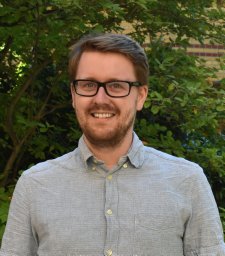 Paul Breiding合作论文数Universität Osnabrück1
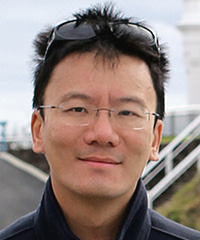 Thomas Lam合作论文数Department of Mathematics, College of Literature, Science, and the Arts, University of Michigan1
 Kathlén Kohn合作论文数Division of Mathematics of Data and AI, Department of Mathematics, School of Engineering Sciences, KTH Royal Institute of Technology1
 Michael Borinsky合作论文数1
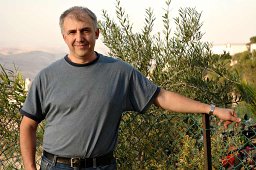 Boris Shapiro合作论文数University of Stockholm1
 Timothy Duff合作论文数College of Arts and Science, University of Missouri–Columbia1
 François-Xavier Vialard合作论文数University Gustave Eiffel1
 Ragni Piene合作论文数Department of Mathematics, The Faculty of Mathematics and Natural Sciences, University of Oslo1
 Fulvio Gesmundo合作论文数1
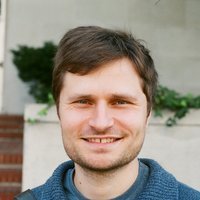 Mateusz Michalek合作论文数Max Planck Institute for Mathematics in the Sciences, Leipzig, Germany1Max Von Renesse合作论文数1
 Karl Meerbergen合作论文数Department of Computer Science of Leuven University (Katholieke Universiteit Leuven)1




