The use of a large-aperture liquid crystal device in a fluorescent microscope is demonstrated to obtain a spatially selective excitation with an order of magnitude enhancement of the efficiency of the local fluorescence. Better than 1 µm lateral resolution of excitation is achieved by generating local electrically tunable lenses that can be moved to continuously scan the entire field of view. Changing their optical powers also allows for the continuous depth scanning of the excitation point. The proposed approach can be integrated into commercial microscopes as an "add-on" light source.
The ArmazoNes high Dispersion Echelle Spectrograph (ANDES) is a powerful second-generation high-resolution spectroscopic instrument for the Extremely Large Telescope (ELT). The UBV, RIZ, and YJH modules comprise fibre-fed spectrographs of the ANDES baseline design and will offer continuous wavelength coverage of 0.35-1.8 μm, with the addition of a K-band channel providing coverage up to 2.4 μm. Coupled with a spectral resolution of ∼100,000, ANDES must deliver the required wavelength calibration stability of 1 m/s over 24 hours, with a goal of 0.02 m/s across 10 years. These requirements establish the framework for the infrared module of ANDES, the YJH Spectrograph, leading to what will likely be the largest cryogenic, ultra-stable, high-resolution spectrograph ever built, and will offer the unique ability to observe in both seeing- and diffraction-limited modes interchangeably. We present the current design and performance analysis of the ANDES YJH Spectrograph, outlining the engineering challenges encountered alongside the corresponding strategies adopted to navigate them. In particular, we detail the technology development of the primary dispersing element, an echelle grating mosaic that will span over a metre in length.
Deformable mirrors are widely used in astronomy, laser communications, and vision science, but conventional contact-based designs are limited by small achievable strokes (< 10 µm). To address this limitation, we developed a contactless deformable mirror based on a magnetorheological elastomer membrane actuated by an array of permanent magnets. The 50 mm diameter, 275 µm thick membrane, composed of PDMS with magnetite nanoparticles, exhibited surface roughness between 3 - 7 nm. Under magnetic flux densities from 21 mT to 77 mT, the mirror achieved deformations up to 0.97 mm using a 37 magnet hexagonal array. Numerical simulations performed in COMSOL showed excellent agreement with experiments, confirming the potential of magnetic actuation to overcome the stroke limitations of conventional deformable mirrors.
Fabricating the Gemini infrared multi-object spectrograph (GIRMOS) image slicer requires ultra-precision diamond machining (UPDM) to achieve nanometric surface quality for astronomical observations. Existing surface topography models lack realism and general modelling in predicting surface generation for complex geometries. This study develops an improved surface topography model for RSA 6061 aluminum image slicers by incorporating refined tool edge profiles, material defects, and post-machining behavior alongside vibration, feed, and tool geometry parameters. Experimental validation of three-slice samples demonstrated excellent agreement with predictions, achieving surface roughness of 3.76-4.1 nm. Power spectral density and profilometry analyses confirm the model's accuracy for UPDM of optical components.
Deep learning is rapidly transforming optical system engineering by introducing data-driven and differentiable modeling techniques into traditionally expert-driven design workflows. This review provides a comprehensive synthesis of recent advances in integrating deep learning across the optical system lifecycle, from initial structure generation to physical assembly. We categorize current methods into three major categories: starting point generation (SPG), End-to-End (E2E) co-optimization, and optical active alignment (OAA). SPG networks aim to explore the design space efficiently by learning mappings from system specifications to viable optical layouts, serving as high-quality initial configurations. E2E methods incorporate the optical imaging process and downstream tasks into differentiable learning pipelines, enabling joint optimization of optical and network parameters. OAA networks bridge simulation and hardware realization by using optical measurements to predict and correct fabrication and alignment deviations during assembly. For each category, we discuss the motivations, modeling strategies, and system-level insights, complemented by representative design examples that illustrate practical performance, as well as the associated challenges and emerging trends. We further analyze cross-domain synergies, highlighting reusable modules. Despite their promise, current approaches face challenges related to generalization, simulation fidelity, and interpretability. Addressing these gaps will require standardized datasets and benchmarks, physics-informed and tolerance-aware training strategies, and learning frameworks that generalize across optical architectures. This review aims to provide both a structured overview and a roadmap for researchers and practitioners working at the intersection of photonics and machine learning.
In this paper, we discuss how ray tracing can be used and whether it is still relevant in the design of quantum-enhanced technological solutions. Furthermore, are current ray tracing software effective in optimizing quantum imaging, such as ghost imaging, quantum super-resolution, or quantum communication with data encryption?
This joint feature issue of Optics Express and Applied Optics is organized in conjunction with the 2025 Optica conference on 3D Image Acquisition and Display: Technology, Perception and Applications, which was held from 18-21 August as part of the 2025 Imaging and Applied Optics Congress in Seattle, United States. This feature issue presents 34 articles that cover the topics and scope of the 2025 3D Image Acquisition and Display conference. This introduction provides a summary of the articles published in this feature issue.
Sea ice harbours a rich community of well-adapted microorganisms that inhabit liquid micro-spaces where extreme conditions prevail. Currently at risk under climate change, the sea-ice microbiome holds mysteries about evolution of life on Earth and possibly elsewhere, which require methodological innovation to be unravelled. Gaining microscopic insight into the internal structure and biology of sea ice has traditionally been limited to destructive and extrusive ice core sampling methods. Here we present an in situ microscopic imaging system to observe undisturbed living microorganisms directly within sea the ice matrix. The complex and heterogeneous nature of sea ice, including its water crystal lattice, brine channels, air bubbles, and various impurities, presents engineering challenges for the development of this imaging system. Despite the fragile nature of the sea-ice matrix, we could successfully deploy, test and use the new in situ microscope during a recent expedition on the icepack in Arctic. We collected numerous images of live and intact single-celled and colony-forming diatoms, and documented for the first time at such a high resolution some microphysical features of sea ice. The hardware and software design of the endoscope is presented along with acquisition results of the microstructure and diatom images. These findings collectively demonstrate the potential for this new in situ microscopic imaging system to transform the way we study sea ice and to allow a deeper understanding of its complex microstructure and living microorganisms.
This feature issue of Optics Express is organized in conjunction with the 2024 Optica conference on 3D Image Acquisition and Display: Technology, Perception and Applications which was held from the 15th to 19th of July as part of the 2024 Imaging and Applied Optics Congress in Toulouse, France. This feature issue presents 50 articles that cover the topics and scope of the 2024 3D Image Acquisition and Display conference. This introduction provides a summary of these published articles that appear in this feature ssue.
3D light field displays (LFDs) can reproduce the main depth cues of human vision by reconstructing the spatio-angular light distribution of a scene. In integral imaging (InIm)-based 3D LFD, this reconstruction is achieved by combining a light source panel with a microlens array (MLA). However, optical aberrations induced by the MLA can degrade the light field quality, thereby altering the rendered depth cues. To better understand these effects, we introduce a new simulation-based framework that links field-dependent aberrations to binocular response by accounting for human visual system characteristics. Through the analysis of the wavefront curvature of individual elemental views, the proposed method quantifies and maps the visual performance of each eye across the full field of view. From these analyses, both monocular and binocular metrics are derived, enabling the evaluation of interocular behavior across different viewing angles and reconstruction depths. Through illustrative examples, we showed that field-dependent aberrations affect the binocular response and degrade its uniformity across the field of view. Based on tolerance criteria derived from the literature, we define an acceptability zone in which binocular performance is maintained. Supplementary analysis reveals that, under the super multi-view condition, visual aberrations primarily affect interocular disparities rather than the eye's accommodative response. While experimental validation remains essential to confirm perceptual thresholds, the proposed framework provides an additional layer in the characterization process to assist and guide the design of better 3D LFDs by accounting for binocular perception.
 Denis Brousseau合作论文数62
 Rene Doyon合作论文数53
 Etienne Artigau合作论文数Université de Montréal33Jocelyn Parent合作论文数31
 Philippe Vallee合作论文数29Lison Malo合作论文数27Guillaume Allain合作论文数26Suresh Sivanandam合作论文数David A. Dunlap Department of Astronomy & Astrophysics, Faculty of Arts and Science, University of Toronto22
 Jean-François Lalonde合作论文数Department of Electrical and Computer Engineering, Universite Laval;Computer Vision and Systems Lab, Universite Laval;Faculté Des Sciences Et De Génie, Universite Laval22
 François Bouchy合作论文数Department of Astronomy, University of Geneva21
 Francesco Pepe合作论文数Department of Astronomy, University of Geneva21
 François Wildi合作论文数Department of Astronomy, University of Geneva21Patrice Roulet合作论文数Immervision Inc, 2020 Robert Bourassa Blvd,Suite 2320, Montreal, PQ H2A 2A5, Canada20
 V. A. Reshetov合作论文数20frederique baron合作论文数19
 David Lafrenière合作论文数Département De Physique, Faculté Des Arts Et Des Sciences, Université De Montréal;Centre De Recherche En Astrophysique Du Québec19Poulin-Girard Anne-Sophie合作论文数18
 Xavier Delfosse合作论文数Centre National De La Recherche Scientifique;Institut de Planétologie et d’Astrophysique de Grenoble18Dallaire Xavier合作论文数17
 Alexandre Cabral合作论文数Faculty of Applied Science, University of Sherbrooke17
 Olivier Hernandez合作论文数17Frédéric Grandmont合作论文数17
 Jean-Pierre Véran合作论文数Herzberg Astrophysics17
 Nuno C. Santos合作论文数Departamento de Física e Astronomia, Faculdade de Ciências, Universidade do Porto;Instituto de Astrofísica e Ciências do Espaço16
 Uriel Conod合作论文数Dept Phys & Astron, Univ British Columbia15Julie Buquet合作论文数Immervision Inc, 2020 Robert Bourassa Blvd,Suite 2320, Montreal, PQ H3A 2A5, Canada15Jeck Borne合作论文数Ctr Opt Photon & laser, Univ Laval15
 Michel Piché合作论文数Department of Physics, Engineering Physics and Optics, Laval University;Centre d’Optique Photonique et Laser, Laval University15
 Claudio Melo合作论文数European Southern Observatory15
 Bruno Chazelas合作论文数15
 Nicolas B. Cowan合作论文数Trottier Space Institute, McGill University;Department of Earth and Planetary Sciences, McGill University14Zhenfeng Zhuang合作论文数14
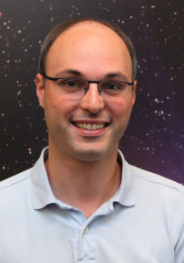 Christophe Lovis合作论文数Department of Astronomy, University of Geneva;Geneva Observatory, University of Geneva14Isabelle Boisse合作论文数14
 Stéphane Udry合作论文数Department of Astronomy, Universite de Geneve14Christian Marois合作论文数13Ryan Cloutier合作论文数13Manuel Abreu合作论文数Instituto de Astrofísica e Ciências do Espaço, Universidade de Lisboa13
 Xavier Bonfils合作论文数Centre National de la Recherche Scientifique;Institut de Planétologie et d'Astrophysique de Grenoble13
 D. Sosnowska合作论文数13Olivier Lardiere合作论文数13Laurent Drissen合作论文数13
 P. Figueira合作论文数Observatoire de Geneve;Universite de Geneve;Observatoire de Geneve, Universite de Geneve13D. Brousseau合作论文数12
 Ermanno Borra合作论文数12G. Lo Curto合作论文数European Southern Observatory12
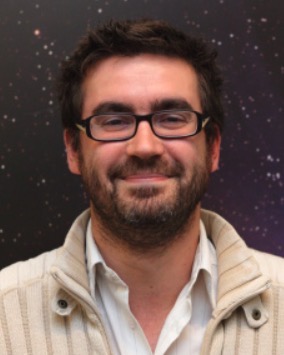 David Ehrenreich合作论文数Department of Astronomy, Université de Genève12
 Rafael Rebolo合作论文数Institute of Astrophysics of the Canary Islands12S. C. C. Barros合作论文数Queen's University Belfast12




