Breast cancer is the most common type of cancer in women. Today, the radiotherapy method is widely preferred to treat cancer patients where proton therapy is a radiotherapy method used to destroy cancerous cells using proton beams with unique characteristics. Photon therapy, on the other hand, is a classical radiotherapy method that treats cancerous cells by targeting ionizing radiation. In our study, a tumor was placed in the left breast in a water phantom with the help of the Geant4 simulation program and geometry with critical organs was modeled. With this simulation, the doses received by the organs were interpreted and comparisons were made using the chi-square method as the two different source beams, proton and photon deployed. When the percentile values in the dose table are normalized for 1 Gy, the test statistic obtained as 0.467, and the H0 hypothesis is rejected at the α=0.975 Statistically, we measured the significant differences between proton and photon dose values for tumors and other organs by Geant4 simulations.
Higher collision energies at future colliders may eventually lead to the falsification of standard fixed-order perturbation theory and linear evolutions due to nonlinear structure of QCD at small-[Formula: see text]. New physics research works that are strictly based on accurate jet measurements will undoubtedly have this observation known as Balitsky–Fadin–Kuraev–Lipatov (BFKL) effect via angular jet decorrelations taking into account the Mueller–Navelet jets. As one of the frontier colliders, FCC-ep, has a great observation potential on parton densities through asymmetrical collisions. We aim to test the observability of azimuthal angular jet decorrelations with the recent event generators (HERWIG, PYTHIA) at the generator and detector level for FCC-ep center of mass energies [Formula: see text][Formula: see text]TeV in proton–electron collisions. Jets are reconstructed by the anti-[Formula: see text] algorithm ([Formula: see text]), with [Formula: see text][Formula: see text]GeV and selected in the range of [Formula: see text]. Relevant pseudo-rapidity regions have been analyzed with the azimuthal-angle difference between Mueller–Navelet Jets ([Formula: see text]) in the pseudo-rapidity separation ([Formula: see text]) and the distributions of [Formula: see text] are presented in comparison as the result.
A bstract A search for the exclusive decays of the Higgs and Z bosons to a ϕ or ρ meson and a photon is performed with a pp collision data sample corresponding to an integrated luminosity of up to 35 . 6 fb −1 collected at $$ \sqrt{s}=13 $$ s = 13 TeV with the ATLAS detector at the CERN Large Hadron Collider. These decays have been suggested as a probe of the Higgs boson couplings to light quarks. No significant excess of events is observed above the background, as expected from the Standard Model. Upper limits at 95% confidence level were obtained on the branching fractions of the Higgs boson decays to ϕ γ and ρ γ of 4 . 8 × 10 −4 and 8 . 8 × 10 −4 , respectively. The corresponding 95% confidence level upper limits for the Z boson decays are 0 . 9 × 10 −6 and 25 × 10 −6 for ϕ γ and ρ γ, respectively.
A search for leptoquarks decaying into the bτ final state is performed using Run 2 proton-proton collision data from the Large Hadron Collider, corresponding to an integrated luminosity of 139 fb−1 at √(s) = 13 TeV recorded by the ATLAS detector. The benchmark models considered in this search are vector leptoquarks with electric charge of 2/3e and scalar leptoquarks with an electric charge of 4/3e. No significant excess above the Standard Model prediction is observed, and 95
One of the most frequent children tumors in the area around the eyes is defined as retinoblastoma. Proton radiotherapy treatment is a particularly effective type of radiation therapy due to the prolonged survival rates of children with childhood cancers such as retinablastoma, continued growth of nearby organs and tissues, low radiation dose restriction of vision-related tissues and systems of these tissues. In this study, a geometry phantom including eyeball, lens, lacrimal gland, optic nerve, optic chiasm, retina, cancer, cornea and bone structures was modeled with Monte Carlo simulation tool GATE (vGATE 9.0). With this simulation, the doses absorbed by the tissues were calculated using the DoseActor and TLEDoseActor algorithms. Secondary doses were determined by the TLEDoseActor algorithm. Determination of secondary radiations is important because of the low radiation dose limit of tissues and systems that affect vision. The best treatment results were tried to be obtained by giving the beam thickness of the radiation used in our study, 4 different angles towards the target and different energies. These results show that it can be helpful in calculating a treatment plan for proton therapy in clinical practice.
Radiation therapy is one of the most widely used treatment methods for tumors. The therapeutic use of carbon ions is more advantageous than other radiotherapy techniquies especially photon-based irradiation due to its physical properties and radiobiological effects, and therefore it has received more attention. One of the most important reasons for that carbon ion beams are more effective than photon beams while minimizing the dose in the normal tissues around the target, it offers an improved dose distribution that leads to sufficient dose concentration in tumors. In addition, the carbon beam reaches its maximum at the end of its range, which increases with depth, and due to this feature, it provides a higher biological efficiency. In radiotherapy studies, Monte Carlo simulation is widely used to determine the dose distributions and to obtain the correct properties of the beams. With MC simulation, it helps to understand the relative biological efficiency as well as the spatial model of energy storages. In this study, a geometry with critical organs (skull, brain, nasopharynx and thyroid) based on a MIRD phantom was modeled with the Monte Carlo simulation tool GATE (vGATE 9.0). In this experiment, the tumor was irradiated with different carbon beam energies and photon beams. The aim is to calculate the energy accumulations in the region and surrounding organs with the MC method, and as a result, to show the dosimetric advantages of carbon radiotherapy over photon radiotherapy.
Proton therapy as one of the radiotherapy applications, aims to treat the tumor by using the accelerated proton particle. High radiation dose distributions delivered to the tumor tissue, is characterized with Bragg curves, while the radiation in the tissues surrounding the tumor is expected to be as low as possible. In our study, proton treatment of the tumor volume placed in the brain created by GATE software was simulated. The absorbed doses in other organs created by GATE software during treatment were determined using DoseActor and TLEDoseActor algorithms. Nuclear interactions of the accelerated proton with the nucleus of the target atom make the target atom reactive and cause secondary radiation. Similar to the TLEDoseActor algorithm, NTLE algorithm was used to determine the doses caused by neutrons from these secondary radiations. With the algorithms used, out-of-field doses and secondary doses for proton beams at 250 MeV energy were determined. It is important to determine the secondary radiations caused by the interaction of the proton with the tissue and to determine the doses out of the field. These results may be helpful in determining and preventing secondary cancer formation in proton therapy in clinical applications.
This letter presents a search for narrow, high-mass resonances in the Zγ final state with the Z boson decaying into a pair of electrons or muons. The s=13 TeV pp collision data were recorded by the ATLAS detector at the CERN Large Hadron Collider and have an integrated luminosity of 140 fb−1. The data are found to be in agreement with the Standard Model background expectation. Upper limits are set on the resonance production cross section times the decay branching ratio into Zγ. For spin-0 resonances produced via gluon–gluon fusion, the observed limits at 95% confidence level vary between 65.5 fb and 0.6 fb, while for spin-2 resonances produced via gluon–gluon fusion (or quark–antiquark initial states) limits vary between 77.4 (76.1) fb and 0.6 (0.5) fb, for the mass range from 220 GeV to 3400 GeV.
The Large Hadron electron Collider (LHeC) is designed to move the field of deep inelastic scattering (DIS) to the energy and intensity frontier of particle physics. Exploiting energy recovery technology, it collides a novel, intense electron beam with a proton or ion beam from the High Luminosity--Large Hadron Collider (HL-LHC). The accelerator and interaction region are designed for concurrent electron-proton and proton-proton operation. This report represents an update of the Conceptual Design Report (CDR) of the LHeC, published in 2012. It comprises new results on parton structure of the proton and heavier nuclei, QCD dynamics, electroweak and top-quark physics. It is shown how the LHeC will open a new chapter of nuclear particle physics in extending the accessible kinematic range in lepton-nucleus scattering by several orders of magnitude. Due to enhanced luminosity, large energy and the cleanliness of the hadronic final states, the LHeC has a strong Higgs physics programme and its own discovery potential for new physics. Building on the 2012 CDR, the report represents a detailed updated design of the energy recovery electron linac (ERL) including new lattice, magnet, superconducting radio frequency technology and further components. Challenges of energy recovery are described and the lower energy, high current, 3-turn ERL facility, PERLE at Orsay, is presented which uses the LHeC characteristics serving as a development facility for the design and operation of the LHeC. An updated detector design is presented corresponding to the acceptance, resolution and calibration goals which arise from the Higgs and parton density function physics programmes. The paper also presents novel results on the Future Circular Collider in electron-hadron mode, FCC-eh, which utilises the same ERL technology to further extend the reach of DIS to even higher centre-of-mass energies.
The first measurement of longitudinal decorrelations of harmonic flow amplitudes v_{n} for n=2-4 in Xe+Xe collisions at sqrt[s_{NN}]=5.44 TeV is obtained using 3 μb^{-1} of data with the ATLAS detector at the LHC. The decorrelation signal for v_{3} and v_{4} is found to be nearly independent of collision centrality and transverse momentum (p_{T}) requirements on final-state particles, but for v_{2} a strong centrality and p_{T} dependence is seen. When compared with the results from Pb+Pb collisions at sqrt[s_{NN}]=5.02 TeV, the longitudinal decorrelation signal in midcentral Xe+Xe collisions is found to be larger for v_{2}, but smaller for v_{3}. Current hydrodynamic models reproduce the ratios of the v_{n} measured in Xe+Xe collisions to those in Pb+Pb collisions but fail to describe the magnitudes and trends of the ratios of longitudinal flow decorrelations between Xe+Xe and Pb+Pb. The results on the system-size dependence provide new insights and an important lever arm to separate effects of the longitudinal structure of the initial state from other early and late time effects in heavy-ion collisions.
A Tier-3g Facility within the computing resources of Istanbul Aydin University has been planned and installed with the TR-ULAKBIM national Tier-2 center. The facility is intended to provide an upgraded data analysis infrastructure to CERN researchers who are the members in the recent nation-wide projects and international projects such as ATLAS and CMS experiments. The fundamental design of Tier-3g has been detailed in this work with an emphasis on technical implementations of the following parts: Virtualization of all nodes, VOMS usage for reaching fast experimental data in the WLCG network, batch cluster / multicore computing with HTCONDOR and PROOF systems, usage of grid proxies to access code libraries in AFS and CVMFS, dynamic disk space allocation and remote system mounting of EOS. We also present the interpretation of test results that was obtained by the simulation of typical analysis codes.
The production cross-sections for W +/- and Z bosons are measured using ATLAS data corresponding to an integrated luminosity of 4.0 pb-1 collected at a centre-ofmass energy v s = 2.76 TeV. The deca ...
The azimuthal angular decorrelation that is relevant to small-x QCD physics is studied in this paper to show the BFKL effect with a recent event generator. Events are generated at root s = 100 TeV with proton- proton collisions and jets that are reconstructed by the anti-k(T) algorithm (R = 0.7) with p(T) > 35 GeV and in the rapidity range of vertical bar y vertical bar < 6 are selected for the study. The azimuthal-angle difference between Mueller-Navelet jets (Delta Phi) in the rapidity separation (Delta y) up to 12 is analysed. The distributions of < cos n(pi-Delta Phi)> for n = 1, 2, 3 and their ratios are also presented as a function of Delta y.
In response to the 2013 Update of the European Strategy for Particle Physics (EPPSU), the Future Circular Collider (FCC) study was launched as a world-wide international collaboration hosted by CERN. The FCC study covered an energy-frontier hadron collider (FCC-hh), a highest-luminosity high-energy lepton collider (FCC-ee), the corresponding 100km tunnel infrastructure, as well as the physics opportunities of these two colliders, and a high-energy LHC, based on FCC-hh technology. This document constitutes the third volume of the FCC Conceptual Design Report, devoted to the hadron collider FCC-hh. It summarizes the FCC-hh physics discovery opportunities, presents the FCC-hh accelerator design, performance reach, and staged operation plan, discusses the underlying technologies, the civil engineering and technical infrastructure, and also sketches a possible implementation. Combining ingredients from the Large Hadron Collider (LHC), the high-luminosity LHC upgrade and adding novel technologies and approaches, the FCC-hh design aims at significantly extending the energy frontier to 100TeV. Its unprecedented centre of-mass collision energy will make the FCC-hh a unique instrument to explore physics beyond the Standard Model, offering great direct sensitivity to new physics and discoveries.
A measurement of the associated production of a top-quark pair ($t\bar{t}$) with a vector boson ($W$, $Z$) in proton-proton collisions at a center-of-mass energy of 13 TeV is presented, using $36.1$ fb$^{-1}$ of integrated luminosity collected by the ATLAS detector at the Large Hadron Collider. Events are selected in channels with two same- or opposite-sign leptons (electrons or muons), three leptons or four leptons, and each channel is further divided into multiple regions to maximize the sensitivity of the measurement. The $t\bar{t}Z$ and $t\bar{t}W$ production cross sections are simultaneously measured using a combined fit to all regions. The best-fit values of the production cross sections are $\sigma_{t\bar{t}Z} = 0.95 \pm 0.08_{\mathrm{stat.}} \pm 0.10_{\mathrm{syst.}}$ pb and $\sigma_{t\bar{t}W} = 0.87 \pm 0.13_{\mathrm{stat.}} \pm 0.14_{\mathrm{syst.}}$ pb in agreement with the Standard Model predictions. The measurement of the $t\bar{t}Z$ cross section is used to set constraints on effective field theory operators which modify the $t\bar{t}Z$ vertex.
This change does not have any impact on the measured helicity fractions, but it changes the obtained limits on the anomalous couplings.
This paper reports searches for heavy resonances decaying into ZZ or ZW using data from proton-proton collisions at a centre-of-mass energy of √(s)=13 TeV. The data, corresponding to an integrated luminosity of 36.1 fb −1 , were recorded with the ATLAS detector in 2015 and 2016 at the Large Hadron Collider. The searches are performed in final states in which one Z boson decays into either a pair of light charged leptons (electrons and muons) or a pair of neutrinos, and the associated W boson or the other Z boson decays hadronically. No evidence of the production of heavy resonances is observed. Upper bounds on the production cross sections of heavy resonances times their decay branching ratios to ZZ or ZW are derived in the mass range 300-5000GeV within the context of Standard Model extensions with additional Higgs bosons, a heavy vector triplet or warped extra dimensions. Production through gluon-gluon fusion, Drell-Yan or vector-boson fusion are considered, depending on the assumed model.
As a high energy e–p collider, FCC-he, has been recently proposed with sufficient energy options to investigate Higgs couplings. To analyze the sensitivity on Higgs boson couplings, we focus specifically on the CP-even and CP-odd Wilson coefficients with hhZZ and hhγγ four-point interactions of Higgs boson with Effective Lagrangian Model through the process e−p→hhje−. We simulate the related processes in FCC-he, with 60 GeV and 120 GeV e− beams and 50 TeV proton beam collisions. We present the exclusion limits on these couplings both for 68% and 95% C.L. in terms of integrated luminosities.
Abstract A search for supersymmetry involving the pair production of gluinos decaying via third-generation squarks into the lightest neutralino $$ \left({\tilde{\chi}}_1^0\right) $$ χ ˜ 1 0 is reported. It uses LHC proton-proton collision data at a centre-of-mass energy $$ \sqrt{s}=13 $$ s = 13 TeV with an integrated luminosity of 36.1 fb−1 collected with the ATLAS detector in 2015 and 2016. The search is performed in events containing large missing transverse momentum and several energetic jets, at least three of which must be identified as originating from b-quarks. To increase the sensitivity, the sample is divided into subsamples based on the presence or absence of electrons or muons. No excess is found above the predicted background. For $$ {\tilde{\chi}}_1^0 $$ χ ˜ 1 0 masses below approximately 300 GeV, gluino masses of less than 1.97 (1.92) TeV are excluded at 95% confidence level in simplified models involving the pair production of gluinos that decay via top (bottom) squarks. An interpretation of the limits in terms of the branching ratios of the gluinos into third-generation squarks is also provided. These results improve upon the exclusion limits obtained with the 3.2 fb−1 of data collected in 2015.
 Orhan Cakir合作论文数Department of Physics, Ankara University53
 Alexander Kupčo合作论文数Institute of Physics, Czech Academy of Sciences46
 Serhat Istin合作论文数Physics Department, Yeditepe University;CERN46
 Tobias Golling合作论文数Département De Physique Nucléaire Et Corpusculaire, Faculté Des Sciences, Université de Genève46
 Mario Lassnig合作论文数European Organization for Nuclear Research46
 Markus Elsing合作论文数Experimental Physics Department, European Organization for Nuclear Research46
 Julie Kirk合作论文数Rutherford Appleton Laboratory46
 Jan Kretzschmar合作论文数46
 Davide Boscherini合作论文数Sezione di Bologna, Istituto Nazionale di Fisica Nucleare46
 Phil Allport合作论文数School of Physics and Astronomy, University of Birmingham46
 Stefan Guindon合作论文数European Organization for Nuclear Research45
 Didier Lacour合作论文数Laboratoire Physique Nucléaire et Hautes Energies, Institut National De Physique Nucléaire Et De Physique Des Particules, CNRS;Paris University, VI-VII45
 Jens Dopke合作论文数Department of Physics, University of Oxford;STFC Rutherford Appleton Laboratory45
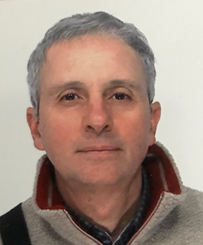 Lorenzo Bellagamba合作论文数Gran Sasso Laboratory, INFN45
 Jose Enrique Garcia合作论文数Instituto de Física Corpuscular45
 Mogens Dam合作论文数Niels Bohr Institute, University of Copenhagen45U. Kruchonak合作论文数45
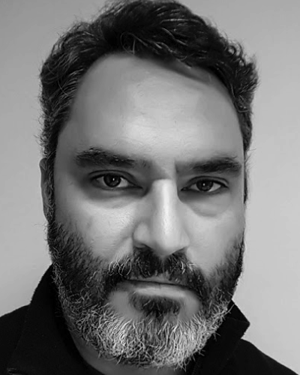 Augusto Santiago Cerqueira合作论文数Federal University of Juiz de Fora45
 Eric Lancon合作论文数Department of Physics, Brookhaven National Laboratory45
 O. Kortner合作论文数45M. Huhtinen合作论文数45A. Doria合作论文数45T. Kono合作论文数45
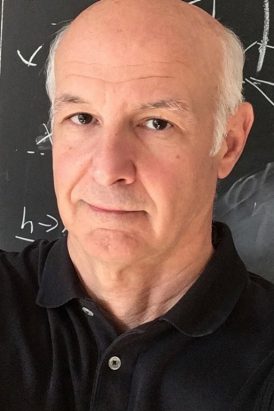 Dante Amidei合作论文数Department of Physics, College of Literature, Science, and the Arts, University of Michigan45S. Lai合作论文数45
 Uta Klein合作论文数School of Physical Sciences, University of Liverpool;Faculty of Science and Engineering, University of Liverpool45
 Lydia Iconomidou-Fayard合作论文数Laboratoire de l'Accélérateur Linéaire45
 Andrea Formica合作论文数IRFU/SEDI, CEA/Saclay45
 Amir Farbin合作论文数Department of Physics, College of Science, The University of Texas at Arlington45Krzysztof Korcyl合作论文数Institute of Nuclear Physics, Polish Academy of Sciences45
 Osamu Jinnouchi (陣内修)合作论文数Department of Physics, School of Science, Tokyo Institute of Technology45
 Tomáš Davídek合作论文数Institute of Particle and Nuclear Physics, Faculty of Mathematics and Physics, Charles University45
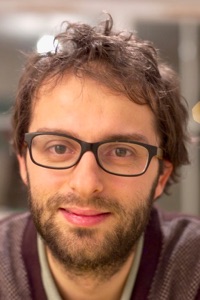 Andrea Coccaro合作论文数INFN Sezione di Genova45
 Sergio Grancagnolo合作论文数Dipartimento di Matematica e Fisica 'Ennio De Giorgi', Università del Salento;INFN Sezione di Lecce45
 Nikolaos Konstantinidis合作论文数Department of Physics and Astronomy, Faculty of Mathematical and Physical Sciences, University College London;STFC Centre for Doctoral Training in Data Intensive Science, University College London45
 Bob Kowalewski合作论文数Victoria Subatomic Physics & Accelerator Research Centre, Department of Physics and Astronomy, Faculty of Science, University of Victoria45
 Sergei Chekanov合作论文数High Energy Physics Division, Argonne National Laboratory45
 Nils Krumnack合作论文数Department of Physics and Astronomy, College of Liberal Arts and Sciences, Iowa State University45
 Pawel Klimek合作论文数UBS45J. Jovicevic合作论文数45C. Blocker合作论文数45S. Falciano合作论文数45Biagio Di Micco合作论文数45
 Kaushik De合作论文数Department of Physics, College of Science, Univeristy of Texas at Arlington45
 Christopher Lester合作论文数The Cavendish Laboratory, Department of Physics, University of Cambridge45Alessandro Di Girolamo合作论文数45P. Kodys合作论文数44G. Herten合作论文数44K. Einsweiler合作论文数44




