Daisychain is an interactive graph visualisation and search tool for custom-built gene homology databases. The main goal of Daisychain is to allow researchers working with specific genes to identify homologs in other annotation releases. The gene-centric representation includes local gene neighborhood to distinguish orthologs and paralogs by local synteny. The software supports genome sequences in FASTA format and GFF3 formatted annotation files, and the process of building the homology database requires a minimum amount of user interaction. Daisychain includes an integrated web viewer that can be used for both data analysis and data publishing. The web interface extends KnetMaps.js and is based on JavaScript.
Enormous volumes of COVID-19 research data have been published and this continues to increase daily. This creates challenges for researchers to interpret, prioritize and summarize their own findings in the context of published literature, clinical trials, and a multitude of databases. Overcoming the data interpretation bottleneck is vital to help researchers to be more efficient in their quest to identify COVID-19 risk factors, potential treatments, drug side-effects, and much more. As a proof of concept, we have organized and integrated a range of COVID-19 and human biomedical data and literature into a knowledge graph (KG). Here we present the datasets we have integrated so far and the content of the KG which consists of 674,969 biological concepts and over 1.6 million relationships between them. The COVID-19 KG is available via KnetMiner, an interactive online platform for gene discovery and knowledge mining, or via RDF and Neo4j graph formats which can be searched programmatically through SPARQL and Cypher endpoints. KnetMiner is a road mapped ELIXIR UK service. We hope this integrated resource will enable faster data interpretation and discovery of linkages between genes, drugs, diseases and many more types of information relating to COVID-19.
ABSTRACT Generating new ideas and scientific hypotheses is often the result of extensive literature and database reviews, overlaid with scientists’ own novel data and a creative process of making connections that were not made before. We have developed a comprehensive approach to guide this technically challenging data integration task and to make knowledge discovery and hypotheses generation easier for plant and crop researchers. KnetMiner can digest large volumes of scientific literature and biological research to find and visualise links between the genetic and biological properties of complex traits and diseases. Here we report the main design principles behind KnetMiner and provide use cases for mining public datasets to identify unknown links between traits such grain colour and pre-harvest sprouting in Triticum aestivum , as well as, an evidence-based approach to identify candidate genes under an Arabidopsis thaliana petal size QTL. We have developed KnetMiner knowledge graphs and applications for a range of species including plants, crops and pathogens. KnetMiner is the first open-source gene discovery platform that can leverage genome-scale knowledge graphs, generate evidence-based biological networks and be deployed for any species with a sequenced genome. KnetMiner is available at http://knetminer.org .
Gene regulatory networks are powerful tools which facilitate hypothesis generation and candidate gene discovery. However, the extent to which the network predictions are biologically relevant is often unclear. Recently a GENIE3 network which predicted targets of wheat transcription factors was produced. Here we used an independent RNA-Seq dataset to test the predictions of the wheat GENIE3 network for the senescence-regulating transcription factor NAM-A1 (TraesCS6A02G108300). We re-analyzed the RNA-Seq data against the RefSeqv1.0 genome and identified a set of differentially expressed genes (DEGs) between the wild-type and nam-a1 mutant which recapitulated the known role of NAM-A1 in senescence and nutrient remobilisation. We found that the GENIE3-predicted target genes of NAM-A1 overlap significantly with the DEGs, more than would be expected by chance. Based on high levels of overlap between GENIE3-predicted target genes and the DEGs, we identified candidate senescence regulators. We then explored genome-wide trends in the network related to polyploidy and found that only homeologous transcription factors are likely to share predicted targets in common. However, homeologs which vary in expression levels across tissues are less likely to share predicted targets than those that do not, suggesting that they may be more likely to act in distinct pathways. This work demonstrates that the wheat GENIE3 network can provide biologically-relevant predictions of transcription factor targets, which can be used for candidate gene prediction and for global analyses of transcription factor function. The GENIE3 network has now been integrated into the KnetMiner web application, facilitating its use in future studies.
Gene regulatory networks are powerful tools which facilitate hypothesis generation and candidate gene discovery. However, the extent to which the network predictions are biologically relevant is often unclear. Recently, as part of an analysis of the RefSeqv1.0 wheat transcriptome, a GENIE3 network which predicted targets of wheat transcription factors was produced. Here we have used an independent and publicly-available RNA-Seq dataset to validate the predictions of the wheat GENIE3 network for the senescence-regulating transcription factor NAM-A1 (TraesCS6A02G108300). We re-analysed the RNA-Seq data against the RefSeqv1.0 genome and identified a de novo set of differentially expressed genes (DEGs) between the wild-type and nam-a1 mutant which recapitulated the known role of NAM-A1 in senescence and nutrient remobilisation. We found that the GENIE3-predicted target genes of NAM-A1 overlap significantly with the de novo DEGs, more than would be expected for a random transcription factor. Based on high levels of overlap between GENIE3-predicted target genes and the de novo DEGs, we also identified a set of candidate senescence regulators. We then explored genome-wide trends in the network related to polyploidy and homoeolog expression levels and found that only homoeologous transcription factors are likely to share predicted targets in common. However, homoeologs in dynamic triads, i.e. with higher variation in homoeolog expression levels across tissues, are less likely to share predicted targets than stable triads. This suggests that homoeologs in dynamic triads are more likely to act on distinct pathways. This work demonstrates that the wheat GENIE3 network can provide biologically-relevant predictions of transcription factor targets, which can be used for candidate gene prediction and for global analyses of transcription factor function. The GENIE3 network has now been integrated into the KnetMiner web application, facilitating its use in future studies.
KnetMaps is a BioJS component for the interactive visualization of biological knowledge networks. It is well suited for applications that need to visualise complementary, connected and content-rich data in a single view in order to help users to traverse pathways linking entities of interest, for example to go from genotype to phenotype. KnetMaps loads data in JSON format, visualizes the structure and content of knowledge networks using lightweight JavaScript libraries, and supports interactive touch gestures. KnetMaps uses effective visualization techniques to prevent information overload and to allow researchers to progressively build their knowledge.
The speed and accuracy of new scientific discoveries - be it by humans or artificial intelligence - depends on the quality of the underlying data and on the technology to connect, search and share the data efficiently. In recent years, we have seen the rise of graph databases and semi-formal data models such as knowledge graphs to facilitate software approaches to scientific discovery. These approaches extend work based on formalised models, such as the Semantic Web. In this paper, we present our developments to connect, search and share data about genome-scale knowledge networks (GSKN). We have developed a simple application ontology based on OWL/RDF with mappings to standard schemas. We are employing the ontology to power data access services like resolvable URIs, SPARQL endpoints, JSON-LD web APIs and Neo4j-based knowledge graphs. We demonstrate how the proposed ontology and graph databases considerably improve search and access to interoperable and reusable biological knowledge (i.e. the FAIRness data principles).
KnetMaps is a BioJS component for the interactive visualization of biological knowledge networks. It is well suited for applications that need to visualise complementary, connected and content-rich data in a single view in order to help users to traverse pathways linking entities of interest, for example to go from genotype to phenotype. KnetMaps loads data in JSON format, visualizes the structure and content of knowledge networks using lightweight JavaScript libraries, and supports interactive touch gestures. KnetMaps uses effective visualization techniques to prevent information overload and to allow researchers to progressively build their knowledge.
Graph-based modelling is becoming more popular, in the sciences and elsewhere, as a flexible and powerful way to exploit data to power world-changing digital applications. Compared to the initial vision of the Semantic Web, knowledge graphs and graph databases are becoming a practical and computationally less formal way to manage graph data. On the other hand, linked data based on Semantic Web standards are a complementary, rather than alternative, approach to deal with these data, since they still provide a common way to represent and exchange information. In this paper we introduce rdf2neo, a tool to populate Neo4j databases starting from RDF data sets, based on a configurable mapping between the two. By employing agrigenomicsrelated real use cases, we show how such mapping can allow for a hybrid approach to the management of networked knowledge, based on taking advantage of the best of both RDF and property graphs.
 Keywan Hassani-Pak合作论文数Rothamsted Research10
 Chris J Rawlings合作论文数Biomedical Computing Unit;Imperial Cancer Research Fund Lincoln's Inn Fields;London;Biomedical Computing Unit, Imperial Cancer Research Fund Lincoln's Inn Fields6
 Marco Brandizi合作论文数Leaf Bioscience, Milano, Italy5
 Joseph Hearnshaw合作论文数2
 Anna E Backhaus合作论文数John Innes Centre, Norwich Research Park2
 Sophie A Harrington合作论文数John Innes Centre2
 Cristobal Uauy合作论文数John Innes Centre2Andrew L. Phillips合作论文数1
 J. Parsons合作论文数Florence Nightingale Fac Nursing Midwifery & Pall, Kings Coll London1Jakob Petereit合作论文数School of Biological Sciences, University of Western Australia1Sandeep Amberkar合作论文数1
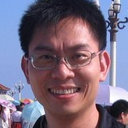 Chon Kit Kenneth Chan合作论文数Sch Biol Sci, Univ Western Australia1
 Bayer Philipp E合作论文数1
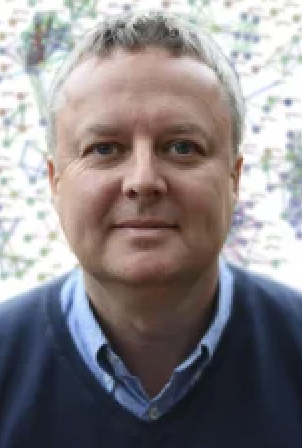 Dave Edwards合作论文数School of Biological Sciences, University of Western Australia;Institute of Agriculture, University of Western Australia1
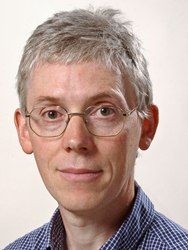 John Doonan合作论文数Institute of Biological, Environmental and Rural Sciences, Aberystwyth University;National Plant Phenomics Centre, Aberystwyth University1
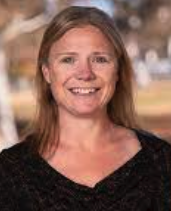 Jacqueline Batley合作论文数School of Biological Sciences, The University of Western Australia;Institute of Agriculture, The University of Western Australia;Oceans Institute, The University of Western Australia1




