Abstract Graph Neural Networks (GNNs) are promising tools for predicting tissue dynamics, but choosing the right architecture remains difficult because experimental datasets are limited, noisy, and system-specific. We introduce a controlled in silico benchmark for comparing GNN architectures on a vertex-model task: predicting relaxed cell–cell interface lengths after a cell neighbor exchange. Because simulated data provide known ground truth, we can vary tissue geometry, mechanics, perturbation complexity, dataset size, and input features independently. Provably Powerful Graph Networks (PPGN) and Principal Neighborhood Aggregation (PNA) were most sample-efficient when pre-event edge lengths were provided, whereas performance dropped sharply with topology alone. We also revealed a predict-or-copy strategy, whereby predictions far from the exchange copied pre-event lengths instead of predicting long-range changes. Prediction was harder in disordered tissues, suggesting hexagonality as a simple indicator of difficulty. These results provide a reproducible testbed for diagnosing feature dependence, copying behavior, and geometric consistency in tissue-remodeling prediction.
Recent advancements in large-scale pre-training have shown the potential to learn generalizable representations for downstream tasks. In the graph domain, however, capturing and transferring structural information across different graph domains remains challenging, primarily due to the inherent differences in graph topological patterns across various contexts. For example, a social network's structure is fundamentally different from that of a product co-purchase graph. Additionally, most existing models struggle to capture the rich topological complexity of graph structures, leading to inadequate exploration of the graph embedding space. To address these challenges, we propose GFSE, a universal pre-trained graph encoder designed to capture transferable structural patterns across diverse domains such as the web graph, social networks, and citation networks. GFSE is the first cross-domain graph structural encoder pre-trained with multiple self-supervised learning objectives. Built on a Graph Transformer, GFSE incorporates attention mechanisms informed by graph structural information, enabling it to encode intricate multi-level and fine-grained topological features within complex graph structures. The pre-trained GFSE produces generic and theoretically expressive positional and structural encoding for graphs, which can be seamlessly integrated with various downstream graph feature encoders, including graph neural networks for vectorized features and Large Language Models (LLMs) for text-attributed graphs. Comprehensive experiments on synthetic and real-world datasets demonstrate GFSE's capability to significantly enhance the model's performance while requiring substantially less task-specific fine-tuning.
While Large Language Model (LLM) multi-agent systems (MAS) offer a transformative approach to simulating human behavior in complex systems, it remains largely unexplored whether these simulations can replicate realistic structural and temporal dynamics from a dynamic network perspective. Our evaluation indicates that existing frameworks excel at generating plausible micro-level interactions but fail to capture the emergent, macroscopic topologies necessary for domains that rely on realistic network dynamics, such as modeling information propagation and cybersecurity threats. To bridge this gap, we introduce two easily integrable extensions to simulation frameworks to ensure they preserve macroscopic network fidelity: 1) augmenting LLM agents with data-driven event triggers to organically sustain long-horizon interactions, and 2) integrating Hawkes processes to accurately model temporal activation dynamics. Our approach allows LLM MAS to capture both plausible micro-level patterns and macroscopic topologies. We further demonstrate the utility of this framework in synthesizing realistic phishing campaigns within evolving communication networks. The study reveals how threats exploit structural vulnerabilities, highlighting the potential of our framework for developing next-generation defenses. Our code is available at https://github.com/Graph-COM/NSL.
Graph Neural Networks (GNNs) are increasingly applied to model collective cell behaviors during development, yet choosing an appropriate architecture remains difficult. We present an in silico benchmark of 1,615 tissue graphs, each undergoing a single T1 transition (cell-neighbor exchange), and evaluate five architectures for predicting post-T1 cell–cell interface (edge) lengths. The Provably Powerful Graph Network (PPGN) outperformed all others, achieving high accuracy with only 41 training graphs. PPGN learned a bimodal prediction strategy: near the T1 event, where deformations are large and localized, it predicts edge-length changes accurately, but several hops away it reverts to copying pre-T1 lengths, safeguarding accuracy yet risking cumulative bias. Additionally, prediction error increased almost linearly with tissue disorder but decreased with larger datasets, identifying disorder as a practical proxy for reliability. Our benchmark provides a controlled platform for evaluating GNNs in tissue-dynamics during development and offers actionable guidelines for model and dataset design.
Charged-particle tracking – reconstructing trajectories from sparse detector measurements – is a fundamental high-energy-physics inference problem and a canonical example of learning under extreme combinatorial ambiguity. At the High-Luminosity Large Hadron Collider (HL-LHC), tracking must remain accurate and efficient despite unprecedented collision densities. Graph neural networks perform strongly, but incur substantial costs from graph construction and processing, while transformer-based approaches rely on auxiliary stages that prevent end-to-end optimization. To address this, we present HEPTv2, an end-to-end point-transformer architecture that reconstructs tracks from detector hits in one trainable pipeline. HEPTv2 combines a locality-aware point encoder with a track decoder that predicts complete trajectories without graph-building, clustering, or filtering. The encoder uses locality-sensitive hashing in detector coordinate space to preserve tracking-relevant geometry while enabling efficient local attention. The decoder resolves ambiguities through sectorized decoding and direct hit-to-track prediction under joint encoder-decoder supervision, allowing the full pipeline to be optimized end-to-end. On TrackML, HEPTv2 achieves 98.6
Message Passing Neural Networks are known to struggle with limited expressivity and capturing long-range dependencies. While Graph Transformers alleviate these issues with global attention modules, their quadratic complexity limits efficiency. Recently, State Space Models have emerged as a compelling alternative to attention for sequence modeling to 1) capture long-range dependencies, 2) enable computational efficiency, and 3) generalize well across varying sequence lengths. However, extending SSMs to graphs presents unique challenges due to the lack of canonical node ordering. This work studies how to leverage the insights of SSM design to improve learning on graph-structured data and proposes Graph State Space Convolution (GSSC). Using global permutation-equivariant set aggregation and factorizable graph kernels based on relative node distances, GSSC retains the three advantages of SSMs. Across 11 real-world, widely used graph benchmark datasets, GSSC achieves the best results on 5 datasets with significant improvements over the state-of-the-art baselines and competitive performance on the other 6. Our findings highlight the potential of building powerful and scalable models upon GSSC for graph machine learning.
Large Language Models (LLMs) demonstrate strong reasoning abilities but face limitations such as hallucinations and outdated knowledge. Knowledge Graph (KG)-based Retrieval-Augmented Generation (RAG) addresses these issues by grounding LLM outputs in structured external knowledge from KGs. However, current KG-based RAG frameworks still struggle to optimize the trade-off between retrieval effectiveness and efficiency in identifying a suitable amount of relevant graph information for the LLM to digest. We introduce SubgraphRAG, extending the KG-based RAG framework that retrieves subgraphs and leverages LLMs for reasoning and answer prediction. Our approach innovatively integrates a lightweight multilayer perceptron (MLP) with a parallel triple-scoring mechanism for efficient and flexible subgraph retrieval while encoding directional structural distances to enhance retrieval effectiveness. The size of retrieved subgraphs can be flexibly adjusted to match the query's needs and the downstream LLM's capabilities. This design strikes a balance between model complexity and reasoning power, enabling scalable and generalizable retrieval processes. Notably, based on our retrieved subgraphs, smaller LLMs like Llama3.1-8B-Instruct deliver competitive results with explainable reasoning, while larger models like GPT-4o achieve state-of-the-art accuracy compared with previous baselines—all without fine-tuning. Extensive evaluations on the WebQSP and CWQ benchmarks highlight SubgraphRAG's strengths in efficiency, accuracy, and reliability by reducing hallucinations and improving response grounding.
Modern large language models (LLMs) are inherently auto-regressive, requiring input to be serialized into flat sequences regardless of their structural dependencies. This serialization hinders the model's ability to leverage structural inductive biases, especially in tasks such as retrieval-augmented generation (RAG) and reasoning on data with native graph structures, where inter-segment dependencies are crucial. We introduce Graph-KV with the potential to overcome this limitation. Graph-KV leverages the KV-cache of text segments as condensed representations and governs their interaction through structural inductive biases. In this framework, 'target' segments selectively attend only to the KV-caches of their designated 'source' segments, rather than all preceding segments in a serialized sequence. This approach induces a graph-structured block mask, sparsifying attention and enabling a message-passing-like step within the LLM. Furthermore, strategically allocated positional encodings for source and target segments reduce positional bias and context window consumption. We evaluate Graph-KV across three scenarios: (1) seven RAG benchmarks spanning direct inference, multi-hop reasoning, and long-document understanding; (2) Arxiv-QA, a novel academic paper QA task with full-text scientific papers structured as citation ego-graphs; and (3) paper topic classification within a citation network. By effectively reducing positional bias and harnessing structural inductive biases, Graph-KV substantially outperforms baselines, including standard costly sequential encoding, across various settings. Code and the Graph-KV data are publicly available.
The interpretability of machine learning models has gained increasing attention, particularly in scientific domains where high precision and accountability are crucial. This research focuses on distinguishing between two critical data patterns—sensitive patterns (model related) and decisive patterns (task related)—which are commonly used as model interpretations but often lead to confusion. Specifically, this study compares the effectiveness of two main streams of interpretation methods: post-hoc methods and self-interpretable methods, in detecting these patterns. Recently, geometric deep learning (GDL) has shown superior predictive performance in various scientific applications, creating an urgent need for principled interpretation methods. Here, therefore, we conduct our study using several representative GDL applications as case studies. We evaluate 13 interpretation methods applied to 3 major GDL backbone models, using 4 scientific datasets to assess how well these methods identify sensitive and decisive patterns. Our findings indicate that post-hoc methods tend to provide interpretations better aligned with sensitive patterns, whereas certain self-interpretable methods exhibit strong and stable performance in detecting decisive patterns. Moreover, our study offers valuable insights into improving the reliability of these interpretation methods. For example, ensembling post-hoc interpretations from multiple models trained on the same task can effectively uncover the task’s decisive patterns. Interpreting decisions made by machine learning systems remains difficult. Here Zhu et al. test interpretability methods on their ability to identify model-related and task-related patterns.
Graph-based retrieval-augmented generation (RAG) enables large language models (LLMs) to ground responses with structured external knowledge from up-to-date knowledge graphs (KGs) and reduce hallucinations. However, LLMs often rely on a weak retriever in graph-based RAG: I) Due to the lack of ground truth, the retriever is often trained on weak supervision, which often introduces spurious signals to the LLMs. II) Due to the abstraction of graph data, the retrieved knowledge is often presented in unorganized forms. To mitigate the issue, we present Refined Graph-based RAG (ReG) to align weak retrievers to LLMs for graph-based RAG. Specifically, ReG incorporates LLM feedback to get rid of spurious signals and improve the quality of the supervision. Meanwhile, ReG introduces a structure-aware reorganization module to refactor the retrieval results into logically coherent evidence chains. Experiments on prominent benchmarks demonstrate that ReG significantly and consistently brings improvements across different LLM backbones by up to 10
Charged particle track reconstruction is a foundational task in collider experiments and the main computational bottleneck in particle reconstruction. Graph neural networks (GNNs) have shown strong performance for this problem, but costly graph construction, irregular computations, and random memory access patterns substantially limit their throughput. The recently proposed Hashing-based Efficient Point Transformer (HEPT) offers a theoretically guaranteed near-linear complexity for large point cloud processing via locality-sensitive hashing (LSH) in attention computations; however, its evaluations have largely focused on embedding quality, and the object condensation pipeline on which HEPT relies requires a post-hoc clustering step (e.g., DBScan) that can dominate runtime. In this work, we make two contributions. First, we present a unified, fair evaluation of physics tracking performance for HEPT and a representative GNN-based pipeline under the same dataset and metrics. Second, we introduce HEPTv2 by extending HEPT with a lightweight decoder that eliminates the clustering stage and directly predicts track assignments. This modification preserves HEPT's regular, hardware-friendly computations while enabling ultra-fast end-to-end inference. On the TrackML dataset, optimized HEPTv2 achieves approximately 28 ms per event on an A100 while maintaining competitive tracking efficiency. These results position HEPTv2 as a practical, scalable alternative to GNN-based pipelines for fast tracking.
Machine learning on graphs has recently found extensive applications across domains. However, the commonly used Message Passing Neural Networks (MPNNs) suffer from limited expressive power and struggle to capture long-range dependencies. Graph transformers offer a strong alternative due to their global attention mechanism, but they come with great computational overheads, especially for large graphs. In recent years, State Space Models (SSMs) have emerged as a compelling approach to replace full attention in transformers to model sequential data. It blends the strengths of RNNs and CNNs, offering a) efficient computation, b) the ability to capture long-range dependencies, and c) good generalization across sequences of various lengths. However, extending SSMs to graph-structured data presents unique challenges due to the lack of canonical node ordering in graphs. In this work, we propose Graph State Space Convolution (GSSC) as a principled extension of SSMs to graph-structured data. By leveraging global permutation-equivariant set aggregation and factorizable graph kernels that rely on relative node distances as the convolution kernels, GSSC preserves all three advantages of SSMs. We demonstrate the provably stronger expressiveness of GSSC than MPNNs in counting graph substructures and show its effectiveness across 11 real-world, widely used benchmark datasets. GSSC achieves the best results on 6 out of 11 datasets with all significant improvements compared to the state-of-the-art baselines and second-best results on the other 5 datasets. Our findings highlight the potential of GSSC as a powerful and scalable model for graph machine learning. Our code is available at https://github.com/Graph-COM/GSSC.
This study introduces a novel transformer model optimized for large-scale point cloud processing in scientific domains such as high-energy physics (HEP) and astrophysics. Addressing the limitations of graph neural networks and standard transformers, our model integrates local inductive bias and achieves near-linear complexity with hardware-friendly regular operations. One contribution of this work is the quantitative analysis of the error-complexity tradeoff of various sparsification techniques for building efficient transformers. Our findings highlight the superiority of using locality-sensitive hashing (LSH), especially OR & AND-construction LSH, in kernel approximation for large-scale point cloud data with local inductive bias. Based on this finding, we propose LSH-based Efficient Point Transformer (**HEPT**), which combines E$^2$LSH with OR & AND constructions and is built upon regular computations. HEPT demonstrates remarkable performance on two critical yet time-consuming HEP tasks, significantly outperforming existing GNNs and transformers in accuracy and computational speed, marking a significant advancement in geometric deep learning and large-scale scientific data processing. Our code is available at https://github.com/Graph-COM/HEPT.
Geometric deep learning (GDL) has gained significant attention in scientific fields, for its proficiency in modeling data with intricate geometric structures. However, very few works have delved into its capability of tackling the distribution shift problem, a prevalent challenge in many applications. To bridge this gap, we propose GeSS, a comprehensive benchmark designed for evaluating the performance of GDL models in scientific scenarios with distribution shifts. Our evaluation datasets cover diverse scientific domains from particle physics, materials science to biochemistry, and encapsulate a broad spectrum of distribution shifts including conditional, covariate, and concept shifts. Furthermore, we study three levels of information access from the out-of-distribution (OOD) test data, including no OOD information, only unlabeled OOD data, and OOD data with a few labels. Overall, our benchmark results in 30 different experiment settings, and evaluates 3 GDL backbones and 11 learning algorithms in each setting. A thorough analysis of the evaluation results is provided, poised to illuminate insights for GDL researchers and domain practitioners who are to use GDL in their applications.
The interpretability of machine learning models has gained increasing attention, particularly in scientific domains where high precision and accountability are crucial. This research focuses on distinguishing between two critical data patterns – sensitive patterns (model-related) and decisive patterns (task-related) – which are commonly used as model interpretations but often lead to confusion. Specifically, this study compares the effectiveness of two main streams of interpretation methods: post-hoc methods and self-interpretable methods, in detecting these patterns. Recently, geometric deep learning (GDL) has shown superior predictive performance in various scientific applications, creating an urgent need for principled interpretation methods. Therefore, we conduct our study using several representative GDL applications as case studies. We evaluate thirteen interpretation methods applied to three major GDL backbone models, using four scientific datasets to assess how well these methods identify sensitive and decisive patterns. Our findings indicate that post-hoc methods tend to provide interpretations better aligned with sensitive patterns, whereas certain self-interpretable methods exhibit strong and stable performance in detecting decisive patterns. Additionally, our study offers valuable insights into improving the reliability of these interpretation methods. For example, ensembling post-hoc interpretations from multiple models trained on the same task can effectively uncover the task's decisive patterns.
Recent work has demonstrated that graph neural networks (GNNs) can match the performance of traditional algorithms for charged particle tracking while improving scalability to meet the computing challenges posed by the HL-LHC. Most GNN tracking algorithms are based on edge classification and identify tracks as connected components from an initial graph containing spurious connections. In this talk, we consider an alternative based on object condensation (OC), a multi-objective learning framework designed to cluster points (hits) belonging to an arbitrary number of objects (tracks) and regress the properties of each object. Building on our previous results, we present a streamlined model and show progress toward a one-shot OC tracking algorithm in a high-pileup environment.
Point cloud data is ubiquitous in scientific fields. Recently, geometric deep learning (GDL) has been widely applied to solve prediction tasks with such data. However, GDL models are often complicated and hardly interpretable, which poses concerns to scientists who are to deploy these models in scientific analysis and experiments. This work proposes a general mechanism, learnable randomness injection (LRI), which allows building inherently interpretable models based on general GDL backbones. LRI-induced models, once trained, can detect the points in the point cloud data that carry information indicative of the prediction label. We also propose four datasets from real scientific applications that cover the domains of high-energy physics and biochemistry to evaluate the LRI mechanism. Compared with previous post-hoc interpretation methods, the points detected by LRI align much better and stabler with the ground-truth patterns that have actual scientific meanings. LRI is grounded by the information bottleneck principle, and thus LRI-induced models are also more robust to distribution shifts between training and test scenarios. Our code and datasets are available at \url{https://github.com/Graph-COM/LRI}.
Interpretable graph learning is in need as many scientific applications depend on learning models to collect insights from graph-structured data. Previous works mostly focused on using post-hoc approaches to interpret pre-trained models (graph neural networks in particular). They argue against inherently interpretable models because the good interpretability of these models is often at the cost of their prediction accuracy. However, those post-hoc methods often fail to provide stable interpretation and may extract features that are spuriously correlated with the task. In this work, we address these issues by proposing Graph Stochastic Attention (GSAT). Derived from the information bottleneck principle, GSAT injects stochasticity to the attention weights to block the information from task-irrelevant graph components while learning stochasticity-reduced attention to select task-relevant subgraphs for interpretation. The selected subgraphs provably do not contain patterns that are spuriously correlated with the task under some assumptions. Extensive experiments on eight datasets show that GSAT outperforms the state-of-the-art methods by up to 20%$\uparrow$ in interpretation AUC and 5%$\uparrow$ in prediction accuracy. Our code is available at https://github.com/Graph-COM/GSAT.
 Pan Li (李攀)合作论文数18
 Shikun Liu合作论文数Department of Electrical and Computer Engineering, Georgia Institute of Technology3
 Javier Duarte合作论文数Department of Physics, Division of Physical Sciences, University of California, San Diego3
 Rex (Zhitao) Ying (应智韬)合作论文数Department of Computer Science, School of Engineering & Applied Science, Yale University3
 Mufei Li (李牧非)合作论文数Georgia Institute of Technology2
 Gage Dezoort合作论文数2Yuan-Tang Chou合作论文数2
 Kilian Lieret合作论文数2
 Yinan Huang合作论文数Georgia Institute of Technology2Li Mufei合作论文数2
 Victor Fung合作论文数School of Computational Science and Engineering, College of Computing, Georgia Institute of Technology2
 Shiyu Chang合作论文数College of Engineering, University of California, Santa Barbara2Zhiyuan Lu合作论文数Department of Communication Engineering, Beijing University of Posts and Telecommunications1Deyu Zou合作论文数1
 Yongqiang Chen合作论文数Causal Learning and Reasoning Group, Carnegie Mellon University;Mohamed bin Zayed University of Artificial Intelligence1
 Jialin Chen合作论文数Yale University1
 Haoyu Wang合作论文数University at Albany1
 Matej Krajnc合作论文数The Lewis-Sigler Institute for Integrative Genomics, Princeton University, Princeton, NJ 08544, USA1
 Mia Liu合作论文数Department of Physics and Astronomy, College of Science, Purdue University1
 Bo Han (韓波)合作论文数Department of Computer Science, Faculty of Science, Hong Kong Baptist University1
 Zhangyang “Atlas” Wang (汪张扬)合作论文数XTX Markets1
 Kaiqing Zhang合作论文数Department of Electrical and Computer Engineering, A. James Clark School of Engineering, University of Maryland, College Park;Institute for Systems Research, University of Maryland, College Park1
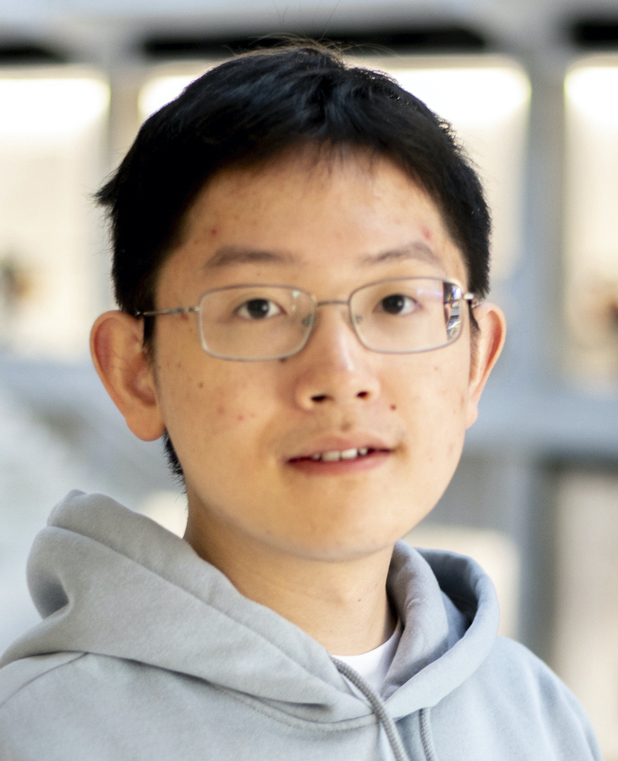 Peihao Wang合作论文数Department of Electrical and Computer Engineering, Cockrell School of Engineering, The University of Texas at Austin1
 James Cheng合作论文数Department of Computer Science and Engineering, Chinese University of Hong Kong1
 Tomer Stern合作论文数1Yunan Luo (罗宇男)合作论文数1
 Shih-Chieh Hsu合作论文数Department of Physics, University of Washington1




