In this paper, we consider the problem of data migration in large scale storage systems in the homogeneous setting where a set of files needs to be transferred within a set of disks, and each disk can only engage in one transmission at a time. The objective is to schedule the data transmissions in the fewest possible time steps. When the file sizes are uniform, the problem is equivalent to edge coloring in multigraphs, which has been studied for decades, and many well-known algorithms have been devised. We consider the problem when the file sizes are non-uniform. We propose two algorithms for the problem - Maximal Compatible Sets (MCS) and the Tetris algorithm, and prove that the Tetris algorithm is a 4-approximation algorithm. We also empirically compare the performance of these algorithms against one of the most recent algorithms for the uniform file size problem, the Greedy-Euler-Color algorithm, and find that the Tetris algorithm performs the best in practice for both uniform and non-uniform file size scenarios.
We present the A2Cloud-cc suite: a multi-agent recommender system to facilitate Cloud resource selection for scientific applications. The suite comprises two components: A2Cloud framework and Council-of-Classifiers (CC). A2Cloud provides the first level of instance recommendation by profiling the target application and selected Cloud instances using hardware benchmarks. The framework uses this information to generate objective scores that are representatives of an application's execution time and cost on the chosen instances. A2Cloud saves this analysis to a public database for scalable machine-learning (ML). CC comprises three ML agents including collaborative filtering, Naïve Bayes', and multinomial logistic regression classifiers; and one decision-making agent: analytic hierarchy process (AHP). CC downloads the A2Cloud analysis from the database to train the three ML agents for instance recommendation. During testing, AHP pools the instance recommendations from ML agents to yield a single recommendation that satisfies the user's preference for performance and cost. We train the suite using 8 applications and 20 Cloud instances from multiple providers. Our testing with two scientific applications yield prediction accuracy over 90%. The suite's aim is to provide users with a sustainable and user-contributed platform that assists with cost-effective instance selection.
In this paper, we consider the problem of data migration in large scale storage systems, where a massive set of data needs to be transferred within a set of disks. The objective is to schedule the data transmissions in the fewest possible time steps. There are two major settings in the study of data migration: homogeneous case - every disk can only engage in one transmission at one time; and heterogeneous case - each disk has a transfer capacity which represents the number the transmissions the disk can engage simultaneously. Most of the literature assumes each disk has unlimited space, which is not realistic in practice. Our paper is the first to consider space constraints in the heterogeneous setting. Each disk v has a total space max{d in v , d out v }+1, where d in v and d out v are the number of data to be received and, respectively, sent by v. We propose four different heuristic algorithms and also formulate the problem as an integer program (IP) that yields an optimal schedule. We conduct simulations to compare the performance of these algorithms, including the optimal result from the integer program when the instance is small enough for the IP computation to be feasible.
Neighbor discovery is a fundamental problem in wireless networks. In this paper, we study asynchronous neighbor discovery on duty-cycled mobile devices. Most existing studies develop integer schedules where time proceeds in discrete slots and a node is awake or asleep for an entire slot duration. We show that integer schedules can lead to significant waste of resources, and develop a generalized non-integer model, where time is continuous and a node may become awake or asleep at any point of time (subject to a few constraints) so that the resultant schedules can be significantly more efficient than integer schedules. In addition, we provide a reduction that transforms any schedule in the integer model to a corresponding schedule in the generalized non-integer model while reducing the discovery latency by up to a factor of two. Applying this reduction, an optimal schedule in the integer model becomes an optimal schedule in the non-integer model. We further demonstrate the practicality of non-integer schedules in a testbed, and compare the worst-case discovery latency of several existing schemes under both integer and non-integer models. Last, we establish a family of lower bounds for the best achievable latency guarantee. These lower bounds are applicable to both integer and non-integer models, covering both symmetric and asymmetric settings, and encompassing the existing lower bounds that are only for a subset of settings as special cases.
In large scale storage systems such as data centers, the layout of data on storage disks needs to be frequently reconfigured for load balancing purposes or in the event of system failure/upgrades. This reconfiguration event, referred to as data migration, must be completed efficiently as the system tends to perform sub-optimally during such process. The data-migration problem has been studied extensively in the literature with efficient algorithms presented for homogeneous (all storage disks have similar capabilities) and heterogeneous (storage disks can have different capabilities) cases. In this paper, we investigate adding data forwarding to existing algorithms for the heterogeneous data migration problem. In data forwarding, we introduce additional storage nodes (called bypass nodes) during the migration process. Our simulations show that adding as few as 2 bypass nodes with limited capabilities can improve the performance by up to 15% and adding more bypass nodes with heterogeneous capabilities can improve the migration performance by 25%. We then present a novel algorithm that makes intrinsic use of bypass nodes and show that the algorithm can always achieve an optimal migration schedule while adding no more than α × n/3 bypass nodes where n is the numbers of disks and α is a term defined to reflect the heterogeneity factor of disks.
In large scale storage systems such as data centers, data layouts need to be reconfigured over time for load balancing or in the event of system failure/upgrades. The data-migration problem pertains to computing an efficient plan to migrate data to their target locations. Most of the previous results on data-migration assume that storage devices have similar capabilities and can perform only one data transfer at a time. In this paper, we consider the heterogeneous data-migration problem where we associate a transfer constraint to each of the storage nodes, representing the number of simultaneous transfers that each of the nodes can handle. We introduce new data-migration algorithms for the heterogeneous case and perform an empirical comparative study of the performance of these algorithms against algorithms from [1] and [2].
We define and construct a novel pseudorandom tool, the Markovian hitter. Given an input sequence of n independent random bits, a Markovian hitter produces a sequence of pseudorandom samples in {0, 1}k, in an online fashion, that hits any subset W ⊂ {0, 1}k of size ε2k with probability ≈ 1 -- 2--(n--k)ε. This is comparable to the behavior of truly random samples or classical pseudorandom hitting sets. A Markovian hitter has an additional "Markovian" property of interest: each pseudorandom sample is a function of only the O(k) most recent bits of the input sequence (of random bits).Such Markovian properties are useful in distributed online settings. In particular, we apply Markovian hitters to obtain a new algorithm for the well-studied blind rendezvous problem for cognitive radios. This is the problem faced by two parties equipped with radios that can access channels in potentially different subsets, S1 and S2, of a universe of n channels. Their challenge is to discover each other (by tuning their radios to the same channel at the same time) as quickly as possible. In prior work [3] it was shown that deterministic schedules have a lower bound for rendezvous time of Ω(|S1| · |S2|). We beat this quadratic barrier by utilizing a public source of randomness in conjunction with a Markovian hitter to achieve rendezvous in expected time[EQUATION]We counterbalance this result by establishing two lower bounds on expected rendezvous time: an[EQUATION]bound for the setting with public randomness, and an Ω(|S1| · |S1|) bound in the setting with private randomness but no public randomness, which is a strengthening of the result for deterministic schedules.
Blind rendezvous is a fundamental problem in cognitive radio networks. The problem involves a collection of agents (radios) that wish to discover each other (i.e., rendezvous) in the blind setting where there is no shared infrastructure and they initially have no knowledge of each other. Time is divided into discrete slots and spectrum is divided into discrete channels, [n] = 1, 2,..., n. Each agent may access (or hop on) a single channel in a single time slot and two agents rendezvous when they hop on the same channel in the same time slot. The goal is to design deterministic channel hopping schedules for each agent so as to guarantee rendezvous between any pair of agents with access to overlapping sets of channels.The problem has three complicating considerations: first, the agents are asymmetric, i.e., each agent Ai only has access to a particular subset S-i subset of [n] of the channels and different agents may have access to different subsets of channels (clearly, two agents can rendezvous only if their channel subsets overlap); second, the agents are asynchronous, i.e., they do not possess a common sense of absolute time, so different agents may commence their channel schedules at different times (they do have a common sense of slot duration); lastly, agents are anonymous i.e., they do not possess an identity, and hence the schedule for Ai must depend only on S-i.Whether guaranteed blind rendezvous in the asynchronous model was even achievable was an open problem. In a recent breakthrough, two independent sets of authors, Shin et al. (Communications Letters, 2010) and Lin et al. (INFOCOM, 2011), gave the first constructions guaranteeing asynchronous blind rendezvous in O(n(2)) and O(n(3)) time, respectively. We present a substantially improved and conceptually simpler construction guaranteeing that any two agents, A(i), A(j), will rendezvous in O(vertical bar S-i vertical bar vertical bar S-j vertical bar log log n) time. Our results are the first that achieve nontrivial dependence on vertical bar S-i vertical bar, the sizes of the sets of available channels. This allows us, for example, to save roughly a quadratic factor over the best previous results in the important case when channel subsets have constant size. We also achieve the best possible bound of O(1) rendezvous time for the symmetric situation; previous works could do no better than O(n). Using techniques from the probabilistic method and Ramsey theory we establish that our construction is nearly optimal: we show both an Omega(vertical bar S-i vertical bar vertical bar S-j vertical bar) lower bound and an Omega(log log n) lower bound when vertical bar S-i vertical bar, vertical bar S-j vertical bar <= n/2.
We consider the online smoothing problem, in which a tracker is required to maintain distance no more than Δ≥0 from a time-varying signal f while minimizing its own movement. The problem is determined by a metric space (X,d) with an associated cost function c:ℝ→ℝ. Given a signal f 1,f 2,…∈X the tracker is responsible for producing a sequence a 1,a 2,… of elements of X that meet the proximity constraint: d(f i ,a i )≤Δ. To complicate matters, the tracker is on-line—the value a i may only depend on f 1,…,f i —and wishes to minimize the cost of his travels, ∑c(d(a i ,a i+1)). We evaluate such tracking algorithms competitively, comparing this with the cost achieved by an optimal adversary apprised of the entire signal in advance.
Stereotyped kinship behaviors are unrecognized as significant to the evolution of human cooperation. Joking relations reinforce cooperation through links with existing or close relatives (cross cousins, sibling’s spouses, spouse’s siblings). Avoidances reach out to connect non-‐relatives through marriage: parents-‐in-‐law and distant in-‐laws such as WiBrWi. The latter behaviors enhance cooperation in more extensive networks of in-‐laws and a variety of more distant kin. Low population densities, in a sample of 34 forager societies, show Joking dyads that are very frequent. They help to integrate societies of smaller scale and density, facilitating close marriages (eg, wife’s sister). Avoidance relationships become more common at higher densities that require nucleation into localized communities of larger scale and integrate kinship networks at these larger scales. Study of kinship-‐behavior dyads and other coded variables in the SCCS reinforce the view that Avoidance is density dependent: as population density increases, along with higher jurisdictional levels, the commonality of parent-‐in-‐law Avoidances among larger-‐scale foragers and more complex societies peaks, declines, and eventually disappears. These relationships are shown here by a Network of Variable Analysis (NoVA) of SCCS societies using Dow-‐Eff software that corrects for autocorrelation and missing data. See Appendix 1: Murdock Kin Behavior Data Summary.A world sample of kinship-‐behavior dyads in 250 societies coded by Murdock (1971 and nd) shows 23 types of avoidances that fall into two categories: Parent-‐in-‐law(4 types) and another set of 19 other in …
In analogy with epsilon-biased sets over Z_2^n, we construct explicit epsilon-biased sets over nonabelian finite groups G. That is, we find sets S subset G such that | Exp_{x in S} rho(x)| <= epsilon for any nontrivial irreducible representation rho. Equivalently, such sets make G's Cayley graph an expander with eigenvalue |lambda| <= epsilon. The Alon-Roichman theorem shows that random sets of size O(log |G| / epsilon^2) suffice. For groups of the form G = G_1 x ... x G_n, our construction has size poly(max_i |G_i|, n, epsilon^{-1}), and we show that a set S \subset G^n considered by Meka and Zuckerman that fools read-once branching programs over G is also epsilon-biased in this sense. For solvable groups whose abelian quotients have constant exponent, we obtain epsilon-biased sets of size (log |G|)^{1+o(1)} poly(epsilon^{-1}). Our techniques include derandomized squaring (in both the matrix product and tensor product senses) and a Chernoff-like bound on the expected norm of the product of independently random operators that may be of independent interest.
In this paper, we consider Multiple-Sink Data Collection Problem in wireless sensor networks, where a large amount of data from sensor nodes need to be transmitted to one of multiple sinks. We design an approximation algorithm to minimize the latency of data collection schedule and show that it gives a constant-factor performance guarantee. We also present a heuristic algorithm based on breadth first search for this problem. Using simulation, we evaluate the performance of these two algorithms, and show that the approximation algorithm outperforms the heuristic up to 60%.
 Alexander Russell合作论文数Department of Computer Science & Engineering;University of Connecticut8
 Chadi Kari合作论文数Computer Science, Bridgewater State University4
 Vivek K. Pallipuram合作论文数Department of Electrical and Computer Engineering, Clemson University4
 Bing Wang合作论文数Department of Computer Science & Engineering, University of Connecticut3
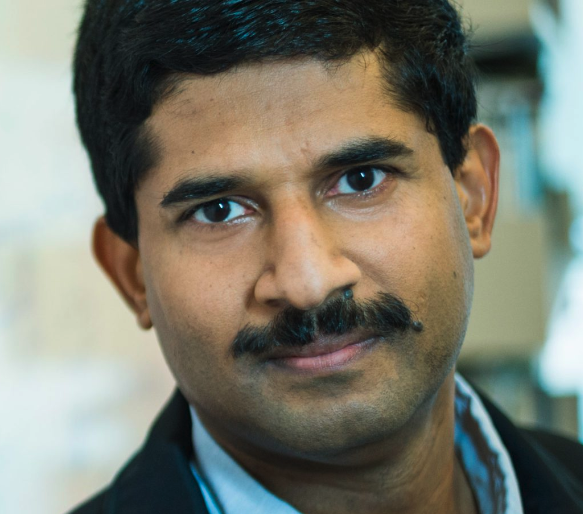 Ravi Sundaram合作论文数Khoury College of Computer Sciences, Northeastern University2
 Cristopher Moore合作论文数Santa Fe Institute2
 Abhishek Samanta合作论文数Northeastern University2
 Matthew Coolbeth合作论文数2James P. Crutchfield合作论文数1JA Selden合作论文数1Lisa Her合作论文数1
 Qiang Tang (唐强)合作论文数School of Computer Science, Faculty of Engineering, The University of Sydney1Oliver Pfante合作论文数1
 Luke Demarest合作论文数1
 Syeduzzaman Khan合作论文数School of Engineering and Computer Science, University of the Pacific1Matthew Dippel合作论文数Northeastern University1Ozgur Oksuz合作论文数Comp Engn Dept, Adiyaman Univ1
 Reynaldo Morillo合作论文数University of Connecticut, Department of Computer Science & Engineering, Storrs, CT, USA1David Samuel合作论文数Sch Engn & Comp Sci, Univ Pacific1
 Qin Yanyuan合作论文数University of Connecticut1
 Mikhail Prokopenko合作论文数School of Civil Engineering, Faculty of Engineering, The University of Sydney1
 Fabio Caccioli合作论文数Computer Science, Faculty of Engineering Sciences, University College London1
 Sohail Ahmad合作论文数Himalayan Institute of Medical Sciences, HIHT University1
 J. Doyne Farmer合作论文数Smith School of Enterprise and the Environment, University of Oxford;Macrocosm Group;Institute for New Economic Thinking, Oxford Martin School, University of Oxford;Oxford-Man Institute of Quantitative Finance, University of Oxford;Santa Fe Institute1
 Christopher Ellison合作论文数Department of Sociology, University of Texas at San Antonio1
 Gunning Christian E合作论文数Department of Entomology, North Carolina State University1
 Clio Andris合作论文数School of Interactive Computing, College of Computing, Georgia Institute of Technology;School of City & Regional Planning, College of Design, Georgia Institute of Technology1Oztan Tolga合作论文数1
 Jürgen Jost合作论文数Max Planck Institute for Mathematics in the Sciences;Department of Mathematics, University of Leipzig1
 Russell Impagliazzo合作论文数Department of Computer Science and Engineering Temp link, University of California, San Diego1Nihat Ay合作论文数1
 Douglas R. White合作论文数University of California1
 Ricard Solé合作论文数Catalan Institute For Research and Advanced Studies/Santa Fe Institute/European Centre For Living Technology/Center For Evolution and Cancer, UCSF/Complex Systems Lab, Universitat Pompeu Fabra1
 Daniel Polani合作论文数Department of Computer Science, School of Physics, Engineering & Computer Science, University of Hertfordshire;Centre for AI and Robotics Research, University of Hertfordshire1
 Cosma Rohilla Shalizi合作论文数Machine Learning Department, School of Computer Science, Carnegie Mellon University;Department of Statistics&Data Science, Dietrich College of Humanities and Social Sciences, Carnegie Mellon University1
 Pan Zhang (张潘)合作论文数Institute of Theoretical Physics, Chinese Academy of Sciences1Yaojia Zhu合作论文数The University of New Mexico1
 David Lee合作论文数Division of Cardiovascular Medicine, Department of Medicine, School of Medicine, Stanford University;Cardiovascular Institute, School of Medicine, Stanford University;Stanford University Medical Center1
 Josep Diaz合作论文数Departament of Computer Science Universitat Politecnica de Catalunya1
 Lise Getoor合作论文数Department of Computer Science, University of California, Santa Cruz;Department of Computer Science, University of Maryland1
 Laurent Hébert-Dufresne合作论文数Dept Phys Genie Phys & Opt, Univ Laval1
 Hieu Dinh合作论文数1
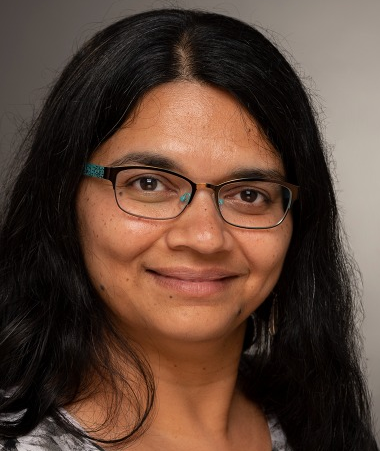 Varsha Dani合作论文数Department of Computer Science, Golisano College of Computing and Information Sciences, Rochester Institute of Technology1
 Paul M. Riechers合作论文数Department of Electrical and Computer Engineering, University of California at Davis1
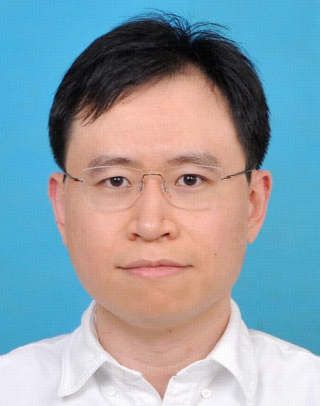 Xiaoran Yan合作论文数AI Research Institute, Zhejiang Lab1
 Sudarshan Vasudevan合作论文数University of Massachusetts1
 Allan Sly合作论文数Department of Mathematics, Princeton University1
 Elchanan Mossel合作论文数Department of Mathematics, Massachusetts Institute of Technology1
 Georg Martius合作论文数University of Tübingen1




