Globally, the bycatch of marine mammals in fisheries represents the greatest source of human-caused mortality that threatens the sustainability of many populations and species. The Australian sea lion ( Neophoca cinerea ) is an endangered species, whose populations off South Australia (SA) have been subject to bycatch in a demersal gillnet fishery targeting sharks since the 1960s. A comprehensive assessment was undertaken of sea lion bycatch mortality that combined independent fishery observer data with species distribution models (underpinned by satellite tracking, abundance data and population modeling) to model the relationship between at-sea foraging effort and bycatch rate. Combined with the distribution of fishing effort, these models enabled the overall level of bycatch mortality to be estimated by age, sex and subpopulation, facilitating population viability analyses that indicated most subpopulations were declining, and subject to unsustainable levels of bycatch mortality. To reduce this mortality, the Australian Fisheries Management Authority implemented an Australian Sea Lion Management Strategy that included an independent observer program (ultimately 100% electronic monitoring of gillnet fishing off SA), permanent spatial gillnet closures around all sea lion breeding sites, bycatch mortality limits that triggered temporal (18 months) spatial closures when zone-specific bycatch trigger limits were reached, and incentives for gillnet fishers to switch to an alternate fishing method (longlines). The Strategy had immediate impacts on the fishery: it resulted in significant reductions in gillnet fishing effort and on the reported bycatch of sea lions. In the next decade, there was an estimated 98% reduction in sea lion bycatch mortality from gillnet interactions and an apparent stabilization of the decline in sea lion pup abundances at some impacted breeding sites. There was an almost complete transition in the fishery from gillnets to longlines, and fishing catches returned to pre-management levels. The successful implementation of management measures to mitigate sea lion bycatch mortality in the gillnet fishery off SA was rapid, science informed, adaptive, comprehensive, and backed by strong compliance and monitoring of the fishery. It provides an important case study which demonstrates how management measures can be effectively applied to mitigate bycatch mortality of marine mammals and other marine protected species.
Australian sea lions (Neophoca cinerea) have typically small breeding colonies, many of which are genetically distinct populations due to female philopatry (i.e. breeding site fidelity). This situation may increase the vulnerability of the species to decline when anthropogenic influences increase levels of mortality, even by small amounts. Anecdotal reports from South Australian shelf waters suggest Australian sea lions become by-caught and drown in demersal gill-nets used to catch sharks, or escape with life threatening entanglements. This study explored the potential impact of the operational interaction by estimating the (i) extent of geographic overlap and (ii) level of by-catch. Monitoring of Australian sea lion at-sea movements and of the demersal gill-net fishery confirmed spatial overlap between the two in 68.7% of 4 km2 grid cells across South Australian shelf waters and by-catch of 283–333 Australian sea lions each breeding cycle (193–227 each year). Recent changes to the management arrangements of demersal gill-netting in South Australian shelf waters are likely to have improved the situation for Australian sea lions, although it may be necessary to further refine aspects relating to (i) the effectiveness of untested electronic fishery monitoring methods, (ii) the efficacy of relatively small permanent fishery closures around breeding colonies and (iii) the efficiency in receiving, processing and responding to by-catch reports to ensure by-catch limits are not exceeded. Long-term monitoring at representative breeding colonies would be useful for determining if and where research and management should be prioritised. A recent report suggests a similar problem may exist in Western Australia, where approximately 14% of the species resides.
This study tracked the movements of Australian sea lion (Neophoca cinerea) pups, juveniles, and adult females to identify home ranges and determine if young sea lions accompanied their mothers at sea. Satellite tags were deployed on nine 15-mo-old pups, nine 23-mo-old juveniles, and twenty-nine adult female Australian sea lions at Seal Bay Conservation Park, Kangaroo Island, South Australia. Females did not travel with their offspring at sea, suggesting young Australian sea lions learn foraging behaviors independently. Although home ranges increased with age, 23-mo-old juveniles had not developed adult movement capacity and their range was only 40.6% of the adult range. Juveniles traveled shorter distances (34.8 +/- 5.5 km) at slower speeds (2.0 +/- 0.3 km/h) than adults (67.9 +/- 3.5 km and 3.9 +/- 0.3 km/h). Young sea lions also stayed in shallower waters; sea floor depths of mean locations were 48 +/- 7 m for juveniles and 74 +/- 2 m for females. Restricted to shallow coastal waters, pups and juveniles are more likely to be disproportionately impacted by human activities. With limited available foraging habitat, young Australian sea lions appear particularly vulnerable to environmental alterations resulting from fisheries or climate change.
For air-breathing animals in aquatic environments, foraging behaviours are often constrained by physiological capability. The development of oxygen stores and the rate at which these stores are used determine juvenile diving and foraging potential.We examined the ontogeny of dive physiology in the threatened Australian sea lion Neophoca cinerea. Australian sea lions exploit benthic habitats; adult females demonstrate high field metabolic rates (FMR), maximize time spent near the benthos, and regularly exceed their calculated aerobic dive limit (cADL). Given larger animals have disproportionately greater diving capabilities; we wanted to determine the extent physiological development constrained diving and foraging in young sea lions.Ten different mother/pup pairs were measured at three developmental stages (6, 15 and 23 months) at Seal Bay Conservation Park, Kangaroo Island, South Australia. Hematocrit (Hct), haemoglobin (Hb) and plasma volume were analyzed to calculate blood O-2 stores and myoglobin was measured to determine muscle O-2. Additionally, FMR's for nine of the juveniles were derived from doubly-labelled water measurements.Australian sea lions have the slowest documented O-2 store development among diving mammals. Although weaning typically occurs by 17.6 months, 23-month juveniles had only developed 68% of adult blood O-2. Muscle O-2 was the slowest to develop and was 60% of adult values at 23 months.We divided available O-2 stores (37.11 +/- 1.49 mL O-2 kg(-1)) by at-sea FMR (15.78 +/- 1.29 mL O-2 min(-1) kg(-1)) to determine a cADL of 2.33 +/- 0.24 min for juvenile Australian sea lions. Like adults, young sea lions regularly exceeded cADL's with 67.8 +/- 2.8% of dives over theoretical limits and a mean dive duration to cADL ratio of 1.23 +/- 0.10.Both dive depth and duration appear impacted by the slow development of oxygen stores. For species that operate close to, or indeed above their estimated physiological maximum, the capacity to increase dive depth, duration or foraging effort would be limited. Due to reduced access to benthic habitat and restricted behavioural options, young benthic foragers, such as Australian sea lions, would be particularly vulnerable to resource limitation.
1. Foraging behaviours of the Australian sea lion (Neophoca cinerea) reflect an animal working hard to exploit benthic habitats. Lactating females demonstrate almost continuous diving, maximize bottom time, exhibit elevated field metabolism and frequently exceed their calculated aerobic dive limit. Given that larger animals have disproportionately greater diving capabilities, we wanted to examine how pups and juveniles forage successfully. 2. Time/depth recorders were deployed on pups, juveniles and adult females at Seal Bay Conservation Park, Kangaroo Island, South Australia. Ten different mother/pup pairs were equipped at three stages of development (6, 15 and 23 months) to record the diving behaviours of 51 (nine instruments failed) animals. 3. Dive depth and duration increased with age. However, development was slow. At 6 months, pups demonstrated minimal diving activity and the mean depth for 23-month-old juveniles was only 44 +/- 4 m, or 62% of adult mean depth. 4. Although pups and juveniles did not reach adult depths or durations, dive records for young sea lions indicate benthic diving with mean bottom times (2.0 +/- 0.2 min) similar to those of females (2.1 +/- 0.2 min). This was accomplished by spending higher proportions of each dive and total time at sea on or near the bottom than adults. Immature sea lions also spent a higher percentage of time at sea diving. 5. Juveniles may have to work harder because they are weaned before reaching full diving capability. For benthic foragers, reduced diving ability limits available foraging habitat. Furthermore, as juveniles appear to operate close to their physiological maximum, they would have a difficult time increasing foraging effort in response to reductions in prey. Although benthic prey are less influenced by seasonal fluctuations and oceanographic perturbations than epipelagic prey, demersal fishery trawls may impact juvenile survival by disrupting habitat and removing larger size classes of prey. These issues may be an important factor as to why the Australian sea lion population is currently at risk.
SUMMARY Interpolation of geolocation or Argos tracking data is a necessity for habitat use analyses of marine vertebrates. In a fluid marine environment, characterized by curvilinear structures, linearly interpolated track data are not realistic. Based on these two facts, we interpolated tracking data from albatrosses, penguins, boobies, sea lions, fur seals and elephant seals using six mathematical algorithms. Given their popularity in mathematical computing, we chose Bézier, hermite and cubic splines, in addition to a commonly used linear algorithm to interpolate data. Performance of interpolation methods was compared with different temporal resolutions representative of the less-precise geolocation and the more-precise Argos tracking techniques. Parameters from interpolated sub-sampled tracks were compared with those obtained from intact tracks. Average accuracy of the interpolated location was not affected by the interpolation method and was always within the precision of the tracking technique used. However, depending on the species tested, some curvilinear interpolation algorithms produced greater occurrences of more accurate locations, compared with the linear interpolation method. Total track lengths were consistently underestimated but were always more accurate using curvilinear interpolation than linear interpolation. Curvilinear algorithms are safe to use because accuracy, shape and length of the tracks are either not different or are slightly enhanced and because analyses always remain conservative. The choice of the curvilinear algorithm does not affect the resulting track dramatically so it should not preclude their use. We thus recommend using curvilinear interpolation techniques because of the more realistic fluid movements of animals. We also provide some guidelines for choosing an algorithm that is most likely to maximize track quality for different types of marine vertebrates.
 Daniel P Costa合作论文数Department of Ecology & Evolutionary Biology, University of California Santa Cruz;Institute of Marine Sciences, University of California Santa Cruz5
 CE Kuhn合作论文数2
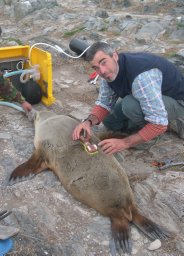 Derek J. Hamer合作论文数2
 Nicholas Gales合作论文数Australian Antarctic Division2J. P. Y. Arnould合作论文数School of Biological and Chemical Sciences, Deakin University2
 Simon David Goldsworthy合作论文数Department of Primary Industries and Regions, South Australian Research and Development Institute2DE Crocker合作论文数1SA Shaffer合作论文数1B. Page合作论文数1M. J. Weise合作论文数1Dirk Holman合作论文数1
 Paul Burch合作论文数1
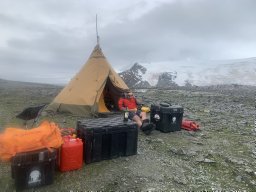 Andrew Damon Lowther合作论文数Fram Centre, Norwegian Polar Institute1Sumner Michael合作论文数1
 Henri Weimerskirch合作论文数Centre of Biological Studies of Chizé, French National Centre for Scientific Research1
 Mark Hindell合作论文数Institute for Marine and Antarctic Studies, University of Tasmania1
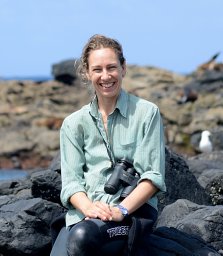 Rebecca R. McIntosh合作论文数Zoology Department;La Trobe University;Zoology Department, La Trobe University1Kristian J. Peters合作论文数1
 Jennifer M. Burns合作论文数Department of Biological Sciences, University of Alaska Anchorage1
 Roger Kirkwood合作论文数Phillip Island Nature Park1
 Birgitte I Mcdonald合作论文数Department of Ecology and Evolutionary Biology Long Marine Lab, University of California1Alice I Mackay合作论文数Sea Mammal Research;Unit Gatty Marine Laboratory;University of St Andrews;Unit Gatty Marine Laboratory, University of St Andrews1
 John Arnould合作论文数Centre for Marine Science, School of Life and Environmental Sciences, Faculty of Science Engineering and Built Environment, Deakin University1
 Brad Page合作论文数South Australian Research and Development Institute1
 Frederic Bailleul合作论文数Centre d’Etudes Biologiques de Chizé (CEBC),, CNRS UPR 19341Simon Bryars合作论文数1
 Peter D. Shaughnessy合作论文数1
 Charles Andre Bost合作论文数UPR 1934, CNRS1
 Yann Tremblay合作论文数Centre d'Etudes Biologiques;Centre National de la Recherche Scientifique;Centre d'Etudes Biologiques, Centre National de la Recherche Scientifique1




