CONTEXT:Previous quantitative studies about doctor well-being have focused primarily on negative well-being, such as burnout. We conducted this study to understand residents' perspectives on well-being.METHODS:We conducted 45-minute interviews with residents from 9 residencies at 2 academic hospitals in Baltimore, Maryland. From February to June 2005, we approached 49 residents through random sampling stratified by programme and gender. The semi-structured instrument elicited descriptions of well-being in residency and factors related to its promotion or reduction. Using an editing analysis style, investigators independently coded transcripts, agreeing on the coding template and its application.RESULTS:The 26 participating residents came from internal medicine (3 programmes), psychiatry, surgery, emergency medicine, anaesthesia, obstetrics and gynaecology, and paediatrics. Six themes emerged: balance among multiple domains; professional development and temporary imbalance; professional satisfaction and accomplishment; maintaining a sense of self; stressors and coping strategies, and the role of residency programmes. Residents described well-being as a balance among multiple domains, including professional development, relationships, and physical and mental health. They viewed residency as a time for temporary imbalance, during which they invested in professional development at the expense of other domains. Some residents described feeling a 'loss of self'. Residents revealed strategies for coping with stressors and endorsed ways in which training programmes helped to enhance their well-being.CONCLUSIONS:Resident well-being was closely connected to professional development and required varying degrees of self-sacrifice with a re-balancing of personal priorities. These findings should be considered by training programmes that are interested in enhancing resident well-being.
Peer education is an important component of residency training and it generally takes the form of informal discussions. Residents may also prepare more formal presentations for their peers and analysing the topics they choose to address can serve as a form of needs assessment by giving faculty insight into the content they believe should be taught. At our internal medicine residency program, interns participating in an evidence-based medicine rotation make a formal 30-minute presentation on the topic of their choosing. We reviewed the Power Point slides from 88 presentations given over the past 6 years and have characterized the topics that were covered. Many of the talks were innovative and dealt with subject matter not covered elsewhere in the residency curriculum. Providing housestaff with more opportunities to formally teach each other may improve the educational experience of residency training.
Being a physician is rewarding but also challenging in the complex health care system. As physicians, we are continually trying to deliver more effective and higher quality care to our patients. With improvement in mind, a list of precepts has been generated as a tool to remind all of us in clinical medicine about the exemplary characteristics, behaviors, and attitudes that are expected as the norm in this profession. The list is organized into four categories: promotion of relationships with patients, principles of the effective clinician, growth and improvement, and values to guide one’s career in medicine. The list is envisioned as an instrument that may be helpful to medical learners and physicians by promoting reflection about ways to consistently perform at a high level while more fully appreciating the joy of practicing medicine. The list of precepts may also be useful to medical educators who wish to successfully mold the physicians of tomorrow.
OBJECTIVE:The study's objectives were to determine (1) the rate at which department of medicine faculty in the United States are promoted, (2) if clinician-educators (CEs) are promoted to Associate Professor at the same rate as clinician-investigators (CIs), and (3) the variables that predict promotion.METHODS:The Prospective Study of Promotion in Academia was a part-retrospective, part-prospective (from 2000 to 2003) cohort study. Six-hundred and four Internal Medicine junior faculty across the United States who had been registered as new appointees with the Association of American Medical Colleges in 1995 were invited to participate. Twenty-one percent of these had already left their institution when the study began. One hundred and eighty-three Internal Medicine faculty from 87 institutions in 35 states enrolled. The main outcome measure was the time from appointment as Assistant Professor to promotion to Associate Professor.RESULTS:Follow-up was complete for all 183 faculty. Among the faculty that achieved promotion, the estimated median time to promotion was 6.0 years (95% Conf. Int.=5.8 to 6.2). The unadjusted sixth-year promotion rate for CEs was 16%, while for CIs it was 26% (P=.002). Independent negative predictors of promotion included low amount of research time (Hazard Ratio [HR] =0.3, 95% Conf. Int.=0.2 to 0.5), having a manuscript review service (HR=0.4, 95% Conf. Int.=0.2 to 0.7), never meeting with Chairman/Chief about promotion (HR=0.4, 95% Conf. Int.=0.2 to 0.7), low job satisfaction (HR=0.5, 95% Conf. Int.=0.3 to 0.9), and working in the Northeast (HR=0.6, 95% Conf. Int.=0.4 to 1.1). Positive predictors included making between 130 dollars and 149,000 dollars per year (HR=1.9, 95% Conf. Int.=1.1 to 3.4), working more than 60 h/wk (HR=1.9, 95% Conf. Int.=1.1 to 3.0), having a career mentor available (HR=1.8, 95% Conf. Int.=1.1 to 2.9), and having access to a grant office (HR=1.6, 95% Conf. Int.=1.0 to 2.6).CONCLUSION:CEs and CIs appear to be promoted at different rates. The characteristics that are independently associated with earlier promotion may be helpful for institutions and individual faculty that are committed to achieving promotion efficiently.
Background: The Accreditation Council for Graduate Medical Education requires that residents demonstrate scholarly activity prior to completion of training. Purpose: To determine which factors are associated with program citation for failure to comply with the Residency Review Committee (RRC) scholarly activity requirement for internal medicine residencies. Methods: All 391 internal medicine residency program directors were surveyed in March 2002. Data were collected on program characteristics and factors (research curriculum, research director, faculty mentors, protected time for research, funding, and presence of a mandatory research requirement) that have been associated with successful resident research. Multiple logistic regression analysis identified factors associated with citation. Results: The response rate was 78%. Ten percent of respondents report having been cited for lack of demonstration of scholarly activity. Factors that reduced the odds of citation were being a university-based program, odds ratio (OR) 0.13, 95% confidence interval (CI) 0.03-0.54, p =. 005; having a greater number of residents, OR 0.95, 95% CI 0.93-0.98, p =. 001; and having funding to support resident scholarship, OR 0.39, 95% CI 0.17-0.91, p =. 03. Using multiple logistic regression analysis, having designated funding for resident scholarship was the only factor independently associated with a decreased odds of citation, OR 0.27, 95% CI 0.10-0.72, p =. 009. Conclusions: To improve compliance with the RRC requirement for scholarly activity and avoid citation, residency programs may wish to consider devoting more resources, particularly money, to support resident scholarly activity.
Case reports are valued components of the medical literature. The assessment of case reports by editors of medical journals and peer reviewers is largely subjective. The purpose of this study was to develop a reliable instrument to evaluate the quality of written case reports.Instrument development involved review of the literature and the materials provided to peer reviewers who review manuscripts, communications with journal editors and discussions of the study team. After multiple amendments, the instrument was pilot tested on both published and unpublished case reports. Further revisions resulted in the final 11-item tool. Four independent reviewers evaluated 28 case reports in their original submission format that had been submitted to five medical journals. The reviewers were blinded to the specific journal that the manuscripts had been submitted and to whether the case reports had been accepted for publication. Inter-rater reliability was assessed using multirater kappa.Inter-rater reliability ranged from 0.03 to 0.90. The four variables with the highest agreement between raters were (i) rationale for writing the case report; (ii) implications of the case report; (iii) adequacy of the literature review; and (IV) overall impression about whether to accept or reject the manuscript (kappas of 0.67, 0.67, 0.90 and 0.67, respectively). Six of the instrument's first 10 variables were highly correlated with the reviewers' decision about whether to accept or reject the case report for publication (item 11) (all p<0.001). No correlation existed between the reviewers' decision to accept or reject the manuscript and the actual decision that had been made by the various journals.The case report review instrument is the first such tool for objectively evaluating case reports and appears to have reasonable reliability. Medical journals may wish to incorporate the use of this instrument into the decision making about a case report's suitability for publication.
OBJECTIVE To understand what motivates academic physicians at a time when physician dissatisfaction is prevalent. SUBJECTS AND METHODS Of a cohort of 480 physician faculty members (identified from the Association of American Medical Colleges faculty roster) hired at the assistant professor level, 183 were monitored prospectively for a characterization of their success in achieving promotion. In mid-2001, follow-up data were collected about the factors that physicians described as motivating in their work. We conducted this study to understand the differences in motivators between clinician-educators and cliniclan-investigators and between male and female physicians, as well as to validate a previously used instrument developed to assess motivation and occupational values. RESULTS Of 183 physicians monitored, 144 (79%) responded to an interim follow-up questionnaire. Factor analysis revealed that physicians' occupational motivators could be grouped statistically into 3 factors: self-expression, helping others, and extrinsic rewards. Compared with clinician-educators, clinician-investigators were more motivated in their current work by having the ability to express themselves (composite factor score, 4.30 vs 3.84; P<.001). Clinician-investigators also rated 4 of the 6 items within the factor of self-expression as being significantly stronger motivators for them than did the clinician-educators. Compared with male physicians, female physicians Indicated they were more motivated by helping others (composite factor score, 4.18 vs 3.89; P=.03). CONCLUSIONS Factors that motivate physicians appear to be different for clinician-investigators and clinician-educators as well as for male and female physicians. Understanding the inspiration for physicians may help medical leadership to better motivate and relate to their physician workforce.
The objective of this study was to describe the relationship between attendance at conferences during residency training and residents' performance on the In-Training Examination (ITE) in Internal Medicine. Nineteen house officers participated in the study. Conference attendance records were retrospectively reviewed for the one-year period preceding the ITE (pre-ITE), and in the three-month period after house officers received their ITE scores (post-ITE). After receiving their scores, participants completed a questionnaire asking about study habits and opinions about conferences. Attendance was taken at 126/165 (76.4%) conferences pre-ITE and 32/42 (76.2%) conferences post-ITE. House officers attended a mean of 35% (range, 10-59) of the conferences pre-ITE and 32% (range, 9-75) post-ITE (p = 0.365). There was no correlation between prior conference attendance and ITE scores (Spearman correlation coefficient -0.230, p = 0.34), and no correlation between score and conference attendance post-ITE (Spearman correlation coefficient 0.174, p = 0.48). Participation in clinical rotations also failed to influence ITE scores in that content area (all p > 0.05). The findings of this study suggest conference attendance does not influence ITE scores. Medical educators may need to rethink and study how best to impart medical knowledge.
Medical EducationVolume 38, Issue 5 p. 567-568 Feedback on assessment of risk and risk reduction Darius A Rastegar, Darius A RastegarSearch for more papers by this authorScott M Wright, Scott M WrightSearch for more papers by this author Darius A Rastegar, Darius A RastegarSearch for more papers by this authorScott M Wright, Scott M WrightSearch for more papers by this author First published: 26 April 2004 https://doi.org/10.1111/j.1365-2929.2004.01878.xCitations: 1 Dr Wright is an Arnold P. Gold Foundation Associate Professor of Medicine. Darius A Rastegar MD, Johns Hopkins Bayview Medical Centre, D1W, 4940 Eastern Avenue, Baltimore, Maryland 21224, USA. Tel: 00 1 410 550 5481; Fax: 00 1 410 550 1912; E-mail: drastega@jhmi.edu. Read the full textAboutPDF ToolsRequest permissionExport citationAdd to favoritesTrack citation ShareShare Give accessShare full text accessShare full-text accessPlease review our Terms and Conditions of Use and check box below to share full-text version of article.I have read and accept the Wiley Online Library Terms and Conditions of UseShareable LinkUse the link below to share a full-text version of this article with your friends and colleagues. Learn more.Copy URL Share a linkShare onFacebookTwitterLinked InRedditWechat No abstract is available for this article.Citing Literature Volume38, Issue5May 2004Pages 567-568 RelatedInformation
Although reflection contributes to the personal growth of clinician–educators and is important for effective teaching, few teaching skills programs report its use. The Johns Hopkins Faculty Development Program in Teaching Skills, first implemented in 1987 as a theoretically grounded, longitudinal model for faculty development of clinician–educators, comprises a set of conditions intended to promote reflective learning. This paper describes the program and reports evaluation results for 98 participants and a comparison group of 112 nonparticipants between 1988 and 1996. Participants met with facilitators weekly for nine months for 3.5 hours, in stable groups of four to six individuals. Educational methods used across seven content areas emphasized relationships and collaboration, and included information provision, experiential learning with reflection, and personal awareness sessions. A pre–post evaluation design with comparison group measured changes in self-assessed teaching and professional skills, teaching enjoyment, and learning effectiveness. A post-only evaluation design appraised overall program quality, educational methods, facilitation, learning environment, and perceived impact of participation. Program participants had significantly greater pre–post-change scores than nonparticipants for all 14 outcomes (p < .05). Multiple regression modeling indicated that program participation was associated with pre–post improvement in all outcomes except administration skills, controlling for all participant and nonparticipant baseline characteristics (p < .05). All measured programmatic characteristics were highly rated by participants. Experiential methods with reflection were rated significantly higher than information-provision and personal awareness sessions (p < .001). Evaluation results demonstrate a positive impact of this alternative approach to faculty development on clinician–educator perceptions of their attitudes and behaviors towards learners and colleagues.
PURPOSE:To study medical grand rounds, the cornerstone of a department of medicine's educational programs.METHOD:Between April and June 2001, a questionnaire was sent to chairs of departments of medicine at the 389 U.S. hospitals with medicine residency programs accredited by the Accreditation Council for Graduate Medical Education. Data were collected on the objectives and attendance, educational structure, perceived quality, and costs of medical grand rounds.RESULTS:Three hundred questionnaires were returned (77%). Grand rounds were offered by 97% of departments and accredited for continuing medical education in 96% of hospitals. The most important objectives were to educate, showcase faculty role models, and promote a collegial atmosphere. Patients were present at grand rounds less than 3% of the time. Grand rounds were predominantly lecture based; only 10% were clinical case presentations or interactive workshops/small groups, the formats proven most effective for facilitating adult learning and a humanistic approach to patients. Curricular tenets of needs assessment, program evaluation, and knowledge assessment were performed in only 73%, 59%, and 17% of programs, respectively. University hospitals were less likely to incorporate these principles (p <.01). Although respondents attested to the high quality of grand rounds, many potential attendees missed more than half the sessions. Grand rounds were the most expensive conference in 78% of departments, with the pharmaceutical industry providing the majority of the funding.CONCLUSIONS:Medical grand rounds are costly and often do not take into account learners' needs. Departments of medicine should reevaluate their commitment to grand rounds.
Purpose. Medical learners look to role models to better understand the values, attitudes, behaviors, and ethics of the medical profession. This study examined issues related to physicians serving as role models for diverse medical learners.Method. Between September and November 2000, in-depth semi-structured 30-minute interviews were conducted with 29 highly regarded role models, as judged by medical house officers at two large teaching hospitals in Baltimore, Maryland. Interview transcripts were independently coded and compared for agreement. Content analysis identified several major categories of themes that were examined and conceptually organized.Results. The informants identified issues that relate to role modeling for diverse medical learners. Subcategories under the domain of similarity facilitates role modeling included learners prefer role models similar to them, role modeling is easier when the learner resembles the teacher, and minority physicians may be better role models for minority learners. Under the domain role modeling when physician-teachers and learners are different were the subcategories extra effort may be necessary, success promotes and inspires confidence, and role modeling across diversity is an achievable objective that should be pursued. The final domain, approaches to differences between physician-teachers and learners, encompassed embrace diversity, act as a consultant and refer when necessary, and minimize and disregard all differences.Conclusions. The results of this study should draw attention to these issues and may serve as a stimulus for teaching physicians to consider a broader range of options for successful interactions with medical learners who are different from them.
 Randy S. Hebert合作论文数8De Kern合作论文数7
 Rachel Beth Levine合作论文数Bayview Division of General Internal Medicine, Johns Hopkins School of Medicine7J. A. Carrese合作论文数7
 Brent W. Beasley合作论文数Division of General Internal Medicine, Kansas University School of Medicine4
 Dario M Torre合作论文数School of Medicine, the Johns Hopkins University4HR Rubin合作论文数3RM Singa合作论文数3
 Eric B. Bass合作论文数School of Medicine, Johns Hopkins University;Evidence-based Practice Center, Johns Hopkins University3
 David E. Kern合作论文数Bayview Division of General Internal Medicine, Johns Hopkins School of Medicine3
 Renee Wilson合作论文数Evidence Based Practice Center, Johns Hopkins University3
 Sasha Shepperd合作论文数Nuffield Department of Population Health, Medical Sciences Division, University of Oxford3Ken Kolodner合作论文数3Lr Barker合作论文数2CO Phillips合作论文数2N. Ratanawongsa合作论文数2M Dienerwest合作论文数2
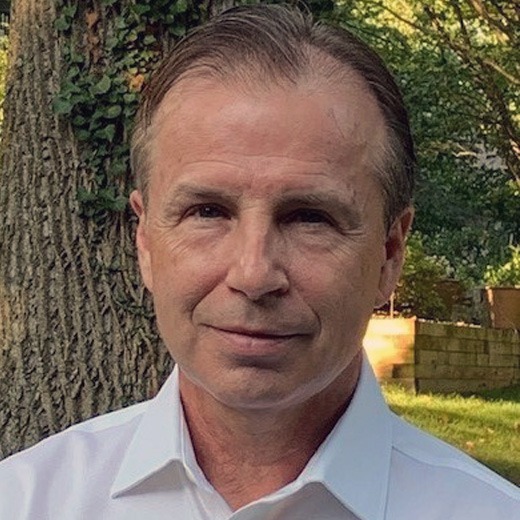 Joseph Carrese合作论文数Bayview Division of General Internal Medicine, Johns Hopkins School of Medicine2
 Stephen D. Simon合作论文数Bowling Green State Univ.2D. A. Reed合作论文数1A Marwaha合作论文数1DM HOWARD合作论文数1Dh Novack合作论文数1David C. Yao合作论文数1christopher o phillips合作论文数1R. Levine合作论文数1
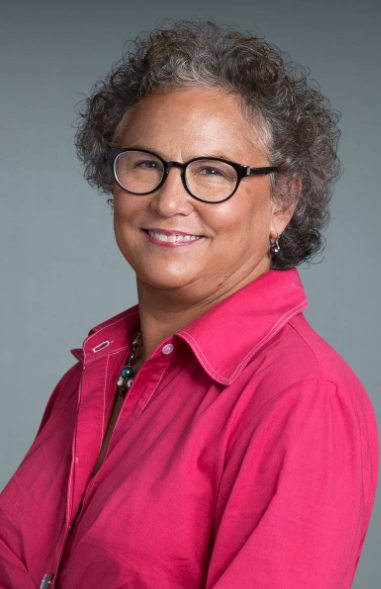 Adina L. Kalet合作论文数Division of General Internal Medicine and Clinical Innovation, Department of Medicine, New York University1
 Marie Diener-West合作论文数Department of Otolaryngology-Head and Neck Surgery, School of Medicine, Johns Hopkins University1Eubank Kathryn J合作论文数1
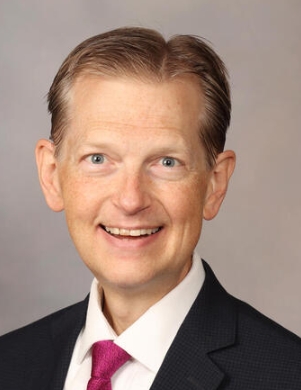 David A. Cook合作论文数Department of General Internal Medicine, College of Medicine, Mayo Clinic1Gress Todd合作论文数1Ramulu V G合作论文数1Frederick L. Brancati合作论文数1
 Richard Frankel合作论文数Department of Physics, Bailey College of Science & Mathematics, California Polytechnic State University1Mack Lipkin合作论文数1Suzanne M. Caccamese合作论文数1Penelope Williamson合作论文数1David B. Hellmann合作论文数1Paul Durbin合作论文数1Paul Haidet合作论文数1
 Thomas J. Beckman合作论文数School of Medicine, Mayo Clinic1




