The online manipulation-resilient testing model, proposed by Kalemaj, Raskhodnikova and Varma (ITCS 2022 and Theory of Computing 2023), studies property testing in situations where access to the input degrades continuously and adversarially. Specifically, after each query made by the tester is answered, the adversary can intervene and either erase or corrupt t data points. In this work, we investigate a more nuanced version of the online model in order to overcome old and new impossibility results for the original model. We start by presenting an optimal tester for linearity and a lower bound for low-degree testing of Boolean functions in the original model. We overcome the lower bound by allowing batch queries, where the tester gets a group of queries answered between manipulations of the data. Our batch size is small enough so that function values for a single batch on their own give no information about whether the function is of low degree. Finally, to overcome the impossibility results of Kalemaj et al. for sortedness and the Lipschitz property of sequences, we extend the model to include t<1, i.e., adversaries that make less than one erasure per query. For sortedness, we characterize the rate of erasures for which online testing can be performed, exhibiting a sharp transition from optimal query complexity to impossibility of testability (with any number of queries). Our online tester works for a general class of local properties of sequences. One feature of our results is that we get new (and in some cases, simpler) optimal algorithms for several properties in the standard property testing model.
We design the first node-differentially private algorithm for approximating the number of connected components in a graph. Given a database representing an n-vertex graph G and a privacy parameter ε, our algorithm runs in polynomial time and, with probability 1-o(1), has additive error Õ(Δ^*łnłn nε ), where Δ^* is the smallest possible maximum degree of a spanning forest of G. Node-differentially private algorithms are known only for a small number of database analysis tasks. A major obstacle for designing such an algorithm for the number of connected components is that this graph statistic is not robust to adding one node with arbitrary connections (a change that node-differential privacy is designed to hide): every graph is a neighbor of a connected graph. We overcome this by designing a family of efficiently computable Lipschitz extensions of the number of connected components or, equivalently, the size of a spanning forest. The construction of the extensions, which is at the core of our algorithm, is based on the forest polytope of G. We prove several combinatorial facts about spanning forests, in particular, that a graph with no induced Δ-stars has a spanning forest of degree at most Δ. With this fact, we show that our Lipschitz extensions for the number of connected components equal the true value of the function for the largest possible monotone families of graphs. More generally, on all monotone sets of graphs, the l∞ error of our Lipschitz extensions is nearly optimal.
We initiate an investigation of node differential privacy for graphs in the local model of private data analysis. In our model, dubbed LNDP, each node sees its own edge list and releases the output of a local randomizer on this input. These outputs are aggregated by an untrusted server to obtain a final output. We develop a novel algorithmic framework for this setting that allows us to accurately answer arbitrary linear queries on a blurry approximation of the input graph's degree distribution. For some natural problems, the resulting algorithms match the accuracy achievable with node privacy in the central model, where data are held and processed by a trusted server. We also prove lower bounds on the error required by LNDP that imply the optimality of our algorithms for several fundamental graph statistics. We then lift these lower bounds to the interactive LNDP setting, demonstrating the optimality of our algorithms even when constantly many rounds of interaction are permitted. Obtaining our lower bounds requires new approaches, since those developed for the usual local model do not apply to the inherently overlapping inputs that arise from graphs. Finally, we prove structural results that reveal qualitative differences between local node privacy and the standard local model for tabular data.
We study property testing with incomplete or noisy inputs. The models we consider allow for adversarial manipulation of the input, but differ in whether the manipulation can be done only offline, i.e., before the execution of the algorithm, or online, i.e., as the algorithm runs. The manipulations by an adversary can come in the form of erasures or corruptions. We compare the query complexity and the randomness complexity of property testing in the offline and online models. Kalemaj, Raskhodnikova, and Varma (Theory Comput `23) provide properties that can be tested with a small number of queries with offline erasures, but cannot be tested at all with online erasures. We demonstrate that the two models are incomparable in terms of query complexity: we construct properties that can be tested with a constant number of queries in the online corruption model, but require querying a significant fraction of the input in the offline erasure model. We also construct properties that exhibit a strong separation between the randomness complexity of testing in the presence of offline and online adversaries: testing these properties in the online model requires exponentially more random bits than in the offline model, even when they are tested with nearly the same number of queries in both models. Our randomness separation relies on a novel reduction from randomness-efficient testers in the adversarial online model to query-efficient testers in the standard model.
We investigate the computational efficiency of agnostic learning for several fundamental geometric concept classes in the plane. While the sample complexity of agnostic learning is well understood, its time complexity has received much less attention. We study the class of triangles and, more generally, the class of convex polygons with k vertices for small k, as well as the class of convex sets in a square. We present a proper agnostic learner for the class of triangles that has optimal sample complexity and runs in time Õ(ε^-6), improving on the algorithm of Dobkin and Gunopulos (COLT `95) that runs in time Õ(ε^-10). For 4-gons and 5-gons, we improve the running time from O(ε^-12), achieved by Fischer and Kwek (eCOLT `96), to Õ(ε^-8) and Õ(ε^-10), respectively. We also design a proper agnostic learner for convex sets under the uniform distribution over a square with running time Õ(ε^-5), improving on the previous Õ(ε^-8) bound at the cost of slightly higher sample complexity. Notably, agnostic learning of convex sets in [0,1]^2 under general distributions is impossible because this concept class has infinite VC-dimension. Our agnostic learners use data structures and algorithms from computational geometry and their analysis relies on tools from geometry and probabilistic combinatorics. Because our learners are proper, they yield tolerant property testers with matching running times. Our results raise a fundamental question of whether a gap between the sample and time complexity is inherent for agnostic learning of these and other natural concept classes.
We provide tools for sharing sensitive data in situations when the data curator does not know in advance what questions an (untrusted) analyst might want to ask about the data. The analyst can specify a program that they want the curator to run on the dataset. We model the program as a black-box function f. We study differentially private algorithms, called privacy wrappers, that, given black-box access to a real-valued function f and a sensitive dataset x, output an accurate approximation to f(x). The dataset x is modeled as a finite subset of a possibly infinite set U, in which each entry x represents data of one individual. A privacy wrapper calls f on the dataset x and on some subsets of x and returns either an approximation to f(x) or a nonresponse symbol perpendicular to. The wrapper may also use additional information (that is, parameters) provided by the analyst, but differential privacy is required for all values of these parameters. Correct setting of these parameters will ensure better accuracy of the privacy wrapper. The bottleneck in the running time of our privacy wrappers is the number of calls to f, which we refer to as queries. Our goal is to design privacy wrappers with high accuracy and small query complexity. We introduce a novel setting, called the automated sensitivity detection setting, where the analyst supplies only the black-box function f and the intended (finite) range of f. In contrast, in the previously considered setting, which we refer to as the claimed sensitivity bound setting, the analyst also supplies additional parameters that describe the sensitivity of f. We design privacy wrappers for both settings and show that our wrappers are nearly optimal in terms of accuracy, locality (i.e., the depth of the local neighborhood of the dataset x they explore), and query complexity. In the claimed sensitivity bound setting, we provide the first accuracy guarantees that have no dependence on the size of the universe U. We also re-interpret and analyze previous constructions in our framework, and use them as comparison points. In addition to addressing the black-box privacy problem, our private mechanisms provide feasibility results for differentially private release of general classes of functions.
We study differentially private algorithms for analyzing graph databases in the challenging setting of continual release with fully dynamic updates, where edges are inserted and deleted over time, and the algorithm is required to update the solution at every time step. Previous work has presented differentially private algorithms for many graph problems that can handle insertions only or deletions only (called partially dynamic algorithms) and obtained some hardness results for the fully dynamic setting. The only algorithms in the latter setting were for the edge count, given by Fichtenberger, Henzinger, and Ost (ESA '21), and for releasing the values of all graph cuts, given by Fichtenberger, Henzinger, and Upadhyay (ICML '23). We provide the first differentially private and fully dynamic graph algorithms for several other fundamental graph statistics (including the triangle count, the number of connected components, the size of the maximum matching, and the degree histogram), analyze their error, and show strong lower bounds on the error for all algorithms in this setting. Previously, only lower bounds for purely differentially private algorithms were known; our lower bounds give an exponential improvement in terms of the dependence on the number of time steps, while applying to algorithms satisfying pure as well as approximate differential privacy. We study two variants of edge differential privacy for fully dynamic graph algorithms: event-level and item-level. Under the former notion, two graph database update sequences are considered neighboring if, roughly speaking, they differ in at most one update; under the latter notion, they can differ only in updates pertaining to one edge. Differential privacy requires that for any two neighboring inputs, the output distributions of the algorithm are close. We give upper and lower bounds on the error of both---event-level and item-level---fully dynamic algorithms for several fundamental graph problems. No fully dynamic algorithms that are private at the item-level (the more stringent of the two notions) were known before. In the case of item-level privacy, for several problems, our algorithms match our lower bounds.
We study local filters for the Lipschitz property of real-valued functions f: V → [0,r], where the Lipschitz property is defined with respect to an arbitrary undirected graph G=(V,E). We give nearly optimal local Lipschitz filters both with respect to ℓ_1-distance and ℓ_0-distance. Previous work only considered unbounded-range functions over [n]^d. Jha and Raskhodnikova (SICOMP `13) gave an algorithm for such functions with lookup complexity exponential in d, which Awasthi et al. (ACM Trans. Comput. Theory) showed was necessary in this setting. We demonstrate that important applications of local Lipschitz filters can be accomplished with filters for functions with bounded-range. For functions f: [n]^d→ [0,r], we circumvent the lower bound and achieve running time (d^rlog n)^O(log r) for the ℓ_1-respecting filter and d^O(r)polylog n for the ℓ_0-respecting filter. Our local filters provide a novel Lipschitz extension that can be implemented locally. Furthermore, we show that our algorithms have nearly optimal dependence on r for the domain {0,1}^d. In addition, our lower bound resolves an open question of Awasthi et al., removing one of the conditions necessary for their lower bound for general range. We prove our lower bound via a reduction from distribution-free Lipschitz testing and a new technique for proving hardness for adaptive algorithms. We provide two applications of our local filters to arbitrary real-valued functions. In the first application, we use them in conjunction with the Laplace mechanism for differential privacy and noisy binary search to provide mechanisms for privately releasing outputs of black-box functions, even in the presence of malicious clients. In the second application, we use our local filters to obtain the first nontrivial tolerant tester for the Lipschitz property.
We initiate a systematic study of the computational complexity of property testing, focusing on the relationship between query and time complexity. While traditional work in property testing has emphasized query complexity, relatively little is known about the computational hardness of property testers. Our goal is to chart the landscape of time-query interplay and develop tools for proving time complexity lower bounds. Our first contribution is a pair of time-query hierarchy theorems for property testing. For all suitable nondecreasing functions $q(n)$ and $t(n)$ with $t(n)\geq q(n)$, we construct properties with query complexity $\tildeΘ(q(n))$ and time complexity $\tildeΩ(t(n))$. Our weak hierarchy holds unconditionally, whereas the strong version-assuming the Strong Exponential Time Hypothesis-provides better control over the time complexity of the constructed properties. We then turn to halfspaces in $\mathbb{R}^d$, a fundamental class in property testing and learning theory. We study the problem of approximating the distance from the input function to the nearest halfspace within additive error $ε$. For the distribution-free distance approximation problem, known algorithms achieve query complexity $O(d/ε^2)$, but take time $\tildeΘ(1/ε^d)$. We provide a fine-grained justification for this gap: assuming the $k$-SUM conjecture, any algorithm must have running time $Ω(1/ε^{d/2})$. This fine-grained lower bound yields a provable separation between query and time complexity for a natural and well-studied (tolerant) testing problem. We also prove that any Statistical Query (SQ) algorithm under the standard Gaussian distribution requires $(1/ε)^{Ω(d)}$ queries if the queries are answered with additive error up to $ε^{Ω(d)}$, revealing a fundamental barrier even in the distribution-specific setting.
A central challenge in property testing is verifying algebraic structure with minimal access to data. A landmark result addressing this challenge, the linearity test of Blum, Luby, and Rubinfeld (JCSS `93), spurred a rich body of work on testing algebraic properties such as linearity and its generalizations to low-degree polynomials and group homomorphisms. However, classical tests for these properties assume unrestricted, noise-free access to the input function–an assumption that breaks down in adversarial or dynamic settings. To address this, Kalemaj, Raskhodnikova, and Varma (Theory of Computing `23) introduced the online manipulation model, where an adversary may erase or corrupt query responses over time, based on the tester's past queries. We initiate the study of manipulation-resilient testing for group homomorphism in this online model. Our main result is an optimal tester that makes O(1/ε+log t) queries, where ε is the distance parameter and t is the number of function values the adversary can erase or corrupt per query. Our result recovers the celebrated O(1/ε) bound by Ben-Or, Coppersmith, Luby, and Rubinfeld (Random Struct. Algorithms `08) for homomorphism testing in the standard property testing model, albeit with a different tester. Our tester, 𝖱𝖺𝗇𝖽𝗈𝗆 𝖲𝗂𝗀𝗇𝗌 𝖳𝖾𝗌𝗍, lifts known manipulation-resilient linearity testers for 𝔽_2^n→𝔽_2 to general group domains and codomains by introducing more randomness: instead of verifying the homomorphism condition for a sum of random elements, it uses additions and subtractions of random elements, randomly selecting a sign for each element. We also obtain improved group-specific query bounds for key families of groups.
We will discuss research areas at the intersection of local algorithms and differential privacy. The main focus will be on using local Lipschitz filters to enable black-box differentially private queries to sensitive datasets. We will also cover new sublinear computational tasks arising in private data analysis. Finally, we will touch upon distributed models of privacy.
We investigate algorithms for testing whether an image is connected. Given a proximity parameter $\epsilon\in(0,1)$ and query access to a black-and-white image represented by an $n\times n$ matrix of Boolean pixel values, a (1-sided error) connectedness tester accepts if the image is connected and rejects with probability at least 2/3 if the image is $\epsilon$-far from connected. We show that connectedness can be tested nonadaptively with $O(\frac 1{\epsilon^2})$ queries and adaptively with $O(\frac{1}{\epsilon^{3/2}} \sqrt{\log\frac{1}{\epsilon}})$ queries. The best connectedness tester to date, by Berman, Raskhodnikova, and Yaroslavtsev (STOC 2014) had query complexity $O(\frac 1{\epsilon^2}\log \frac 1{\epsilon})$ and was adaptive. We also prove that every nonadaptive, 1-sided error tester for connectedness must make $\Omega(\frac 1\epsilon\log \frac 1\epsilon)$ queries.
We study differentially private algorithms for analyzing graphs in the challenging setting of continual release with fully dynamic updates, where edges are inserted and deleted over time, and the algorithm is required to update the solution at every time step. Previous work has presented differentially private algorithms for many graph problems that can handle insertions only or deletions only (called partially dynamic algorithms) and obtained some hardness results for the fully dynamic setting. The only algorithms in the latter setting were for the edge count, given by Fichtenberger, Henzinger, and Ost (ESA 21), and for releasing the values of all graph cuts, given by Fichtenberger, Henzinger, and Upadhyay (ICML 23). We provide the first differentially private and fully dynamic graph algorithms for several other fundamental graph statistics (including the triangle count, the number of connected components, the size of the maximum matching, and the degree histogram), analyze their error and show strong lower bounds on the error for all algorithms in this setting. We study two variants of edge differential privacy for fully dynamic graph algorithms: event-level and item-level. We give upper and lower bounds on the error of both event-level and item-level fully dynamic algorithms for several fundamental graph problems. No fully dynamic algorithms that are private at the item-level (the more stringent of the two notions) were known before. In the case of item-level privacy, for several problems, our algorithms match our lower bounds.
We study local filters for the Lipschitz property of real-valued functions $f: V \to [0,r]$, where the Lipschitz property is defined with respect to an arbitrary undirected graph $G=(V,E)$. We give nearly optimal local Lipschitz filters both with respect to $\ell_1$-distance and $\ell_0$-distance. Previous work only considered unbounded-range functions over $[n]^d$. Jha and Raskhodnikova (SICOMP `13) gave an algorithm for such functions with lookup complexity exponential in $d$, which Awasthi et al. (ACM Trans. Comput. Theory) showed was necessary in this setting. We demonstrate that important applications of local Lipschitz filters can be accomplished with filters for functions with bounded-range. For functions $f: [n]^d\to [0,r]$, we circumvent the lower bound and achieve running time $(d^r\log n)^{O(\log r)}$ for the $\ell_1$-respecting filter and $d^{O(r)}\text{polylog } n$ for the $\ell_0$-respecting filter. Our local filters provide a novel Lipschitz extension that can be implemented locally. Furthermore, we show that our algorithms have nearly optimal dependence on $r$ for the domain $\{0,1\}^d$. In addition, our lower bound resolves an open question of Awasthi et al., removing one of the conditions necessary for their lower bound for general range. We prove our lower bound via a reduction from distribution-free Lipschitz testing and a new technique for proving hardness for adaptive algorithms. We provide two applications of our local filters to arbitrary real-valued functions. In the first application, we use them in conjunction with the Laplace mechanism for differential privacy and noisy binary search to provide mechanisms for privately releasing outputs of black-box functions, even in the presence of malicious clients. In the second application, we use our local filters to obtain the first nontrivial tolerant tester for the Lipschitz property.
Many deployments of differential privacy in industry are in the local model, where each party releases its private information via a differentially private randomizer. We study triangle counting in the noninteractive and interactive local model with edge differential privacy (that, intuitively, requires that the outputs of the algorithm on graphs that differ in one edge be indistinguishable). In this model, each party's local view consists of the adjacency list of one vertex. In the noninteractive model, we prove that additive $\Omega(n^2)$ error is necessary, where $n$ is the number of nodes. This lower bound is our main technical contribution. It uses a reconstruction attack with a new class of linear queries and a novel mix-and-match strategy of running the local randomizers with different completions of their adjacency lists. It matches the additive error of the algorithm based on Randomized Response, proposed by Imola, Murakami and Chaudhuri (USENIX2021) and analyzed by Imola, Murakami and Chaudhuri (CCS2022) for constant $\varepsilon$. We use a different postprocessing of Randomized Response and provide tight bounds on the variance of the resulting algorithm. In the interactive setting, we prove a lower bound of $\Omega(n^{3/2})$ on the additive error. Previously, no hardness results were known for interactive, edge-private algorithms in the local model, except for those that follow trivially from the results for the central model. Our work significantly improves on the state of the art in differentially private graph analysis in the local model.
We generalize the celebrated isoperimetric inequality of Khot, Minzer, and Safra~(SICOMP 2018) for Boolean functions to the case of real-valued functions $f \colon \{0,1\}^d\to\mathbb{R}$. Our main tool in the proof of the generalized inequality is a new Boolean decomposition that represents every real-valued function $f$ over an arbitrary partially ordered domain as a collection of Boolean functions over the same domain, roughly capturing the distance of $f$ to monotonicity and the structure of violations of $f$ to monotonicity. We apply our generalized isoperimetric inequality to improve algorithms for testing monotonicity and approximating the distance to monotonicity for real-valued functions. Our tester for monotonicity has query complexity $\widetilde{O}(\min(r \sqrt{d},d))$, where $r$ is the size of the image of the input function. (The best previously known tester, by Chakrabarty and Seshadhri (STOC 2013), makes $O(d)$ queries.) Our tester is nonadaptive and has 1-sided error. We show a matching lower bound for nonadaptive, 1-sided error testers for monotonicity. We also show that the distance to monotonicity of real-valued functions that are $\alpha$-far from monotone can be approximated nonadaptively within a factor of $O(\sqrt{d\log d})$ with query complexity polynomial in $1/\alpha$ and the dimension $d$. This query complexity is known to be nearly optimal for nonadaptive algorithms even for the special case of Boolean functions. (The best previously known distance approximation algorithm for real-valued functions, by Fattal and Ron (TALG 2010) achieves $O(d\log r)$-approximation.)
We study the accuracy of differentially private mechanisms in the continual release model. A continual release mechanism receives a sensitive dataset as a stream of $T$ inputs and produces, after receiving each input, an accurate output on the obtained inputs. In contrast, a batch algorithm receives the data as one batch and produces a single output. We provide the first strong lower bounds on the error of continual release mechanisms. In particular, for two fundamental problems that are widely studied and used in the batch model, we show that the worst case error of every continual release algorithm is $\tilde \Omega(T^{1/3})$ times larger than that of the best batch algorithm. Previous work shows only a polylogarithimic (in $T$) gap between the worst case error achievable in these two models; further, for many problems, including the summation of binary attributes, the polylogarithmic gap is tight (Dwork et al., 2010; Chan et al., 2010). Our results show that problems closely related to summation -- specifically, those that require selecting the largest of a set of sums -- are fundamentally harder in the continual release model than in the batch model. Our lower bounds assume only that privacy holds for streams fixed in advance (the"nonadaptive"setting). However, we provide matching upper bounds that hold in a model where privacy is required even for adaptively selected streams. This model may be of independent interest.
Privacy is a central challenge for systems that learn from sensitive data sets, especially when a system's outputs must be continuously updated to reflect changing data. We consider the achievable error for differentially private continual release of a basic statistic -- the number of distinct items -- in a stream where items may be both inserted and deleted (the turnstile model). With only insertions, existing algorithms have additive error just polylogarithmic in the length of the stream $T$. We uncover a much richer landscape in the turnstile model, even without considering memory restrictions. We show that every differentially private mechanism that handles insertions and deletions has worst-case additive error at least $T^{1/4}$ even under a relatively weak, event-level privacy definition. Then, we identify a parameter of the input stream, its maximum flippancy, that is low for natural data streams and for which we give tight parameterized error guarantees. Specifically, the maximum flippancy is the largest number of times that the contribution of a single item to the distinct elements count changes over the course of the stream. We present an item-level differentially private mechanism that, for all turnstile streams with maximum flippancy $w$, continually outputs the number of distinct elements with an $O(\sqrt{w} \cdot poly\log T)$ additive error, without requiring prior knowledge of $w$. We prove that this is the best achievable error bound that depends only on $w$, for a large range of values of $w$. When $w$ is small, the error of our mechanism is similar to the polylogarithmic in $T$ error in the insertion-only setting, bypassing the hardness in the turnstile model.
We initiate the study of sublinear-time algorithms that access their input via an online adversarial erasure oracle. After answering each query to the input object, such an oracle can erase $t$ input values. Our goal is to understand the complexity of basic computational tasks in extremely adversarial situations, where the algorithm's access to data is blocked during the execution of the algorithm in response to its actions. Specifically, we focus on property testing in the model with online erasures. We show that two fundamental properties of functions, linearity and quadraticity, can be tested for constant $t$ with asymptotically the same complexity as in the standard property testing model. For linearity testing, we prove tight bounds in terms of $t$, showing that the query complexity is $\Theta(\log t)$. In contrast to linearity and quadraticity, some other properties, including sortedness and the Lipschitz property of sequences, cannot be tested at all, even for $t=1$. Our investigation leads to a deeper understanding of the structure of violations of linearity and other widely studied properties. We also consider implications of our results for algorithms that are resilient to online adversarial corruptions instead of erasures.
We initiate a systematic study of tolerant testers of image properties or, equivalently, algorithms that approximate the distance from a given image to the desired property. Image processing is a particularly compelling area of applications for sublinear-time algorithms and, specifically, property testing. However, for testing algorithms to reach their full potential in image processing, they have to be tolerant, which allows them to be resilient to noise. We design efficient approximation algorithms for the following fundamental questions: What fraction of pixels have to be changed in an image so it becomes a half-plane? A representation of a convex object? A representation of a connected object? More precisely, our algorithms approximate the distance to three basic properties (being a half-plane, convexity, and connectedness) within a small additive error ε, after reading poly (1/ε) pixels, independent of the image size. We also design an efficient agnostic proper PAC learner of convex sets (continuous and discrete) in two dimensions under the uniform distribution. Our algorithms require very simple access to the input: uniform random samples for the half-plane property and convexity, and samples from uniformly random blocks for connectedness. However, the analysis of the algorithms, especially for convexity, requires many geometric and combinatorial insights. For example, in the analysis of the algorithm for convexity, we define a set of reference polygons P ε such that (1) every convex image has a nearby polygon in P ε and (2) one can use dynamic programming to quickly compute the smallest empirical distance to a polygon in P ε .
 Adam D. Smith合作论文数Department of Computer Science, Boston University;Faculty of Computing and Data Sciences, Boston University19
 Grigory Yaroslavtsev合作论文数Stealth8
 Nithin Varma合作论文数Department of Mathematics and Computer Science, University of Cologne8
 Arnab Bhattacharyya合作论文数Department of Computer Science, The University of Warwick7
 Meiram Murzabulatov合作论文数7
 Piotr Berman合作论文数Department of Computer Science and Engineering;The Pennsylvania State University7Ramesh Krishnan S. Pallavoor合作论文数6
 Dana Ron合作论文数Department of Electrical Engineering - Systems, School of Electrical Engineering, Faculty of Engineering, Tel Aviv University6
 Ronitt Rubinfeld合作论文数Department of Electrical Engineering & Computer Science, Massachusetts Institute of Technology6
 Madhav Jha合作论文数Pennsylvania State University5
 Ephraim Linder合作论文数Department of Computer Science, Boston University4
 Iden Kalemaj合作论文数Boston Univ4
 Elena Grigorescu合作论文数Department of Computer Science, Purdue University4
 David P. Woodruff合作论文数Department of Computer Science, School of Computer Science, Carnegie Mellon University4Roksana Baleshzar合作论文数3
 Satchit Sivakumar合作论文数Boston University3
 Amir Shpilka合作论文数Department of Computer Science, Tel-Aviv University3
 Kobbi Nissim合作论文数Department of Computer Science, Georgetown University;Google3Berman Piotr合作论文数Department of Computer Science and Engineering
The Pennsylvania State University3
Kobbi Nissim合作论文数Department of Computer Science, Georgetown University;Google3Berman Piotr合作论文数Department of Computer Science and Engineering
The Pennsylvania State University3 Kyomin Jung合作论文数Machine Intelligence Lab, Seoul National University;Department of Electrical and Computer Engineering, Seoul National University3
 Paul Medvedev合作论文数Department of Computer Science, University of Toronto3
 Kashyap Dixit合作论文数Pennsylvania State University3
 Rayan Chikhi合作论文数Computer Science Department, ENS Cachan/IRISA3
 Abhradeep Guha Thakurta合作论文数Google DeepMind3
 Martin Milanic合作论文数Slovenia and University of Primorska, University of Primorska3Esty Kelman合作论文数2
 Palak Jain合作论文数Department of Computer Science, Boston University2
 Vladan Jovicic合作论文数2Arsen Vasilyan合作论文数2Teresa Anna Steiner合作论文数Tech Univ Denmark2Uri Meir合作论文数2
 Quanquan Liu合作论文数Massachusetts Institute of Technology2
 Thomas Steinke合作论文数Google DeepMind2
 Talya Eden合作论文数Department of Computer Science, Bar-Ilan University2Lange Jane M合作论文数2
 Klaus Jansen合作论文数Institut fur Informatik, Technische Fakultat, Christian-Albrechts-Universitat zu Kiel2Alex Samorodnitsky合作论文数2
 Ilan Newman合作论文数Department of Computer Science, Faculty of Social Sciences, University of Haifa2
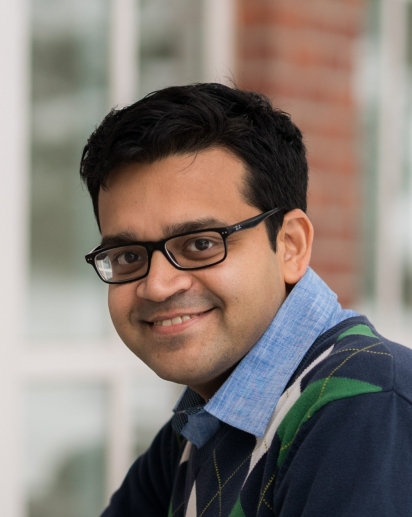 Deeparnab Chakrabarty合作论文数Department of Computer Science, Dartmouth College2
 Adam T. Smith合作论文数Department of Anthropology, College of Arts and Sciences, Cornell University2
 Stefan Kratsch合作论文数Institut für Informatik, Mathematisch-Naturwissenschaftliche Fakultät, Humboldt-Universität zu Berlin2
 Oded Goldreich合作论文数Faculty of Mathematics and Computer Science, The Weizmann Institute of Science2
 Prasad Raghavendra合作论文数Department of Electrical Engineering and Computer Sciences, University of California, Berkeley2
 Eli Ben-Sasson合作论文数StarkWare;Electric Coin Company2
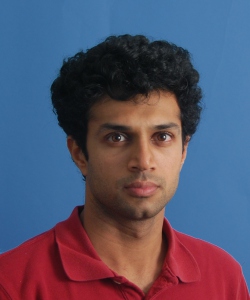 C. Seshadhri (Seshadhri Comandur)合作论文数Baskin School of Engineering, University of California, Santa Cruz2
 Prahladh Harsha合作论文数Toyota Technological Institute at Chicago (TTI-Chicago)2Vishesh Karwa合作论文数Penn State Univ, University Pk2
 Piotr Indyk合作论文数Department of Electrical Engineering and Computer Science, Schwarzman College of Computing, Massachusetts Institute of Technology;Computer Science and Artificial Intelligence Laboratory, Schwarzman College of Computing, Massachusetts Institute of Technology2