A dual-sense stacked circularly polarized (CP) antenna using single feed is proposed for wireless applications (WLAN/Bluetooth). An inclined third iterative F-shaped fractal slot is cut in the first quadrant on the lower driven patch and an added same fractal slot in the third quadrant is used as the upper parasitic patch. The inclined F-shaped fractal slot etched on a parasitic patch, is able to create dual-sense CP radiation. The proposed structure has volume of 0.31λ0 × 0.31λ0 × 0.026λ0, λ0 (free space wavelength) at 2.487 GHz. The measured results of right-hand Circular polarization and left-hand circular polarization shows good CP radiation characteristic. The − 10 dB return loss bandwidth of the antenna was around 7.43
We introduce Style Tailoring, a recipe to finetune Latent Diffusion Models (LDMs) in a distinct domain with high visual quality, prompt alignment and scene diversity. We choose sticker image generation as the target domain, as the images significantly differ from photorealistic samples typically generated by large-scale LDMs. We start with a competent text-to-image model, like Emu, and show that relying on prompt engineering with a photorealistic model to generate stickers leads to poor prompt alignment and scene diversity. To overcome these drawbacks, we first finetune Emu on millions of sticker-like images collected using weak supervision to elicit diversity. Next, we curate human-in-the-loop (HITL) Alignment and Style datasets from model generations, and finetune to improve prompt alignment and style alignment respectively. Sequential finetuning on these datasets poses a tradeoff between better style alignment and prompt alignment gains. To address this tradeoff, we propose a novel fine-tuning method called Style Tailoring, which jointly fits the content and style distribution and achieves best tradeoff. Evaluation results show our method improves visual quality by 14%, prompt alignment by 16.2% and scene diversity by 15.3%, compared to prompt engineering the base Emu model for stickers generation.
Recent large-scale text-to-image generation models have made significant improvements in the quality, realism, and diversity of the synthesized images and enable users to control the created content through language. However, the personalization aspect of these generative models is still challenging and under-explored. In this work, we propose a pipeline that enables personalization of image generation with avatars capturing a user's identity in a delightful way. Our pipeline is zero-shot, avatar texture and style agnostic, and does not require training on the avatar at all - it is scalable to millions of users who can generate a scene with their avatar. To render the avatar in a pose faithful to the given text prompt, we propose a novel text-to-3D pose diffusion model trained on a curated large-scale dataset of in-the-wild human poses improving the performance of the SOTA text-to-motion models significantly. We show, for the first time, how to leverage large-scale image datasets to learn human 3D pose parameters and overcome the limitations of motion capture datasets.
We propose Latent-Shift -- an efficient text-to-video generation method based on a pretrained text-to-image generation model that consists of an autoencoder and a U-Net diffusion model. Learning a video diffusion model in the latent space is much more efficient than in the pixel space. The latter is often limited to first generating a low-resolution video followed by a sequence of frame interpolation and super-resolution models, which makes the entire pipeline very complex and computationally expensive. To extend a U-Net from image generation to video generation, prior work proposes to add additional modules like 1D temporal convolution and/or temporal attention layers. In contrast, we propose a parameter-free temporal shift module that can leverage the spatial U-Net as is for video generation. We achieve this by shifting two portions of the feature map channels forward and backward along the temporal dimension. The shifted features of the current frame thus receive the features from the previous and the subsequent frames, enabling motion learning without additional parameters. We show that Latent-Shift achieves comparable or better results while being significantly more efficient. Moreover, Latent-Shift can generate images despite being finetuned for T2V generation.
Recent text-to-image diffusion models are able to generate convincing results of unprecedented quality. However, it is nearly impossible to control the shapes of different regions/objects or their layout in a fine-grained fashion. Previous attempts to provide such controls were hindered by their reliance on a fixed set of labels. To this end, we present SpaText - a new method for text-to-image generation using open-vocabulary scene control. In addition to a global text prompt that describes the entire scene, the user provides a segmentation map where each region of interest is annotated by a free-form natural language description. Due to lack of large-scale datasets that have a detailed textual description for each region in the image, we choose to leverage the current large-scale text-to-image datasets and base our approach on a novel CLIP-based spatio-textual representation, and show its effectiveness on two state-of-the-art diffusion models: pixel-based and latent-based. In addition, we show how to extend the classifier-free guidance method in diffusion models to the multi-conditional case and present an alternative accelerated inference algorithm. Finally, we offer several automatic evaluation metrics and use them, in addition to FID scores and a user study, to evaluate our method and show that it achieves state-of-the-art results on image generation with free-form textual scene control.
We propose Make-A-Video -- an approach for directly translating the tremendous recent progress in Text-to-Image (T2I) generation to Text-to-Video (T2V). Our intuition is simple: learn what the world looks like and how it is described from paired text-image data, and learn how the world moves from unsupervised video footage. Make-A-Video has three advantages: (1) it accelerates training of the T2V model (it does not need to learn visual and multimodal representations from scratch), (2) it does not require paired text-video data, and (3) the generated videos inherit the vastness (diversity in aesthetic, fantastical depictions, etc.) of today's image generation models. We design a simple yet effective way to build on T2I models with novel and effective spatial-temporal modules. First, we decompose the full temporal U-Net and attention tensors and approximate them in space and time. Second, we design a spatial temporal pipeline to generate high resolution and frame rate videos with a video decoder, interpolation model and two super resolution models that can enable various applications besides T2V. In all aspects, spatial and temporal resolution, faithfulness to text, and quality, Make-A-Video sets the new state-of-the-art in text-to-video generation, as determined by both qualitative and quantitative measures.
Text-guided human motion generation has drawn significant interest because of its impactful applications spanning animation and robotics. Recently, application of diffusion models for motion generation has enabled improvements in the quality of generated motions. However, existing approaches are limited by their reliance on relatively small-scale motion capture data, leading to poor performance on more diverse, in-the-wild prompts. In this paper, we introduce Make-An-Animation, a text-conditioned human motion generation model which learns more diverse poses and prompts from large-scale image-text datasets, enabling significant improvement in performance over prior works. Make-An-Animation is trained in two stages. First, we train on a curated large-scale dataset of (text, static pseudo-pose) pairs extracted from image-text datasets. Second, we fine-tune on motion capture data, adding additional layers to model the temporal dimension. Unlike prior diffusion models for motion generation, Make-An-Animation uses a U-Net architecture similar to recent text-to-video generation models. Human evaluation of motion realism and alignment with input text shows that our model reaches state-of-the-art performance on text-to-motion generation.
In this article, a single feed antenna design which consists of a parasitic patch slot with an I-tree shaped fractal defected ground structure for circularly polarized radiation is presented. In the proposed design, circular polarization characteristics are achieved by deploying fractal slotted defected ground structures. The antenna design with a third iterative I-tree shaped fractal slot on an Fr4 substrate is fabricated and tested for verifying the simulated results. The circular polarization mechanism is performed using parametric studies. The measured and simulated results confirmed that the proposed structure can adequately generate an impedance bandwidth of 10.6% with 3 dB axial ratio bandwidth of 4.89%, with the measured peak gain of the proposed antenna being 5.16 dBic. The proposed article is suitable for C-band and CA-band applications.
In this article, an antenna structure consisting fractal defected ground monopole antenna for circularly polarized radiation is presented. The characteristics of circular polarization in the proposed structure are obtained by fractal defected ground structure. The third iterative h-shaped fractal slot antenna is fabricated and examined on Rogers RT/duroid 5880 substrate for validating the simulated results. The best circular polarization radiation is obtained by varying the key parameters of the proposed geometry. The simulated and measured results confirmed that the proposed antenna can be adequately produced an impedance bandwidth (2.15 GHz - 3.55 GHz) of 49.12% with 3 dB axial ratio bandwidth (2.54 GHz - 3.03 GHz) of 17.59%, while the measured peak gain of the proposed structure is 2.99 dBic. The proposed work is suitable for Bluetooth/LTE/CNSS/S-band and CA-band applications.
AbstractDesign of single-feed circularly polarized (CP) microstrip antenna is proposed in this article. The design employs the concept of E-shape patch with inclined fractal defected ground structure (IFDGS), which can improve the impedance bandwidth, gain, and axial ratio (AR) bandwidth. The excellent enhanced impedance bandwidth, axial ratio bandwidth, and gain are achieved by an inclined E-shaped fractal etched on the ground plane. The parameter studies of the E-shaped IFDGS are given to illustrate the way to obtain CP radiation. The third iterative IFDGS is fabricated on easily available FR4 substrate with a size of 0.494 λ0 × 0.494 λ0 × 0.019 λ0 (λ0 is the wavelength in free space at 3.624 GHz). The measured results verify the simulated results and show good agreement. The proposed antenna shows an impedance bandwidth of 12.7% at a centre frequency of 3.47 GHz and 3-dB AR bandwidth for this band is 2.39% at a centre frequency of 3.626 GHz. The measured peak gain for the proposed antenna is found as 8.1 dBi. The proposed antenna can be suitable for mobile WIMAX operation (IEEE 802.16e-2005 standard), wireless communication in CA-band and FCC.
In this paper, we study the utilization of pre-trained language models to enable few-shotNatural Language Generation (NLG) in task-oriented dialog systems. We introduce a system consisting of iterative self-training and an extensible mini-template framework that textualizes the structured input data into semi-natural text to fully take advantage of pre-trained language models. We compare var-ious representations of NLG models’ input and output and show that transforming the input and output to be similar to what the language model has seen before during pre-training improves the model’s few-shot performance substantially. We show that neural mod-els can be trained with as few as 300 annotated examples while providing high fidelity, considerably lowering the resource requirements for standing up a new domain or language.This level of data efficiency removes the need for crowd-sourced data collection resulting in higher quality data annotated by expert linguists. In addition, model maintenance and debugging processes will improve in this few-shot setting. Finally, we explore distillation and using a caching system to satisfy latency requirements of real-world systems.
Introduction: The dental health of people with disabilities has been reported to be worse than that of normal people. Maintenance of oral hygiene by tooth brushing is the most important and effective way of reducing levels of plaque and gingivitis.Aim: To evaluate the effectiveness of supervised tooth brushing in various special schools of Mathura district.Materials and Methodology: 160 subjects (6-14years) were selected for the study and the participants were divided into four groups depending upon their disability as: Down’s syndrome, Cerebral palsy, Autism spectrum disorder & Hearing impaired. Baseline of half of the subjects were maintained; Gingival & plaque index were recorded followed by oral hygiene instructions to all the children, supervising staff and caregivers. Plaque and gingival index were recorded again in 3 months and again reminded the taught technique & subsequently a 6 months follow-up.Result: Gingival health status was improved in all the groups. Statistical significant result was found in Plaque index of hearing impaired whose baseline were maintained and statistical analysis was done using paired t-test.Conclusion: School based dental programs for oral health education should be done regularly and frequently as it will help in avoiding the expensive and lengthy dental procedures.
Pre-training on larger datasets with ever increasing model size is now a proven recipe for increased performance across almost all NLP tasks. A notable exception is information retrieval, where additional pre-training has so far failed to produce convincing results. We show that, with the right pre-training setup, this barrier can be overcome. We demonstrate this by pre-training large bi-encoder models on 1) a recently released set of 65 million synthetically generated questions, and 2) 200 million post-comment pairs from a preexisting dataset of Reddit conversations made available by pushshift.io. We evaluate on a set of information retrieval and dialogue retrieval benchmarks, showing substantial improvements over supervised baselines.
Current abstractive summarization systems outperform their extractive counterparts, but their widespread adoption is inhibited by the inherent lack of interpretability. To achieve the best of both worlds, we propose EASE, an extractive-abstractive framework for evidence-based text generation and apply it to document summarization. We present an explainable summarization system based on the Information Bottleneck principle that is jointly trained for extraction and abstraction in an end-to-end fashion. Inspired by previous research that humans use a two-stage framework to summarize long documents (Jing and McKeown, 2000), our framework first extracts a pre-defined amount of evidence spans as explanations and then generates a summary using only the evidence. Using automatic and human evaluations, we show that explanations from our framework are more relevant than simple baselines, without substantially sacrificing the quality of the generated summary.
Training with soft targets instead of hard targets has been shown to improve performance and calibration of deep neural networks. Label smoothing is a popular way of computing soft targets, where one-hot encoding of a class is smoothed with a uniform distribution. Owing to its simplicity, label smoothing has found wide-spread use for training deep neural networks on a wide variety of tasks, ranging from image and text classification to machine translation and semantic parsing. Complementing recent empirical justification for label smoothing, we obtain PAC-Bayesian generalization bounds for label smoothing and show that the generalization error depends on the choice of the noise (smoothing) distribution. Then we propose low-rank adaptive label smoothing (LORAS): a simple yet novel method for training with learned soft targets that generalizes label smoothing and adapts to the latent structure of the label space in structured prediction tasks. Specifically, we evaluate our method on semantic parsing tasks and show that training with appropriately smoothed soft targets can significantly improve accuracy and model calibration, especially in low-resource settings. Used in conjunction with pre-trained sequence-to-sequence models, our method achieves state of the art performance on four semantic parsing data sets. LORAS can be used with any model, improves performance and implicit model calibration without increasing the number of model parameters, and can be scaled to problems with large label spaces containing tens of thousands of labels.
We propose pre-finetuning, an additional large-scale learning stage between language model pre-training and fine-tuning. Pre-finetuning is massively multi-task learning (around 50 datasets, over 4.8 million total labeled examples), and is designed to encourage learning of representations that generalize better to many different tasks. We show that prefinetuning consistently improves performance for pretrained discriminators (e.g. RoBERTa) and generation models (e.g. BART) on a wide range of tasks (sentence prediction, commonsense reasoning, MRC, etc.), while also significantly improving sample efficiency during fine-tuning. We also show that large-scale multi-tasking is crucial; pre-finetuning can hurt performance when few tasks are used up until a critical point (usually above 15) after which performance improves linearly in the number of tasks.
Current abstractive summarization systems outperform their extractive counterparts, but their widespread adoption is inhibited by the inherent lack of interpretability. Extractive summarization systems, though interpretable, suffer from redundancy and possible lack of coherence. To achieve the best of both worlds, we propose EASE, an extractive-abstractive framework that generates concise abstractive summaries that can be traced back to an extractive summary. Our framework can be applied to any evidence-based text generation problem and can accommodate various pretrained models in its simple architecture. We use the Information Bottleneck principle to jointly train the extraction and abstraction in an end-to-end fashion. Inspired by previous research that humans use a two-stage framework to summarize long documents (Jing and McKeown, 2000), our framework first extracts a pre-defined amount of evidence spans and then generates a summary using only the evidence. Using automatic and human evaluations, we show that the generated summaries are better than strong extractive and extractive-abstractive baselines.
Despite their recent popularity and well-known advantages, dense retrievers still lag behind sparse methods such as BM25 in their ability to reliably match salient phrases and rare entities in the query and to generalize to out-of-domain data. It has been argued that this is an inherent limitation of dense models. We rebut this claim by introducing the Salient Phrase Aware Retriever (SPAR), a dense retriever with the lexical matching capacity of a sparse model. We show that a dense Lexical Model {\Lambda} can be trained to imitate a sparse one, and SPAR is built by augmenting a standard dense retriever with {\Lambda}. Empirically, SPAR shows superior performance on a range of tasks including five question answering datasets, MS MARCO passage retrieval, as well as the EntityQuestions and BEIR benchmarks for out-of-domain evaluation, exceeding the performance of state-of-the-art dense and sparse retrievers. The code and models of SPAR are available at: https://github.com/facebookresearch/dpr-scale/tree/main/spar
Scaling semantic parsing models for task-oriented dialog systems to new languages is often expensive and time-consuming due to the lack of available datasets. Available datasets suffer from several shortcomings: a) they contain few languages b) they contain small amounts of labeled examples per language c) they are based on the simple intent and slot detection paradigm for non-compositional queries. In this paper, we present a new multilingual dataset, called MTOP, comprising of 100k annotated utterances in 6 languages across 11 domains. We use this dataset and other publicly available datasets to conduct a comprehensive benchmarking study on using various state-of-the-art multilingual pre-trained models for task-oriented semantic parsing. We achieve an average improvement of +6.3 points on Slot F1 for the two existing multilingual datasets, over best results reported in their experiments. Furthermore, we demonstrate strong zero-shot performance using pre-trained models combined with automatic translation and alignment, and a proposed distant supervision method to reduce the noise in slot label projection.
Although widely adopted, existing approaches for fine-tuning pre-trained language models have been shown to be unstable across hyper-parameter settings, motivating recent work on trust region methods. In this paper, we present a simplified and efficient method rooted in trust region theory that replaces previously used adversarial objectives with parametric noise (sampling from either a normal or uniform distribution), thereby discouraging representation change during fine-tuning when possible without hurting performance. We also introduce a new analysis to motivate the use of trust region methods more generally, by studying representational collapse; the degradation of generalizable representations from pre-trained models as they are fine-tuned for a specific end task. Extensive experiments show that our fine-tuning method matches or exceeds the performance of previous trust region methods on a range of understanding and generation tasks (including DailyMail/CNN, Gigaword, Reddit TIFU, and the GLUE benchmark), while also being much faster. We also show that it is less prone to representation collapse; the pre-trained models maintain more generalizable representations every time they are fine-tuned.
 Christopher Manning合作论文数Department of Linguistics, Stanford University;Department of Computer Science, Stanford University;AIX Ventures11
 Yashar Mehdad合作论文数Airbnb10
 Arash Einolghozati合作论文数Sch. of Electr. & Comput. Eng., Georgia Inst. of Technol.;c;Sch. of Electr. & Comput. Eng., Georgia Inst. of Technol.9
 Xilun Chen合作论文数Fundamental AI Research, Meta8
 Luke Zettlemoyer合作论文数Paul G. Allen School of Computer Science & Engineering, University of Washington;Facebook AI7
 Anchit Gupta合作论文数Facebook6
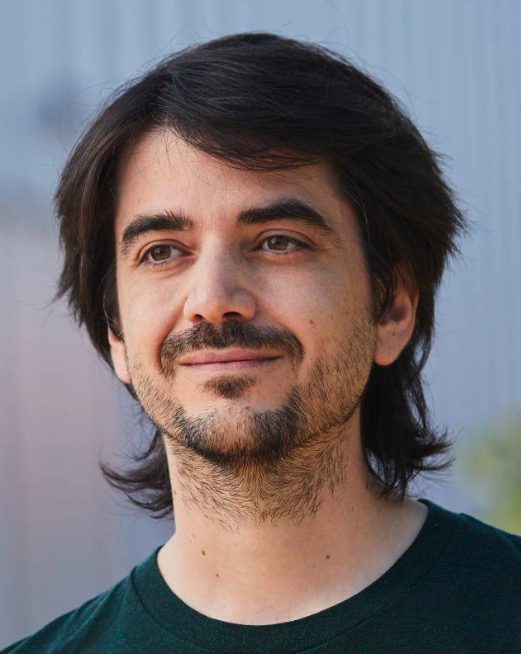 Barlas Oğuz合作论文数Meta AI6
 Rushin Shah合作论文数Carnegie Mellon University6
 Shilpee Patil合作论文数Noida Institute of Engineering and Technology5
 Armen Aghajanyan合作论文数Facebook AI Research5
 Chhaya Dalela合作论文数JSS ACADEMY Of Technical Education5
 Mike Lewis合作论文数Meta5
 Scott Wen-Tau Yih (易文韜)合作论文数Facebook AI Research, Meta5
 Binod Kumar Kanaujia合作论文数Department of Electronics and Communication Engineering, Dr B R Ambedkar National Institute of Technology Jalandhar, Punjab5
 Mrinal Mohit合作论文数Facebook4
 Haoran Li合作论文数Facebook Inc4
 A Kumar合作论文数Facebook4
 Devi Parikh合作论文数Yutori4
 Abhinav Arora合作论文数Facebook4
 Stan Peshterliev合作论文数3
 Keith Diedrick合作论文数3
 Kushal Lakhotia合作论文数AI Res, Facebook3
 Dmytro Okhonko合作论文数3
 Ashish Soni合作论文数Dept Mech Engn, Natl Inst Technol3
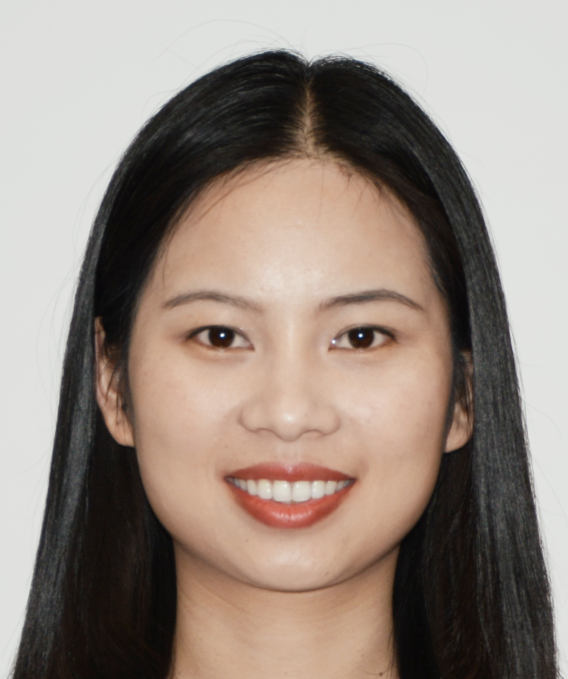 Xi Yin (殷希)合作论文数Meta3
 Panupong (Ice) Pasupat合作论文数Google AI, Google3
 Patrick Lewis合作论文数Cohere3
 Akshat Shrivastava合作论文数Perceptron AI3
 Jeffrey Michael Heer合作论文数Paul G. Allen School of Computer Science & Engineering, University of Washington;Interactive Data Lab, University of Washington3
 Raymond J. Mooney合作论文数Department of Computer Science, College of Natural Sciences, University of Texas at Austin;UT Artificial Intelligence Laboratory, University of Texas at Austin3
 Tom Hayes合作论文数Department of Computer Science, University of New Mexico3
 Gabor Angeli合作论文数Google3
 Vladimir Karpukhin合作论文数Google3
 Harry Yang合作论文数The Hong Kong University of Science and Technology;Everlyn2
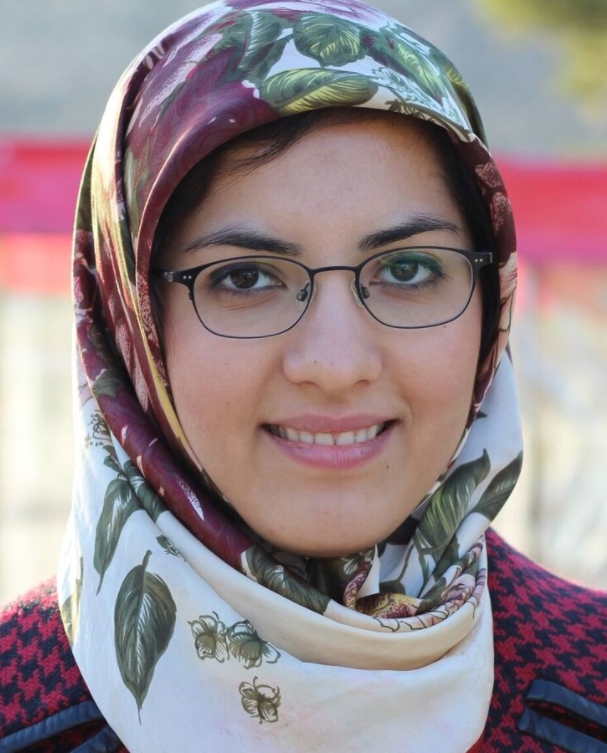 Samaneh Azadi合作论文数Meta Research2Akbar Shah合作论文数2
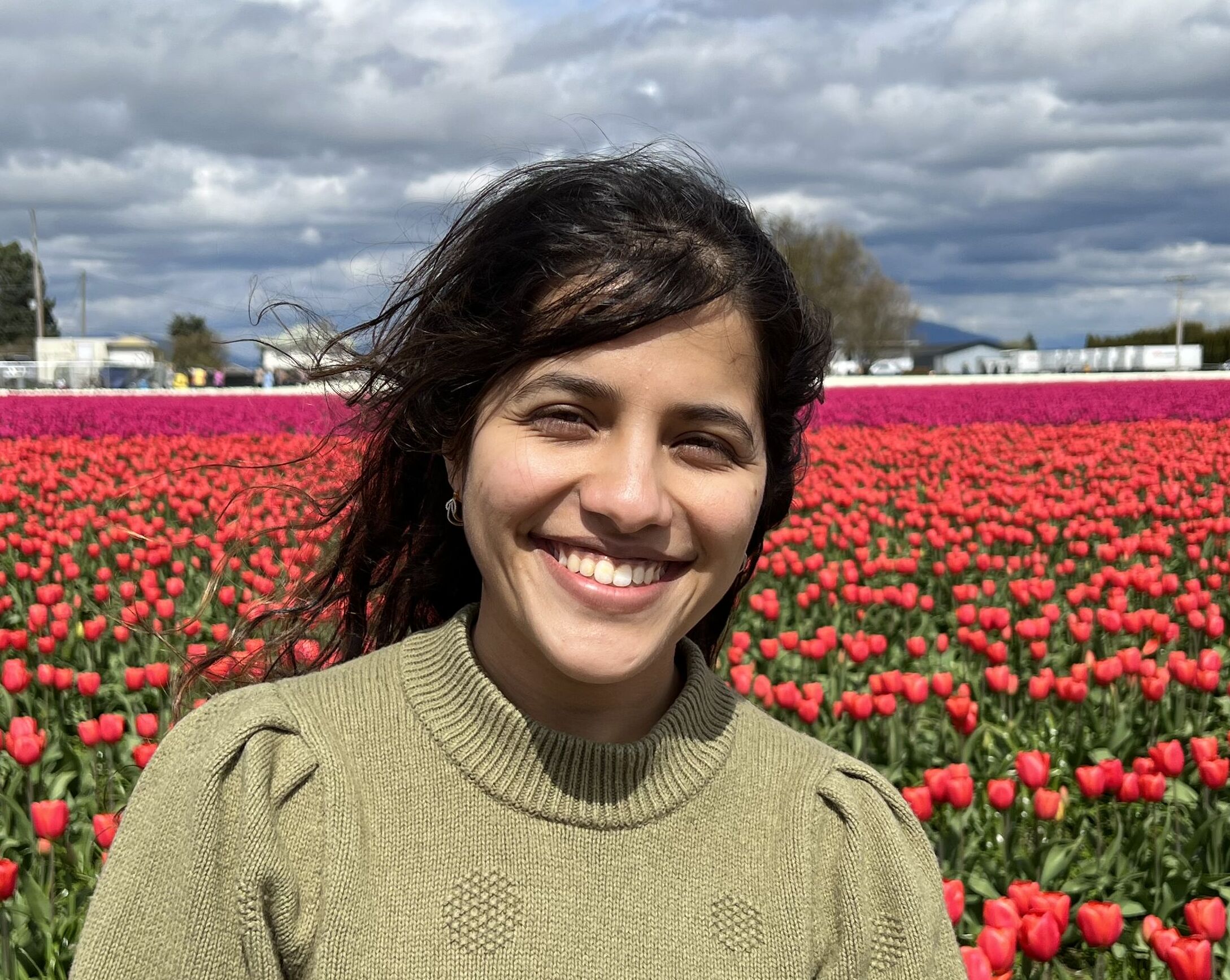 Bhargavi Paranjape合作论文数Paul G. Allen School of Computer Science & Engineering, University of Washington2
 Songyang Zhang (张宋扬)合作论文数Amazon Artificial General Intelligence Team2
 Jean Wu合作论文数Apple2
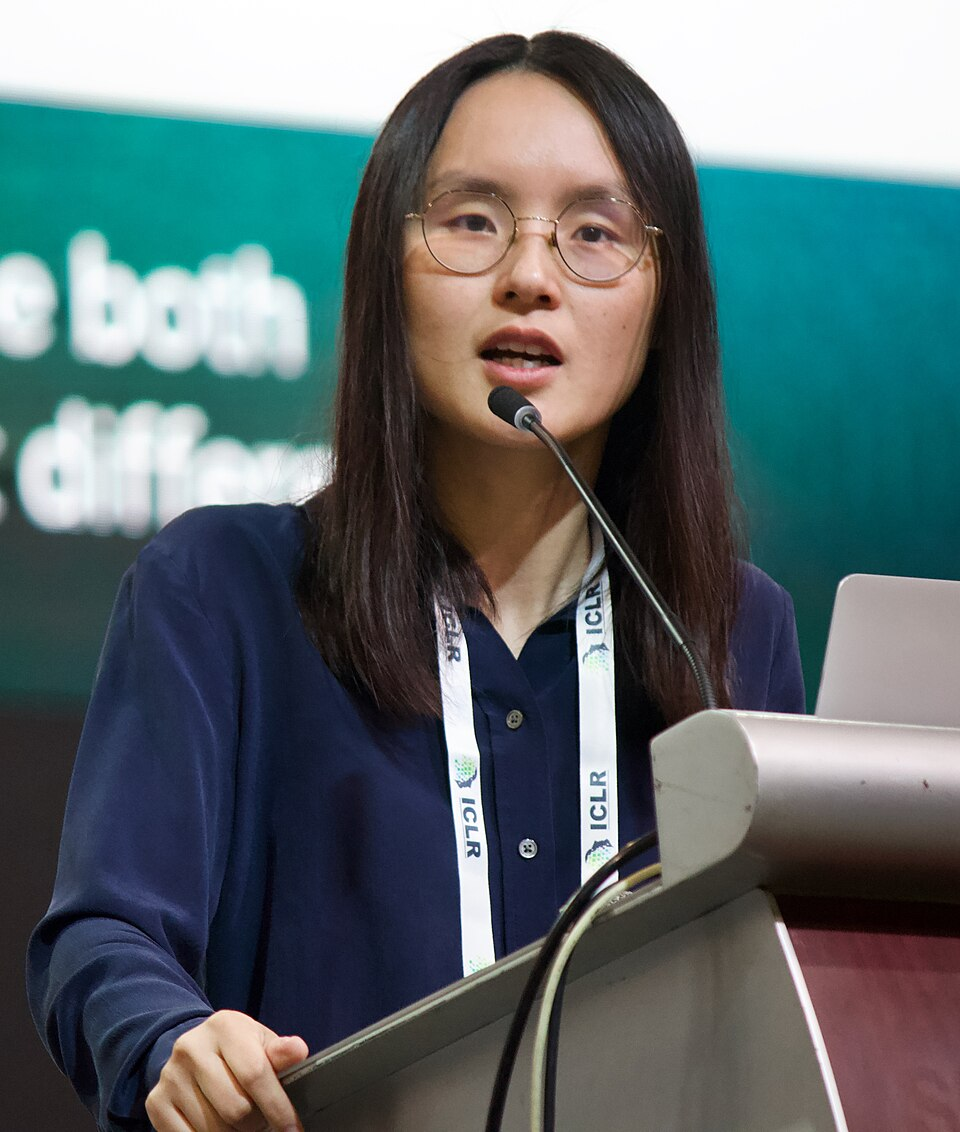 Danqi Chen (陈丹琦)合作论文数2
 Jie An (安捷)合作论文数Amazon AGI2Tripathi Y B合作论文数2
 Srinivasan Iyer (斯里尼瓦桑艾耶)合作论文数Facebook AI Research, Meta AI Research2
 Oran Gafni合作论文数Meta AI Research2
 Kristen Grauman合作论文数Department of Computer Science, University of Texas at Austin;Facebook AI Research2
 Yaniv Taigman合作论文数Meta2
 Pinar Donmez合作论文数Carnegie Mellon University, Pittsburgh, PA, USA2Diana Maclean合作论文数2
 Sen Wu (武森)合作论文数2




