Automultiscopic screens present different images depending on the viewing direction. This enables glasses-free 3D and provides motion parallax effect. However, due to the limited angular resolution of such displays, they suffer from hot-spotting, i. e., image quality is highly affected by the viewing position. In this paper, we analyze light fields produced by lenticular and parallax-barrier displays, and show that, unlike in real world, the light fields produced by such screens have a repetitive structure. This induces visual artifacts in the form of view discontinuities, depth reversals, and excessive disparities when viewing position is not optimal. Although the problem has been always considered as inherent to the technology, we demonstrate that light fields reproduced on automultiscopic displays have enough degrees of freedom to improve the visual quality. We propose a new technique that modifies light fields using global and local shears followed by stitching to improve their continuity when displayed on a screen. We show that this enhances visual quality significantly, which is demonstrated in a series of user experiments with an automultiscopic display as well as lenticular prints.
In this paper, we have proposed a novel patch-based method for automatic completion of stereoscopic images and the corresponding depth/disparity maps simultaneously. The missing depths are estimated in local feature space and a patch distance metric is designed to take the appearance, depth gradients and depth inconsistency into account. To ensure the proper stereopsis, we first search for the proper stereoscopic patch in both left and right images according to the distance metric, and then iteratively refine the images. Our method is capable of dealing with general scenes including both frontal-parallel and non-frontal-parallel objects. Experimental results show that our method is superior to previous ones with better stereoscopically consistent content and more plausible completion.
Solid textures, comprising 3D particles embedded in a matrix in a regular or semiregular pattern, are common in natural and man-made materials, such as brickwork, stone walls, plant cells in a leaf, etc. We present a novel technique for synthesizing such textures, starting from 2D image exemplars which provide cross-sections of the desired volume texture. The shapes and colors of typical particles embedded in the structure are estimated from their 2D cross-sections. Particle positions in the texture images are also used to guide spatial placement of the 3D particles during synthesis of the 3D texture. Our experiments demonstrate that our algorithm can produce higher quality structures than previous approaches; they are both compatible with the input images, and have a plausible 3D nature.
We propose a novel metric of visual comfort for stereoscopic motion, based on a series of systematic perceptual experiments. We take into account disparity, motion in depth, motion on the screen plane, and the spatial frequency of luminance contrast. We further derive a comfort metric to predict the comfort of short stereoscopic videos. We validate it on both controlled scenes and real videos available on the internet, and show how all the factors we take into account, as well as their interactions, affect viewing comfort. Last, we propose various applications that can benefit from our comfort measurements and metric.
Traditional image editing techniques cannot be directly used to edit stereoscopic ("3D”) media, as extra constraints are needed to ensure consistent changes are made to both left and right images. Here, we consider manipulating perspective in stereoscopic pairs. A straightforward approach based on depth recovery is unsatisfactory: Instead, we use feature correspondences between stereoscopic image pairs. Given a new, user-specified perspective, we determine correspondence constraints under this perspective and optimize a 2D warp for each image that preserves straight lines and guarantees proper stereopsis relative to the new camera. Experiments verify that our method generates new stereoscopic views that correspond well to expected projections, for a wide range of specified perspective. Various advanced camera effects, such as dolly zoom and wide angle effects, can also be readily generated for stereoscopic image pairs using our method.
Stereoscopic (‘3D’) devices and content relying on stereopsis are now widely available. However, traditional image editing techniques cannot be directly used to edit stereoscopic media, as extra constraints are needed to ensure consistent changes are made to both left and right images. This paper addresses the problem of manipulating perspective in stereoscopic pairs. We note that a straightforward approach based on depth recovery is unsatisfactory. Instead, our method relies on feature correspondences between stereoscopic image pairs. Given a new, user-specified perspective, we determine correspondence constraints under this perspective, and optimize a 2D warp for each image which preserves straight lines, and guarantees proper stereopsis relative to the new camera. Experiments demonstrate that our method generates new views with suitable stereoscopic output which correspond well to expected projections, for a wide range of specified perspective. Various advanced camera effects, such as dolly zoom and wide angle effects, can also be readily generated for stereoscopic image pairs using our method.
Compared to 2D textures, solid textures can represent not only the bounding surfaces, but also their interiors. Existing solid texture synthesis methods pay little attention to the generation of conforming textures that capture geometric structures or reflect the artists’ design intentions. In this paper, we propose a novel approach to synthesizing solid textures using 2D exemplars. The generated textures locally agree with a tensor field derived from user sketching curves. We use a deterministic approach and only a small portion of the voxels needs to be synthesized on demand. Correction is fundamental in deterministic texture synthesis. We propose a history windows representation, which is general enough to unifiedly represent various previous correction schemes, and a dual grid scheme based on it to significantly reduce the dependent voxels while still producing high quality results. Experiments demonstrate that our method produces significantly improved solid textures with a small amount of user interaction.
 Shimin Hu (胡事民)合作论文数Department of Computer Science and Technology, Tsinghua University8
 Ralph Martin合作论文数Cardiff University4
 Wojciech Matusik合作论文数Department of Electrical Engineering and Computer Science, Massachusetts Institute of Technology;Computer Science and Artificial Intelligence Laboratory, Massachusetts Institute of Technology2
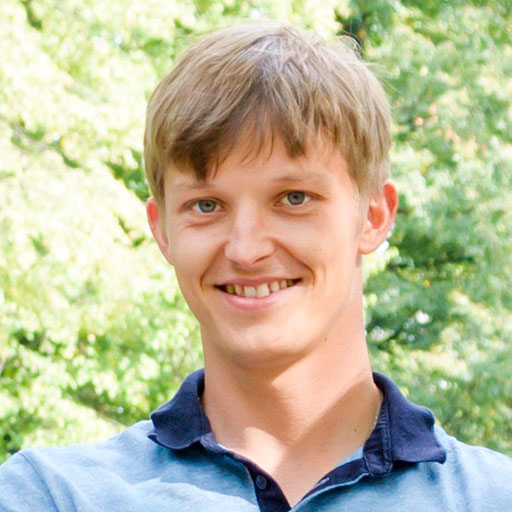 Piotr Didyk合作论文数Faculty of Informatics, Università della Svizzera italiana2
 frederic durand合作论文数1
 Tai-Jiang Mu (穆太江)合作论文数1
 Guoxin Zhang合作论文数College of Chemistry, Liaoning University1
 Yu-Kun Lai合作论文数School of Computer Science and Informatics, Cardiff University;AI Hub in Generative Models1
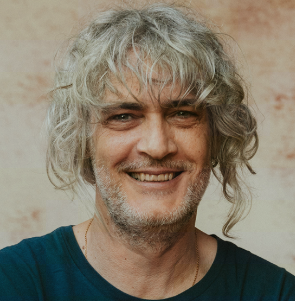 Diego Gutierrez合作论文数Computer Science Department, Universidad de Zaragoza;Graphics & Imaging Lab, Universidad de Zaragoza1
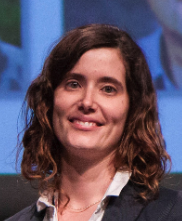 Belen Masia合作论文数Instituto Universitario de Investigacion en Ingenieria de Aragon, Universidad Zaragoza;Computer Science Department, Universidad de Zaragoza;DIVE Medical1Tianyun Ni合作论文数1Juhong Wang合作论文数1
 Frédo Durand合作论文数Computer Science & Artificial Intelligence Laboratory, Electrical Engineering & Computer Science Department, Schwarzman College of Computing, Massachusetts Institute of Technology1




