Millimeter wave (mmWave) systems rely on predefined codebooks for both initial access and data transmission. To compensate the high pathloss of mmWave signal, base station(BS) and user equipment(UE) to be equipped with large antenna arrays which make those codebooks consist of a large number of candidate narrow beams. Both the BS and UE needs to search for a optimal beam from their codebooks that provides maximum received power, such procedure may cause huge beam training overhead. Besides, codebook based beam management limits the maximum beamforming gain as it is bounded by the spatial granularity of the codewords. To overcome these limitations, in the paper, we design a deep learning (DL) based beam training method with partial codebook sweeping. Unlike the existing works using machine learning (ML) or DL to predict the best beam ID from the codebook, the DL model directly outputs the beamforming weights of the analog phase shifters which maximize certain metric, e.g. received signal to noise ratio (SNR). The neural network (NN) is trained offline using simulated environments according to the 3GPP channel models and is then deployed online to predict the optimal beamforming vector with partial beams sensing. Simulation results show that our proposed model outperforms the standard DFT-based codebook with significantly reduced beam training overhead, and enhance the beamforming gain which reflects on the achievable rates.
In this paper, we study the blind signal detection for massive MIMO systems by exploiting not only the channel sparsity in the angular domain but also the data concentration property that the transmit signal lies on the Stiefel manifold under long-term statistics. We establish a novel ℓ 2 -ℓ 1 model which can simultaneously detect the channel and the transmit signal in the presence of impulsive noise, and propose two methods to solve it. Simulation results demonstrate that the proposed schemes can significantly reduce symbol error and resist noise interference.
随着5G网络在全球范围的大规模商用部署,运营商正在依托5G网络的优异性能兑现商用价值.预计到2025年底,全球范围内的5G基站部署量将突破650万,为全球58%以上的人口提供累积1000亿次的链接服务.从产业发展驱动角度看,5G网络被认为是个人消费体验升级和工业数字化的关键使能技术,并将长期在全球经济发展中扮演重要角色.从技术演进角度看,新兴业务的出现对5G网络提出了全新的需求,从而推动着产业界持续思考5G的持续演进,即5G-Advanced.
Extended reality (XR) technologies, including augmented reality (AR) and virtual reality (VR), is now used in a wide spectrum of applications, e.g., telemedicine, remote education, and computer gaming. However, existing experiments are predominantly deployed in the indoor environment with the help of wired connectivity or Wi-Fi networks. Recently, the global commercialization of 5G networks provides new opportunities for XR applications. By using wireless cellular network, XR is able to offer seamless user experience from anywhere at any time. Despite remarkable advantages, current cellular-enhanced XR services are still facing certain challenges. For instance, edge users may not be able to achieve a reliable XR experience due to the limitation of transmission power and free-space path loss. In this paper, a novel flexible spectrum access (FSA) approach is proposed, which allows XR users to be flexibly handed over between multiple carriers. By such means, the reliability for the edge users can be significantly improved thanks to the use of lower frequency bands. It is also shown that the end-to-end latency has been reduced due to more evenly distributed time frequency domain resources.
In this paper, a novel end-to-end learning approach, namely JTRD-Net, is proposed for uplink multiuser single-input multiple-output (MU-SIMO) joint transmitter and non-coherent receiver design (JTRD) in fading channels. The basic idea lies in the use of artificial neural networks (ANNs) to replace traditional communication modules at both transmitter and receiver sides. More specifically, the transmitter side is modeled as a group of parallel linear layers, which are responsible for multiuser waveform design; and the non-coherent receiver is formed by a deep feed-forward neural network (DFNN) so as to provide multiuser detection (MUD) capabilities. The entire JTRD-Net can be trained from end to end to adapt to channel statistics through deep learning. After training, JTRD-Net can work efficiently in a non-coherent manner without requiring any levels of channel state information (CSI). In addition to the network architecture, a novel weight-initialization method, namely symmetrical-interval initialization, is proposed for JTRD-Net. It is shown that the symmetrical-interval initialization outperforms the conventional method (e.g. Xavier initialization) in terms of well-balanced convergence-rate among users. Simulation results show that the proposed JTRD-Net approach takes significant advantages in terms of reliability and scalability over baseline schemes on both i.i.d. complex Gaussian channels and spatially-correlated channels.
Quantization is the characterization of analogue-to-digital converters (ADC) in massive MIMO systems. The design of quantization function or quantization thresholds is found to relate to quantization step, which is the factor that adapts with the changing of transmit power and noise variance. With the objective of utilizing low-resolution ADC is reducing the cost of massive MIMO, we propose an idea as if it is necessary to have adaptive-threshold quantization function. It is found that when maximum-likelihood (ML) is employed as the detection method, having quantization thresholds fixed for low-resolution ADCs will not cause significant performance loss. Moreover, such fixed-threshold quantization function does not require any information of signal power which can reduce the hardware cost of ADCs. Simulations have been carried out in this paper to make comparisons between fixed-threshold and adaptive-threshold quantization regarding various factors.
In this paper, a novel spatially non-stationary channel model is proposed for link-level computer simulations of massive multiple-input multiple-output (mMIMO) with extremely large aperture array (ELAA). The proposed channel model allows a mix of non-line-of-sight (NLoS) and LoS links between a user and service antennas. The NLoS/LoS state of each link is characterized by a binary random variable, which obeys a correlated Bernoulli distribution. The correlation is described in the form of an exponentially decaying window. In addition, the proposed model incorporates shadowing effects which are non-identical for NLoS and LoS states. It is demonstrated, through computer emulation, that the proposed model can capture almost all spatially non-stationary fading behaviors of the ELAA-mMIMO channel. Moreover, it has a low implementational complexity. With the proposed channel model, Monte-Carlo simulations are carried out to evaluate the channel capacity of ELAA-mMIMO. It is shown that the ELAA-mMIMO channel capacity has considerably different stochastic characteristics from the conventional mMIMO due to the presence of channel spatial non-stationarity.
In this paper, an orthogonal stochastic gradient descent (O-SGD) based learning approach is proposed to tackle the wireless channel over-training problem inherent in artificial neural network (ANN)-assisted MIMO signal detection. Our basic idea lies in the discovery and exploitation of the training-sample orthogonality between the current training epoch and past training epochs. Unlike the conventional SGD that updates the neural network simply based upon current training samples, O-SGD discovers the correlation between current training samples and historical training data, and then updates the neural network with those uncorrelated components. The network updating occurs only in those identified null subspaces. By such means, the neural network can understand and memorize uncorrelated components between different wireless channels, and thus is more robust to wireless channel variations. This hypothesis is confirmed through our extensive computer simulations as well as performance comparison with the conventional SGD approach.
In this paper, we reveal that artificial neural network (ANN) assisted multiple-input multiple-output (MIMO) signal detection can be modeled as ANN-assisted lossy vector quantization (VQ), named MIMO-VQ, which is basically a joint statistical channel quantization and signal quantization procedure. It is found that the quantization loss increases linearly with the number of transmit antennas, and thus MIMO-VQ scales poorly with the size of MIMO. Motivated by this finding, we propose a novel modular neural network based approach, termed MNNet, where the whole network is formed by a set of pre-defined ANN modules. The key of ANN module design lies in the integration of parallel interference cancellation in the MNNet, which linearly reduces the interference (or equivalently the number of transmit-antennas) along the feed-forward propagation; and so as the quantization loss. Our simulation results show that the MNNet approach largely improves the deep-learning capacity with near-optimal performance in various cases. Provided that MNNet is well modularized, the learning procedure does not need to be applied on the entire network as a whole, but rather at the modular level. Due to this reason, MNNet has the advantage of much lower learning complexity than other deep-learning based MIMO detection approaches.
This paper aims to handle the joint transmitter and noncoherent receiver design for multiuser multiple-input multiple-output (MU-MIMO) systems through deep learning. Given the deep neural network (DNN) based noncoherent receiver, the novelty of this work mainly lies in the multiuser waveform design at the transmitter side. According to the signal format, the proposed deep learning solutions can be divided into two groups. One group is called pilot-aided waveform, where the information-bearing symbols are time-multiplexed with the pilot symbols. The other is called learning-based waveform, where the multiuser waveform is partially or even completely designed by deep learning algorithms. Specifically, if the information-bearing symbols are directly embedded in the waveform, it is called systematic waveform. Otherwise, it is called non-systematic waveform, where no artificial design is involved. Simulation results show that the pilot-aided waveform design outperforms the conventional zero forcing receiver with least squares (LS) channel estimation on small-size MU-MIMO systems. By exploiting the time-domain degrees of freedom (DoF), the learning-based waveform design further improves the detection performance by at least 5 dB at high signal-to-noise ratio (SNR) range. Moreover, it is found that the traditional weight initialization method might cause a training imbalance among different users in the learning-based waveform design. To tackle this issue, a novel weight initialization method is proposed which provides a balanced convergence performance with no complexity penalty.
This paper presents a parallel computing approach that is employed to reconstruct original information bits from a non-recursive convolutional codeword in noise, with the goal of reducing the decoding latency without compromising the performance. This goal is achieved by means of cutting a received codeword into a number of sub-codewords (SCWs) and feeding them into a two-stage decoder. At the first stage, SCWs are decoded in parallel using the Viterbi algorithm or equivalently the brute force algorithm. Major challenge arises when determining the initial state of the trellis diagram for each SCW, which is uncertain except for the first one; and such results in multiple decoding outcomes for every SCW. To eliminate or more precisely exploit the uncertainty, an Euclidean-distance minimization algorithm is employed to merge neighboring SCWs; and this is called the merging stage, which can also run in parallel. Our work reveals that the proposed two-stage decoder is optimal and has its latency growing logarithmically, instead of linearly as for the Viterbi algorithm, with respect to the codeword length. Moreover, it is shown that the decoding latency can be further reduced by employing artificial neural networks for the SCW decoding. Computer simulations are conducted for two typical convolutional codes, and the results confirm our theoretical analysis.
Deep learning is driving a radical paradigm shift in wireless communications, all the way from the application layer down to the physical layer. Despite this, there is an ongoing debate as to what additional values artificial intelligence(or machine learning) could bring to us, particularly on the physical layer design; and what penalties there may have? These questions motivate a fundamental rethinking of the wireless modem design in the artificial intelligence era. Through several physical-layer case studies, we argue for a significant role that machine learning could play, for instance in parallel error-control coding and decoding, channel equalization, interference cancellation, as well as multiuser and multiantenna detection. Inaddition, we discuss the fundamental bottlenecks of machine learning as well as their potential solutions in this paper.
In this paper, a novel unsupervised deep learning approach is proposed to tackle the multiuser frequency synchronization problem inherent in orthogonal frequency-division multiple-access (OFDMA) uplink communications. The key idea lies in the use of the feed-forward deep neural network (FF-DNN) for multiuser interference (MUI) cancellation taking advantage of their strong classification capability. Basically, the proposed FF-DNN consists of two essential functional layers. One is called carrier-frequency-offsets (CFOs) classification layer that is responsible for identifying the users' CFO range, and another is called MUI-cancellation layer responsible for joint multiuser detection (MUD) and frequency synchronization. By such means, the proposed FF-DNN approach showcases remarkable MUI-cancellation performances without the need of multiuser CFO estimation. In addition, we also exhibit an interesting phenomenon occurred at the CFO-classification stage, where the CFO-classification performance get improved exponentially with the increase of the number of users. This is called multiuser diversity gain in the CFO-classification stage, which is carefully studied in this paper.
This letter aims to handle the joint transmitter and noncoherent receiver optimization for multiuser single-input multiple-output (MU-SIMO) communications through unsupervised deep learning. It is shown that MU-SIMO can be modeled as a deep neural network with three essential layers, which include a partially-connected linear layer for joint multiuser waveform design at the transmitter side, and two nonlinear layers for the noncoherent signal detection. The proposed approach demonstrates remarkable MU-SIMO noncoherent communication performance in Rayleigh fading channels.
In this paper, unsupervised deep learning solutions for multiuser single-input multiple-output (MU-SIMO) coherent detection are extensively investigated. According to the ways of utilizing the channel state information at the receiver side (CSIR), deep learning solutions are divided into two groups. One group is called equalization and learning, which utilizes the CSIR for channel equalization and then employ deep learning for multiuser detection (MUD). The other is called direct learning, which directly feeds the CSIR, together with the received signal, into deep neural networks (DNN) to conduct the MUD. It is found that the direct learning solutions outperform the equalization-and-learning solutions due to their better exploitation of the sequence detection gain. On the other hand, the direct learning solutions are not scalable to the size of SIMO networks, as current DNN architectures cannot efficiently handle many co-channel interferences. Motivated by this observation, we propose a novel direct learning approach, which can combine the merits of feedforward DNN and parallel interference cancellation. It is shown that the proposed approach trades off the complexity for the learning scalability, and the complexity can be managed due to the parallel network architecture.
In this paper, a novel unsupervised deep learning approach is proposed to tackle the multiuser frequency synchronization problem inherent in orthogonal frequency-division multiple-access (OFDMA) uplink communications. The key idea lies in the use of the feed-forward deep neural network (FF-DNN) for multiuser interference (MUI) cancellation taking advantage of their strong classification capability. Basically, the proposed FF-DNN consists of two essential functional layers. One is called carrier-frequency-offsets (CFOs) classification layer that is responsible for identifying the users’ CFO range, and another is called MUI-cancellation layer responsible for joint multiuser detection (MUD) and frequency synchronization. By such means, the proposed FF-DNN approach showcases remarkable MUIcancellation performances without the need of multiuser CFO estimation. In addition, we also exhibit an interesting phenomenon occurred at the CFO-classification stage, where the CFO-classification performance get improved exponentially with the increase of the number of users. This is called multiuser diversity gain in the CFO-classification stage, which is carefully studied in this paper.
The aim of this paper is to handle the multi-frequency synchronization problem inherent in orthogonal frequency-division multiple access (OFDMA) uplink communications, where the carrier frequency offset (CFO) for each user may be different, and they can be hardly compensated at the receiver side. Our major contribution lies in the development of a novel OFDM receiver that is resilient to unknown random CFO thanks to the use of a CFO-compensator bank. Specifically, the whole CFO range is evenly divided into a set of sub-ranges, with each being supported by a dedicated CFO compensator. Given the optimization for CFO compensator a NP-hard problem, a machine deep-learning approach is proposed to yield a good sub-optimal solution. It is shown that the proposed receiver is able to offer inter-carrier interference free performance for OFDMA systems operating at a wide range of SNRs.
 Yi Ma (马毅)合作论文数School of Computing and Data Science, The University of Hong Kong;Department of Electrical Engineering and Computer Sciences, University of California, Berkeley12
 Na Yi (依那)合作论文数School of Electronics, Peking University12
 Rahim Tafazolli合作论文数Institute for Communication Systems, School of Computer Science and Electronic Engineering, University of Surrey11
 Terence E. Dodgson合作论文数4
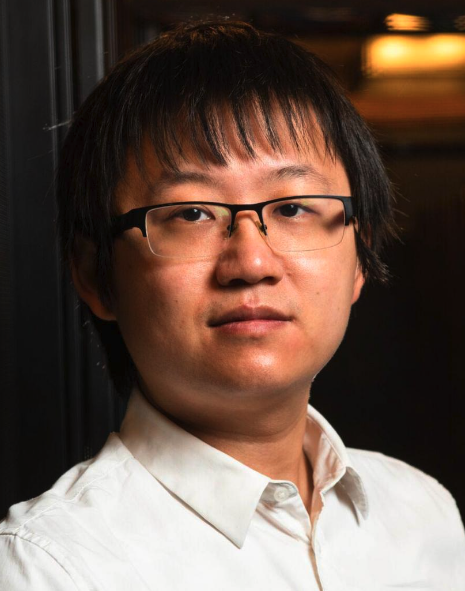 Ang Li合作论文数Unconventional AI3
 Jiyong Pang合作论文数Xidian University, Xidian Univ.3Jinfei Wang合作论文数Univ Surrey, Inst Commun Syst ICS, Guildford GU2 7XH, Surrey, England2
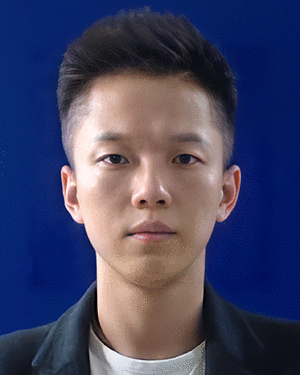 Lifu Liu合作论文数University of Science and Technology Beijing(University of Science and Technology Beijing),Beijing,China2Peng Jinlin合作论文数1quanzhong gao合作论文数1Yixin Wu合作论文数1
 Shaobo Wang合作论文数1
 Jiuyu Liu合作论文数1Yufeng Chen合作论文数1
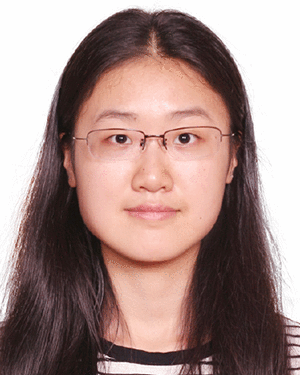 Mengying Ding合作论文数Huawei Technol Co Ltd, Shanghai, Peoples R China1Dodgson, T.合作论文数1
 Fan Wang合作论文数Department of Radiology and BRIC, University of North Carolina at Chapel Hill1
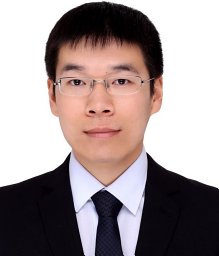 Yan Sun合作论文数1
 Jinyan Fan (范金燕)合作论文数School of Mathematical Sciences, Shanghai Jiao Tong University1




