This paper is devoted to the study of cellular communications using aerial platforms (APs). A set of key equations is derived that quantify the coverage area on the ground as a function of AP elevation, the operation of the adaptive multibeam antenna on the AP, and the formulation of contiguous terrestrial cells and their shapes. Specifically, we consider the deployment of an AP to provide terrestrial mobile radio communications using the universal mobile telecommunication system operating in its wide-band code-division multiple-access mode. Calculations are made of the number of users versus E/sub b//N/sub 0/ for different service rates. Multitiered cellular structures having cells of different size that are steerable with the offered teletraffic are examined. The array structure to achieve this is identified. The preliminary results shows that an AP at a height of 21 km covers an area of radius 517 km. Up to 21 users per cell with a service rate of 8 kb/s can be accommodated in the 3.2-GHz band. These services can be provided within an area of radius 70 km with transmitted powers of less than 1 W. High system capacity is proved to be possible by constructing cells of radius as small as 100 m using square planar arrays with dimensions of less than 12 m /spl times/12 m. The AP system provides high capacity and Doppler frequency shifts that only originate from roving mobiles.
Partant des progrès attendus de la 3G durant la première décennie de ce siècle, nous continuons en anticipant les développements ultérieurs fondés sur ce dont aurait besoin la société et les technologies qui seraient nécessaires. La fin proche des réseaux de mobiles par satellite et la disparition de la radiodiffusion des bandes potentielles pour les mobiles fournira la largeur de bande nécessaire pour une grande capacité, une qualité supérieure des services mobiles multimédias utilisant une forte concentration de réseaux optiques couplés avec des cellules radio de toutes tailles. Ľintroduction de multiples facteurs est discutée, des plates-formes à haute altitude (situées dans la stratosphère), et des cellules terrestres configurables en taille et déplaçables instantanément pour s’adapter aux changements du trafic aux picocellules, des réseaux locaux corporels au réseau fixe, des agents logiciels intelligents aux télécommunications intelligentes. Enfin, la possibilité pour nos réseaux de se métamorphoser en un cerveau global et la façon dont ľhumanité pourra s’adapter à cette super intelligence sont abordées.
Chapter 3 analyses the capacity of GSM systems and includes The analysis of a macrocellular GSM network The analysis of a microcellular GSM network
Commencing with the advancements that may be expected in 3G during the first decade of this century, we move on to anticipate subsequent developments based on what society might need and the technologies that may be required. The near demise of mobile satellite networks and removal of radio broadcasting from potential mobile radio bands will provide the necessary bandwidth for high capacity, high quality multimedia mobile services utilising a dense concentration of fibre networks coupled to radio cells of all sizes. The integration of many factors from high aerial platforms (haps) (that are located in the stratosphere and from terrestrial cells that can be adjusted in size and moved instantly to suit teletraffic changes) to picocells, body-LANs to the fixed network, software agents to soft telecommunications, will be discussed. Finally the possibility of our networks metamorphosing into a global brain, and how man-kind might adapt to this supra-intelligence will be addressed.RésuméPartant des progrès attendus de la 3G durant la première décennie de ce siècle, nous continuons en anticipant les développements ultérieurs fondés sur ce dont aurait besoin la société et les technologies qui seraient nécessaires. La fin proche des réseaux de mobiles par satellite et la disparition de la radiodiffusion des bandes potentielles pour les mobiles fournira la largeur de bande nécessaire pour une grande capacité, une qualité supérieure des services mobiles multimédias utilisant une forte concentration de réseaux optiques couplés avec des cellules radio de toutes tailles. Ľintroduction de multiples facteurs est discutée, des plates-formes à haute altitude (situées dans la stratosphère), et des cellules terrestres configurables en taille et déplaçables instantanément pour s’adapter aux changements du trafic aux picocellules, des réseaux locaux corporels au réseau fixe, des agents logiciels intelligents aux télécommunications intelligentes. Enfin, la possibilité pour nos réseaux de se métamorphoser en un cerveau global et la façon dont ľhumanité pourra s’adapter à cette super intelligence sont abordées.
Résumé Partant des progrès attendus de la 3G durant la première décennie de ce siècle, nous continuons en anticipant les développements ultérieurs fondés sur ce dont aurait besoin la société et les technologies qui seraient nécessaires. La fin proche des réseaux de mobiles par satellite et la disparition de la radiodiffusion des bandes potentielles pour les mobiles fournira la largeur de bande nécessaire pour une grande capacité, une qualité supérieure des services mobiles multimédias utilisant une forte concentration de réseaux optiques couplés avec des cellules radio de toutes tailles. Ľintroduction de multiples facteurs est discutée, des plates-formes à haute altitude (situées dans la stratosphère), et des cellules terrestres configurables en taille et déplaçables instantanément pour s’adapter aux changements du trafic aux picocellules, des réseaux locaux corporels au réseau fixe, des agents logiciels intelligents aux télécommunications intelligentes. Enfin, la possibilité pour nos réseaux de se métamorphoser en un cerveau global et la façon dont ľhumanité pourra s’adapter à cette super intelligence sont abordées.
Commencing with the advancements that may be expected in 3G during the first decade of this century, we move on to anticipate subsequent developments based on what society might need and the technologies that may be required. The near demise of mobile satellite networks and removal of radio broadcasting from potential mobile radio bands will provide the necessary bandwidth for high capacity, high quality multimedia mobile services utilising a dense concentration of fibre networks coupled to radio cells of all sizes. The integration of many factors from HAP technologies to picocells, body-LANs to the fixed network, software agents to soft telecommunications, will be discussed. Finally the possibility of our networks metamorphisising into a global brain, and how man-kind might adapt to this supra-intelligence will be addressed.
Engmcenng, Nnlronol Unrversuy o f Slngupore. ublic cellular radio systems are less than two decades old. The concepts of cellular radio are much older, rooted in the O OS, when technology was far too immature to support such complex systcms. There are two main components in mobile radio systems.Theradiointerface,whichallowsuserstowander while communicating via radio from a mobile station (MS) to the other component, a fixed network that interworks with the public switched telephone network (PSTN) or the integrated services digital nctwork (ISDN). Privatc mobile radio communication systems have been present throughout most of this century, as exemplified by the marine, police, and military services. What makes public cellular radio complex is the control structure that enables the network to know where an MSiscurrently located, and to track it irrespective of whether the MS is making a call, with the proviso that the mobile equipment is switched on. Thc control mechanism is made possible by a sct of protocols that enables MSs to register on the network, facilitates call set-up and clear-down, switches MSs between base stations (BSs) as they travel, controls the radiated power levels, provides security (in some systems). and perform a myriad of other vital functions. However,thenumber of 8 ;ersa networkcan support is fundamentally dependent 011 the common air interface (CAI) overwhich userscommunicate. User capacity is dependent on many factorb, but the cardinal ones are the amount of spectrum the regulators allocate. the size of the radio coverage area from a BS. and the amount of interference a particular radio link can tolerate. In this article we are primarily concerned with the system aspects associated with the CAI. We do not consider the subsystem of the radio link, such as speech codccs, channcl codccs, modems, nor propagation issues. Multiple access method5 that enable many users to access the network are of interest. but we refrain from in-depth discussions of the two major multiple access methodscurrentlyinvogueastheyareconsideredinother articles in this issue. We will focus on the critical importance of BS siting. Starting with existing large cells, we will deliberate on the problems that might arise in siting BSs in three dimensional microcells, in order to consider suitable multiple access methods for future cellular environments. In keeping with this magazine, our treatment will be general and light in touch,identifyingissuesrather than solving them.
From the Book:...Providing a detailed description and analysis of the global second generation (2G)mobile radio systems: the Global System of Mobile Communications (GSM) andcdmaOne, this volume examines how these two systems will evolve into the thirdgeneration (3G) with their requirement to support multimedia mobile radiocommunications.The principle objectives of this book are to present to the reader detailed descriptionsof the basic GSM and cdmaOne systems, mainly from the radio interface point ofview; as well as accompanying analyses.GSM was deployed before cdmaOne and is the market leader, entrenched in manyparts of the world. Its success is due to numerous factors: its advanced backbonenetwork, the introduction of subscriber identity modules (SIMs) that decoupledhandsets from subscribers, its good security system, the low cost equipment due toopen (i.e. public) interfaces, the relentless programme of evolution that has yieldedsubstantial gains in spectral efficiency compared with the basic GSM system, and soon.cdmaOne started as a radio interface. It was a bold step to use CDMA at a time whenfew thought CDMA could work in a cellular environment. But it did so, acquiring thenecessary backbone network, and became a global standard offering toughcompetition to GSM. It is also worthy of note that Europe, which had designed andpromoted GSM, has opted for wideband CDMA for its third generation (3G)networks.The first chapter is designed to provide background material on TDMA, CDMA andcellular radio networks. Chapter 2 describes the basic GSM system and Chapter 3provides an analysis of the performance of GSM networks. The same method ofsystem description followed by a chapter dedicated to mathematical analysis isapplied for cdmaOne in Chapters 4 and 5, respectively. The final chapter endeavoursto describe how GSM is evolving to provide higher bit rate circuit-switched channelsand packet transmissions that will have an ability to provide a range of multimediaservices. The Universal Mobile Telecommunications System (UMTS) is thendescribed, followed by a discussion of the evolution of cdmaOne to cdma2000. BothUMTS and cdma2000 are 3G systems....
The effect of the changes in the position and inclination of an aerial platform (AP) on the number of users per cell (M) in a code division multiple access (CDMA) cellular system is described. The AP at 21 km uses a multiple beam antenna system to create elliptical cells on the Earth's surface. Vertical errors in altitude of the AP of /spl plusmn/0.5 km cause M to decrease by 1 to 2%, while horizontal displacement errors of up to 0.3 km result in a decrease in M of approximately 1%. An inclination of 5/spl deg/ from the horizontal significantly impairs M by 38%.
Cellular communications using aerial platforms (APs) is addressed. A set of key equations are derived that quantify the coverage area on the ground as a function of AP elevation. The formulation of contiguous terrestrial cells and their shapes using multi-beam antenna is described. We consider the deployment of an AP to provide terrestrial mobile radio communications for the Universal Mobile Telecommunication System (UMTS) operating in its wideband CDMA mode. The preliminary results shows that an AP at a height of 21 km provides a cell structure with up to 21 users per cell with a service rate of 8 kb/s in the 2.2 GHz band. These services can be provided over an area of radius 70 km with transmitted powers less than one watt.
The performance in terms of signal-to-interference ratio (SIR), teletraffic, and spectral efficiency of a combined macrocellular and microcellular network is investigated when either both types of cells share the same channel set, or when the channel set is partitioned between the macrocells and the microcells. The analysis is for time-division multiple access (TDMA) with frequency hopping, power control, and discontinuous transmission, and the radio channel is composed of an inverse fourth-power path loss law with log-normal fading. We commence by introducing a single microcell into a hexagonal cluster of macrocells before considering clustered microcells. Both omnidirectional and sectorized cells are examined. We find that high reuse factors are required when channel sharing is employed. When channel partitioning is used, no co-channel interference occurs between the microcells and the macrocells allowing them to be planned independently. The reuse factors in the microcells and macrocells therefore do not need to be increased beyond conventional values. The outcome is that by opting for channel partitioning, the improvement in spectral efficiency compared to channel sharing is two to three times greater.
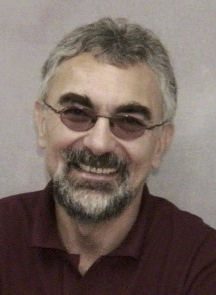 Lajos Hanzo合作论文数University of Southampton22
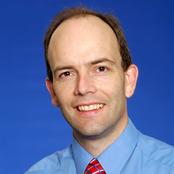 William Webb合作论文数Institution of Engineering and Technology11
 jcs cheung合作论文数10Chin-Chun Lee合作论文数8Peter Gould合作论文数7
 Wai Choong Lawrence Wong合作论文数Department of Electrical & Computer Engineering, National University of Singapore5
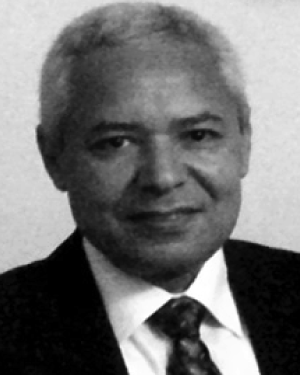 Mostafa Nofal合作论文数College of Computers and Information Technology, Taif University5
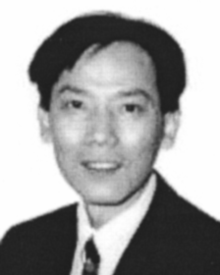 Wong Hing Lam合作论文数Department of Electrical and Electronic Engineering, The University of Hong Kong, Pokfulam, Hong Kong4
 El-Jabu, B.A.合作论文数4Ce Sundberg合作论文数3tik bin oon合作论文数3Xiao Lin合作论文数3Fortune, P.-M.合作论文数3R. Stedman合作论文数3Sundberg, C.-E.W.合作论文数2Chang-Chun D Lee合作论文数Dept Integrat Struct & Computat Biol, Scripps Res Inst2J. E. B. Williams合作论文数2Salami, R.A.合作论文数2
 Hamid Gharavi合作论文数NIST2j e halligan合作论文数1Wc Wong合作论文数1S. A. El-Dolil合作论文数1Sami Eldolil合作论文数1Ying Li合作论文数1Dehghan, S.合作论文数1Marvin, D.合作论文数1Au, M.合作论文数1Salami, R.合作论文数1Gould, P.R.合作论文数1
 Chung-Chieh Lee合作论文数Communications and Networking Laboratory, Department of Electrical and Computer Engineering, Robert R. McCormick School of Engineering and Applied Science, Northwestern University1Robin Coombs合作论文数1D Twelves合作论文数1
 Jonathan Phillips合作论文数Naval Postgraduate School1
 Gerhard Fettweis合作论文数Technische Universität Dresden;Barkhausen Institut1
 Jim Coons合作论文数1Philippe Charas合作论文数1




