Confessions carry substantial weight in criminal investigations, yet little is known about the psychological mechanisms underlying suspects’ confession decisions. This research tested the hypothesis that situational pressures inherent to accusatorial interrogations deplete suspects’ self-regulatory resources, impairing their ability to make rational, self-protective decisions. We examined three potential mechanisms of self-regulatory depletion in accusatorial interrogations: (1) decision-making pressure, (2) fatigue, and (3) depleted self-regulatory reserves. Participants were interviewed about minor (Experiment 1; N = 154) or serious (Experiment 2; N = 486) prior criminal and unethical behaviors under conditions that manipulated whether they experienced both decision-making pressure and fatigue, fatigue alone, or neither. We operationalized decision-making pressure through a response-contingent consequence structure and fatigue through extended questioning. We measured self-regulatory capacity by assessing time spent on an unsolvable anagram task after the interview. Experiment 2 also manipulated whether participants’ pre-interview self-regulatory reserves were depleted by having some complete the unsolvable anagram task before, as opposed to after, the interview. The results suggested a role of decision-making pressure—alone and in combination with fatigue—in producing self-regulatory depletion but provided no evidence for the effect of experimentally depleted self-regulatory reserves. These findings offer empirical support for theories linking interrogation pressures to self-regulatory decline.
Courts have the capacity to structure juries' decision making through the use of general verdicts with answers to written questions, special verdicts, and, in some countries, the requirement that juries provide reasons for their verdicts. Little empirical research has explored the impact of special verdicts or a reasoning requirement on juror decision making in comparison to other verdict procedures. In Experiment 1, mock jurors (N = 267) read a summary detailing a case of alleged defamation of a White or Black plaintiff and rendered a verdict (general verdict vs. special verdict vs. two variations of a general verdict procedure with a reasoning requirement). In Experiment 2, mock jurors (N = 292) heard a mock trial while viewing photos of a White or Latinx plaintiff and rendered a verdict (general verdict vs. special verdict with a reasoning requirement) after deliberating as a group. In Experiments 1 and 2, mock jurors who rendered a verdict using a general verdict form were more likely to find for the plaintiff compared to those using a special verdict form (Experiment 1) or a modified special verdict form with reason-giving (Experiment 2).
A criminal confession typically ends in conviction, raising a critically important question: Why do suspects decide to confess to their guilt against their own self-interests? The authors of this chapter answer this question by reviewing a large body of theoretical and empirical research related to decision-making involving confessions. Major topics covered include the distinction between different types of confessions, the Reid technique, Miranda waiver decisions, psychological and dispositional vulnerabilities that encourage a confession decision, and interrogation reforms and their impact on confessions and interrogations. The core message of the chapter is that the dominant method of police interrogation used in North America relies on well-established social influence tactics that cause suspects to perceive a confession as a rational decision under the circumstances. The authors examine research involving these tactics and their effects on interrogations and confessions, along with laws and policies that regulate interviews and interrogations of suspects in custody.
OBJECTIVE:Two experiments examined the potential for inconclusive forensic decisions to disadvantage the innocent. HYPOTHESES:Both experiments tested the hypothesis that inconclusive decisions produce more incriminating legal judgments than do clearly exculpatory forensic decisions. Experiment 2 also examined whether this hypothesized effect conformed to a confirmation bias, a communication error, or perceptual accuracy. METHOD:In Experiment 1 (N = 492), a forensic expert testified that physical evidence recovered from a crime scene either matched or did not match a suspect's evidence or produced an inconclusive result. In Experiment 2 (N = 1,002), a forensic expert testified that physical evidence recovered from a crime scene either matched or did not match a suspect's evidence, produced an inconclusive result, or was unsuitable for analysis. A fifth condition omitted the forensic evidence and expert testimony. RESULTS:The inconclusive decision produced less incriminating legal judgments than did the match forensic decision (|d|average = 0.96), more incriminating legal judgments than did the no-match forensic decision (|d|average = 0.62), and equivalent legal judgments to the unsuitable decision (|d|average = 0.12) and to legal judgments made in the absence of forensic evidence (|d|average = 0.07). These results suggest that participants interpreted the inconclusive decision to be forensically neutral, which is consistent with a communication error. CONCLUSION:The findings provide preliminary support for the idea that inconclusive decisions can put the innocent at risk of wrongful conviction by depriving them of a clearly exculpatory forensic decision. (PsycInfo Database Record (c) 2024 APA, all rights reserved).
Abstract Wrongful convictions represent a grave injustice. The innocent are punished, the guilty go free, and the postmortems that attend their occasional discovery typically reveal some shocking combination of incompetence, indifference, and malfeasance. Escaping notice, however, are myriad mundane influences that usually have negligible effects but which, like a feather falling on a balance, can sometimes tip the scale. In this chapter we highlight effects that could nudge the innocent onto paths that might ultimately lead to wrongful conviction. We begin by considering how the innocent are disadvantaged by an unwarranted sense of invulnerability. Next, we explore how police encounters and investigative stops can initially entangle the innocent in a criminal investigation. We then discuss how police may come to target an innocent suspect through the effects of expectancies, both justified and unjustified, and which may or may not operate outside awareness. We conclude by discussing future research directions.
Police conduct pre-interrogation interviews with suspects whom they presume might be guilty. This research tested whether a presumption of guilt causes police to misclassify innocent suspects as guilty during pre-interrogation interviews by virtue of biasing their interpretation of suspects' emotional states. In two experiments, college students (n = 33) and police officers (n = 33) each watched eight videos in which an experimenter interviewed a student who was either factually guilty or factually innocent of having cheated on a problem-solving task. After watching each video, participants reported their judgments of the interviewed student's emotional state and guilt-status. The results indicated that both college students and police officers reported higher guilt judgments when they presumed the interviewed students to be guilty versus innocent. Additionally, participants' perceptions of the interviewed students' emotional states mediated this effect. Factual guilt-status did not influence judgments rendered by either college students or police officers. The results suggest that police may be susceptible to misclassifying innocent suspects as guilty when they hold a presumption of guilt at the outset of a pre-interrogation interview.
OBJECTIVE:Black people are disproportionately targeted and disadvantaged in the criminal legal system. We tested whether Black exonerees are similarly disadvantaged by the stigma of wrongful conviction.HYPOTHESES:In Experiment 1, we predicted that the stigma of wrongful conviction would be greater for Black than White exonerees. After finding the opposite pattern, we conducted two experiments to investigate the psychological underpinnings of this counterintuitive effect-specifically, whether it was driven by attempts to appear unprejudiced and/or beliefs regarding the legal system bias that Black and White exonerees face.METHOD:In Experiment 1, we unobtrusively measured non-Black participants' behavioral reactions to an anticipated meeting with a Black or White exoneree or businessman. In Experiment 2, participants completed measures that assessed their motivation to appear unprejudiced and then, in a separate session, evaluated a Black or White exoneree and reported their beliefs about the legal system bias faced by the exoneree. Experiment 3 was a partial replication of Experiment 2. In Experiments 2 and 3, we examined data from both non-Black and Black participants.RESULTS:Non-Black participants in Experiment 1 stigmatized the White exoneree, d = -0.31, 95% confidence interval (CI) [-0.72, 0.10], but not the Black exoneree, d = 0.44, 95% CI [0.04, 0.83]. Experiments 2 and 3 replicated this finding, showing that the effect was mediated by the belief that Black exonerees faced greater legal system bias than White exonerees (Experiment 2: B = 0.21, SE = 0.06, 95% CI [0.11, 0.33]; Experiment 3: B = 0.35, SE = 0.09, 95% CI [0.19, 0.55]). Our results also suggested that Black individuals react more favorably to Black than White exonerees, potentially because of their beliefs regarding legal system bias.CONCLUSIONS:People may react more favorably to Black than White exonerees because of the belief that Black exonerees face greater injustices within the legal system. (PsycInfo Database Record (c) 2023 APA, all rights reserved).
This article presents key findings from a research project that evaluated the validity and probative value of cartridge- case comparisons under field- based conditions. Decisions provided by 228 trained firearm examiners across the US showed that forensic cartridge- case comparison is characterized by low error rates. However, inconclusive decisions constituted over one- fifth of all decisions rendered, complicating evaluation of the technique's ability to yield unambiguously correct decisions. Specifically, restricting evaluation to only the conclusive decisions of identification and elimination yielded true- positive and true- negative rates exceeding 99%, but incorporating inconclusives caused these values to drop to 93.4% and 63.5%, respectively. The asymmetric effect on the two rates occurred because inconclusive decisions were rendered six times more frequently for different- source than same- source comparisons. Considering probative value, which is a decision's usefulness for determining a comparison's ground- truth state, conclusive decisions predicted their corresponding ground- truth states with near perfection. Likelihood ratios (LRs) further showed that conclusive decisions greatly increase the odds of a comparison's ground- truth state matching the ground- truth state asserted by the decision. Inconclusive decisions also possessed probative value, predicting different- source status and having a LR indicating that they increase the odds of different- source status. The study also manipulated comparison difficulty by using two firearm models that produce dissimilar cartridge- case markings. The model chosen for being more difficult received more inconclusive decisions for same- source comparisons, resulting in a lower true- positive rate compared to the less difficult model. Relatedly, inconclusive decisions for the less difficult model exhibited more probative value, being more strongly predictive of different- source status.
Empathy toward one's offender has been identified as an important variable in the forgiveness process, but elements of the empathy-forgiveness connection have yet to be explored. The current study experimentally examined both direct and indirect methods of promoting general empathy (i.e., empathy not connected specifically to the offense) toward a confederate who behaved inconsiderately, and how those methods of general empathy promotion affected forgiveness. Results demonstrated that a direct method of promoting empathy (i.e., being instructed to empathize with the confederate) increased empathy toward the confederate, whereas an indirect method (i.e., the confederate's display of emotional vulnerability) did not significantly increase empathy. The direct promotion of general empathy facilitated higher levels of self-reported forgiveness, whereas the indirect attempt to promote general empathy resulted in lower self-reported and behavioral forgiveness. The results help to refine our understanding of the empathy-forgiveness connection by questioning the types and forms of empathy that might be useful for promoting forgiveness.
This study tested whether high counseling self-efficacy was associated with less physiologic stress for student helpers facing difficult helping situations. A total of 225 students completed a counseling self-efficacy measure before providing supportive help. During this time, participants' blood pressure and heart rate were evaluated. Between the time that participants learned about their upcoming roles as student helpers and began experiencing session-management problems, diastolic blood pressure decreased for those with high self-efficacy, but not for those with low self-efficacy. The results suggest that mental health agencies may consider utilizing counseling self-efficacy measures to identify and develop capable student helpers.
OBJECTIVEIn custodial interrogations, suspects tend to give disproportionate weight to immediate outcomes relative to future outcomes when deciding whether to confess or deny guilt. The current research examined whether the perceived (un)certainty of an immediate outcome influences suspects' short-sighted confession decisions.HYPOTHESESWe hypothesized that suspects are more likely to make short-sighted confession decisions when an immediate punishment is certain versus uncertain and that the effects of a certain immediate punishment become stronger the longer suspects are interrogated.METHODUsing the repetitive question paradigm, college student participants (N = 164, 57% women, 87% Caucasian, M age 18.9 years) admitted or denied 20 illegal and unethical behaviors in an interview. Participants' admissions and denials received either an immediate punishment (answering repetitive questions) or a future punishment (meeting with a police officer in several weeks to discuss their misconduct). In addition, we manipulated participants' perceptions of the immediate punishment to be either certain or uncertain.RESULTSParticipants showed greater short-sightedness in their admission decisions when they perceived the immediate punishment to be certain versus uncertain. Moreover, the influence of the certain immediate punishment on participants' admission decisions tended to increase over time.CONCLUSIONSThese findings provide empirical evidence that the certainty of immediate outcomes may contribute to suspects' shorted-sighted confession decisions. (PsycINFO Database Record (c) 2019 APA, all rights reserved).
This research tested whether the perception of threat during a police interrogation mobilizes suspects to cope with interrogation demands and bolsters their resistance to self-incrimination pressures. Experimental procedures led university undergraduates (N = 296) to engage in misconduct or not, thereby making them guilty or innocent. An experimenter then accused all participants of misconduct in either a threatening or nonthreatening way. High threat produced a broad pattern of mobilization entailing physiologic, cognitive, and behavioral components. Specifically, in comparison to the low threat accusation, the high threat accusation produced greater cardiovascular reactions, increased attentional bias and memory for accusation-relevant information, and strengthened resistance to self-incrimination. Furthermore, with the exception of physiologic reactions, these effects were similar for both guilty and innocent participants. Consistent with the phenomenology of innocence wherein the innocent perceive less threat from interrogation than do the guilty, the innocent evidenced smaller cardiovascular responses to high threat than did the guilty. Results suggest that the more threat that suspects experience, the more they will be mobilized to cope with interrogation demands and resist interpersonal pressure to self-incriminate, at least initially. (PsycINFO Database Record (c) 2019 APA, all rights reserved).
Although research has given substantial attention to understanding the antecedents of dispositional inferences, less attention has been directed at the consequences of these inferences, such that evidence linking dispositional inferences to downstream effects is relatively scarce. The present investigation examined whether dispositional inferences formed during initial observations elicited confirmatory processing of subsequent information about observed targets. Because confirmation biases influence a variety of information processing strategies, four experiments examined the extent to which dispositional inferences guided memory of new information (Experiment 1), interpretation of ambiguous information (Experiment 2), and information-seeking behavior (Experiments 3 and 4). Results indicated that biased processing of subsequent information was more likely when dispositional inferences were encouraged (i.e., impression formation objective) versus discouraged (i.e., narrative construction objective). This investigation highlights the role of causal inferences on confirmation biases and reveals the ease with which biases can be both bolstered and attenuated.
A recurring theme in the psychological literature is that the self-fulfilling effect of stereotypes can accumulate across perceivers. This article provides the first empirical support for this long-standing hypothesis. In three experiments (Ns = 123-241), targets more strongly confirmed a stereotype as the number of perceivers who held stereotypic expectations about them increased. A fourth experiment (N = 121) showed that new perceivers judged targets according to the stereotypic behaviors they had previously been channeled to adopt, an effect that even occurred among perceivers who were privy to the fact that targets' behavior had been shaped by the actions of others. The authors discuss ways in which these effects may contribute to group inequalities. (PsycINFO Database Record (c) 2018 APA, all rights reserved).
This research examined whether criminal stereotypes-i.e., beliefs about the typical characteristics of crime perpetrators-influence mock jurors' judgments of guilt in cases involving confession evidence. Mock jurors (N = 450) read a trial transcript that manipulated whether a defendant's ethnicity was stereotypic or counterstereotypic of a crime, and whether the defendant had confessed to the crime or not. When a confession was present, the transcript varied whether the confession had been obtained using high-pressure or low-pressure interrogation tactics. Consistent with the hypothesis, the presence of a confession (relative to no confession) increased perceptions of the defendant's guilt when the defendant was stereotypic of the crime, regardless of the interrogation tactics that had been used to obtain it. When the defendant was counterstereotypic of the crime, however, the presence of a confession did not significantly increase perceptions of guilt, even when the confession was obtained using low-pressure interrogation tactics. These findings demonstrate the potentially powerful effects of criminal stereotypes on legal judgments and suggest that individuals who fit a criminal stereotype may be disadvantaged over the course of the criminal justice process. (PsycINFO Database Record
One reason people falsely confess is to protect the true perpetrator. The current study examined whether relationship closeness influences people's self-reported willingness to falsely take the blame. Utilizing theoretical work from the prosocial area, three potential mediators were investigated. Participants (N = 131) were randomly assigned to think of either a close or a casual friend and then read one of two scenarios that described a minor offense committed by the friend. Participants' willingness to take the blame was assessed, as well as their perceptions of reciprocity, feelings of empathy, and distress concerns related to their relationship with the offending friend. Results showed that, in both scenarios, participants more often took the blame in the close friend condition than in the casual friend condition. Reciprocity and empathy each uniquely and independently mediated relationship closeness, whereas distress concerns did not. Differences in the two scenarios, which describe different offenses, are discussed. Copyright © 2017 John Wiley & Sons, Ltd.
Every day, thousands of defendants, prosecutors, and defense attorneys must make guilty plea decisions, such as whether to accept a plea offer or proceed to trial. Most defendants opt to plead guilty; approximately 95% of state and federal convictions result from guilty pleas. In light of a newly emerging body of research and recent Supreme Court decisions on guilty pleas, this article asks and answers 2 questions: First, who pleads guilty and why? We describe the characteristics of those who are more or less likely to plead guilty, and examine the reasons why individuals plead guilty instead of proceeding to trial, exploring the cognitive, social influence, and developmental factors that underlie decision making. Second, are defendants' plea decisions valid, in that the decisions are made knowingly, intelligently, voluntarily, and with a factual basis of guilt? That is, do defendants who plead guilty understand and appreciate the conditions and consequences of their pleas, as required by law? Are innocent people induced to plead guilty to crimes they did not commit? We conclude with suggestions to move the field of plea research forward. (PsycINFO Database Record
 Max Guyll合作论文数Department of Psychology, Iowa State University58Kyle C. Scherr合作论文数23
 Yueran Yang合作论文数Department of Psychology, College of Science, University of Nevada Reno21Jennifer Willard合作论文数20
 Smalarz Laura合作论文数Iowa State University15
 Lannin Daniel G合作论文数Department of Psychology, Iowa State University14
 Richard Spoth合作论文数Partnerships in Prevention Science Institute, Iowa State University14
 Lee Jussim合作论文数Department of Psychology, School of Arts and Sciences, Rutgers University12
 David L. Vogel合作论文数Graduate Medical Education/Surgery, Mount Carmel Health11
 Jacquelynne Sue Eccles合作论文数School of Education, University of California, Irvine7Justin Marschall合作论文数5P. Palumbo合作论文数5
 Gary L. Wells合作论文数Department of Psychology, Iowa State University5Ashley A. Buller合作论文数5Alison E. Smith合作论文数5Sarah Greathouse合作论文数4
 Kayla A Burd合作论文数Dept Psychol, Univ Wyoming4
 Guy Boysen合作论文数Department of Psychology4Sarah J. Hilbert合作论文数3Ashley Buller合作论文数3
 Marilyn A Cornish合作论文数3
 Stephen R. Wester合作论文数University of Wisconsin-Milwaukee3
 Daniel Wayne Russell合作论文数Dept. of Human Development and Family Studies, Iowa State University3
 Anna Turosak合作论文数2Madison Sawyer合作论文数2Jean J. Cabell合作论文数2Alison Smith合作论文数2Curran Timothy合作论文数2Polly Palumbo合作论文数2
 Linda Trudeau合作论文数Prevention Science Institute;Iowa State University2Eulices Montiel合作论文数1Kathy Aboufadel合作论文数1elizabeth salib合作论文数1
 Krystia Reed合作论文数Cornell Law Sch, Ithaca, NY USA1
 Sarah A Moody合作论文数Interdisciplinary Social Psychol PhD Program, Univ Nevada1
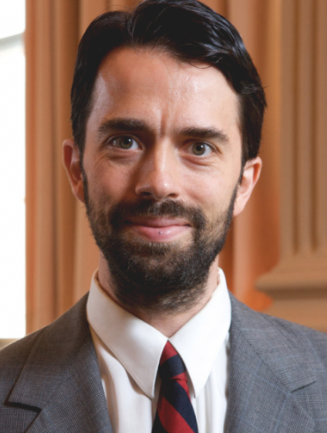 Stephanos Bibas合作论文数United States Court of Appeals for the 3rd Circuit1
 Stevens Sean T合作论文数1
 Vanessa A. Edkins合作论文数1
 Sarah Edwards合作论文数1
 Kristi Costabile合作论文数Department of Psychology, University of California1Loreto R. Prieto合作论文数Counseling Psychology Program, The University of Iowa1
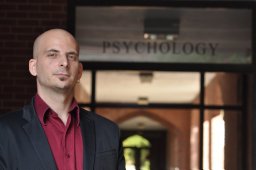 Zlatan Krizan合作论文数University of Iowa1Michelle Vannoy合作论文数1
 Kimberley A. Clow合作论文数Faculty of Criminology, Justice and Social Policy, Ontario Institute of Technology1
 Allison D Redlich合作论文数Policy Research Associates Inc.1S. Keiper合作论文数1
 Martin Heesacker合作论文数University of Florida1Thomas R. Cain合作论文数1
 Jarret T Crawford合作论文数Department of Psychology, Rutgers University1




