Brain tumors are the leading cause of cancer-related death in children. Ependymoma (EPN) is a devastating pediatric brain tumor with only ∼50% survival, currently treated with non-targeted approaches such as surgery and irradiation. Over 70% of EPNs arising in the brain cortex are driven by a gene fusion between ZFTA and RELA (ZR). ZR is a potent oncogenic driver capable of initiating brain tumors when expressed alone in mouse or human neural stem/progenitor cells. Despite its strong transforming capacity, the molecular mechanisms and cell types that give rise to EPN remain unclear. We hypothesized that the ZR fusion oncoprotein functions as an oncogenic transcription factor (TF), engaging distinct genomic loci accessible during embryonic brain development. Our findings demonstrate that ZR binds specific Plag/l TF motifs that are accessible in radial glial and cycling progenitor cell sduring mouse and human neocortical development. The oncogenic activity of ZR depends on a key intrinsically disordered region (IDR) that promote biomolecular condensate formation, regulates gene transcription, and governs chromatin binding. Finally, lineage tracing of natively forming mouse ZR tumors reveals the emergence of dominant clones driven by ZR expression, which induce transcriptional plasticity through impaired neuronal and glial differentiation programs. Together, these findings uncover critical molecular and developmental mechanisms of ZR fusion oncoprotein, providing a foundation for future therapeutic strategies. Stephen C. Mack. Intersecting Developmental and Oncogenic Networks in ZFTA Fusion-Driven Brain Cancer [abstract]. In: Proceedings of the AACR Special Conference in Cancer Research: Fusion-Positive Cancer: From Discovery to Therapy; 2026 Jan 13-15; Philadelphia PA. Philadelphia (PA): AACR; Cancer Res 2026;86(1_Suppl):Abstract nr IA003.
Abstract Isocitrate dehydrogenase (IDH) mutations arise early in glioma development and are associated with a defined neurodevelopmental cancer cell hierarchy. However, how mutant IDH contributes to this hierarchy and whether this interaction promotes gliomagenesis remain unclear. Progress in addressing these questions has been hindered by technical limitations. Patient-derived models rarely capture the biology of tumor initiation, as surgical specimens are obtained only after these phases of cancer evolution have passed. Moreover, the lack of faithful preclinical models of mutant IDH has constrained mechanistic investigation. To overcome these challenges, we developed a genetic mouse model of mutant IDH-driven gliomagenesis and IDH-wildtype companion models to enable direct testing of causal genotype-phenotype relationships involving the Idh1-R132H oncogene. We leveraged these models to survey IDH-mutant glioma initiation by performing time-resolved, joint single-cell RNA and ATAC sequencing analysis of engineered neural cells. Mutant IDH activates neural progenitor cells (NPCs) and drives NPC lineage switching. These actions expand oligodendrocyte precursor cells, the predominant cell-of-origin for these tumors, at the expense of interneurons, a lineage incompatible with mutant IDH-induced transformation. We further find that lineage switching is mediated by promoter hypermethylation and silencing of Gsx2, a homeobox gene required for neurogenesis. Critically, Gsx2 ablation recapitulates NPC fate reprogramming by mutant IDH while restoring Gsx2 expression in IDH-mutant neurosphere lines impairs their self-renewal and tumorigenic potential. Our work uncovers the molecular mechanisms by which mutant IDH reprograms neural lineage specification to promote cancer initiation, providing a new model of neural cell fate control by IDH oncogenes and insights into the developmental origins of glioma. Citation Format: Yi Xiao, Diana D. Shi, Lei Guo, Ethan Neumann, Michael M. Levitt, Pranita Kaphle, Tracey Shipman, Haocheng Li, Feng Cai, Denise M. Ramirez, Lauren G. Zacharias, Zhenkang Chen, Mathew Lin, Vinesh T. Puliyappadamba, Tao Chen, Milan R. Savani, Salvador Peña, Janaka Wansapura, Thomas P. Mathews, Prashant Mishra, Yoon Jung Kim, Prithvi Raj, Timothy E. Richardson, Jian Xu, Stephen C. Mack, Gilbert J. Rahme, Bradley E. Bernstein, Ralph J. DeBerardinis, Itay Tirosh, Mario L. Suvà, Lin Xu, Kalil G. Abdullah, Samuel K. McBrayer. IDH mutations disable the tumor suppressive activity of GSX2 to promote gliomagenesis [abstract]. In: Proceedings of the American Association for Cancer Research Annual Meeting 2026; Part 1 (Regular Abstracts); 2026 Apr 17-22; San Diego, CA. Philadelphia (PA): AACR; Cancer Res 2026;86(7 Suppl):Abstract nr 837.
BACKGROUND:Ependymoma (EPN) is the third most common pediatric brain tumor with no targeted therapies available to patients. In supratentorial ependymoma, the most frequent driver alteration is a gene fusion between ZFTA and RELA (denoted ZR), leads to constitutive localization of ZR in the nucleus. Because ZR is not currently druggable, we tested whether ZR expression leads to aberrant protein interactions that could represent therapeutic vulnerabilities. METHODS:Using CRISPR-Cas9 pooled screening, we identified many novel druggable ZR interacting proteins including XPO1, CARM1, SMARCA4, and CDK1. We focused on the nuclear export protein (XPO1), given the ability of most XPO1 inhibitors (i.e. Selinexor) to cross the blood brain barrier, FDA approval, and documented safety profiles in children. RESULTS:We found that specific nuclear ZR levels are needed for cell proliferation and are regulated by XPO1. Increased ZR accumulation in the nucleus does not increase oncogenic gene expression but drives tumor cells out of cell cycle, as compared to a defective ZR DNA binding mutant. Treatment of ZR driven patient-derived mouse models with Selinexor impairs cell growth and extends survival of animals in vivo. The combination of Selinexor treatment with Gemcitabine and Ribociclib (used in a clinical trial for relapsed EPN at St Jude Children's Research Hospital (SJDAWN)) further extends mouse survival. CONCLUSION:Our findings demonstrate that ZR interacting proteins constitute therapeutic leads, and that XPO1 is critical for titrating 'goldilocks' levels of ZR nuclear expression. We identify a novel combination therapy of Selinexor, Gemcitabine, and Ribociclib that may be immediately translated into clinical trials for EPN patients that are currently without targeted treatments.
BACKGROUND:Medulloblastoma and ependymoma are common pediatric central nervous system tumors with significant molecular and clinical heterogeneity. While molecular subgrouping has enabled classification into molecular subtypes, the extent of heterogeneity within these subgroups remains poorly defined. METHODS:We collected bulk RNA sequencing data from 888 medulloblastoma and 370 ependymoma tumors to establish a comprehensive reference landscape. After rigorous batch effect correction, normalization, and dimensionality reduction, we generated a unified landscape to explore gene expression, signaling pathways, RNA fusions, and copy number variations. RESULTS:Our transcriptional analysis revealed distinct clustering patterns, including two primary ependymoma compartments, EPN-E1 and EPN-E2, each with specific RNA fusions and molecular signatures. In medulloblastoma, we observed precise stratification of Group 3/4 tumors by subtype and in Sonic Hedgehog (SHH) tumors by patient age. We also identified subtype-specific pathways and gene fusions, enriched in each group. CONCLUSIONS:This transcriptomic landscape serves as a resource for biomarker discovery, diagnostic refinement, and prediction of tumor biology and outcome. By enabling projection of new patients' bulk RNA-seq data onto the reference map using nearest neighbor analysis, the framework supports accurate subtype classification. The landscape is publicly available via Oncoscape, an interactive platform for global exploration and application.
MYCN functions as a developmental oncogene, but its role in pediatric high-grade gliomas (pHGGs) remains unclear. In co-operation with Trp53 and Pten loss, MYCN initiates tumorigenesis and establishes an origin for MYCN-driven pHGGs. This transformation creates a vulnerability to PI3K and mTOR inhibition. However, prolonged treatment drives adaptive resistance through MYCN protein rebound, mediated by the attenuation of IGFBP5 and the induction of insulin-like growth factor 2. Although insulin pathway feedback has been implicated in resistance to PI3K targeted therapies, MYCN emerges as the central node of this adaptive program. Resistance can be overcame by sustained MYCN suppression using PI3K and mTOR inhibitors, combined with insulin-like growth factor 1 receptor and insulin receptor inhibitors or dietary intervention. A degradation-resistant MYCN isoform abolishes this response, establishing MYCN as both an initiating oncogene and a resistance driver and revealing a mechanistically defined therapeutic vulnerability.
ZFTA-RELA is the most recurrent genetic alteration seen in paediatric supratentorial ependymoma (EPN) and is sufficient to initiate tumours in mice1. Despite its oncogenic potential, ZFTA-RELA (ZR) is observed nearly exclusively in childhood EPN, with tumours located distinctly in the supratentorial brain of the central nervous system1. We proposed that specific chromatin modules accessible during brain development would render distinct cell lineage programs at direct risk of transformation by ZR. To test this hypothesis, we performed combined single-nucleus assay for transposase-accessible chromatin and RNA (snMultiome) sequencing of the developing mouse forebrain compared with ZR-driven mouse and human EPN. We demonstrated that specific developmental lineage programs present in transient progenitor cells and regulated by PLAG/L family transcription factors were at risk of neoplastic transformation. Binding of this chromatin network by ZR or other PLAG/L family motifs targeting fusion oncoproteins led to persistent chromatin accessibility at oncogenic loci and oncogene expression. Cross-species analysis of mouse and human ZR EPN revealed significant cell type heterogeneity indicating incomplete neurogenic and gliogenic differentiation, with a small percentage of cycling progenitor-like or radial glial-like cells that established a putative tumour cell hierarchy. In vivo lineage tracing studies identified neoplastic clones that aggressively dominated tumour growth and established the entire EPN cellular hierarchy. These findings identify developmental epigenomic states that are critical for fusion-oncoprotein-driven transformation and show how these states continue to shape tumour progression.
Background:Ependymoma is a malignancy of the neuroepithelium-derived ependyma that lines the spinal cord and ventricles of the brain, occurring most frequently in young children and older adults. Genetic susceptibility to ependymoma has proven difficult to assess due to disease rarity. Methods:We performed genome-wide association studies (GWAS) of 478 ependymoma patients and 4,841 disease-free controls of European ancestry. Ependymoma patients consisted of 117 children (<18 years old) with whole-genome sequencing (WGS), 142 children with genotyping, and 219 adults (≥18 years old) with genotyping. Genotyped samples were imputed using the 1,000 Genomes Project as the reference panel and underwent quality control filtering. The GWAS was performed separately by age group and technology (genotyped or WGS). GWAS variants were considered significant at P < 5 × 10⁻⁸. Results:Among pediatric subjects with WGS data, we identified a significant intronic variant in EDIL3 (rs149378, P = 1.9 × 10⁻⁸) and a nearly significant intronic variant in LHX4 (rs79008224, P = 7.2 × 10⁻⁸). In pediatric subjects with genotyped data, two significant intronic variants were detected: FAM149A (rs6852180, P = 1.8 × 10⁻⁸) and CYS1 (rs61052588, P = 3.0 × 10⁻⁸). Additionally, an intergenic variant near C1orf94 (rs1404350, P = 1.2 × 10⁻¹⁴) was highly significant. In genotyped adult subjects, a single variant was observed in KCNQ3 (rs79089725, P = 2.0 × 10⁻⁸). Conclusion:Our analysis represents one of the most extensive ependymoma-specific GWAS conducted to date. Several significant intronic variants were harbored in genes associated with cancer and neurological disease. Future studies are needed to investigate the role of these age-specific alterations in ependymoma pathogenesis.
Transcription factors are frequent cancer driver genes, exhibiting noted specificity based on the precise cell of origin. We demonstrate that ZIC1 exhibits loss-of-function (LOF) somatic events in group 4 (G4) medulloblastoma through recurrent point mutations, subchromosomal deletions and mono-allelic epigenetic repression (60% of G4 medulloblastoma). In contrast, highly similar SHH medulloblastoma exhibits distinct and diametrically opposed gain-of-function mutations and copy number gains (20% of SHH medulloblastoma). Overexpression of ZIC1 suppresses the growth of group 3 medulloblastoma models, whereas it promotes the proliferation of SHH medulloblastoma precursor cells. SHH medulloblastoma ZIC1 mutants show increased activity versus wild-type ZIC1, whereas G4 medulloblastoma ZIC1 mutants exhibit LOF phenotypes. Distinct ZIC1 mutations affect cells of the rhombic lip in diametrically opposed ways, suggesting that ZIC1 is a critical developmental transcriptional regulator in both the normal and transformed rhombic lip and identifying ZIC1 as an exquisitely context-dependent driver gene in medulloblastoma.
Figure S22 shows IHC evaluation of B7-H3 expression and CD3+ cell infiltration inside syngeneic ZFTA-RELA EPN tumors.
Figure S13 shows sustained or increased cytokine secretion of HER2.CAR T-cells following repetitive stimulation with EPN cells.
Distinguishing tumor maintenance genes from initiation, progression, and passenger genes is critical for developing effective therapies. We employed a functional genomic approach using the Lazy Piggy transposon to identify tumor maintenance genes in vivo and applied this to sonic hedgehog (SHH) medulloblastoma (MB). Combining Lazy Piggy screening in mice and transcriptomic profiling of human MB, we identified the voltage-gated potassium channel KCNB2 as a candidate maintenance driver. KCNB2 governs cell volume of MB-propagating cells (MPCs), with KCNB2 depletion causing osmotic swelling, decreased plasma membrane tension, and elevated endocytic internalization of epidermal growth factor receptor (EGFR), thereby mitigating proliferation of MPCs to ultimately impair MB growth. KCNB2 is largely dispensable for mouse development and KCNB2 knockout synergizes with anti-SHH therapy in treating MB. These results demonstrate the utility of the Lazy Piggy functional genomic approach in identifying cancer maintenance drivers and elucidate a mechanism by which potassium homeostasis integrates biomechanical and biochemical signaling to promote MB aggression.
Medulloblastoma and ependymoma are common pediatric central nervous system tumors with significant molecular and clinical heterogeneity. We collected bulk RNA sequencing data from 888 medulloblastoma and 370 ependymoma tumors to establish a comprehensive reference landscape. Following rigorous batch effect correction, normalization, and dimensionality reduction, we constructed a unified landscape to explore gene expression, signaling pathways, RNA fusions, and copy number variations. Our analysis revealed distinct clustering patterns, including two primary ependymoma compartments, EPN-E1 and EPN-E2, each with specific RNA fusions and molecular signatures. In medulloblastoma, we observed precise stratification of Group 3/4 tumors by subtype and in SHH tumors by patient age. This landscape serves as a vital resource for identifying biomarkers, refining diagnoses, and enables the mapping of new patients' bulk RNA-seq data onto the reference framework to predict biology and outcome from nearest neighbor analysis facilitate accurate disease subtype identification. The landscape is accessible via Oncoscape, an interactive platform, empowering global exploration and application.
Figure S7 shows inverse correlation between B7-H3.CAR T-cell expansion and B7-H3 target antigen density.
Figure S9 shows Type 2 polarization of B7-H3.CAR T-cells over repetitive stimulation with EPN cells.
PURPOSE:Targeted treatments are desperately needed for ependymomas. Chimeric antigen receptor (CAR) T cells have immense potential to transform patient outcomes. However, CAR T-cell therapy for ependymomas has been largely understudied. In this study, we explore the potential of targeting B7 homolog 3 (B7-H3/CD276) with CAR T cells to treat pediatric ependymomas. EXPERIMENTAL DESIGN:We profiled B7-H3 protein expression in 44 pediatric ependymoma samples by IHC. We generated second-generation human B7-H3.CAR T cells and examined their anti-ependymoma activity in six in vitro and two in vivo xenograft models. We validated findings using HER2-targeted CAR T cells. In addition, we used murine B7-H3.CAR T cells to evaluate in vivo antitumor activity in a fully syngeneic supratentorial ependymoma model. RESULTS:The majority of clinical ependymoma samples (29/44) stained positive for B7-H3, indicating high but heterogeneous expression across patients. In vitro, human B7-H3.CAR T cells had potent anti-ependymoma cytolytic activity, expansion, and persistence, which was inversely correlated with the upregulation of B7-H3 on CAR T cells. We found that CAR T cells favor type 2 cytokines phenotypes after repeated exposure to ependymoma cell lines, which may be driven by C-C motif chemokine ligand 2 secretion by ependymomas. In vivo, there was potent and significant antitumor activity in human xenograft ependymoma models. However, response durability was limited and significantly correlated with the degree of tumor burden. In the syngeneic setting, murine B7-H3.CAR T-cell efficacy against ependymomas was limited and did not extend survival. CONCLUSIONS:Our results support ongoing clinical evaluation of B7-H3.CAR T cells for ependymomas and provide model systems for further studying determinants of anti-ependymoma CAR T-cell treatment efficacy and resistance.
 Michael Taylor合作论文数Department of Medical Biophysics, Temerty Faculty of Medicine, University of Toronto;Departments of Pediatrics, Baylor College of Medicine;Texas Children’s Hospital113
 Stefan Pfister合作论文数Hopp Children's Cancer Center Heidelberg86
 Varadharajan Srinidhi合作论文数Department of Biology, Lund University;Chemistry Innovation Centre, AstraZeneca R&D Mölndal;Chemistry Innovation Centre, Discovery Sciences, Lund University67
 Sameer Agnihotri合作论文数Hospital for Sick Childrens Research Institute, University Health Network67
 Kelsey C. Bertrand合作论文数Arthur and Sonia Labatt Brain Tumor Research Centre, Hospital for Sick Children66
 Andrey Korshunov合作论文数Division of Clinical Cooperation Unit Neuropathology, German Cancer Research Center;Institute of Pathology, Universität Heidelberg62
 Nada Jabado合作论文数Department of Pathology, McGill University;Division of Hematology and Oncology, Montreal Children’s Hospital50
 Jeremy Rich合作论文数School of Medicine, University of North Carolina49
 Vijay Ramaswamy合作论文数Department of Medical Biophysics, Temerty Faculty of Medicine, University of Toronto49Paul A. Northcott合作论文数The Arthur and Sonia Labatt Brain Tumour Research Center, Hospital for Sick Children, Toronto, ON, Canada48
 David W. Ellison合作论文数Department of Pathology, St. Jude Children's Research Hospital;Comprehensive Cancer Center, St. Jude Children's Research Hospital46
 Marcel Kool合作论文数Division of Pediatric Neurooncology, German Cancer Research Center44Kristian W. Pajtler合作论文数43
 Richard Gilbertson合作论文数Department of Ocology, University of Cambridge41Amir Arabzade合作论文数40
 James Rutka合作论文数Department of Surgery, University of Toronto;Division of Neurosurgery, University of Toronto;The Labatt Brain Tumour Research Centre, The Hospital for Sick Children37Golbourn Brian合作论文数35Erik Emanus合作论文数33David T W Jones合作论文数Department of Pathology, Division of Molecular Histopathology, University of Cambridge33
 Cynthia Hawkins合作论文数Department of Laboratory Medicine & Pathobiology, Temerty Faculty of Medicine, University of Toronto;The Hospital for Sick Children33Qiulian Wu合作论文数33Siri Ippagunta合作论文数32
 Benjamin Deneen合作论文数Howard Hughes Medical Institute, California Institute of Technology32
 Daisuke Kawauchi合作论文数Department of Tumor Cell Biology, St. Jude Children's Research Hospital31
 Marc Remke合作论文数30Livia Garzia合作论文数McGill Univ Hlth Ctr, Canc Res Program, Res Inst, Montreal, PQ, Canada30
 Ian F. Pollack合作论文数Department of Neurological Surgery, School of Medicine, University of Pittsburgh30Felix Sahm合作论文数29Hendrik Witt合作论文数Division Molecular Genetics Im Neuenheimer Feld, German Cancer Research Center29
 Xiuxing Wang (汪秀星)合作论文数School of Basic Medical Sciences, Nanjing Medical University28
 Robert Kupp合作论文数Barrow Neurological Institute, St. Joseph’s Hospital and Medical Center28
 Claudia Kleinman合作论文数Department Human Genetics, Faculty of Medicine, McGill University;Centre for Translational Research in Cancer, McGill University28
 Giedre Krenciute合作论文数Center for Molecular Discovery, Baylor College of Medicine28
 Xin Wang合作论文数Hosp Sick Children, Arthur & Sonia Labatt Brain Tumour Res Ctr, Div Neurosurg, Toronto, ON M5G 1X8, Canada27Ann-Catherine J. Stanton合作论文数26Yanhua Zhao合作论文数25
 Uri Tabori合作论文数Department of Medical Biophysics, Temerty Faculty of Medicine, University of Toronto24
 Wilda Orisme合作论文数23
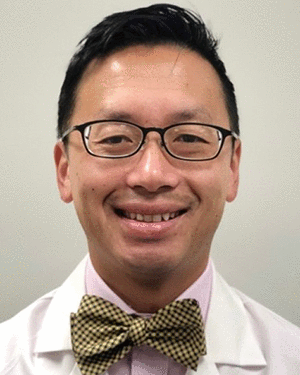 Jason Chiang合作论文数St Jude Childrens Res Hosp, Dept Pathol, 332 N Lauderdale St, Memphis, TN 38105 USA23
 Adrian Dubuc合作论文数Department of Pathology, Brigham and Women's Hospital and Harvard Medical School, Boston, Massachusetts, USA.23
 Andreas Von Deimling合作论文数University of Heidelberg;German Cancer Research Center23Alisha Kardian合作论文数22Hsiao-Chi Chen合作论文数22Deanna Langfitt合作论文数21Xiaochong Wu合作论文数21Baoli Hu合作论文数21Prager Briana合作论文数Cleveland Clinic Lerner College of Medicine, Cleveland Clinic21
 Donald Williams Parsons合作论文数Department of Molecular and Human Genetics, Baylor College of Medicine21
 Martin Sill合作论文数Division of Biostatistics, German Cancer Research Center21




