Domain science experts are commonly limited by computational efficiency of their code and hardware resources available for execution of desired simulations. Here, we detail a collaboration between domain scientists focused on simulating an ensemble of climate and human management decisions to drive environmental (e.g., water quality) and economic (e.g., crop yield) outcomes. Briefly, the domain scientists developed a message passing interface to execute the formerly serial code across a number of processors, anticipating significant performance improvement by moving to a cluster computing environment from their desktop machines. The code is both too complex to efficiently re-code from scratch and has a shared codebase that must continue to function on desktop machines as well as the parallel implementation. However, inefficiencies in the code caused the LUSTRE filesystem to bottleneck performance for all users. The domain scientists collaborated with Indiana University's Science Applications and Performance Tuning and High Performance File System teams to address the unforeseen performance limitations. The non-linear process of testing software advances and hardware performance is a model of the failures and successes that can be anticipated in similar applications. Ultimately, through a series of iterative software and hardware advances the team worked collaboratively to increase performance of the code, cluster, and file system to enable more than 100-fold increases in performance. As a result, the domain science is able to assess ensembles of climate and human forcing on the model, and sensitivities of ecologically and economically important outcomes of intensively managed agricultural landscapes.
This research was supported in part by: The Pervasive Technology Institute, Indiana Metabolomics and Cytomics Initiative, and the Indiana Genomics Initiative. All of these initiatives have been supported in part by Lilly Endowment, Inc. Grant number 1U24AA014818-01 from NIAAA/NIH. Its contents are solely the responsibility of the authors and do not necessarily represent the official views of the NIAAA/NIH. National Science Foundation under Grants CDA-9601632, EIA-0116050, ACI-0338618l, OCI-0451237, OCI-0535258, and OCI-0504075, CNS-0723054, and CNS-0521433. Shared University Research grants from IBM, Inc. to Indiana University. Any opinions, findings and conclusions or recommendations expressed in this material are those of the author(s) and do not necessarily reflect the views of the funding agencies represented above.
Any opinions, findings, and conclusions or recommendations expressed in this material are those of the author(s) and do not necessarily reflect the views of the funding agencies that supported this work.
Digital instruments and simulations are creating an ever-increasing amount of data. The need for institutions to acquire these data and transfer them for analysis, visualization, and archiving is growing as well. In parallel, networking technology is evolving, but at a much slower rate than our ability to create and store data. Single fiber 100 Gbps networking solutions have recently been deployed as national infrastructure. This article describes our experiences with data movement and video conferencing across a networking testbed, using the first commercially available single fiber 100 Gbps technology. The testbed is unique in its ability to be configured for a total length of 60, 200, or 400 km, allowing for tests with varying network latency. We performed low-level TCP tests and were able to use more than 99.9% of the theoretical available bandwidth with minimal tuning efforts. We used the Lustre file system to simulate how end users would interact with a remote file system over such a high performance link. We were able to use 94.4% of the theoretical available bandwidth with a standard file system benchmark, essentially saturating the wide area network. Finally, we performed tests with H.323 video conferencing hardware and quality of service (QoS) settings, showing that the link can reliably carry a full high-definition stream. Overall, we demonstrated the practicality of 100 Gbps networking and Lustre as excellent tools for data management.
As part of the SCinet Research Sandbox at the 2011 International Conference for High Performance Computing, Networking, Storage and Analysis (SC11), Indiana University utilized a dedicated 100 Gbps wide area network (WAN) link spanning more than 3,500 km (2,175 mi) to demonstrate the capabilities of the Lustre high performance parallel file system in a high bandwidth, high latency WAN environment. This demonstration functioned as a proof of concept and provided an opportunity to study Lustre's performance over a 100 Gbps WAN. To characterize the performance of the network and file system, a series of benchmarks and tests were undertaken. These included low level iperf network tests, Lustre networking (LNET) tests, file system tests with the IOR benchmark, and a suite of real-world applications reading and writing to the file system. All of the benchmarks were run over a the WAN link with a latency of 50.5 ms. In this article, we describe the configuration and constraints of the demonstration, and focus on the key findings made regarding the Lustre networking layer for this extremely high bandwidth, high latency connection. Of particular interest is the relationship between the peer_credits and max_rpcs_in_flight settings when considering LNET performance.
As part of the SCinet Research Sandbox at the Supercomputing 2011 conference, Indiana University (IU) demonstrated use of the Lustre high performance parallel file system over a dedicated 100 Gbps wide area network (WAN) spanning more than 3,500 km (2,175 mi). This demonstration functioned as a proof of concept and provided an opportunity to study Lustre's performance over a 100 Gbps WAN. To characterize the performance of the network and file system, low level iperf network tests, file system tests with the IOR benchmark, and a suite of real-world applications reading and writing to the file system were run over a latency of 50.5 ms. In this article we describe the configuration and constraints of the demonstration and outline key findings.
This material is based upon work supported by the National Science Foundation under Grant No. CNS-0521433 to Indiana University for MRI: Acquisition of a High-Speed, High Capacity Storage System to Support Scientific Computing: The Data Capacitor. Any opinions, findings, and conclusions or recommendations expressed in this material are those of the author(s) and do not necessarily reflect the views of the NSF.
Cyberinfrastructure is a word commonly used but lacking a single, precise definition. One recognizes intuitively the analogy with infrastructure , and the use of cyber to refer to thinking or computing -- but what exactly is cyberinfrastructure as opposed to information technology infrastructure? Indiana University has developed one of the more widely cited definitions of cyberinfrastructure. Cyberinfrastructure consists of computing systems, data storage systems, advanced instruments and data repositories, visualization environments, and people, all linked together by software and high performance networks to improve research productivity and enable breakthroughs not otherwise possible. A second definition, more inclusive of scholarship generally and educational activities, has also been published and is useful in describing cyberinfrastructure: Cyberinfrastructure consists of computational systems, data and information management, advanced instruments, visualization environments, and people, all linked together by software and advanced networks to improve scholarly productivity and enable knowledge breakthroughs and discoveries not otherwise possible. In this paper, we describe the origin of the term cyberinfrastructure based on the history of the root word infrastructure, discuss several terms related to cyberinfrastructure, and provide several examples of cyberinfrastructure
The Indiana University Data Capacitor wide area Lustre file system provides over 350 TB of short- to mid-term storage of large research data sets. It spans multiple geographically distributed compute, storage, and visualization resources. In order to effectively harness the power of these resources from various institutions, it has been necessary to develop software to keep ownership and permission data consistent across many client mounts. This paper describes the Data Capacitor's Lustre WAN service and the history, development, and implementation of IU's UID mapping scheme that enables Lustre WAN on the TeraGrid.
Astrophysical simulations of protoplanetary disks and gas giant planet formation are being performed with a variety of numerical methods. Some of the codes in use today have been producing scientifically significant results for several years, or even decades. Each must simulate millions of resolution elements for millions of time steps, capture and store output data, and rapidly and efficiently analyze this data. To do this effectively, a parallel code is needed that scales to tens or hundreds of processors. Furthermore, an efficient workflow for the transport, analysis, and interpretation of the output data is needed to achieve scientifically meaningful results. Since such simulations are usually performed on moderate to large parallel systems, the compute system is generally located at a remote institution. However, analysis of results is typically performed interactively, and due to the fact that most supercomputing centers do not offer dedicated interactive nodes, the transfer of simulation output data to local resources becomes necessary. Even if interactive resources were available, typical network latencies make X-forwarded displays nearly impossible to work with. Since data sets can be quite large and traditional transfer mechanisms such as scp and sftp offer relatively low throughput, this transfer of data sets becomes a bottleneck in the research workflow. In this article we measure the scalability of the Computational HYdronamics with MultiplE Radiation Algorithms (CHYMERA) code on the SGI Altix architecture. We find that it scales well up to 64 threads for moderate and large sized problems. We also present a novel approach to enable rapid transfer and analysis of simulation data via the Data Capacitor (DC) and Lustre WAN (Wide Area Network) [17]. The usage of a WAN file system to tie batch system operated compute resources and interactive analysis and visualization resources together is of general interest and can be applied broadly.
In this article we explore the utility of a centralized filesystem provided by the TeraGrid to both TeraGrid and non-TeraGrid sites. We highlight several common cases in which such a filesystem would be useful in obtaining scientific insight. We present results from a test case using Indiana University's Data Capacitor over the wide area network as a central filesystem for simulation data generated at multiple TeraGrid sites and analyzed at Mississippi State University. Statistical analysis of the I/O patterns and rates, via detailed trace records generated with VampirTrace, for both the Data Capacitor and a local Lustre filesystem are provided. The benefits of a centralized filesystem and potential hurdles in adopting such a system for both TeraGrid and non-TeraGrid sites are discussed.
 Craig A. Stewart合作论文数Indiana University22
 Matthew R. Link合作论文数Indiana University13
 Robert Henschel合作论文数Indiana University11
 Scott Michael合作论文数Indiana University9
 David Y. Hancock合作论文数8
 Kurt Seiffert合作论文数6Bret Hammond合作论文数5Gregory G. Pike合作论文数Oak Ridge National Laboratory5matthew davy合作论文数4
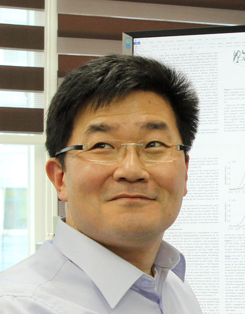 Mu-Hyun (Mookie) Baik合作论文数Department of Chemistry, Center for Catalytic Hydrocarbon Functionalizations, Institute for Basic Science;Department of Chemistry, Korea Advanced Institute of Science and Technology4
 John C. Huffman合作论文数Department of Chemistry, The College of Arts & Sciences, Indiana University Bloomington;Molecular Structure Center, Indiana University Bloomington4
 Beth Plale合作论文数Luddy School of Informatics, Computing, and Engineering, Indiana University Bloomington4
 Randall Bramley合作论文数Luddy School of Informatics, Computing, and Engineering, Indiana University Bloomington4s teige合作论文数3T. William合作论文数3
 Matthias Müller合作论文数RWTH Aachen University3Doug Balog合作论文数3Dennis Gannon合作论文数Department of Computer Science at Indiana University;Indiana Pervasive Technology Labs3Michael Kluge合作论文数Center for Information Services and High Performance Computing;Dresden University of Technology3
 Holger Brunst合作论文数Dresden University of Technology3p r mukund合作论文数2mary papakhian合作论文数2Matt Link合作论文数2Therese Miller合作论文数2andrew elble合作论文数2matthew allen合作论文数2Andreas Knüpfer合作论文数Technische Universität Dresden2D. F. Mcmullen合作论文数2
 David Scott McCaulay合作论文数Indiana University2Julie Wernert合作论文数2Kia Huffman合作论文数2
 Richard Knepper合作论文数Indiana University2
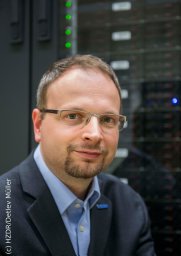 Guido Juckeland合作论文数Center for Information Services and High Performance Computing, Technische Universität Dresden2
 David L. Hart合作论文数National Center for Atmospheric Research2elizabeth b stobie合作论文数1
 Tyler Balson合作论文数1
 Adam Scot Ward合作论文数1Harold E. B. Dennis合作论文数1adam sweeny合作论文数1matt liggett合作论文数1Peng Wang合作论文数1peng wang合作论文数1Christian Meyer合作论文数1Shawn D. Slavin合作论文数1michael mcrobbie合作论文数1ben fulton合作论文数1
 Yu Ma合作论文数1
 Wolfgang E. Nagel合作论文数Center for Information Services and High Performance Computing, Technische Universitat Dresden1




