Designing quantum algorithms is a complex and counterintuitive task, making it an ideal candidate for AI-driven algorithm discovery. To this end, we employ the Hive, an AI platform for program synthesis, which utilises large language models to drive a highly distributed evolutionary process for discovering new algorithms. We focus on the ground state problem in quantum chemistry, and discover efficient quantum heuristic algorithms that solve it for molecules LiH, H2O, and F2 while exhibiting significant reductions in quantum resources relative to state-of-the-art near-term quantum algorithms. Further, we perform an interpretability study on the discovered algorithms and identify the key functions responsible for the efficiency gains. Finally, we benchmark the Hive-discovered circuits on the Quantinuum System Model H2 quantum computer and identify minimum system requirements for chemical precision. We envision that this novel approach to quantum algorithm discovery applies to other domains beyond chemistry, as well as to designing quantum algorithms for fault-tolerant quantum computers.
South Africa is currently facing a critical situation in its power generation landscape, which is plagued by frequent power outages and the need to move from fossil fuels to renewable energy sources. This period emphasizes the importance of having firm-dispatchable power to balance out the intermittent nature of wind and solar energy sources. The paper proposes to repurpose old coal-fired power plants to generate firm-dispatchable energy in line with the principles of a Just Transition. Eskom's coal plants are approaching the end of their economic life, and their declining energy availability factor is becoming a challenge in meeting the country's energy needs. The study suggests that a comprehensive strategy that integrates wind, solar, and firm-dispatchable power can be cost-effective and reliable compared to the traditional coal-based approach or the nuclear alternative. The study emphasizes the necessity of a 25-year plan that would invest in flexible and modular dispatchable generation. It also highlights the strategic location of this generating capacity, including repurposing decommissioned coal plant sites. The proposed model integrates private investment, adheres to established best practices, and emphasizes adaptability to changing demand dynamics. The study provides a roadmap for enabling firm-dispatchable capacity for South Africa's energy transition, emphasizing economic prudence, environmental sustainability, and alignment with the principles of the Just Transition program.
Since its rediscovery in the twentieth century, the Mpemba effect, where a far-from-equilibrium state may relax faster than a state closer to equilibrium, has been extensively studied in classical systems and has recently received attention in quantum systems. Many theories explaining this counter-intuitive behavior in classical systems rely on memory effects. However, in quantum systems, the relation between the Mpemba effect and memory has remained unexplored. In this Letter, we consider general non-Markovian open quantum systems and reveal new classes of quantum Mpemba effects, with no analog in Markovian quantum dynamics. Generically, open quantum dynamics possess a finite memory time and a unique steady state. Because of non-Markovian dynamics, even if the system is initialized in the steady state it can take a long time to relax back. We find other initial states that reach the steady state much faster. Most notably, we demonstrate that there can be an initial state in which the system reaches the steady state within the finite memory time itself, giving the fastest possible relaxation to stationarity. We verify the effect for quantum dot systems coupled to electronic reservoirs in equilibrium and nonequilibrium setups at weak, intermediate and strong coupling. Our Letter provides new insights into the rich physics underlying accelerated relaxation in quantum systems.
We develop a unified framework for open quantum systems composed of many mutually interacting quantum spins, or any isomorphic systems like qubits and qudits, surrounded by one or more independent bosonic baths. Our framework, based on Schwinger–Keldysh field theory (SKFT), can handle arbitrary spin value S , dimensionality of space, and geometry, while being applicable to a large parameter space for system and bath. It can probe regimes in which non-Markovian dynamics and nonperturbative effects pose formidable challenges for other state-of-the-art theoretical methods. This is achieved by working with the two-particle irreducible (2PI) effective action, which resums classes of Feynman diagrams of SKFT to an infinite order. Furthermore, such diagrams are generated via an expansion in 1 / N , where N is the number of Schwinger bosons we employ to map spin operators onto canonically commuting ones, rather than via conventional expansion in system-bath coupling constant. We carefully benchmark our SKFT+2PI-computed results vs. numerically (quasi)exact ones from tensor network calculations applied to the archetypical spin-boson model where both methodologies are applicable. Additionally, we demonstrate the capability of SKFT+2PI to handle a much more complex spin-chain-boson model with multiple baths interacting with each spin where no benchmark from other methods is available at present. The favorable numerical cost of solving integro-differential equations produced by the SKFT+2PI framework with an increasing number of spins and time steps makes it a promising route for simulating driven-dissipative systems in quantum computing, quantum magnonics, and quantum spintronics.
Over the past decade, access to National Health Service (NHS) dentistry in England has been problematic. There are increasing media reports of patients being unable to find treatment at a local NHS dentist. However, the extent of this issue varies by location and by the characteristics of the neighbourhood. The study uses official data sources on NHS dental provision and population. Travel accessibility is measured using car journey times. An advanced form of Floating Catchment Area accessibility is used, which accounts for supply competition, varying catchments, and distance decay. Spatial availability and accessibility indices are calculated. Ways in which the method can be used to explore various types of 'what-if' scenarios are outlined. Both availability and accessibility vary by the level of neighbourhood deprivation and the urban/rural nature of the neighbourhood. A case study, based on a real-world situation, shows the impact on the local neighbourhood of the closure of a dental practice. For all neighbourhoods, NHS dental provision is generally less than would be needed to provide basic dental care. The interpretation of outputs needs to take account of edge-effects near to Scotland and Wales. Possible improvements include the inclusion of other modes of travel and the exclusion of the population that does not want to access NHS care.
In this article we present a new modelling framework for structured concepts using a category-theoretic generalisation of conceptual spaces, and show how the conceptual representations can be learned automatically from data, using two very different instantiations: one classical and one quantum. A contribution of the work is a thorough category-theoretic formalisation of our framework. We claim that the use of category theory, and in particular the use of string diagrams to describe quantum processes, helps elucidate some of the most important features of our approach. We build upon Gardenfors' classical framework of conceptual spaces, in which cognition is modelled geometrically through the use of convex spaces, which in turn factorise in terms of simpler spaces called domains. We show how concepts from the domains of shape, colour, size and position can be learned from images of simple shapes, where concepts are represented as Gaussians in the classical implementation, and quantum effects in the quantum one. In the classical case we develop a new model which is inspired by the Beta-VAE model of concepts, but is designed to be more closely connected with language, so that the names of concepts form part of the graphical model. In the quantum case, concepts are learned by a hybrid classical-quantum network trained to perform concept classification, where the classical image processing is carried out by a convolutional neural network and the quantum representations are produced by a parameterised quantum circuit. Finally, we consider the question of whether our quantum models of concepts can be considered conceptual spaces in the Gardenfors sense.
Projected variational wavefunctions such as the Gutzwiller, many-body correlator and Jastrow ansatzes have provided crucial insight into the nature of superfluid-Mott insulator transition in the Bose Hubbard model (BHM) in two or more spatial dimensions. However, these ansatzes have no obvious tractable and systematic way of being improved. A promising alternative is to use Neural-network quantum states (NQS) based on Restricted Boltzmann Machines (RBMs). With binary visible and hidden units NQS have proven to be a highly effective at describing quantum states of interacting spin-1/2 lattice systems. The application of NQS to bosonic systems has so far been based on one-hot encoding from machine learning where the multi-valued site occupation is distributed across several binary-valued visible units of an RBM. Compared to spin-1/2 systems one-hot encoding greatly increases the number of variational parameters whilst also making their physical interpretation opaque. Here we revisit the construction of NQS for bosonic systems by reformulating a one-hot encoded RBM into a correlation operator applied to a reference state, analogous to the structure of the projected variational ansatzes. In this form we then propose a number of specialisations of the RBM motivated by the physics of the BHM and the ability to capture exactly the projected variational ansatzes. We analyse in detail the variational performance of these new RBM variants for a 10 x 10 BHM, using both a standard Bose condensate state and a pre-optimised Jastrow + many-body correlator state as the reference state of the calculation. Several of our new ansatzes give robust results as nearly good as one-hot encoding across the regimes of the BHM, but at a substantially reduced cost. Such specialised NQS are thus primed tackle bosonic lattice problems beyond the accuracy of classic variational wavefunctions.
Artificial intelligence (AI) is currently based largely on black-box machine learning models which lack interpretability. The field of eXplainable AI (XAI) strives to address this major concern, being critical in high-stakes areas such as the finance, legal and health sectors. We present an approach to defining AI models and their interpretability based on category theory. For this we employ the notion of a compositional model, which sees a model in terms of formal string diagrams which capture its abstract structure together with its concrete implementation. This comprehensive view incorporates deterministic, probabilistic and quantum models. We compare a wide range of AI models as compositional models, including linear and rule-based models, (recurrent) neural networks, transformers, VAEs, and causal and DisCoCirc models. Next we give a definition of interpretation of a model in terms of its compositional structure, demonstrating how to analyse the interpretability of a model, and using this to clarify common themes in XAI. We find that what makes the standard 'intrinsically interpretable' models so transparent is brought out most clearly diagrammatically. This leads us to the more general notion of compositionally-interpretable (CI) models, which additionally include, for instance, causal, conceptual space, and DisCoCirc models. We next demonstrate the explainability benefits of CI models. Firstly, their compositional structure may allow the computation of other quantities of interest, and may facilitate inference from the model to the modelled phenomenon by matching its structure. Secondly, they allow for diagrammatic explanations for their behaviour, based on influence constraints, diagram surgery and rewrite explanations. Finally, we discuss many future directions for the approach, raising the question of how to learn such meaningfully structured models in practice.
Many countries have commenced a transition from fossil fuel-based electricity generation systems to sustainable systems based on wind and solar generation. It is often noted that the least cost approach would involve a massive scale-up in the building of variable renewables, supported by battery storage and gas peaking plants. The required backup should be firm-dispatchable generation rather than peaking power. The wind and solar generation aspects for this system are clearly defined and understood, however, the term firm-dispatchable power is not defined and the specific requirements are poorly understood. This study seeks to define firm-dispatchable power in this context and its requirement in the sustainable generation system. The study compares 100 renewable generation scenarios from South Africa, Texas, and the UK to demonstrate the requirement for this firm-dispatchable generation. The results indicate that firm-dispatchable generation must be available to replace the renewable generation completely. The required installed capacity for this firm-dispatchable generation does not vary with the distinct demand profiles of the different locations or their comparative renewable generation profiles. It also does not change significantly with the use of energy storage. The usage for this firm-dispatchable generation will vary due to the comparative economics of its use, but the requirement for its installation does not change.
Correlated quantum systems feature a wide range of nontrivial effects emerging from interactions between their constituent particles. In nonequilibrium scenarios, these manifest in phenomena such as many-body insulating states and anomalous scaling laws of currents of conserved quantities, crucial for applications in quantum circuit technologies. In this work, we propose a giant-rectification scheme based on the asymmetric interplay between strong particle interactions and a tilted potential, each of which induces an insulating state on its own. While for reverse bias both cooperate and induce a strengthened insulator with an exponentially suppressed current, for forward bias they compete, generating conduction resonances; this leads to a rectification coefficient of many orders of magnitude. We uncover the mechanism underlying these resonances as enhanced coherences between energy eigenstates occurring at avoided crossings in the bulk energy spectrum of the system. Furthermore, we demonstrate the complexity of the many-body nonequilibrium conducting state through the emergence of enhanced density-matrix impurity and operator-space entanglement entropy close to the resonances. Our proposal paves the way for implementing a perfect diode in currently available electronic and quantum simulation platforms.
We present a variety of methods for training complex-valued word embeddings, based on the classical Skip-gram model, with a straightforward adaptation simply replacing the real-valued vectors with arbitrary vectors of complex numbers. In a more "physically-inspired" approach, the vectors are produced by parameterised quantum circuits (PQCs), which are unitary transformations resulting in normalised vectors which have a probabilistic interpretation. We develop a complex-valued version of the highly optimised C code version of Skip-gram, which allows us to easily produce complex embeddings trained on a 3.8B-word corpus for a vocabulary size of over 400k, for which we are then able to train a separate PQC for each word. We evaluate the complex embeddings on a set of standard similarity and relatedness datasets, for some models obtaining results competitive with the classical baseline. We find that, while training the PQCs directly tends to harm performance, the quantum word embeddings from the two-stage process perform as well as the classical Skip-gram embeddings with comparable numbers of parameters. This enables a highly scalable route to learning embeddings in complex spaces which scales with the size of the vocabulary rather than the size of the training corpus. In summary, we demonstrate how to produce a large set of high-quality word embeddings for use in complex-valued and quantum-inspired NLP models, and for exploring potential advantage in quantum NLP models.
We conduct an extensive study on using near-term quantum computers for a task in the domain of computational biology. By constructing quantum models based on parameterised quantum circuits we perform sequence classification on a task relevant to the design of therapeutic proteins, and find competitive performance with classical baselines of similar scale. To study the effect of noise, we run some of the best-performing quantum models with favourable resource requirements on emulators of state-of-the-art noisy quantum processors. We then apply error mitigation methods to improve the signal. We further execute these quantum models on the Quantinuum H1-1 trapped-ion quantum processor and observe very close agreement with noiseless exact simulation. Finally, we perform feature attribution methods and find that the quantum models indeed identify sensible relationships, at least as well as the classical baselines. This work constitutes the first proof-of-concept application of near-term quantum computing to a task critical to the design of therapeutic proteins, opening the route toward larger-scale applications in this and related fields, in line with the hardware development roadmaps of near-term quantum technologies.
We develop quantum RNNs with cells based on Parametrised Quantum Circuits (PQCs). PQCs can provide a form of hybrid quantum-classical computation where the input and the output is in the form of classical data. The previous “hidden” state is the quantum state from the previous time-step, and an angle encoding is used to define a (non-linear) mapping from a classical word embedding into the quantum Hilbert space. Measurements of the quantum state provide classical statistics which are used for classification. We report results which are competitive with various RNN baselines on the Rotten Tomatoes dataset, as well as emulator results which demonstrate the feasibility of running such models on quantum hardware.
An environment interacting with a quantum system can enhance transport through the suppression of quantum effects responsible for localization. In this paper, we study the interplay between bulk dephasing and a linear potential in a boundary-driven tight-binding chain. A linear potential induces Wannier-Stark localization in the absence of noise, while dephasing induces diffusive transport in the absence of a tilt. We derive an approximate expression for the steady-state current as a function of both dephasing and tilt which closely matches the exact solution for a wide range of parameters. From it, we find that the maximum current occurs for a dephasing rate equal to the period of Bloch oscillations in the Wannier-Stark localized system. We also find that the current displays a maximum as a function of the system size, provided that the total potential tilt across the chain remains constant. Our results can be verified in current experimental platforms and represents a step forward in analytical studies of environment-assisted transport.
The most general description of quantum evolution up to a time τ is a completely positive tracing preserving map known as a dynamical mapΛ̂(τ). Here, we consider Λ̂(τ) arising from suddenly coupling a system to one or more thermal baths with a strength that is neither weak nor strong. Given no clear separation of characteristic system/bath time scales, Λ̂(τ) is generically expected to be non-Markovian; however, we do assume the ensuing dynamics has a unique steady state, implying the baths possess a finite memory time τm. By combining several techniques within a tensor network framework, we directly and accurately extract Λ̂(τ) for a small number of interacting fermionic modes coupled to infinite non-interacting Fermi baths. First, we use an orthogonal polynomial mapping and thermofield doubling to arrive at a purified chain representation of the baths whose length directly equates to a time over which the dynamics of the infinite baths is faithfully captured. Second, we employ the Choi-Jamiolkowski isomorphism so that Λ̂(τ) can be fully reconstructed from a single pure state calculation of the unitary dynamics of the system, bath and their replica auxiliary modes up to time τ. From Λ̂(τ), we also compute the time local propagator L̂(τ). By examining the convergence with τ of the instantaneous fixed points of these objects, we establish their respective memory times τmΛ and τmL. Beyond these times, the propagator L̂(τ) and dynamical map Λ̂(τ) accurately describe all the subsequent long-time relaxation dynamics up to stationarity. These timescales form a hierarchy τmL≤τmΛ≤τre, where τre is a characteristic relaxation time of the dynamics. Our numerical examples of interacting spinless Fermi chains and the single impurity Anderson model demonstrate regimes where τre ≫ τm, where our approach can offer a significant speedup in determining the stationary state compared to directly simulating the long-time limit. Our results also show that having access to Λ̂(τ) affords a number of insightful analyses of the open system thus far not commonly exploited.
Understanding the entropy production of systems strongly coupled to thermal baths is a core problem of both quantum thermodynamics and mesoscopic physics. While there exist many techniques to accurately study entropy production in such systems, they typically require a microscopic description of the baths, which can become numerically intractable to study for large systems. Alternatively an open-systems approach can be employed with all the nuances associated with various levels of approximation. Recently, the mesoscopic leads approach has emerged as a powerful method for studying such quantum systems strongly coupled to multiple thermal baths. In this method, a set of discretised lead modes, each locally damped, provide a Markovian embedding. Here we show that this method proves extremely useful to describe entropy production of a strongly coupled open quantum system. We show numerically, for both non-interacting and interacting setups, that a system coupled to a single bath exhibits a thermal fixed point at the level of the embedding. This allows us to use various results from the thermodynamics of quantum dynamical semi-groups to infer the non-equilibrium thermodynamics of the strongly coupled, non-Markovian central systems. In particular, we show that the entropy production in the transient regime recovers the well established microscopic definitions of entropy production with a correction that can be computed explicitly for both the single- and multiple-lead cases.
Progress in the realisation of reliable large-scale quantum computers has motivated research into the design of quantum machine learning models. We present Quixer: a novel quantum transformer model which utilises the Linear Combination of Unitaries and Quantum Singular Value Transform primitives as building blocks. Quixer operates by preparing a superposition of tokens and applying a trainable non-linear transformation to this mix. We present the first results for a quantum transformer model applied to a practical language modelling task, obtaining results competitive with an equivalent classical baseline. In addition, we include resource estimates for evaluating the model on quantum hardware, and provide an open-source implementation for classical simulation. We conclude by highlighting the generality of Quixer, showing that its parameterised components can be substituted with fixed structures to yield new classes of quantum transformers.
In this report we present a new modelling framework for concepts based on quantum theory, and demonstrate how the conceptual representations can be learned automatically from data. A contribution of the work is a thorough category-theoretic formalisation of our framework. We claim that the use of category theory, and in particular the use of string diagrams to describe quantum processes, helps elucidate some of the most important features of our quantum approach to concept modelling. Our approach builds upon Gardenfors' classical framework of conceptual spaces, in which cognition is modelled geometrically through the use of convex spaces, which in turn factorise in terms of simpler spaces called domains. We show how concepts from the domains of shape, colour, size and position can be learned from images of simple shapes, where individual images are represented as quantum states and concepts as quantum effects. Concepts are learned by a hybrid classical-quantum network trained to perform concept classification, where the classical image processing is carried out by a convolutional neural network and the quantum representations are produced by a parameterised quantum circuit. We also use discarding to produce mixed effects, which can then be used to learn concepts which only apply to a subset of the domains, and show how entanglement (together with discarding) can be used to capture interesting correlations across domains. Finally, we consider the question of whether our quantum models of concepts can be considered conceptual spaces in the Gardenfors sense.
Background The number of people living with obesity or who are overweight presents a global challenge, and the development of effective interventions is hampered by a lack of research which takes a joined up, whole system, approach that considers multiple elements of the complex obesity system together. We need to better understand the collective characteristics and behaviours of those who are overweight or have obesity and how these differ from those who maintain a healthy weight. Methods Using the UK Biobank cohort we develop an obesity classification system using k-means clustering. Variable selection from the UK Biobank cohort is informed by the Foresight obesity system map across key domains (Societal Influences, Individual Psychology, Individual Physiology, Individual Physical Activity, Physical Activity Environment). Results Our classification identifies eight groups of people, similar in respect to their exposure to known drivers of obesity: ‘Younger, urban hard-pressed’, ‘Comfortable, fit families’, ‘Healthy, active and retirees’, ‘Content, rural and retirees’, ‘Comfortable professionals’, ‘Stressed and not in work’, ‘Deprived with less healthy lifestyles’ and ‘Active manual workers’. Pen portraits are developed to describe the characteristics of these different groups. Multinomial logistic regression is used to demonstrate that the classification can effectively detect groups of individuals more likely to be living with overweight or obesity. The group identified as ‘Comfortable, fit families’ are observed to have a higher proportion of healthy weight, while three groups have increased relative risk of being overweight or having obesity: ‘Active manual workers’, ‘Stressed and not in work’ and ‘Deprived with less healthy lifestyles’. Conclusions This paper presents the first study of UK Biobank participants to adopt this obesity system approach to characterising participants. It provides an innovative new approach to better understand the complex drivers of obesity which has the potential to produce meaningful tools for policy makers to better target interventions across the whole system to reduce overweight and obesity.
 Dieter Jaksch合作论文数Institute for Quantum Physics, Department of Physics, Universität Hamburg;Keble College, University of Oxford70
 James R. Curran合作论文数Grok Academy;National Computer Science School31
 Andrea Cavalleri合作论文数Condensed Matter Department, Max Planck Institute for the Structure and Dynamics of Matter;Department of Physics, University of Oxford;University of Hamburg18
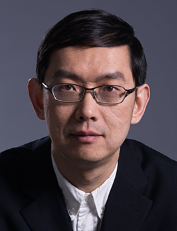 Yue Zhang (张岳)合作论文数School of Engineering, Westlake University;Westlake Institute for Advanced Study;Singapore University of Technology and Design16
 Laura Rimell合作论文数Computer Laboratory, University of Cambridge16
 Douwe Kiela合作论文数Contextual AI;Stanford University13
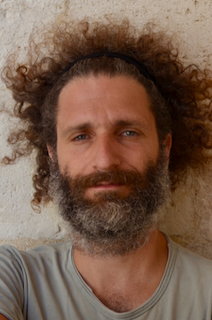 Andreas Vlachos合作论文数Department of Computer Science and Technology, University of Cambridge;Fitzwilliam College, University of Cambridge11
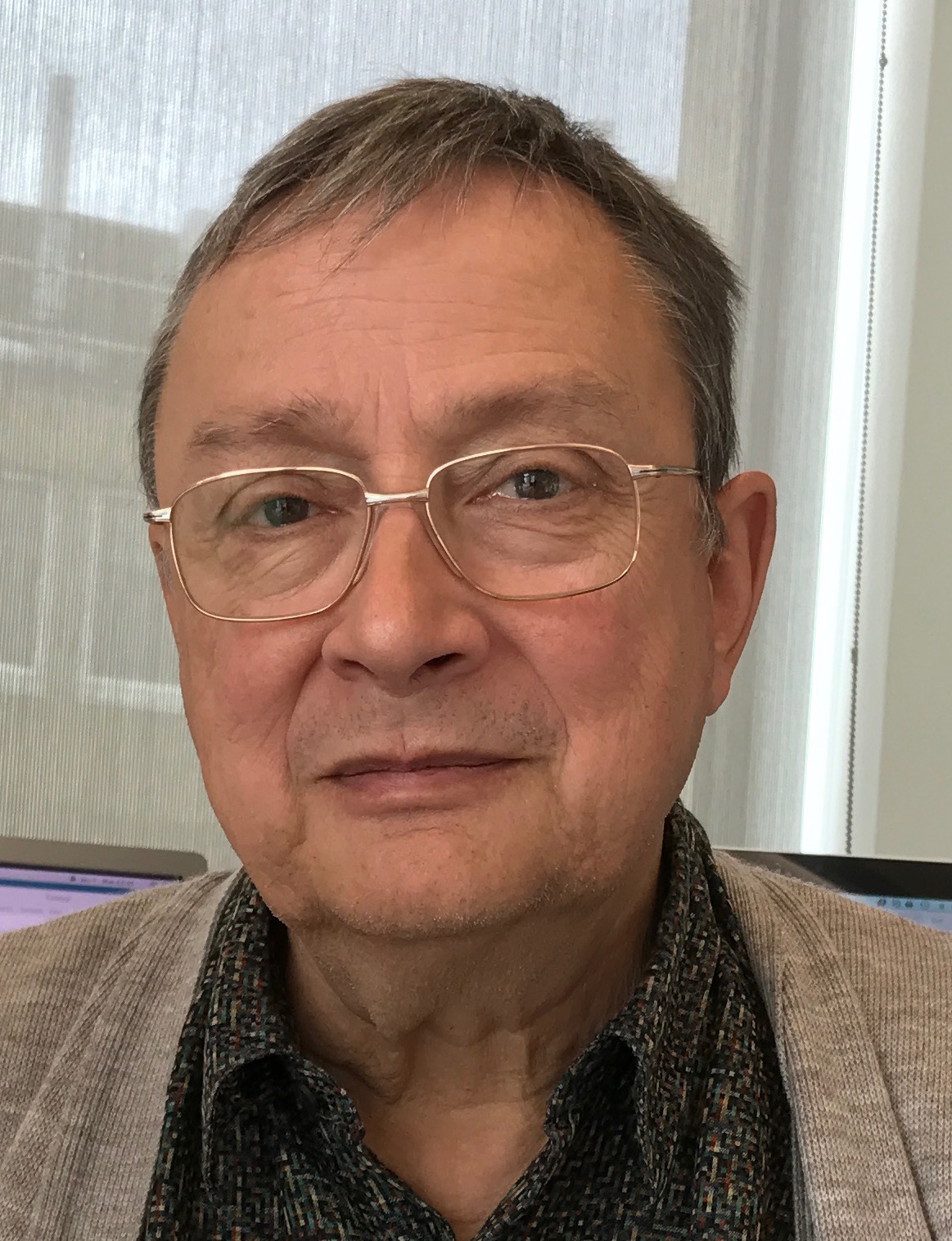 Mark Steedman合作论文数Institute for Language, Cognition, and Computation, School of Informatics, The University of Edinburgh11
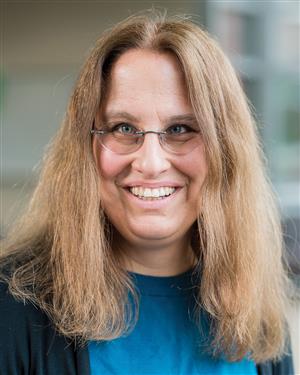 Julia Hockenmaier合作论文数Department of Computer Science, University of Illinois Urbana-Champaign;Siebel School of Computing and Data Science, The Grainger College of Engineering, University of Illinois Urbana-Champaign11
 John Goold合作论文数Trinity College Dublin10
 Stefan Kaiser合作论文数Institute for Solid State and Material Physics, Faculty of Physics, Technical University of Dresden10
 Daniele Nicoletti合作论文数Dipartimento di Fisica;Universita di Roma " La Sapienza;Dipartimento di Fisica, Universita di Roma " La Sapienza10
 Tamara Polajnar合作论文数University of Glasgow10
 Juan Jose Mendoza-Arenas合作论文数Universidad Nacional de Colombia10
 Tomi Harry Johnson合作论文数Clarendon Laboratory, University of Oxford9
 Felix Hill合作论文数DeepMind9
 Matteo Mitrano合作论文数Department of Physics, Harvard University9
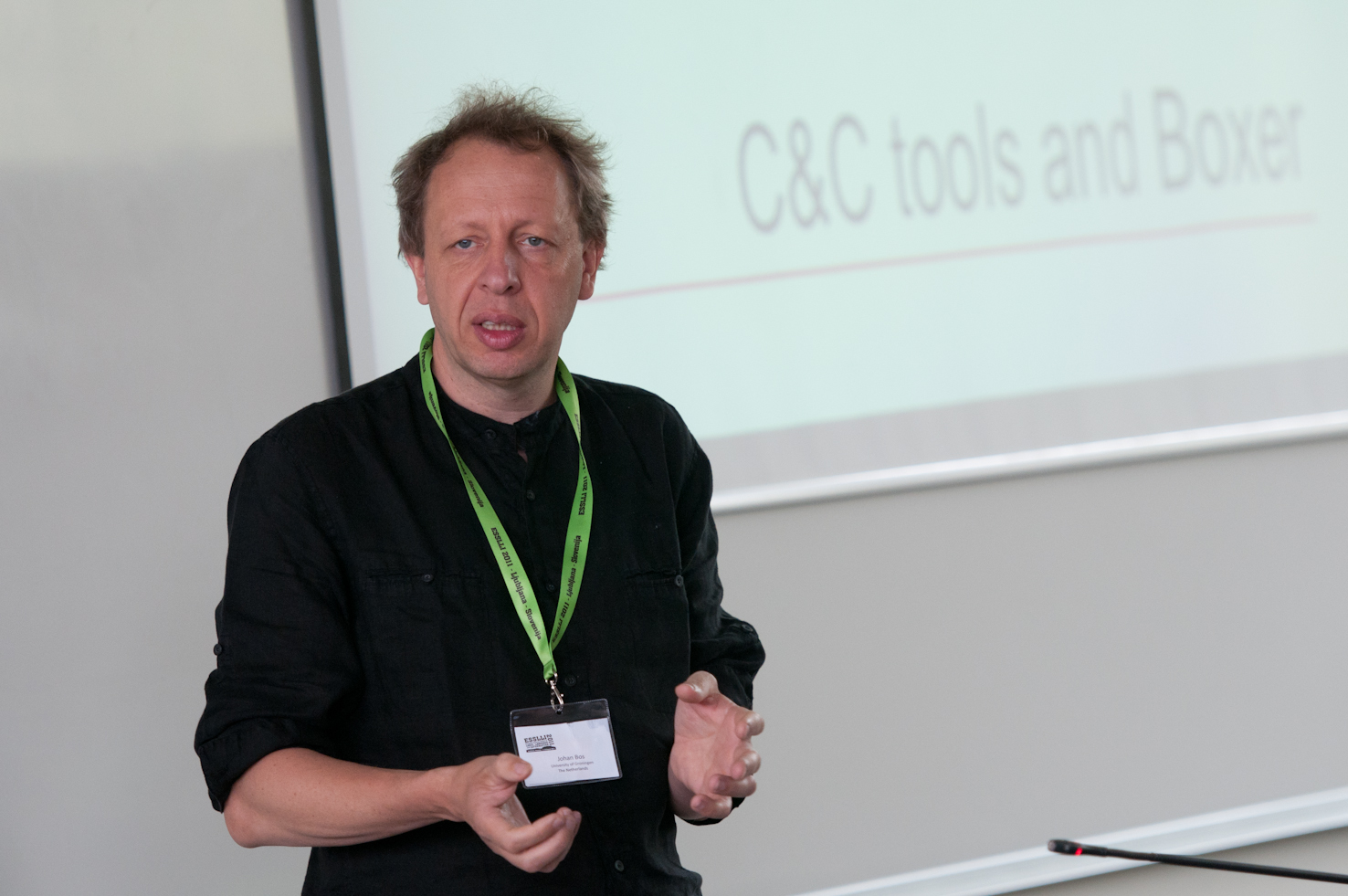 Johan Bos合作论文数University of Groningen9
 Bob Coecke合作论文数Department of Computer Science, University of Oxford;Wolfson College, University of Oxford;Quantinuum;Perimeter Institute8
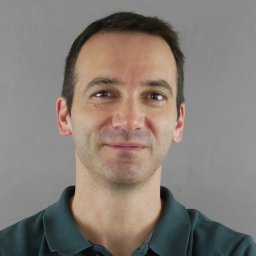 Martin Bruderer合作论文数Clarendon Laboratory;University of Oxford;Clarendon Laboratory, University of Oxford8
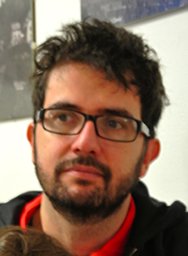 Andrea Perucchi合作论文数Elettra Sincrotrone Trieste7
 Bonnie Webber合作论文数Institute for Language, Cognition and Computation, School of Informatics, University of Edinburgh;The Human Communication Research Centre7
 Mehrnoosh Sadrzadeh合作论文数Dept of Computer Science, University College London7
 Dimitris G. Angelakis合作论文数Centre for Quantum Computation;Department of Applied Mathematics and Theoretical Physics;University of Cambridge;Centre for Quantum Computation, University of Cambridge7
 Giovanni Cotugno合作论文数6
 Luana Bulat合作论文数University of Cambridge6
 Hiroshi Okamoto (岡本博)合作论文数Okamoto&Kida Lab., Department of Advanced Materials Science, Graduate School of Frontier Sciences, The University of Tokyo6
 Giulio Nicola Cerullo合作论文数Dipartimento di Fisica, Politecnico di Milano6
 Phil Blunsom合作论文数St Hugh's College, University of Oxford;Cohere6
 Mauro Riccò合作论文数Dipartimento di Scienze Matematiche, Fisiche e Informatiche, Università di Parma6Wenduan Xu合作论文数6
 Daniele Pontiroli合作论文数Dipartimento Fis, Univ Parma6
 Jean Maillard合作论文数Facebook AI Research6A. Cantaluppi合作论文数5
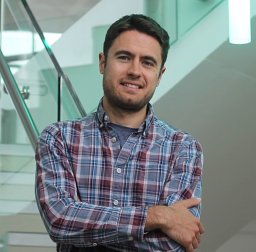 Charles Sayers合作论文数Dipartimento Fis, Politecn Milan5
 Konstantinos Meichanetzidis合作论文数Univ Leeds, Sch Phys & Astron, Leeds LS2 9JT, W Yorkshire, England5
 Mark T. Mitchison合作论文数Trinity Coll Dublin5
 Sean Tull合作论文数Quantum Computing, Cambridge5
 Di Pietro, P.合作论文数5Hamoon Hedayat合作论文数5
 Miles Osborne合作论文数Epistemic AI5Tatsuo Hasegawa合作论文数5
 Oliver Lemon合作论文数Mathematics and Computer Science
Heriot-Watt University5
Oliver Lemon合作论文数Mathematics and Computer Science
Heriot-Watt University5 Jasper Van Wezel合作论文数Inst Theoret Phys, Univ Amsterdam5
 Ching-Yun Chang合作论文数Amazon5
 Claudia Dallera合作论文数Dipartimento di Fisica, Politecnico di Milano5
 J. Prior合作论文数Institute for Mathematical Sciences;Imperial College London;Institute for Mathematical Sciences, Imperial College London5
 Ettore Carpene合作论文数Istituto di Fotonica e Nanotecnologie Consiglio Nazionale delle Ricerche(CNR-IFN)5Alexander Klein合作论文数5




