New 40Ar/39Ar and U/Pb geochronology constrains the depositional age of the Middle Miocene fossil locality known as Napudet on the west side of Lake Turkana in Kenya. Napudet is the type locality for Nyanzapithecus alesi, represented by a remarkably complete fossil skull of an infant ape. Abundant fossil trees in the stratigraphic section (“Emunyan beds”) from which the N. alesi specimen was exhumed indicate that Napudet was a Middle Miocene forest. 40Ar/39Ar geochronology from basalt flows brackets the depositional age of the Emunyan beds between 14.05 ± 0.34 Ma and 13.52 ± 0.13 Ma (2σ). A laser ablation U/Pb dating approach based on geochemical image mapping of carbonate petrified wood found within the Emunyan beds yields ages of 13.19 ± 0.61 Ma using a Tera-Wasserburg diagram to correct for common Pb and 14.11 ± 0.95 Ma using a total−Pb/U−Th isochron (2σ). Both ages are consistent with the bracketing basalts and provide an opportunity to examine different approaches for dating carbonates. Carbonate U/Pb dating represents an exciting avenue for directly dating terrestrial sequences.
Additional discussion of U/Pb sampling and methods, additional photographs, 40Ar/39Ar inverse isochron plots, and U/Pb standard and elemental plots.
We present evidence that the Einstein relation (ER) breaks down completely in pure water and dilute aqueous solutions under strong centrifugation fields at 40 oC. Isotopologues (e.g., H2O-18) and solutes migrate at a speed of only 5% of that predicted based on the ER. The ER is restored with the addition of solutes above a transition concentration (ct). We further discovered a new scaling law between the solute's partial molar density, the centrifugal acceleration, and ct, which can be quantitatively described by a two-phase model in analog to the Avrami model for phase transformation. The breakdown may stem from long-range dipole interactions or the hydrogen bond network in water, which are disrupted by the presence of solutes. This report shows that studying transport under centrifugation can be a new strategy to understand fundamental transport properties and complex interactions in liquids.
The Antarctic ice sheet blankets >99% of the continent and limits our ability to study how subglacial geology and topography have evolved through time. Ice- rafted dropstones derived from the Antarctic subglacial continental interior at different times during the late Cenozoic provide valuable thermal history proxies to understand this geologic history. We applied multiple thermochronometers covering a range of closure temperatures (60- 800 C-degrees) to 10 dropstones collected during Integrated Ocean Drilling Program (IODP) Expedition 318 in order to explore the subglacial geology and thermal and exhumation history of the Wilkes Subglacial Basin. The Wilkes Subglacial Basin is a key target for study because ice- sheet models show it was an area of ice- sheet retreat that significantly contributed to sea- level rise during past warm periods. Depositional ages of dropstones range from early Oligocene to late Pleistocene and have zircon U-Pb or Ar-40/Ar-39 ages indicating sources from the Mertz shear zone, Adelie craton, Ferrar large igneous province, and Millen schist belt. Dropstones from the Mertz shear zone and Adelie craton experienced three cooling periods (1700- 1500 Ma; 500- 280 Ma; 34-0 Ma) and two periods of extremely slow cooling rates (1500- 500 Ma; 280- 34 Ma). Low- temperature thermochronometers from seven of the dropstones record cooling during the Paleozoic, potentially recording the Ross or Pan- African orogenies, and during the Mesozoic, potentially recording late Paleozoic to Mesozoic rifting. These dropstones then resided within similar to 500 m of the surface since the late Paleozoic and early Mesozoic. In contrast, two dropstones deposited during the mid- Pliocene, one from the Mertz shear zone and one from Adelie craton, show evidence for localized post- Eocene glacial erosion of >= 2 km.
Synchrotron X-ray fluorescence microtomography can non-destructively image the three-dimensional distribution of several trace elements in whole apatite crystals at the resolution of 1 mu m3. This allows for precise determination of the physical geometry of a crystal and the quantification of the relative abundance of the radioactive parent nuclides uranium and thorium with high fidelity. We use these data to develop a more precise alpha ejection correction for (U-Th) / He thermochronology and high-resolution models of apatite crystals that are the foundation for a new generation of three-dimensional diffusion modeling. The application of synchrotron radiation to non-destructive imaging of minerals used for geochronology sheds light on causes of long-standing unresolved problems in the field that are rooted in previously unmeasurable parent nuclide zonation, especially the pervasive overdispersion of single-crystal ages.
Determining the exact age of volcanic activity in the Northern Taiwan Volcanic Zone (NTVZ) is essential for comprehending Taiwan's tectonic evolution. The timing and duration of the volcanic processes that formed the NTVZ remain uncertain despite the availability of geochronological, geochemical, and geophysical data. While extensive efforts have been directed towards investigating the age of the Tatun Volcanic Group, the primary feature of the NTVZ, many other aspects require further examination. This study concentrates on two offshore islets in the northern region of the NTVZ. We present new 40Ar/39Ar ages of 0.252 +/- 0.018 Ma for a lava flow, representing an early stage of volcanic activity, and 0.118 +/- 0.012 Ma for a dike, representing the latest stage of volcanic activity around Pengjia Islet. A sample collected from Mianhua Islet did not yield a reasonable age due to high uncertainty, likely attributable to young and low radiogenic argon. Field observations support the interpretation that volcanic activity on both islets is considerably younger than previously estimated. This study corroborates the hypothesis from geophysical studies that submarine NTVZ features to record a potentially active magmatic reservoir offshore of northern Taiwan. By refining our understanding of spatio-temporal patterns in volcanic activity, this study contributes to volcanic hazard assessment in Taiwan and surrounding areas.
There is a consensus that volcanism along the East African Rift System (EARS) is related to plume activities. However, because of our limited knowledge of the local lithospheric mantle, the dynamics of the plume are poorly constrained by magma chemistry. The Turkana Basin is one of the best places to study plume‐related volcanism because the lithospheric mantle there is unusually thin. New Ar‐Ar geochronology and geochemical data on lavas from western Turkana show that Eocene volcanics have relatively low 206 Pb/ 204 Pb (<19.1) and high εNd (>3.78). Their relatively high Ba/Rb (35–78) ratios suggest contributions from the shallow lithospheric mantle. Oligo‐Miocene Turkana volcanics have HIMU‐ and EMI‐ type enriched mantle signatures with overall lower Ba/Rb ratios, which is consistent with partial melting of plume material. Pliocene and younger Turkana volcanics have low Ba/Rb and Sr‐Nd‐Pb isotope ratios that resemble those of Ethiopian volcanics with elevated 3 He/ 4 He ratios. This temporal variation can be reconciled with a layered plume model where an outer layer of ancient recycled oceanic crust and sediment overlies more primitive lower mantle material. Beneath Ethiopia, the outer layer of the plume is either missing or punctured by the delamination of the thicker overlying lithospheric mantle at ca. 30 Ma, an event that would have facilitated the rapid upwelling of the inner portion of the plume and triggered the Ethiopian flood volcanism. The outer layer of the plume may be thicker in the southern EARS, which could explain the occurrence of young HIMU‐ and EMI‐type volcanics with primordial noble gas signatures.
Archean rocks exposed in the Beartooth Mountains, Montana and Wyoming, have experienced a complex >2.5 Gyr thermal history related to the long‐term geodynamic evolution of Laurentia. We constrain this history using “deep‐time” thermochronology, reporting zircon U‐Pb, biotite 40 Ar/ 39 Ar, and zircon and apatite [U‐Th(‐Sm)]/He results from three transects across the basement‐core of the range. Our central transect yielded a zircon U‐Pb concordia age of 2,805.6 ± 6.4 Ma. Biotite 40 Ar/ 39 Ar plateau ages from western samples are ≤1,775 ± 27 Ma, while those from samples further east are ≥2,263 ± 76 Ma. Zircon (U‐Th)/He dates span 686.4 ± 11.9 to 13.5 ± 0.3 Ma and show a negative relationship with effective uranium—a proxy for radiation damage. Apatite (U‐Th)/He dates are 109.2 ± 23.9 to 43.6 ± 1.9 Ma and correlate with sample elevation. Multi‐chronometer Bayesian time‐temperature inversions suggest: (a) Cooling between ∼1.90 and ∼1.80 Ga, likely related to Big Sky orogeny thermal effects; (b) Reheating between ∼1.80 Ga and ∼1.35 Ga consistent with Mesoproterozoic burial; (c) Cooling to ≤100°C between Mesoproterozoic and early Paleozoic time, likely reflecting continental erosion; (d) Variable Paleozoic–Jurassic cooling, possibly related to Paleozoic tectonism and/or low eustatic sea level; (e) Rapid Cretaceous–Paleocene cooling, preceding accepted proxies for flat‐slab subduction; (f) Eocene–Miocene reheating consistent with reburial by Cenozoic volcanics and/or sediments; (g) Post‐20 Ma cooling consistent with Neogene development of topographic relief. Our results emphasize the utility of multi‐chronometer thermochronology in recovering complex, non‐monotonic multi‐billion‐year thermal histories.
A general method of separating isotopes by centrifuging dissolved chemical compounds in a liquid is introduced. This technique can be applied to almost all elements and leads to large separation factors. The method has been demonstrated in several isotopic systems including Ca, Mo, O, and Li with single-stage selectivities of 1.046 to 1.067 per neutron mass difference (e.g., 1.43 in 40Ca/48Ca), which are beyond the capabilities of various conventional methods. Equations are derived to model the process, and the results agree with those of the experiments. The scalability of the technique has been demonstrated by a three-stage enrichment of 48Ca with a total 40Ca/48Ca selectivity of 2.43, and the scalability is more broadly supported through analogies to gas centrifuge, whereby countercurrent centrifugation can further multiply the separation factor by 5 to 10 times per stage in a continuous process. Optimal centrifuge conditions and solutions can achieve both high-throughput and highly efficient isotope separation.
W ith a half-life of 1.25 billion years, potassium-40 does not decay often, but its decays have a big impact. As a relatively common isotope (0.012% of all potassium) of a very commonmetal (2.4% bymass of Earth’s crust), potassium-40 is one of the primary sources of radioactivity we encounter in daily life. Its decays are the primary source of argon-40, which makes up almost 1% of the atmosphere, and the copious amount of heat released from these decays threw off early estimates of the age of Earth made by Lord Kelvin. Potassium-40 is largely responsible for the meager radioactivity in our food (such as bananas), and it is a significant source of noise in some highly sensitive particle physics detectors. This isotope and its decay products are also useful tools in dating rocks and geological processes that go back to the earliest parts
The K/Ar chronology of glauconite pellets is a long-used method for directly dating marine sedimentary deposits. Many papers have explored the processes that form glauconite and the factors that lead to greater reliability in the ages. Although K/Ar ages of glauconite are generally in agreement with other measures of stratigraphic age, there are examples of occurrences with ages too old and examples with ages too young. This paper seeks to build on the accumulated knowledge of glauconite, using synchrotron radiation to non-destructively characterize individual pellets and then consecutively measure the argon and potassium to obtain a K/Ar age. This strategy provides the advantage of measurements on a single aliquot while avoiding recoil loss of 40Ar in the nuclear reactor during irradiation for 40Ar/39Ar dating. We have used the glauconite reference material GL-O-1 to showcase several non-destructive methods for evaluating the maturity of individual pellets. In our argon measurements, we have found that the radiogenic argon concentration of large bulk samples underestimates the values for individual visually mature pellets, and we determined a K/Ar age of 101.0 ± 0.3 Ma (1σ SEM), M.S.W.D. 0.54 from 15 of 16 visually mature individual pellets. This age is 6% older than the reference value of 95.03 ± 1.11 Ma (1σ), and it is in good agreement with constraints from the U-Pb dating of volcanic minerals near the Albian–Cenomanian boundary.
This study describes 16 well-dated, terrestrial glacial sedimentary cycles deposited during astronomically paced climate cycles from the termination of the Miocene Climatic Optimum (MCO) through the middle Miocene Climate Transition (MMCT) (15.1−13.8 Ma) in the Friis Hills, Transantarctic Mountains, Antarctica. Three locations were continuously cored (79% recovery) to a maximum depth of 50.48 m through a succession of interbedded till sheets and fossil-bearing, fluvio-lacustrine sediments. A composite chronostratigraphic framework is presented for the cores based on the previous mapping, a seismic refraction survey that defines basin geometry, and a new, integrated age model based on paleomagnetic stratigraphy that is constrained by radioisotopic 40Ar/39Ar numeric ages on two newly identified silicic tephra. The paleoecologic and sedimentologic characteristics of organic-rich lithologies are relatively consistent up-section, which implies that successively younger interglacial deposits during the MMCT represented broadly similar environmental and climatic conditions. During these interglacials, the Friis Hills hinterland was likely ice-free. Major disconformities in the section suggest a transition to colder climates, and after ca. 14.6 Ma, thicker, more extensive and erosive ice cover occurred across the Friis Hills during glacial episodes. Diamictites in the upper three cycles suggest that climate cooled and became drier after ca. 14.2 Ma. However, cyclical retreat of the ice and a return to warm climate conditions during interglacials continued through ca. 13.9 Ma. These direct records reflect a highly variable East Antarctic Ice Sheet margin but show that the ice margin became progressively more extensive during successive glacial intervals, which is consistent with a cooling trend toward more glacial values in the far-field benthic foraminifera δ18O proxy ice volume and temperature record. Age constraints show that glacial-interglacial variability at the terrestrial margin of the East Antarctic Ice Sheet was primarily paced by astronomical precession (∼23 k.y.) through the onset of the MMCT (15−14.7 Ma). Precession-driven cycles are modulated by short-period (∼100 k.y.) eccentricity cycles. Intervals of maximum eccentricity (high seasonality) coincide with sedimentary cycles comprising thin diamictites and relatively thick interglacial sandstone and mudstone units. Intervals of minimum eccentricity (low seasonality) coincide with sedimentary cycles comprising thick diamictites and relatively thin interglacial sedimentary deposits. Major disconformities in the Friis Hills succession that span more than ∼100 k.y. reflect episodes of expansion of erosive ice across, and well beyond, the Transantarctic Mountains and coincide with nodes in eccentricity (∼400 k.y.). These relationships suggest that during relatively warm intervals in the middle Miocene, the East Antarctic Ice Sheet expanded and contracted over 100 k.y. cycles, while its margins continued to fluctuate at higher (∼23 k.y.) frequency. After 14.5 Ma, obliquity is the dominant frequency in δ18O records, marking a period during which large regions of the Antarctic Ice Sheet grounded in marine environments.
At present, the Basin and Range of the western USA is arid, but geologic studies show evidence of past wetness. The timing of these wetter conditions reveals a close association with glacial conditions. This association has led to the hypothesis of a causal link between glacial climate and regional wetness, but poor age control on the onset of regional wetness thwarts a test of this hypothesis. Here we determine the start of the most recent interval of persistent wetness in the Mono Basin, which is a hydrologically closed depression that sits at the west-central edge of the Basin and Range. The most recent emergence of persistent wetness in the Mono Basin is stratigraphically correlated with the depositional age of Ash 19—a rhyolitic ash bed that represents the oldest tephra of the Wilson Creek Formation and one of the earliest-known products of explosive volcanic activity from the Mono Craters. We constrain the depositional age of Ash 19 by using the U/Th disequilibrium dating method to date carbonates that are younger and older than Ash 19. Our U/Th dating results show that Ash 19 was deposited before the formation of a cross-cutting carbonate bed dated to 69.2 ± 0.3 ka but after an underlying carbonate tufa dated to 67.4 ± 3.5 ka, which suggests that the start of wetness in the Mono Basin was contemporary with the inception of the Last Glaciation—the beginning of Marine Isotope Stage 4—at ca. 70 ka. This finding corroborates the hypothesis of a link between glacial climate and regional wetness.
Abstract. A pervasive challenge in noble gas geochemistry is to ensure that analytical techniques do not modify the composition of the noble gases in the samples. Noble gases are present in the atmosphere and are used in a number of manufacturing procedures and by laboratory equipment. Of particular concern is the introduction of atmospheric or laboratory noble gases to samples during preparation before samples are placed in a vacuum chamber for analysis. Recent work has shown the potential for contamination of crushed samples with air-derived He that is not released by placing the samples under vacuum at low temperature. Using pure He gas as a tracer, we show that the act of crushing samples to a fine powder itself can introduce He contamination, but that this is easily avoided by crushing under liquid or in an inert atmosphere. Because the He is trapped during crushing, the same concern does not extend to samples that are naturally fine-grained when collected. The degree of He contamination even from crushing samples to sizes smaller than typically used for geochronology is insignificant for samples at least 1 Ma and with more than 1 ppm U when the guidelines outlined here are followed.
 Sidney Rasbury Hemming合作论文数Department of Earth and Environmental Sciences, Lamont-Doherty Earth Observatory, Columbia University37
 Stuart N. Thomson合作论文数Department of Geosciences, University of Arizona10
 Peter Reiners合作论文数Department of Geosciences, College of Sciences, University of Arizona9
 Tina Van De Flierdt合作论文数Institute for Isotope Geology and Mineral Resources, ETH-Zentrum9
 Steven L. Goldstein合作论文数Department of Earth and Environmental Sciences, Columbia University;Lamont-Doherty Earth Observatory, Columbia Climate School, Columbia University8
 George E. Gehrels合作论文数Department of Geosciences, College of Science, University of Arizona7
 E. Troy Rasbury合作论文数Department of Earth and Space Sciences, State University of New York7
 Francis Sousa合作论文数Coll Earth Ocean & Atmospher Sci, Oregon State Univ6
 Kenneth A. Farley合作论文数Division of Geological and Planetary Sciences, California Institute of Technology6
 Stefanie Brachfeld合作论文数Montclair State University6
 Gregory A. Henkes合作论文数Department of Earth and Planetary Sciences, Johns Hopkins University5
 Kathy J. Licht合作论文数5Kevin Hatton合作论文数4
 Mae Saslaw合作论文数4
 Christine S Siddoway合作论文数Department of Geology, Colorado College4
 Genevieve L. Coffey合作论文数GNS Sci Earth Struct & Proc3Heng Chen合作论文数Lamont-Doherty Earth Observatory, Columbia University3
 Trevor J. Williams合作论文数Department of Medicine, Monash University;Alfred Hospital3
 Stefan Nicolescu合作论文数Department of Geology and Geophysics, Yale University3Tanzhuo Liu合作论文数3
 Gisela Winckler合作论文数Geochemistry Division, Lamont-Doherty Earth Observatory, Columbia Climate School, Columbia University in the City of New York;Trace lsotope and Noble Gas Laboratory, Columbia Climate School, Columbia University in the City of New York;Department of Earth and Environmental Sciences, Columbia University in the City of New York3
 Heather M. Savage合作论文数Department of Earth and Planetary Sciences, University of California3Pratigya J. Polissar合作论文数Department of Geosciences, University of Massachusetts3
 Hayden Miller合作论文数2e a steponaitis合作论文数2Kathleen M. Wooton合作论文数2Patricia Princehouse合作论文数2Bailey Nordin合作论文数2
 Chance B. Ronemus合作论文数2
 Sara Mana合作论文数Department of Geological Sciences, Salem State University2Guleed Ali合作论文数Earth Observatory of Singapore, Nanyang Technological University2
 Jenna L Everard合作论文数Sergievsky Ctr, Columbia Univ2
 M. Gevedon合作论文数Dept Geol Sci, Univ Texas2
 Florian Hofmann合作论文数Div Geol & Planetary Sci, CALTECH2
 Catherine C. Beck合作论文数Geosci Dept, Hamilton Coll2e l pierce合作论文数2Isaiah Nengo合作论文数SUNY Stony Brook, Turkana Basin Inst, Stony Brook, NY 11794 USA2
 Wang Xianfeng合作论文数The Asian School of the Environment, College of Science, Nanyang Technological University;Earth Observatory of Singapore, Nanyang Technological University2
 Ryan Tappero合作论文数2
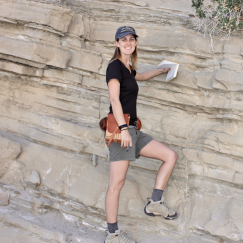 Devon A. Orme合作论文数Montana State University2Brent D. Turrin合作论文数Department of Geology and Geophysics, University of California2
 James B. Rossie合作论文数Department of Anthropology, Stony Brook University2
 Gabrielle A. Russo合作论文数2Ellen R. Miller合作论文数2
 William Guenthner合作论文数Department of Geology, School of Earth, Society & Environment, College of Liberal Arts and Sciences, University of Illinois at Urbana-Champaign2Carl C. Swisher合作论文数2
 Alex N. Halliday合作论文数Earth Institute, Columbia Climate School, Columbia University2Paul Northrup合作论文数Environmental Sciences Department, Brookhaven National Laboratory2
 Craig S. Feibel合作论文数Department of Geological Sciences, Rutgers University2




