The Magnetic Recoil Spectrometer (MRS) on the National Ignition Facility is used to measure the neutron spectrum from deuterium-tritium fueled inertial confinement fusion implosions via n-d elastic scattering and magnetic dispersion of recoil deuterons. From the MRS-determined neutron spectrum, the yield (Y_n), apparent ion temperature (T_i) and areal density (ρR) are determined. However, anomalous energy modulations in recoil deuterons have been observed in several high-yield indirect drive experiments (Y_n∼10^16-10^18). These observations raise concerns about their potential impact on the MRS-inferred performance metrics. Analytic calculations and particle-in-cell simulations are used to examine the possible beam-plasma instabilities, which indicate the two-stream instability as the driving mechanism behind energy modulations. Based on a statistical analysis of synthetic deuteron spectra, the modulations-induced errors are found to be within the errors of the determined Y_n, T_i and ρR values and thus do not have a significant impact on the MRS measurement.
This paper presents a simple physics-based model for the interpretation of key metrics in laser direct drive. The only input parameters required are target scale, in-flight aspect ratio, and beam-to-target radius, and the importance of each has been quantified with a tailored set of cryogenic implosion experiments. These analyses lead to compact and accurate predictions of the fusion yield and areal density as a function of hydrodynamic stability, and they suggest new ways to take advantage of direct drive. To provide examples, we discuss how the inferred mix width behaves relative to theory and then show how it could be exploited to perform a direct drive implosion with a Lawson metric or χ_{noα} of 0.24±0.02-using a novel parameter space at high velocities and beam radii on the OMEGA laser-that projects to ignition at a laser energy of ≤2.0 MJ.
Improved laser illumination uniformity drives shocks and implosions to create more extreme high energy density environments. Predominantly, the geometry of experiments that can be performed is dictated by the layout of beams at laser facilities, limiting interfacility and multiscale investigations. This Letter presents the first automated, algorithmic approach for generating illumination configurations for high energy density experiments. The method is demonstrated in comparison to a polar direct-drive solid target experiment at the National Ignition Facility. The new illumination configuration is simulated to create greater than x3 higher peak pressure and almost x2 higher density by maintaining better shock uniformity. The optimization process is performed with reduced computational expense and isotropic plasma profiles while accounting for the impact of cross-beam energy transfer.
On December 5, 2022, an indirect drive fusion implosion on the National Ignition Facility (NIF) achieved a target gain G_{target} of 1.5. This is the first laboratory demonstration of exceeding "scientific breakeven" (or G_{target}>1) where 2.05 MJ of 351 nm laser light produced 3.1 MJ of total fusion yield, a result which significantly exceeds the Lawson criterion for fusion ignition as reported in a previous NIF implosion [H. Abu-Shawareb et al. (Indirect Drive ICF Collaboration), Phys. Rev. Lett. 129, 075001 (2022)PRLTAO0031-900710.1103/PhysRevLett.129.075001]. This achievement is the culmination of more than five decades of research and gives proof that laboratory fusion, based on fundamental physics principles, is possible. This Letter reports on the target, laser, design, and experimental advancements that led to this result.
A new, efficient, algorithmic approach to create illumination configurations for laser driven high energy density physics experiments is proposed. The method is applied to a polar direct drive solid target experiment at the National Ignition Facility (NIF), where it is simulated to create more than x2 higher peak pressure and x1.4 higher density by maintaining better shock uniformity. The analysis is focused on projecting shocks into solid targets at the NIF, but with minor adaptations the method could be applied to implosions, other target geometries and other facilities.
An Omega-like beam configuration is considered where the 60-beam layout can be separated into two independent sub-configurations with 24 and 36 laser beams, each minimizing direct drive illumination non-uniformity. Two different laser focal spot profiles, one associated with each configuration, are proposed to apply the zooming technique in order to increase the laser-target coupling efficiency. This approach is used by 1D hydrodynamics simulations of the implosion of a direct-drive capsule characterized by a relatively large aspect ratio A = 7 and an optimized laser pulse shape delivering a maximum of 30 TW and 30 kJ, with different temporal pulse shapes in each of the two sets of beams. It is shown that zooming allows for an optimistic 1D thermonuclear energy gain greater than one while without zooming the thermonuclear gain remains largely below one. While this is incompatible with the as-built Omega laser, it provides a promising option for a future intermediate-energy direct drive laser system.
Following indirect-drive experiments which demonstrated promising performance for low convergence ratios (below 17), previous direct-drive simulations identified a fusion-relevant regime which is expected to be robust to hydrodynamic instability growth. This paper expands these results with simulated implosions at lower energies of 100 and 270 kJ, and 'hydrodynamic equivalent' capsules which demonstrate comparable convergence ratio, implosion velocity and in-flight aspect ratio without the need for cryogenic cooling, which would allow the assumptions of one-dimensional-like performance to be tested on current facilities. A range of techniques to improve performance within this regime are then investigated, including the use of two-colour and deep ultraviolet laser pulses. Finally, further simulations demonstrate that the deposition of electron energy into the hotspot of a low convergence ratio implosion through auxiliary heating also leads to significant increases in yield. Results include break even for 1.1 MJ of total energy input (including an estimated 370 kJ of short-pulse laser energy to produce electron beams for the auxiliary heating), but are found to be highly dependent upon the efficiency with which electron beams can be created and transported to the hotspot to drive the heating mechanism.
For more than half a century, researchers around the world have been engaged in attempts to achieve fusion ignition as a proof of principle of various fusion concepts. As recently reported, a burning plasma state, where the alpha-heating in the plasma is the primary source of heating, was achieved in laboratory experiments. Following the Lawson criterion, an ignited plasma is one where the fusion heating power is high enough to overcome all the physical processes that cool the fusion plasma, creating a positive thermodynamic feedback loop with rapidly increasing temperature. In inertially confined fusion, ignition is a state where the fusion plasma can begin ``burn propagation'' into surrounding cold fuel, enabling the possibility of high energy gain. While ``scientific breakeven'' (i.e. unity target gain) has not yet been achieved, this talk reports the first controlled fusion experiment on the National Ignition Facility to produce capsule gain greater than unity (here 5.8) and reach ignition by many different formulations of the Lawson criterion. In the talk, we will discuss some key basic physics inertial confinement fusion (ICF) principles behind the burning plasma and ignition results as well as discuss future challenges.
At the Laboratory for Laser Energetics' Omega Laser Facility, thin plastic shells were directly driven with ∼20 kJ resulting in a time-integrated x-ray yield of ∼1012 ph/eV/sr at 7 keV. Using temporally, spatially, and spectrally discriminating diagnostics, three x-ray emission phases were identified: corona emission produced by the laser ablation of the shell, core stagnation, and afterglow emission due to the expanding hot material after stagnation. The newly measured corona and afterglow emission phases account for ∼25% of the total x-ray signal and produce x-ray emission at a different time or larger radius than previously considered. The resulting implications of this additional emission for x-ray absorption fine structure spectroscopy are discussed. Finally, improvements to the laser drive intensity and uniformity produced a factor-of-2 increase in total x-ray emission while decreasing the size of the stagnated core.
Polar direct drive neutron source experiments were performed at the National Ignition Facility showing substantial improvement in total neutron yield and efficiency of conversion of laser energy to fusion output. Plastic capsules 3–4 mm in diameter were filled with 1.5 mg/cc of deuterium–tritium (DT) fuel and imploded with laser beam pointing and defocus designed to compensate for polar asymmetry introduced by the facility beam entrance angles. Radiation-hydrodynamics simulations were employed to optimize the multi-dimensional laser and target parameter space, within facility and target fabrication constraints. Ensembles of 1D simulations tuned to match the outputs of early shots in the series were used to design subsequent shots in the series. This allowed the later shots to be designed based on empirically motivated sensitivities to laser and target input parameters, while eliminating the need to explicitly model phenomena such as hydrodynamic instabilities and nonlinear laser–plasma interactions. One experiment with a 3.0 mm diameter CH capsule produced 13.6 kJ (4.81 × 10¹⁵ DT neutrons) from a laser input below the NIF optics damage threshold at 585 kJ, 328 TW. Two experiments with 4.0 mm capsules produced 31.3 and 33.6 kJ of fusion output (1.11 × 10¹⁶ and 1.19 × 10¹⁶ DT neutrons) with 1.10 MJ, 390 TW and 1.26 MJ, 425 TW of laser input, respectively.
A new configuration is proposed for spherical hohlraums on OMEGA in which seven laser entrance holes (LEHs) are used-five around the equator and one at each pole [Farmer et al., Phys. Plasmas 26, 032701 (2019)]. This is known as the PEPR (pentagonal prism) hohlraum. A new view-factor code LORE is used to model the PEPR hohlraum and compare its performance with tetrahedral hohlraums shot on OMEGA. With optimization of beam pointings, the PEPR hohlraum produces a nonuniformity ranging from 1.1% (rms) at low albedos to 0.6% at high albedos. The tradeoffs between hohlraum-to-capsule ratio, uniformity, and background radiation temperature have been explored, and it has been shown that larger LEH radii on the poles can result in a modest improvement in uniformity. The seven-hole PEPR hohlraum is well matched to the OMEGA symmetry and promises to provide insight into the performance of spherical hohlraums including octahedral (six-LEH) hohlraums.
Experimental measurements using the OMEGA EP laser facility demonstrated direct laser acceleration (DLA) of electron beams to (505 ± 75) MeV with (140 ± 30) nC of charge from a low-density plasma target using a 400 J, picosecond duration pulse. Similar trends of electron energy with target density are also observed in self-consistent two-dimensional particle-in-cell simulations. The intensity of the laser pulse is sufficiently large that the electrons are rapidly expelled along the laser pulse propagation axis to form a channel. The dominant acceleration mechanism is confirmed to be DLA and the effect of quasi-static channel fields on energetic electron dynamics is examined. A strong channel magnetic field, self-generated by the accelerated electrons, is found to play a comparable role to the transverse electric channel field in defining the boundary of electron motion.
We examine the performance of pure boron, boron carbide, high density carbon, and boron nitride ablators in the polar direct drive exploding pusher (PDXP) platform. The platform uses the polar direct drive configuration at the National Ignition Facility to drive high ion temperatures in a room temperature capsule and has potential applications for plasma physics studies and as a neutron source. The higher tensile strength of these materials compared to plastic enables a thinner ablator to support higher gas pressures, which could help optimize its performance for plasma physics experiments, while ablators containing boron enable the possibility of collecting additional data to constrain models of the platform. Applying recently developed and experimentally validated equation of state models for the boron materials, we examine the performance of these materials as ablators in 2D simulations, with particular focus on changes to the ablator and gas areal density, as well as the predicted symmetry of the inherently 2D implosion.
The Scattered Light Time-history Diagnostic (SLTD) is being implemented at the National Ignition Facility (NIF) to greatly expand the angular coverage of absolute scattered-light measurements for direct- and indirect-drive inertial confinement fusion (ICF) experiments. The SLTD array will ultimately consist of 15 units mounted at a variety of polar and azimuthal angles on the NIF target chamber, complementing the existing NIF backscatter suite. Each SLTD unit collects and diffuses scattered light onto a set of three optical fibers, which transport the light to filtered photodiodes to measure scattered light in different wavelength bands: stimulated Brillouin scattering (350 nm-352 nm), stimulated Raman scattering (430 nm-760 nm), and ω/2 (695 nm-745 nm). SLTD measures scattered light with a time resolution of ∼1 ns and a signal-to-noise ratio of up to 500. Currently, six units are operational and recording data. Measurements of the angular dependence of scattered light will strongly constrain models of laser energy coupling in ICF experiments and allow for a more robust inference of the total laser energy coupled to implosions.
Cross-beam energy transfer (CBET) can significantly affect the energy coupling and symmetry of direct-drive implosions. We report on a series of direct-drive shots with 2.1 mm outer diameter capsules conducted on NIF for diagnostic development and calibration in which the wavelength separation (Δλ) between the inner and outer cone beams was varied. We observe a strong improvement in performance as Δλ is applied, with the nuclear yield increasing by up to a factor of 4×. Other data including the nuclear bang time and implosion symmetry suggest that increasing Δλ suppresses CBET and improves both the energy coupling and drive symmetry. These results provide a strong and important benchmark for CBET models applicable to direct-drive ignition designs.
Proton radiography is a well-established technique for measuring electromagnetic fields in high-energy-density plasmas. Fusion reactions producing monoenergetic particles, such as D3He, are commonly used as a source, produced by a capsule implosion. Using smaller capsules for radiography applications is advantageous as the source size decreases, but on the National Ignition Facility (NIF), this can introduce complications from increasing blow-by light, since the phase plate focal spot size is much larger than the capsules. We report a demonstration of backlighter targets where a "Saturn" ring is placed around the capsule to block this light. The nuclear performance of the backlighters is unperturbed by the addition of a ring. We also test a ring with an equatorial cutout, which severely affects the proton emission and is not viable for radiography applications. These results demonstrate the general viability of Saturn ring backlighter targets for use on the NIF.
 W Seka合作论文数146
 Robert L. McCrory合作论文数Department of Physics and Astronomy, School of Arts & Sciences, University of Rochester;Department of Mechanical Engineering, Hajim School of Engineering & Applied Sciences, University of Rochester100
 David D. Meyerhofer合作论文数Department of Physics and Astronomy, School of Arts & Sciences, University of Rochester;Experimental Division, Laboratory for Laser Energetics, University of Rochester87F. J. Marshall合作论文数83
 John M Soures合作论文数Laboratory for Laser Energetics;University of Rochester;Laboratory for Laser Energetics, University of Rochester78
 J. A. Delettrez合作论文数76Stanley Skupsky合作论文数75Thomas Sangster合作论文数University of Rochester73B. Yaakobi合作论文数69James P. Knauer合作论文数65
 Patrick Mckenty合作论文数Laboratory for Laser Energetics, University of Rochester62
 Valeri Goncharov合作论文数Department of Mechanical Engineering, Hajim School of Engineering & Applied Sciences, University of Rochester;Laboratory for Laser Energetics, University of Rochester61
 Reuben Epstein合作论文数Laboratory for Laser Energetics;University of Rochester;Laboratory for Laser Energetics, University of Rochester58
 P. B. Radha合作论文数Laboratory for Laser Energetics;University of Rochester;Laboratory for Laser Energetics, University of Rochester55
 Christian Stoeckl合作论文数Laboratory for Laser Energetics, University of Rochester53Rw Short合作论文数49
 Riccardo Betti合作论文数Department of Mechanical Engineering, Hajim School of Engineering & Applied Sciences, University of Rochester;Laboratory for Laser Energetics47t r boehly合作论文数46
 Robert L. Keck合作论文数46Dana Harold Edgell合作论文数46
 J. A. Marozas合作论文数Laboratory for Laser Energetics;University of Rochester;Laboratory for Laser Energetics, University of Rochester44
 Johan Frenje合作论文数Plasma Science and Fusion Center, Massachusetts Institute of Technology42
 David R. Harding合作论文数Laboratory for Laser Energetics, University of Rochester;Department of Chemical Engineering, Hajim School of Engineering & Applied Sciences, University of Rochester41
 Sean Regan合作论文数Department of Mechanical Engineering, Hajim School of Engineering & Applied Sciences, University of Rochester;Experimental Division, Laboratory for Laser Energetics, University of Rochester39
 R.D. Petrasso合作论文数High-Energy-Density Physics Division, Plasma Science and Fusion Center, Massachusetts Institute of Technology37
 Dustin Froula合作论文数Department of Physics and Astronomy, University of Rochester;Laboratory for Laser Energetics, University of Rochester36
 T. J. B. Collins合作论文数Laboratory for Laser Energetics;University of Rochester;Laboratory for Laser Energetics, University of Rochester35
 Vladimir Smalyuk合作论文数Lawrence Livermore National Laboratory33Igor V. Igumenshchev合作论文数Laboratory for Laser Energetics;University of Rochester;Laboratory for Laser Energetics, University of Rochester32Jason Frank Myatt合作论文数Laboratory for Laser Energetics;University of Rochester;Laboratory for Laser Energetics, University of Rochester31T. Kessler合作论文数30Jh Kelly合作论文数29
 Wolfgang Theobald合作论文数Department of Mechanical Engineering, Hajim School of Engineering & Applied Sciences, University of Rochester;Laboratory for Laser Energetics, University of Rochester28
 Chikang Li合作论文数Plasma Science and Fusion Center, Massachusetts Institute of Technology28
 Matthias Hohenberger合作论文数Dept. of Phys., Texas Univ.;c;Dept. of Phys., Texas Univ.26
 David K. Bradley合作论文数Physics Division, Lawrence Livermore National Laboratory25V Yu Glebov合作论文数25
 Suxing Hu (胡素兴)合作论文数Department of Mechanical Engineering, Hajim School of Engineering & Applied Sciences, University of Rochester;Department of Physics and Astronomy, University of Rochester;Laboratory for Laser Energetics, University of Rochester25s j loucks合作论文数24
 D.T. Michel合作论文数Lab Laser Energet, Univ Rochester22Pw Mckenty合作论文数21Lm Goldman合作论文数21Charles P. Verdon合作论文数21Pa Jaanimagi合作论文数20
 Andrew james Mackinnon合作论文数20
 Alex Shvydky合作论文数Laboratory for Laser Energetics, University of Rochester20
 Jeremy Schnittman合作论文数Department of Physics;Massachusetts Institute of Technology;Department of Physics, Massachusetts Institute of Technology20Andrei V Maximov合作论文数University of Rochester, University of Rochester19
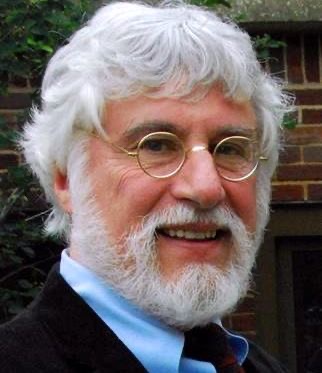 Fredrick Seguin合作论文数Plasma Science and Fusion Center, Massachusetts Institute of Technology19




