The detection of special nuclear materials (SNM) in commercial cargoes is a major objective in the field of nuclear security. In this work we investigate the use of two-neutron time-correlations from photo-fission using the Prompt Neutrons from Photofission (PNPF) detectors in Passport Systems Inc.’s (PSI) Shielded Nuclear Alarm Resolution (SNAR) platform for the purpose of detecting ∼5 kg quantities of fissionable materials in seconds. The goal of this effort was to extend the secondary scan mode of this system to differentiate fissile materials, such as highly enriched uranium, from fissionable materials, such as low enriched and depleted uranium (LEU and DU). Experiments were performed using a variety of material samples, and data were analyzed using the variance-over-mean technique referred to as Y2F or Feynman-α. Results were compared to computational models to improve our ability to predict system performance for distinguishing fissile materials. Simulations were then combined with empirical formulas to generate receiver operating characteristics (ROC) curves for a variety of shielding scenarios. We show that a 10 second screening with a 200 μA 9 MeV X-ray beam is sufficient to differentiate kilogram quantities of HEU from DU in various shielding scenarios in a standard cargo container.
A x-ray inspection system utilizing a continuous-wave 9 MeV rhodotron x-ray source for scanning cargo containers is presented. This system scans for contraband, anomalies, stowaway passengers, and nuclear threats for trucks and towed cargo containers. A transmission image is generated concurrently with a 3D image of the cargo, the latter presenting material information in the form of atomic number and density. Neutrons from photofission are also detected during each scan. In addition, nuclear resonance fluorescence detectors are capable of identifying specific isotopes. This system has recently been deployed at the Port of Boston.
A robust network of distributed sensors has been proposed in response to the Radiation Awareness and Interdiction Network (RAIN) Broad Agency Announcement (BAA) issued by DHS/DNDO in March of 2014. The testbed system is designed to detect, track, and identify potential threatening radiation sources in moving vehicles without interrupting the flow of traffic in typical highway scenarios. The algorithmic basis for the system depends on a number of data fusion methodologies to optimally combine and exploit multi-sensor, multi-modal data. Specifically, data-level fusion of radiation measurements is being used to enhance detection and identification of radiation sources, while extracted feature-level data from auxiliary video sensors is used both to improve computational speed and accuracy as well as provide operationally relevant source attribution information. An overview of the current development work will be provided in two parts: 1) A theoretical description of the data fusion algorithms and their expected utility will be provided; and 2) Performance results from both simulated and real measurements will be used to demonstrate the efficacy of a system using the proposed data fusion algorithms. The expected value of the testbed system using the advanced algorithms will also be discussed.
In response to the US Department of Homeland Security (DHS) Domestic Nuclear Detection Office's (DNDO) Small Business Innovative Research (SBIR), Phase 12.1 solicitation, Passport Systems, Inc. of Billerica, MA has demonstrated the feasibility of integrating a COTS Inertial Measurement Unit (IMU) with a portable radiation detector for improved radiation source search capabilities. The SBIR Phase I feasibility study integrated both the necessary hardware and algorithms and verified the utility of providing this new capability to an operator in search scenarios. Advanced algorithms combining IMU data with radiation measurements constrained source location and increased the efficacy of the search mission. An overview of the SBIR Phase I program will provide: 1) a description of the hardware and algorithm integration; 2) a summary of the expected system benefits; and 3) a review of the proof-of-concept demonstration developed during the program.
In response to the Domestic Nuclear Detection Office's (DNDO) BAA 09-102 Passport Systems, Inc. of Billerica, MA has developed and tested a prototype system of networked portable spectroscopic radiation detectors designed to improve the detection, localization, and identification of potential radiological threats. A system of this nature is primarily targeted to situations where it is not feasible to direct traffic through portal radiation detection systems, e.g. large events, search team objectives, etc. The capability to intelligently network individual portable detectors and fuse their data using advanced algorithms and COTS hardware has been shown within this program to significantly increase the effectiveness of an assortment of portable radiation detectors in a variety of NORM (naturally occurring radioactive material) backgrounds. An overview of current work will be provided in two parts: 1) A review of the system design, including trade space analysis, of both the hardware and algorithmic components; and 2) Presentation of data and results to date focusing on the improvement afforded by the networked data fusion.
Nuclear resonance fluorescence (NRF), a process by which a nucleus is excited by absorption of a specific quantum of energy and then deexcites via the emission of one or more. rays, may be applied to nondestructively measure the isotopic composition of a sample. NRF excitations in Pu-240 were identified in the energy range of 2.1 to 2.8 MeV using a 3-MeV bremsstrahlung source. Utilizing high-purity germanium detectors at backward angles, nine resonances in Pu-240 were identified in this energy range. The measured integrated cross sections range from 29 to 104 eV b. These resonances are of interest to nuclear structure physics and provide unique signatures for the assay of Pu-240 content for nuclear forensics, nuclear safeguards, and counterterrorism applications.
Transmission nuclear resonance fluorescence measurements were made on targets consisting of Pb and depleted U with total areal densities near 86g/cm2. The 238U content in the targets varied from 0% to 8.5% (atom fraction). The experiment demonstrates the capability of using transmission measurements as a non-destructive technique to identify and quantify the presence of an isotope in samples with thicknesses comparable to the average thickness of a nuclear fuel assembly. The experimental data also appear to demonstrate the process of notch refilling with a predictable intensity. Comparison of measured spectra to previous backscatter 238U measurements indicates general agreement in observed excited states. Evidence of two new 238U excited states and possibly a third state have also been observed.
Studies of nuclear resonance fluorescence based applications are presented. Important for these applications are data for isotopes such as {sup 239}Pu. Nuclear resonance fluorescence measurements of {sup 239}Pu were performed at the free electron laser facility at UC Santa Barbara using photons from a bremsstrahlung beam with an endpoint energies between 4.0 MeV and 5.5 MeV. Though no discrete states with significant confidence level were measured, we have excluded the region above 27(3) eV-barns, or 4-sigma, where we would expect only a small chance of false positives. Details of the measurements and the results are presented here.
International Journal of Modern Physics AVol. 26, No. 10n11, pp. 1713-1735 (2011) SPECIAL ISSUE: Fixed Field Alternating Gradient Accelerators: Proceedings of the International Conference (FFAG'09) Dedicated to Alessandro G. Ruggiero for His Many Contributions to the Rebirth of the FFAG Fermilab, USA, 21–25 September 2009; Editors: C. Johnstone, M. Berz and P. SnopokNo AccessACCELERATORS FOR HOMELAND SECURITYWILLIAM BERTOZZI, WILBUR FRANKLIN, STEVE KORBLY, ROBERT J. LEDOUX, RUSTAM NIYAZOV, DAVID R. SWENSON, and ALEXEI KLIMENKOWILLIAM BERTOZZIPassport Systems, Inc., 70 Treble Cove Road, North Billerica, MA 01862, USA, WILBUR FRANKLINPassport Systems, Inc., 70 Treble Cove Road, North Billerica, MA 01862, USA, STEVE KORBLYPassport Systems, Inc., 70 Treble Cove Road, North Billerica, MA 01862, USA, ROBERT J. LEDOUXPassport Systems, Inc., 70 Treble Cove Road, North Billerica, MA 01862, USA, RUSTAM NIYAZOVPassport Systems, Inc., 70 Treble Cove Road, North Billerica, MA 01862, USA, DAVID R. SWENSONPassport Systems, Inc., 70 Treble Cove Road, North Billerica, MA 01862, USA, and ALEXEI KLIMENKOLos Alamos National Laboratory, Los Alamos, NM, USAhttps://doi.org/10.1142/S0217751X11053122Cited by:2 PreviousNext AboutSectionsPDF/EPUB ToolsAdd to favoritesDownload CitationsTrack CitationsRecommend to Library ShareShare onFacebookTwitterLinked InRedditEmail References Brian Fishbine, Los Alamos Research Quaterly (2003). Google ScholarJ. Ryneset al., NIM A 422(1-3), 895 (1999), DOI: 10.1016/S0168-9002(98)01039-0. Crossref, ISI, ADS, Google Scholar Imaging and Radiography with Nuclear Resonance Fluorescence and Effective-Z (EZ-3DTM) Determination; SNM Detection Using Prompt Neutrons from Photon Induced Fission; William Bertozzi, Richard Hasty, Alexei Klimenko, Stephen E. Korbly, Robert J. Ledoux and William Park; Application of Accelerators in Research and Industry: 20th Int. Conf., edited by F. D. McDaniel and B. L. Doyle; AIP Conference Proceedings 1099 . Google ScholarW. Bertozziet al., Phys. Rev. C 78, 041601(C) (2008), DOI: 10.1103/PhysRevC.78.041601. Crossref, Google ScholarC. P. Sargentet al., Phys. Rev. 137, B89 (1965), DOI: 10.1103/PhysRev.137.B89. Crossref, ADS, Google Scholar Donald W. Kerst and Keith R. Symon, Imparting Energy to Charged Particles, U. S. Patent 2,932,798, Apr. 12, 1960 . Google ScholarC. Johnstoneet al., Fixed Field Circular Accelerator Designs, PAC'99 p. 3068. Google Scholar C. Johnstone et al. , Nonscaling FFAG Variants for HEP and Medical Applications , Proceedings of PAC09 . Google Scholar C. Prior, Ed., ICFA Beam Dynamics Newsletter #43, August 2007 , http://www-bd-fnal.gov\icfabd\Newsletter43.pdf . Google Scholar You currently do not have access to the full text article. Recommend the journal to your library today! FiguresReferencesRelatedDetailsCited By 2Non-classical applications of chemical analysis based on nuclear activationM. Grdeń5 December 2019 | Journal of Radioanalytical and Nuclear Chemistry, Vol. 323, No. 2Overview of Accelerators with Potential Use in Homeland SecurityRobert W. Garnett1 Jan 2015 | Physics Procedia, Vol. 66 Recommended Vol. 26, No. 10n11 Metrics History PDF download
Nuclear resonance fluorescence is a physical process that provides an isotope-specific signature that could be used for the identification and characterization of materials. The technique involves the detection of prompt discrete-energy photons emitted from a sample that is exposed to MeV-energy photons. Potential applications of the technique range from detection of high explo- sives to characterization of special nuclear materials such as . We conducted a pair of measurements to search for a nuclear res- onance fluorescence response of above 3 MeV and of above 5 MeV using an 8 g sample of highly enriched uranium and a 90 g sample of depleted uranium. No new signatures were ob- served. The minimum detectable integrated cross section for varies from 4 eV b at 3 MeV up to 120 eV b at 8 MeV. Index Terms—Bremsstrahlung, gamma rays, nuclear physics, uranium.
Nuclear resonance fluorescence is a physical process that provides an isotope-specific signature that could be used for the identification and characterization of materials. The technique involves the detection of prompt discrete-energy photons emitted from a sample that is exposed to MeV-energy photons. Potential applications of the technique range from detection of high explosives to characteriz...
Measurements of states excited by nuclear resonance fluorescence in Np-237 were performed using a bremsstrahlung beam. Fifteen new states were observed in the region of 1.7 to 2.5 MeV. They can be used to detect or assay Np-237 nondestructively for applications in security and safeguards. The states are populated with similar strength as those states found previously in U-235 and Pu-239 but are spread out more in energy.
Hard photons well above 100GeV have to be generated in a future photon collider which essentially will be based on the infrastructure of the planned International Linear Collider (ILC). The energy of near-infrared laser photons will be boosted by Compton backscattering against a high-energy relativistic electron beam. For high effectiveness, a very powerful laser system is required that exceeds today’s stateof-the-art capabilities. In this paper a design of an auxiliary passive cavity is discussed that resonantly enhances the peak-power of the laser. The properties and prospects of such a cavity are addressed on the basis of the specifications for the European TeV Energy Superconducting Linear Accelerator (TESLA) proposal. Those of the ILC are expected to be similar. r 2006 Elsevier B.V. All rights reserved. PACS: 41.75.Lx; 42.60.Da; 42.55.Vc; 29.25.!t; 13.60.Fz
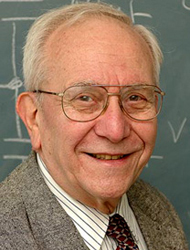 William Bertozzi合作论文数Massachusetts Institute of Technology17
 Glen a Warren合作论文数Pacific Northwest National Laboratory National Security Directorate17william park合作论文数12Robert J. Ledoux合作论文数11r j ledoux合作论文数10
 Eric B. Norman合作论文数University of California, Berkeley7
 David Shuh合作论文数Chemical Sciences Division, The Glenn T. Seaborg Center, Lawrence Berkeley National Laboratory6
 David Kulp合作论文数6C. T. Angell合作论文数6
 Tenzing Joshi合作论文数Nuclear Science Division, Lawrence Berkeley National Laboratory5Joseph a Caggiano合作论文数5A. V. Klimenko合作论文数5
 Alexei V. Klimenko合作论文数5E. Swanberg合作论文数4c l jr hicks合作论文数4Kamieniecki, K.合作论文数4
 Daniel Cooper合作论文数4
 Charles Wilson合作论文数4Roy Copping合作论文数4
 Per-Anders Glans合作论文数Advanced Light Source Division, Berkeley Lab4
 Tolek Tyliszczak合作论文数Lawrence Berkeley National Laboratory4Travis H. Bray合作论文数4r m yee合作论文数3
 Jac Caggiano合作论文数3James Costales合作论文数3charles l wilson合作论文数3Thompson Jeffrey合作论文数3Ivan Mastovsky合作论文数3M Johnson合作论文数3
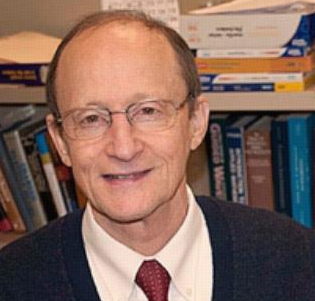 Richard Temkin合作论文数Department of Physics, Massachusetts Institute of Technology;Plasma Science & Fusion Center, Massachusetts Institute of Technology3Dennis Paul Mcnabb合作论文数Lawrence Livermore National Laboratory3R. Yee合作论文数2Ke Kreischer合作论文数2james batcheler合作论文数2R. Copping合作论文数2j haimson合作论文数2Brian J. Quiter合作论文数Nuclear Science Division, Lawrence Berkeley National Laboratory, Berkeley, CA, United States2
 S. A. Sheets合作论文数North Carolina State University2A. Kesar合作论文数2Bernhard Ludewigt合作论文数2Walter K. Hensley合作论文数2Edward Reedy合作论文数1A. Danagoulian合作论文数1J.M. Hall合作论文数1j b costales合作论文数1r hasty合作论文数1W. Bertozzi合作论文数1Erik L. Swanberg合作论文数1




