Health-care systems within most countries are resource-limited – budgets are finite and not every service one would like to provide can be funded. In publicly funded health systems, those responsible for procuring health-care need to be able to explain how taxpayers’ money has been spent. Decisions are made at both individual patient and population levels. At an individual level, the decision might be: which statin should this patient get a prescription for to lower her blood cholesterol? At a population level, the decision might be: will a health and social care commissioning organization purchase a heart-failure specialist nurse or an additional sexual health clinic?
How much of what health and other professionals do is based soundly in science? Answers to the question, ‘Is our practice evidence based?’ depend on what we mean by practice and evidence.
The policy process is the means by which particular policies emerge and are pursued by governments and government agencies. Policy is best understood as the consequence of the interrelation of ‘actors’, the wider context, the process by which policy is made and the content of the policy itself. A common-sense approach would equate public policy with the formal decisions or explicit proposals of governments or public agencies. Descriptions of the policy process as a system have been dominated in recent years by two opposing schools of thought - the ‘rationalists’ and the ‘incrementalists’. ‘Rational’ models of the policy process describe it in terms of a series of linked, but distinct, phases and types of activity that together produce ‘a policy’. In the rational models of the policy process described, implementation features as a distinct phase that occurs once the formal ‘policy’ has been created.
The aim of this book has been to develop your competencies in: ➤ leading people understanding the nature of leadership ➤ adopting an appropriate management style analysing accurately your environmental circumstances analysing accurately the needs of the people reporting to you and to whom you report identifying your own preferred management style adjusting your style to the needs of the situation.
Danish health policy is dominated by a national health service that combines a tax-financed universal health insurance with healthcare delivery through public hospitals and primary care physicians operating in private practices. This basic structure has been stable for almost half a century and is likely to remain so due to a strong consensus among voters and the political parties about the public system. Underneath the wide consensus, however, there is a ‘submerged’ political conflict and party competition between the left and the right about the degree to which the public healthcare system should use private providers and marketized patient rights. In part because of party competition and strong patient rights, there has been a significant drive towards higher total health costs over the past two decades. The Danish healthcare system is thus hardly challenged from political contestation since few politicians would dare to propose a real alternative. Nonetheless, the healthcare system is challenged by structural factors similar to what other countries face, such as an ageing population, as well as difficulties in controlling costs related to both pharmaceuticals and a scarce supply of healthcare professionals.
DOVES AND HAWKSWhat? Three out of five for 'motivation'?Surely not!I checked the feedback on my latest practice visit once more: a row of fives for communication, expertise, professionalism, and so on, but there it was.The shameful 'three' somehow implied my detachment from the process.I wondered if my time was up.I first applied to join the ranks of Care Quality Commission (CQC) inspectors (or Specialist Advisers as they are generously styled) from curiosity.I wanted to see how the new organisation worked.I harboured secret aspirations to try and ensure the inspections were formative.Those aspirations were naïve for the purpose of the inspection is plainly summative or judgmental.I submitted to a thorough training and induction before joining an ex-practice manager for my first visit.The CQC has particular codes of conduct for visitors.Shoes shined, laces tied, fragrant behind the ears, and clutching voluminous checklists I sallied forth.In those early days, one often encountered ill-concealed hostility.The Primary Care department of the CQC got off to a rocky start with flawed data being used as background intelligence.'Do you not think I've got something better to do than talk to you people?' the doctor snapped.She had calmed down when I interviewed her later, pouring out the details of her stressed working life.The visit passed off uneventfully as most of them do.We presented our findings with recommendations to attend to minor bureaucratic lapses and the out-of-date emergency glucagon.The doctor rolled her hazel eyes and fixed me with a steely glare.Then, as now, I wondered at the visit's worth.The CQC has many functions: to register, to monitor, to inspect (and rate), to enforce where necessary, and to advocate independently.The same five questions
You know the old trope: ‘General practice would be great if it wasn’t for the patients.’ The last three months have been among the strangest of my career. The car park and waiting room eerily empty, all day on the phone. ‘This will change the way we practice for ever’, my colleague breezily opined. ‘We’ve always known we don’t really need to see people for most of what we do.’ Really? Among its many victims, will COVID-19 kill off another weakened creature: the ‘family doctor’? The term ‘general practitioner’ was first recorded in 1809 when surgeon-apothecaries were plying private trade from their own shops. The Apothecaries Act of 1815 initiated the first common licensing arrangements, and thereby the professionalisation of this branch of medicine.1 GPs struggled initially — ever complaining about the expense of education, the difficulties of establishing a practice, poverty, competition from ‘irregulars’ — but the profession had become firmly established by around 1850. Generalists in the likeness of Tertius Lydgate came to dominate the practice of medicine.2 Their rise led to a decline in demand for physicians other than as more genteel attendants of the aristocracy. Indeed, the provincial GP enjoyed a virtual monopoly of the local health economy.3 The notion of the family doctor emerged over the second half of the 19th century. The Royal Colleges of Physicians and Surgeons were reactionary and continued to resist the establishment of a college for GPs. Novelists reflected attitudes of the time. The fictional stereotype of the early family doctor was often poor, shabby, and old-fashioned, but always accessible. He enjoyed the confidence of his patients. A contemporary users’ guide intoned: ‘Let not your doctor be too useful … and avoid the man whose dress and demeanour indicate puppyism … Be not averse to him if …
Danish health policy is dominated by a national health service that combines a tax-financed universal health insurance with healthcare delivery through public hospitals and primary care physicians operating in private practices. This basic structure has been stable for almost half a century and is likely to remain so due to a strong consensus among voters and the political parties about the public system. Underneath the wide consensus, however, there is a ‘submerged’ political conflict and party competition between the left and the right about the degree to which the public healthcare system should use private providers and marketized patient rights. In part because of party competition and strong patient rights, there has been a significant drive towards higher total health costs over the past two decades. The Danish healthcare system is thus hardly challenged from political contestation since few politicians would dare to propose a real alternative. Nonetheless, the healthcare system is challenged by structural factors similar to what other countries face, such as an ageing population, as well as difficulties in controlling costs related to both pharmaceuticals and a scarce supply of healthcare professionals.
‘How to move from managing sick individuals to creating healthy communities’ , the editorial earnestly intoned.1 Luke Allen et al went on to argue the case for reorienting the NHS towards prevention, upon which less than 5% of the health budget is currently spent. Social determinants, after all, account for up to 90% of health outcomes. They suggested, among other things, that practices should work alongside public health teams proactively to engage with local communities in furtherance of health promotion. So far, so comprehensible. In the opinion of many readers, I suspect, they then departed Planet Earth: ‘We need a greater focus on fundamentally changing the physical and socio-political structure of society … ’ Really? There are several reasons why their call will go unheeded, notwithstanding a long tradition of public health in general practice (or, for that matter, strong arguments for changing the structure of our society). Few have ever embraced the role of Tudor Hart’s community physician.2 In part, this is because Allen et al ’s vision is essentially ideological. Public health inclines to centralisation and is largely ‘left wing’. GPs, on the other hand, are politically heterogeneous. Closet ‘Corbynistas’, they are often working in inner cities, rubbing shoulders with more reactionary colleagues from the shires. Vulgar caricatures, of course, but GPs are understandably suspicious of grand plans. The utilitarian values underpinning population-oriented care and budget-holding are sometimes at odds with the individualistic nature of the doctor–patient relationship. Then there is the ever-present problem of time. Allen et al suggest that GPs engage with Health and Wellbeing Boards, Joint Strategic Needs Assessments, and Better Care Fund activity. Even without spare …
PHENOMENONOver 10 million sick-notes per annum may comprise as much as 10% of our workload.According to Adrian Massey, an experienced occupational health physician, most of this is an anachronistic charade.If 300 pages on sickness certification fill you with trepidation, persevere.This thoughtprovoking polemic is both erudite and wickedly entertaining.Massey early on acknowledges a debt to the greatest of medicine's iconoclasts.Ivan Illich coined the term 'cultural iatrogenesis' for the destruction of traditional ways of dealing with, and making sense of, death, suffering, and sickness. 1The medicalisation of everyday life proceeds apace.We the shamans continue to take confession and confer absolution.Meanwhile, the public retains a credulous belief in medical omnipotence and continues to entrust us with the power to adjudicate on their conditions.Certification is predicated on the notion that sickness is the consequence of disease.Many of the conditions of modern life (for example, fibromyalgia, irritable bowel syndrome, chronic fatigue, and stress) are diagnoses only loosely rooted in medical science.Despite improvements in the population's health, sickness rates have increased along with time off work and the burden of sick pay.The statistics still startle.After being off work for 6 months, only 1 in 5 return to work.After 2 years, the employee is more likely to die or retire than return to work. 2 The annual bill for sickness
This chapter looks at the barriers and challenges associated with health promotion and public health teaching. It identifies three main challenges: strengthening the public health curriculum, strengthening the resource base and increasing teacher capacity and skills. The main challenge facing curriculum developers therefore is to ensure clinical relevance, for information learned in context will be more readily retrieved. The teaching of undergraduate public health has always reflected a number of tensions. Debates about the place of public health in the teaching of medical school students go back over a century. Medical faculties are responsible for ensuring that the GMC recommendations on health promotion and public health education are fulfilled. The influential Flexner Report of 1910 entrenched medical sciences at the core of medical training. Departments of public health can and should provide access to trained staff with varied experience in education, health services and clinical research and clinical, social and health promotion services.
Among innumerable white papers and contractual revisions, three legislative milestones bestride the organisational development of British general practice in the second half of the 20th century. Two of these events form ‘book-ends’ to the third. First, the NHS Act of 1947 cemented the place of general practice in the new health system. Second, the Family Doctor Charter, enacted in 1966, revitalised the discipline after a period of stagnation and ushered in a ‘golden age’ of general practice. The expansionism of this era extended its range of responsibilities in various ways. To these were added a purchasing function following the Working for Patients white paper of 1989. The consequences of this third milestone are still being worked through. Why was the Charter required, what did it portend, and how should we look back on it half a century on? Rose-tinted historiography in support of Beveridge’s vision has obscured shortcomings in the NHS.1 In reality, general medical care was reorganised but not transformed. For GPs, the NHS represented an elaboration of the system of National Health Insurance (NHI) established in 1911, under which a capitation system also operated. Many of the regulations of the NHI scheme were simply transferred into the NHS. These were compiled in that industrial artefact of hallowed memory, the ‘Red Book’. The major change was to extend health care free at the point of delivery from insured working class males to the whole population. However, there were limited economic incentives to provide good patient care; rather, they kept lists long and costs low. The standards and social ethos of care were largely a continuation of the old panel system.2 Workloads …
Who now remembers the fanfare that greeted the Five Year Forward View (FYFV)?1 It seems so long ago: a pre-Brexit age of innocence when politics was at least predictably unpredictable. Launched in October 2014, the ‘FYFV’ was billed as Simon Stevens’s bid to reconfigure the NHS. It marked a shift away from competition as a means of health service improvement to a more collaborative approach. Sustainability and transformation plans (STPs) were the vehicle through which NHS organisations and their partners were to develop new models of care in their area. Over halfway through those 5 years, what has been achieved and what does the future portend for STPs? From the outset, the production of STPs was tightly controlled from the centre; 44 geographical areas (‘footprints’) were defined, covering the whole country. The King’s Fund has described the production process based on detailed interviews in four sites.2 Much creditable work has been done generating innovative plans over a short period.3 In time-honoured fashion, NHS England has pump-primed 50 ‘vanguard’ sites as exemplars transmitting early experience. Of the proposed care models, most interest from the primary care perspective has focused on multispecialty community providers (MCPs) and primary and acute care systems (PACS), which feature in more than half the vanguards. MCPs form extended primary care group practices through federations, networks, or single organisations to provide a wider range of care using a broader range of professionals. They may, for example, employ consultants or take them on as partners. PACS are a new variant of ‘vertically integrated’ care allowing single organisations to provide GP, hospital, community, and mental health services. Compared with their 2014/2015 baseline, both PACS and MCP vanguards have seen a …
There has been much cause to celebrate Leicester in the recent past, but this year marks a little-noted academic anniversary. Forty years ago, in the second of two seminal papers, Nicholas Jewson helped to recast medical historiography. Earlier historians of medicine focused on scientific developments, the origins of theories and treatments. Hitherto, intellectual progress had been regarded as the inexorable driver of therapeutic and institutional advance. A sociologist at the University of Leicester, Jewson was one of a new wave of researchers for whom medicine was a social phenomenon, shaped by wider political, economic, and cultural influences.1Jewson was concerned in this paper with what he called ‘the disappearance of the sick man’ from medical cosmology in the period from 1770 to 1870.2 He used the term ‘medical cosmology’ as shorthand for the prevailing theories and practices that defined the nature of medical discourse at that time. He sought to demonstrate how the social relations underpinning 18th-century medicine had been supplanted — with major consequences for knowledge and practice that endure to the present day.Until the late 18th century, a system of ‘bedside medicine’ had prevailed in the Western world. In the Galenic tradition, diseases were thought to result from an imbalance of humours. Health was restored through various therapeutic actions and interventions devised to restore the disrupted equilibrium. Thus the sick man (or woman) was not viewed in isolation. Rather, an individual’s psychological and social circumstances, behaviours, and life history were central to diagnosis and treatment.In a paper published 2 years earlier, Jewson sought to show how this system was influenced by the economic power exercised by patients.3 The fee-payer could choose the doctor who met their needs. The clinical encounter was also influenced by what Jewson called ‘epistemological parity’ — the extent of …
Richard Horton's observation that residual anger over the Health and Social Care Act has fomented the junior doctors' strike is well made (May 7, p 1892).1Horton R Offline: The 500-year old cause of the doctors' strike.Lancet. 2016; 387: 1892Summary Full Text Full Text PDF Scopus (1) Google Scholar However, rooting the conflict in 1512 at Woodstock with Henry VIII's endorsement of a college of physicians is infelicitous. During the last half millennium, the Royal College of Physicians has hardly been an unerring champion of progressive change. Royal Colleges are inherently conservative. What they do best is to maintain standards of practice through training, examination, and licensing. What they do next best is defend monopolistic professional interests. What they are ill equipped for is leading health system reform; to that they are frequently marginal. I doubt that Jeremy Hunt “believes that in return for autonomy a doctor's first duty is to support the policy of an elected government”.1Horton R Offline: The 500-year old cause of the doctors' strike.Lancet. 2016; 387: 1892Summary Full Text Full Text PDF Scopus (1) Google Scholar I doubt also that many doctors seriously “demand that they control the meaning of medicine and health care”.1Horton R Offline: The 500-year old cause of the doctors' strike.Lancet. 2016; 387: 1892Summary Full Text Full Text PDF Scopus (1) Google Scholar In today's plural marketplace, how could they? The hapless Hunt can claim a democratic mandate for aspects of his reforms just as junior doctors can claim that they are honouring their first duty—to their patients. Both sides are misguided. Both sides have handled their negotiations lamentably, betraying public trust in the process. The combatants have lost their heads. Henry VIII might have employed other means to the same end. I declare no competing interests. Offline: The 500-year old cause of the doctors' strikeFor the first time in the history of the UK's National Health Service (NHS), junior doctors went on strike twice last week. They withdrew their labour from emergency and intensive care, in protest at the UK Government's decision to impose a new employment contract. Jeremy Hunt, the Conservative Secretary of State for Health, says repeatedly that junior doctors are “the backbone of the NHS”. But he also argues that the strike is not about health. It is, he says, about bringing his government down. Full-Text PDF
Millions of pounds have been spent on patient participation groups in the past five years, but is anyone listening? Stephen Gillam and Jennifer Newbould look at the evidence
Background: Patient and public involvement in the development of health services is central to current government policy. In 2011 new financial incentives were introduced to promote the establishment of Patient participation groups (PPGs) which led to an increase in the number of PPG groups in England. PPGs are now well established in many practices. Objectives: The aim of this study was to explore PPG members’ views of the current and future challenges for Patient Participation Groups. Methods: Six focus groups were conducted with members of PPGs (n=31). They were audio recorded and transcribed verbatim. Qualitative analysis followed established principles with data coded and recoded into categories and themes. Results: Beyond acting as a conduit for patient feedback and as advisors to their practices, there was variation and some confusion about the roles of PPGs. All groups struggled to engage the interest of the patients they purport to represent. Their ability to improve quality of care was limited by several factors including the information available to them, their ability to interpret it, their perceived remit, and their relationship with the practice team. Many participants foresaw a future expanded role in relation to commissioning but this had yet to be defined in practice.
Pay-for-performance (P4P) schemes have become increasingly common in primary care, and this article reviews their impact. It is based primarily on existing systematic reviews. The evidence suggests that P4P schemes can change health professionals' behavior and improve recorded disease management of those clinical processes that are incentivized. P4P may narrow inequalities in performance comparing deprived with nondeprived areas. However, such schemes have unintended consequences. Whether P4P improves the patient experience, the outcomes of care or population health is less clear. These practical uncertainties mirror the ethical concerns of many clinicians that a reductionist approach to managing markers of chronic disease runs counter to the humanitarian values of family practice. The variation in P4P schemes between countries reflects different historical and organizational contexts. With so much uncertainty regarding the effects of P4P, policy makers are well advised to proceed carefully with the implementation of such schemes until and unless clearer evidence for their cost-benefit emerges.
 Sian M. Griffiths (葛菲雪)合作论文数The Jockey Club School of Public Health and Primary Care, The Chinese University of Hong Kong8
 Alison Hill合作论文数7Padmanabhan Badrinath合作论文数6Jan Yates合作论文数5
 Aloysius Niroshan Siriwardena合作论文数Sch Hlth & Social Care, Lincoln Univ5
 Stefi Barna合作论文数4
 Minha Rajput-Ray合作论文数Curaidh Clinic;Nnedpro Global Institute for Food, Nutrition and Health3
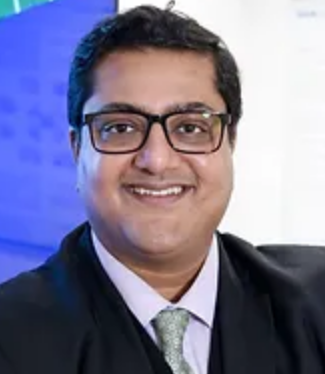 Sumantra (Shumone) Ray合作论文数BMJ;NNEdPro Global Institute for Food Nutrition and Health;Imperial College London;University of Wollongong;Cordia College;Remedy Clinic3
 Raj Khanchandani合作论文数3Joan Gandy合作论文数2Simon Hargreaves合作论文数2Paul Cosford合作论文数2
 Greg Irving合作论文数2
 Celia V Laur合作论文数Need for Nutrition Education/Innovation Programme, Medical Research Council Human Nutrition Research2
 Pauline Douglas合作论文数2Newbould Jennifer合作论文数2
 Shobhana Nagraj合作论文数Department of Paediatric Surgery, Birmingham Children's Hospital2
 Veena Rodrigues合作论文数2
 Nicholas Steel合作论文数Norwich Medical School, Faculty of Medicine and Health Sciences, University of East Anglia;Norwich Institute for Healthy Aging, Faculty of Medicine and Health Sciences, University of East Anglia;Health Services and Primary Care, Public Health and Health Services Research, Norwich Medical School, Faculty of Medicine and Health Sciences, University of East Anglia2Alaster Rutherford合作论文数1Joanna Bircher合作论文数1Peter W Raven合作论文数1Frances Mortimer合作论文数1Sg Wright合作论文数1Margaret Spottswood合作论文数1
 Cliff O'Callahan合作论文数1Timothy Eden合作论文数1
 Kieran Walsh合作论文数1
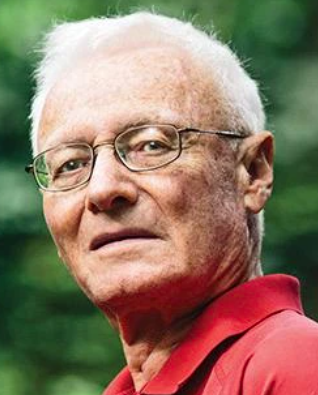 Neal Nathanson合作论文数Department of Microbiology, Perelman School of Medicine, University of Pennsylvania1
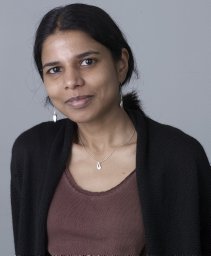 Myles Puja R合作论文数Div Epidemiol & Publ Hlth, Univ Nottingham1van der Es Mike J合作论文数1Udumyan Ruzan合作论文数1
 Ann Wylie合作论文数School of Population Health & Environmental Sciences, Faculty of Life Sciences & Medicine, King’s College London1Henry Smithson合作论文数Department of General Practice, University College Cork Ireland1Seward Lesley合作论文数1Hinson Joy P合作论文数1Dominic Patterson合作论文数1
 Judith Richardson合作论文数1Ann Griffin合作论文数Medical School, Faculty of Medical Sciences, University College London1
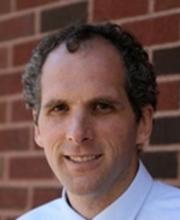 David S. Jones合作论文数Department of the History of Science, Harvard University/Department of History, Harvard University1Crowley Jennifer合作论文数1
 Marietta Sayegh合作论文数Elsie Widdowson Laboratory, the Medical Research Council (MRC)1
 Jeff Markuns合作论文数1
 Lauren Ball合作论文数School of Public Health and Griffith Health Institute, Griffith University1Rughani Amar合作论文数1
 Alfred Adiamah合作论文数Institute of Clinical Education, University of Warwick1Godden Andy合作论文数1
 Richard Lewis合作论文数Cardiff Law School;Cardiff University1
 Jihong Wei (魏继红)合作论文数School of Health Humanities, Peking University1




