This paper presents an ultra-low power super-regenerative receiver (SRR) suitable for OOK modulation. The receiver is fabricated in 40 nm CMOS technology and operates in the ISM band of 902–928 MHz. It exploits a SAR architecture to calibrate the internally generated quench signal. Employing an on-chip inductor and a single to differential architecture for the input amplifier has made the receiver fully integrable, eliminating the need for external components. A power consumption of 320 µW from a 0.65 V supply results in an excellent energy efficiency of 80 pJ/b at 4 Mb/s data rate, while the best sensitivity is −87 dBm at 1 Mb/s data rate.
Although sophisticated wireless radio technologies make it possible for unlicensed wireless devices to take advantage of un-used broadcast TV spectra, those looking to advance the field have lacked a book that covers cognitive radio in TV white spaces (TVWS). Filling this need, TV White Space Spectrum Technologies: Regulations, Standards and Applications explains how white space technology can be used to enable the additional spectrum access that is so badly needed. Providing a comprehensive overview and analysis of the topics related to TVWS, this forward-looking reference contains contributions from key industry players, standards developers, and researchers from around the world in TV white space, dynamic spectrum access, and cognitive radio fields. It supplies an extensive survey of new technologies, applications, regulations, and open research areas in TVWS. The book is organized in four parts: Regulations and ProfilesCovers regulations, spectrum policies, channelization, and system requirements StandardsExamines TVWS standards efforts in different standard-developing organizations, with emphasis on the IEEE 802.22 wireless network standard CoexistencePresents coexistence techniques between all potential TVWS standards, technologies, devices, and service providers, with emphasis on the Federal Communications Commissions (FCC) recent regulations and policies, and IEEE 802.19 coexistence study group efforts Important AspectsConsiders spectrum allocation, use cases, and security issues in the TVWS network This complete reference includes coverage of system requirements, collaborative sensing, spectrum sharing, privacy, and interoperability. Suggesting a number of applications that can be deployed to provide new services to users, including broadband Internet applications, the book highlights potential business opportunities and addresses the deployment challenges that are likely to arise.
This chapter provides an overview of the IEEE Standard 802.22-2011 Wi-FAR™ standard . This standard provides rural area broadband access and fulfils the dire need for cost-effective backhaul and middle-mile solution in developing countries. We discuss how those needs tie to the requirements definition and the operation of the IEEE 802.22 Wi-FAR systems. This chapter provides a special emphasis on the several cognitive radio (CR) features and techniques incorporated or referred to in the standard. These features include geo-location and access to an incumbent database, spectrum sensing, regulatory dependent policies, channel set management, spectrum etiquette, and self-coexistence mechanisms. On the basis of the regulatory rules applicable locally, the different CR features can be turned on or off. This chapter describes the ongoing white spaces implementations, trials, and deployments all over the world. Finally, this chapter provides an overview of the future enhancements to the IEEE 802.22 Standard and other activities of the Working Group to provide spectrum sharing solutions such as advanced beaconing for radar and communications coexistence and new activity on spectrum characterization and occupancy sensing.
 Ahmed K. Sadek合作论文数Department of Electrical and Computer Engineering;Institute for Systems Research;University of Maryland;Institute for Systems Research, University of Maryland14
 Santosh Paul Abraham合作论文数14
 Wenyi Zhang (张文逸)合作论文数Department of Electronic Engineering and Information Science, School of Information Science and Technology, University of Science and Technology of China13sameer vermani合作论文数8Rahul Tandra合作论文数Dept . of Electrical Engineering and Computer Science;University of California;Dept . of Electrical Engineering and Computer Science, University of California , Berkeley8
 Cong Shen (沈聪)合作论文数Department of Electrical and Computer Engineering, School of Engineering and Applied Science, University of Virginia7Vincent K Jones合作论文数Airgo Networks7
 joseph katz合作论文数Stanford University6william sackett合作论文数5Hemanth Sampath合作论文数5Andrea Garavaglia合作论文数5didier johannes richard van nee合作论文数4sean a connolly合作论文数4christian pietsch合作论文数4
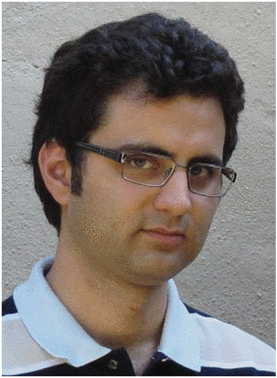 Nicola Varanese合作论文数4
 Jacob Sharony合作论文数Columbia Univ.4patrick stupar合作论文数3gary serbin合作论文数3joseph cabana合作论文数3harry kuchenbrod合作论文数3frank boccuzzi合作论文数3a van zelst合作论文数3jerome swartz合作论文数3robert beach合作论文数3adam levine合作论文数3
 Yong Jin Kim合作论文数Business School, Sogang University3
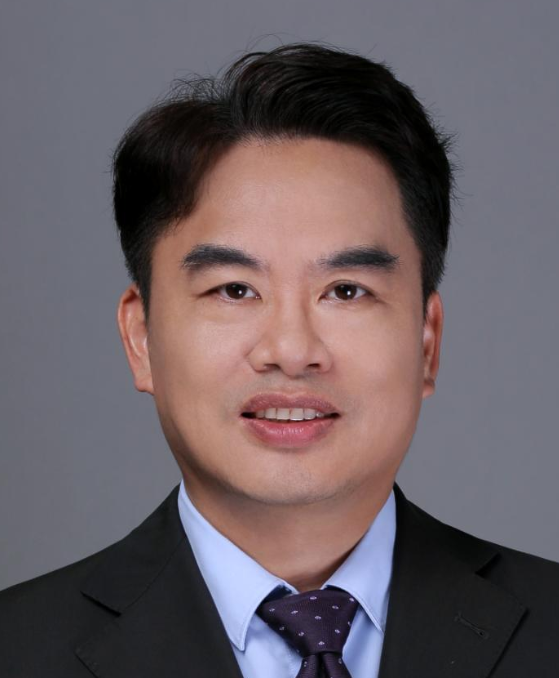 Zhi Quan (全智)合作论文数College of Electronics and Information Engineering, Shenzhen University3
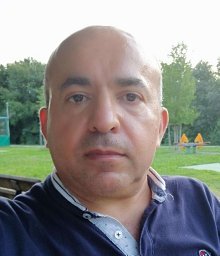 Saeed R.A合作论文数Faculty of Engineering, IIUM3patrick tilley合作论文数2arman nikzad合作论文数2guy cipriani合作论文数2edward barkan合作论文数2david p goren合作论文数2paul poloniewicz合作论文数2sean connolly合作论文数2
 Ali H. Sayed合作论文数Adaptive Systems Laboratory, École Polytechnique Fédérale de Lausanne2
 Raj Bridgelall合作论文数Upper Great Plains Transportation Institute, North Dakota State University2Sai Shankar N合作论文数1george cherian合作论文数1anthony biuso合作论文数1avinash jain合作论文数1alireza raissinia合作论文数1daniel curry合作论文数1judith murrah合作论文数1joseph campanelli合作论文数1michael ryder合作论文数1glenn spitz合作论文数1daniel r mcglynn合作论文数1bruce a willins合作论文数1




