Background: The PRIORITY-CONNECT 2 pilot trial will establish the feasibility and acceptability of a virtual multimodal programme following gastrointestinal cancer surgery. The secondary aims are to obtain pilot data on the likely difference in key outcomes, data elements that will guide future implementation studies, and to identify barriers and facilitators that inform the development and execution of a substantive randomised clinical effectiveness trial of teleprehabilitation/rehabilitation. Methods: This is a multicentre, assessor-blinded, pilot, randomised controlled trial utilising a Hybrid Type I effectiveness-implementation design. 20 participants undergoing major gastrointestinal cancer surgery will be randomised (1:1 allocation) to attend a virtual multimodal prehabilitation-rehabilitation hub (intervention group), delivered before (1-6 weeks) and after (up to 3 months) surgery plus usual care, or to usual care alone (control group). An individualised intervention will be delivered by an experienced multidisciplinary team including a physiotherapist, psychologist, dietitian, nurse, social worker, and a geriatrician. Outcomes will be collected at baseline, 1-2 days before surgery, during the hospital stay, day of discharge from hospital, and 3 months postoperatively. The primary outcomes will be feasibility and acceptability of the virtual multimodal hub. Secondary outcomes assess the rate of postoperative complications within 30 days after surgery, quality of life, the number of days at home within 30 and 90 days after surgery, healthcare use, and implementation outcomes. Discussion: The PRIORITY-CONNECT 2 pilot trial will generate findings about the feasibility and acceptability of delivering an evidence-based virtual multimodal preoperative (prehabilitation) and postoperative (rehabilita-tion) intervention targeting patients having major gastrointestinal cancer surgery. Trial registration: This trial was registered prospectively with the National Library of Medicine ClinicalTrials.gov Registry (NCT06212700) on 8th January 2024.
A renewed call for replications has emerged in social science research. An important form of replication involves exploring the extent to which findings from a given study hold in other contexts. This study draws on opinion polling data to replicate key findings across time and space based on an original study in one location analyzing attitudes toward public school assignment policies. The replication finds that many of the original findings hold, though one important exception reflects the changing context. We note that the increasing availability of relatively inexpensive methods of quantitative data production facilitates replication and comment on how the temporal interval between the original study and the replication may influence the extent to which findings replicate. We argue that largely successful replications help to clarify the conditions under which findings replicate, and that sociologists are in the early stages of determining which strategies work best for replicating which findings.
An accurate blood‐based RAS mutation assay to determine eligibility of metastatic colorectal cancer (mCRC) patients for anti‐EGFR therapy would benefit clinical practice by better informing decisions to administer treatment independent of tissue availability. The objective of this study was to determine the level of concordance between plasma and tissue RAS mutation status in patients with mCRC to gauge whether blood‐based RAS mutation testing is a viable alternative to standard‐of‐care RAS tumor testing. RAS testing was performed on plasma samples from newly diagnosed metastatic patients, or from recurrent mCRC patients using the highly sensitive digital PCR technology, BEAMing (beads, emulsions, amplification, and magnetics), and compared with DNA sequencing data of respective FFPE (formalin‐fixed paraffin‐embedded) tumor samples. Discordant tissue RAS results were re‐examined by BEAMing, if possible. The prevalence of RAS mutations detected in plasma (51%) vs. tumor (53%) was similar, in accord with the known prevalence of RAS mutations observed in mCRC patient populations. The positive agreement between plasma and tumor RAS results was 90.4% (47/52), the negative agreement was 93.5% (43/46), and the overall agreement (concordance) was 91.8% (90/98). The high concordance of plasma and tissue results demonstrates that blood‐based RAS mutation testing is a viable alternative to tissue‐based RAS testing.
Abstract Australia and New Zealand have the highest worldwide CRC incidence with CRC being the 2nd most commonly diagnosed cancer and the 3rd most common cause of cancer death among both men and women. CRC is a complex disease arising from the impact of environmental factors, including diet and lifestyle choices on different genetic backgrounds. Obesity and type 2 diabetes are significant risk factors for CRC, the levels of which are increasing in Australia. As a consequence CRC is projected to increase, being the most common Australian cancer by 2025. While the association of obesity with CRC has been reported by a number of studies, the mechanism\s that contribute to CRC development in the context of obesity are unknown. Understanding these mechanisms and potential genetic susceptibility is crucial for developing effective intervention and screening strategies. Recent evidence suggests that gut microbial communities are altered in obese individuals, resulting in a change in the predominant species and overall loss of community diversity but it is unknown if these changes impact CRC development or progression. We have established a comprehensive tissue, blood and microbial collection from 150 lean and obese colorectal cancer patients in the Hunter Region, Australia and commenced an integrative pilot next generation sequencing project to begin to unravel the link between obesity and CRC. Twelve individuals (6 lean and 6 obese) were selected for complementary next-generation sequencing; generating matched sequencing data sets (Total RNA-seq, Poly A RNA-seq, microbial RNA-seq and exome-seq) from normal colon, colon tumor, adipose and digesta samples samples. For this purpose, we have developed a method for simultaneously isolating human and microbial RNA from gut lumen of sufficient quality and quantity from limited material. Results presented will evaluate the differences in host and microbial transciptomics in normal colon and tumor tissue of lean and obese individuals with CRC and methodological comparisons between Total RNA-seq and Poly A RNA-seq will be reported. Citation Format: Desma M. Grice, Denis C. Bauer, Konsta Duesing, Dongmei Li, Paul Greenfield, Sarah Nielsen, Brian Draganic, Steve Smith, Peter Pockney, Rodney Scott, Garry N. Hannan. Human and microbial transcriptomics from lean and obese individuals with colorectal cancer: A comparison of Total and Poly A RNA sequencing from clinical samples. [abstract]. In: Proceedings of the 104th Annual Meeting of the American Association for Cancer Research; 2013 Apr 6-10; Washington, DC. Philadelphia (PA): AACR; Cancer Res 2013;73(8 Suppl):Abstract nr LB-237. doi:10.1158/1538-7445.AM2013-LB-237
 Peter Pockney合作论文数3Brian Draganic合作论文数2Garry N. Hannan合作论文数2Grice Desma M合作论文数2Li Dongmei合作论文数2
 Greenfield, Paul合作论文数CSIRO Math. & Inf. Sci.;c;CSIRO Math. & Inf. Sci.2Duesing Konsta合作论文数2Nielsen Sarah M合作论文数2
 Denis C. Bauer合作论文数Institute for Molecular Bioscience, The University of Queensland2
 Rodney Scott合作论文数School of Biomedical Sciences and Pharmacy, University of Newcastle;Centre for Bioinformatics, Biomarker Discovery and Information-Based Medicine, University of Newcastle;College of Health, Medicine and Wellbeing, University of Newcastle2Susan Dooley合作论文数1Susanne Hegewisch-Becker合作论文数1barbara dockhorndworniczak合作论文数1Philippe Ronga合作论文数1Amanda Lucas合作论文数1michael pohl合作论文数1Kate Wilson合作论文数1Frederick S Jones合作论文数1
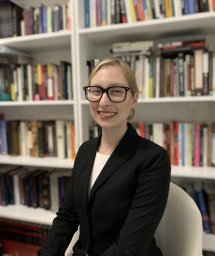 Virginia Riel合作论文数Dept Sociol & Anthropol, North Carolina State Univ1
 Deepak Vangala合作论文数1
 Rachael Morton合作论文数NHMRC Clinical Trials Centre, University of Sydney;Faculty of Medicine and Health, University of Sydney1
 Liliana Laranjo合作论文数School of Health Sciences, Faculty of Medicine and Health, The University of Sydney1
 Leanne Hassett合作论文数School of Health Sciences, Faculty of Medicine and Health, The University of Sydney1Mbathio Dieng合作论文数School of Health Sciences, Faculty of Medicine and Health, The University of Sydney1
 Kate White合作论文数Susan Wakil School of Nursing and Midwifery, Faculty of Medicine and Health, The University of Sydney1Daniel Steffens合作论文数School of Medicine, Faculty of Medicine and Health, The University of Sydney1
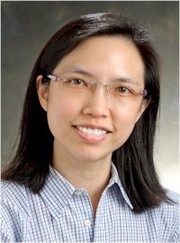 Cherry Koh合作论文数School of Medicine, Faculty of Medicine and Health, The University of Sydney1
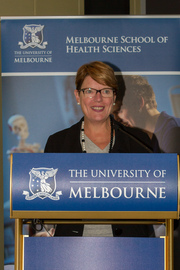 Linda Denehy合作论文数Department of Physiotherapy, Melbourne School of Health Sciences, Faculty of Medicine, Dentistry and Health Sciences, The University of Melbourne1
 Chelsee A Hewitt合作论文数1
 Sharon Carey合作论文数Nutrition and Dietetics Department, Royal Prince Alfred Hospital1Patton Vicki合作论文数1
 Liu Xiaoqiu合作论文数1
 Bernhard Riedel合作论文数1
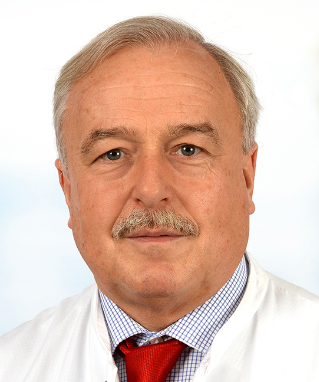 Waldemar Uhl合作论文数St. Josef-Hospital Bochum, Katholischen Klinikum Bochum1
 Helen Mohan合作论文数1
 Phyllis Butow合作论文数School of Psychology, Faculty of Science, University of Sydney1
 Helmut Friess合作论文数School of Medicine and Health, Technische Universitat Munchen;Klinik Und Poliklinik Für Chirurgie, Klinikum Rechts Der Isar, Technische Universitat Munchen;R.E. Kavetsky Institute of Experimental Pathology, Oncology and Radiobiology, National Academy of Science of the Ukraine1
 Richard Viebahn合作论文数1
 Stephen Fox合作论文数The Sir Peter Maccallum Department of Oncology, The University of Melbourne;Division of Medicine, Dentistry and Health Sciences, The University of Melbourne;Peter MacCallum Cancer Center1Wolff Schmiegel合作论文数1
 U. Nitsche合作论文数Department of Surgery, Technische Universität München1
 Heiner Wolters合作论文数1
 Alexander Baraniskin合作论文数1
 Stephan Hahn合作论文数Department of Molecular GI-Oncology, Ruhr University Bochum1Christian Teschendorf合作论文数1
 Klaus-Peter Janssen合作论文数Department of Surgery, Klinikum Rechts Der Isar, Technical University of Munich;Clinic and Polyclinic for Surgery, Technical University of Munich1
 Toby L. Parcel合作论文数Pennsylvania State University1Cliff J Meldrum合作论文数1




