We perform diverse experimental validation of an optical spectrum analysis GOSNR estimation method, showing good agreement (typically within 0.5 dB) relative to the conventional transceiver-based method over metro and long-haul distances and two fiber types.
We highlight commercial flexible coherent transceivers, including their features and capabilities for optical networks, and present the versatility of a 140-GBd transceiver in typical optical link configurations from short reach to subsea.
We introduce an all-optical method for estimating linear and nonlinear noise using an unmodulated laser source and varied state of polarization optical spectrum analyzer, then experimentally validate the technique against the conventional transceiver-based GOSNR approach.
We demonstrate real-time transmission using a single -carrier coherent pluggable at 138-GBd in a deployed network. We show 800 Gb/s over a record 2220 km and over 1422 km with 24 WSSs, and a record 1 Tb/s over 869 km.
We experimentally study filtering penalties for single-sided and double-sided passband narrowing from in-line ROADMs. Using 400-Gb/s single-carrier and 800-Gb/s dual-carrier coherent signals over an 800-km transmission link with up to 8 WSS, we observe lower penalties and increased ROADM node count with single-sided filtering conditions.
As modern optical networks continue evolving toward higher symbol rates while supporting tight channel spacing, penalties due to optical filtering incurred by transmission through reconfigurable optical add-drop multiplexers (ROADMs) can become significant within the overall link budget. For this reason, filtering impairments must be realistically assessed and accurately modeled, particularly in terrestrial networks where signals may traverse many ROADMs. Given that modern transceivers can provide flexible modulation options and most ROADMs in use today support flexible grid operation, there remains the challenge of optimizing performance and/or capacity while managing these multiple degrees of freedom. In this work, we use real-time transceivers with a tunable symbol rate up to 72 GBaud and variable modulation up to 64QAM to experimentally investigate the impact of ROADM filtering on the optimum operating condition required to maximize channel capacity or margin. We also present a simplified model for considering the filtering impairment as an additive noise term and use it to predict performance in other scenarios. It is shown that symbol rate tunability in steps below 5 GBd is required to maximize the margin for a given link passband. Finally, we explore the difference in performance for filtering conditions with passband narrowing on both sides of the signal, assuming individual wavelength routing, or only on one side of the signal, assuming multi-carrier routing.
We demonstrate an ML-based optical performance monitoring technique using constellation diagrams which accurately assess OSNR and generalized OSNR in a realistic deployment environment with product constraints. Limitations of OSNR estimation in commercial deployments are discussed. © 2022 Stephen E. Ralph
We compare performance of a single-span 400ZR system with bandwidth loading over 2.4 THz from independent modulated signals, channelized ASE noise, or flat ASE noise bands, and quantify the impact on optimum launch power. © 2022 The Author(s)
We demonstrate accurate estimation of generalized optical signal to noise ratio (GOSNR) for wavelength division multiplexed fiber communication systems using an experimentally trained multi-tasking convolutional neural network while simultaneously estimating linear and nonlinear noise contributions. Using dual-polarized 32-GBaud 16QAM DWDM links we extract learnable features from constellation density matrices and accurately estimate GOSNR while simultaneously estimating linear and nonlinear contributions. Estimation of the OSNRASE, OSNRNL and GOSNR are demonstrated with < 0.5 dB mean absolute error. We also assess the universality of our model within the regime of metro networks by cross-training with data from such links comprised of different fiber types. We demonstrate a path to a practical universal training method that includes additional link parameters. The methods do not require contiguous high-speed sampling, additional hardware nor transmission of special symbols or patterns and are readily implemented in deployed systems.
Using real-time transceivers with symbol rates up to 72 GBd, we investigate the impact of ROADM filtering on optimum symbol rate and fractional m-QAM modulation required to maximize channel capacity. Granularity below 5 GBd is shown to yield maximum margin for a given link passband.
We introduce a GOSNR measurement based on optical spectrum analysis and experimentally validate the method using multiple coherent signal types (34 and 69 Gbd, QPSK and 16QAM) over 8 and 12 spans LEAF transmission.
Real-time transceivers were used to evaluate the accuracy of the closed-form GN model for SSMF and NZDSF C-band terrestrial applications with symbol rates from 34 to 69 GBd and modulation formats from QPSK to 64QAM.
Data center interconnect (DCI) links with high data-rate direct-detection require strict chromatic dispersion compensation. One such solution which has been widely deployed is based on four-level pulse amplitude modulation (PAM4). With this application in mind, we describe in detail a 50-GHz channelized fiber Bragg grating (FBG) tunable dispersion compensation module (TDCM) which can compensate chromatic dispersion slope over the full C-band (4.8 THz) and is thus suitable for dense wavelength division multiplexing (DWDM) PAM4 DCI systems. We then present a comprehensive set of system performance results comprising 1,120 unique link measurements, to characterize the combined effect of statistical variations in component characteristics and link impairments, and show that a statistical approach to link budgeting is advantageous in this type of system. We also analyze the group delay ripple characteristics of the FBG-TDCM device and the corresponding impact on the PAM4 system. Instead of the conventional phase ripple standard deviation, we introduce a novel metric to quantify high-frequency phase ripple, which is better correlated with the impact on the PAM4 system.
We describe a 50-GHz channelized FBG-TDCM offering slope compensation over the full C-band which is suitable for DWDM PAM4 systems. We present comprehensive system performance results comprising 1,120 link measurements, with a novel statistical approach to account for variations in component characteristics and link impairments.
A novel in-service OSNR monitoring technique is experimentally validated on tightly filtered polarization-multiplexed signals for a range of network operating conditions and reconfigurations. The results demonstrate sufficient accuracy and robustness for measurements in practical networks.
We discuss and review in-service optical-signal-to-noise-ratio measurement techniques with a focus on methods relying on optical spectrum analysis. We briefly review the optical signal-to-noise ratio (OSNR) definition and the measurement procedure employed in early multiwavelength systems with inline amplification, and present in detail the development of the spectrum-based OSNR measurement methods to account for polarized, filtered dense wavelength division multiplexing (DWDM) signals, and further still, to the current generation of DWDM systems based on coherent detection. We present mathematical implementations for the measurement of polarized signals and their evolution to a reference-based method, suitable for measuring polarization-multiplexed signals independent of coherent transmission formats and receiver metrics. The performance of this reference-based technique is illustrated in a wide range of coherent transmission use cases, thus demonstrating its tolerance to fiber nonlinearity induced spectral deformation of the signal. We also explain and demonstrate the ability of this technique to discriminate the amplified spontaneous emission noise due to inline amplifiers from “Gaussian-like” noise generated in a nonlinear operating regime. Finally, we present an extension of this OSNR measurement technique for links where inline filtering causes significant spectral deformations of the signal and we show how it can be applied to troubleshooting and maintenance-monitoring use cases. The OSNR measurement statistics across all test conditions indicate accuracy levels suitable for use in deployed DWDM networks with reconfigurable optical add/drop multiplexers and coherent transponders.
We discuss in-service OSNR measurement options independent of coherent receiver metrics. We review a spectral analysis technique for discriminating ASE when fiber nonlinearities contribute "Gaussian-like" noise and evaluate its performance in practical network scenarios.
We demonstrate a 4-Tb/s metro-DCI system with commercial QSFP28 modules (40×100G dual-wavelength 56-Gb/s PAM4). We detail system performance over 80km and quantify tolerance to chromatic dispersion and nonlinearity over a wide range of fiber types.
A non-intrusive in-band OSNR measurement method is experimentally investigated on polarization-multiplexed signals, including spectrally-shaped PM-16QAM, at OSNR levels beyond 25dB and under strong nonlinear conditions. OSNR measurement statistics demonstrate sufficient accuracy for practical network applications.
A non-intrusive OSNR measurement technique relying on the detailed spectral comparison of an optical signal with its "noise-free" spectrum is described, including mathematical basis, validity conditions and algorithmic steps. The technique's performance is experimentally demonstrated with 100G PM-QPSK and 200G PM-16QAM signals subject to fiber non-linearity induced by 100G PM-QPSK and 10G NRZ-OOK neighbors. The OSNR measurement performance is also demonstrated when root-raised cosine spectral shaping is applied to the signals, with channel spacings of 50GHz and 37.5GHz. Experimental results for OSNR levels up to 30dB and launch powers up to 3dB above the optimum BER launch conditions are shown for different system and signal configurations.
 Sorin Tibuleac合作论文数ADVA Optical Networking33
 Stephen E Ralph合作论文数School of Electrical and Computer Engineering, College of Engineering, Georgia Institute of Technology;Georgia Electronic Design Center, Georgia Institute of Technology15
 Thomas Detwiler合作论文数11
 Gang He合作论文数10
 Andrew Stark合作论文数Sch. of Electr. & Comput. Eng., Georgia Inst. of Technol.;c;Sch. of Electr. & Comput. Eng., Georgia Inst. of Technol.9
 Mark Filer合作论文数Microsoft8Daniel Gariepy合作论文数8Yu-Ting Hsueh合作论文数georgia institute of technology8
 thomas richter合作论文数Fraunhofer Society7
 Gee-Kung Chang合作论文数School of Electrical and Computer Engineering, Georgia Institute of Technology7Basch, B.E.合作论文数5
 Robert Lingle, Jr.合作论文数3Sergey Burtsev合作论文数3Sylvain Boudreau合作论文数2guillaume brochu合作论文数2Hyung Joon Cho合作论文数2Daniel Lippiatt合作论文数Sch Etc Trical & Comp Engn, Georgia Inst Technol2Pascal Gosselin-Badaroudine合作论文数Centre de Recherche de l'Institut Universitaire en Santé Mentale de Québec, Laval University2Detwiler, T.F.合作论文数2
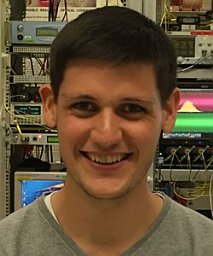 Philippe Jenneve合作论文数2
 Varghese Antony Thomas合作论文数BITS Pilani - Goa Campus2
 Cheng Liu合作论文数Sch Elect & Comp Engn, Georgia Inst Technol2F. Trépanier合作论文数2philip n ji合作论文数1F. Kueppers合作论文数1Jinno, M.合作论文数1
 Evie Parsons合作论文数1Ahmed Awadalla合作论文数1Kohei Shimada合作论文数1Genki Mizuno合作论文数1robert olah合作论文数1Alex Kaylor合作论文数1Yang Fu合作论文数1benjamin kogel合作论文数1Jim Farina合作论文数1
 Siddharth Varughese合作论文数Infinera Corp1
 Rachel Ludwig合作论文数1gil cohen合作论文数1
 Christian Gierl-Mayer合作论文数1wakao sasaki合作论文数1
 Itaru Nishioka合作论文数Deloitte Touche Tohmatsu LLC1
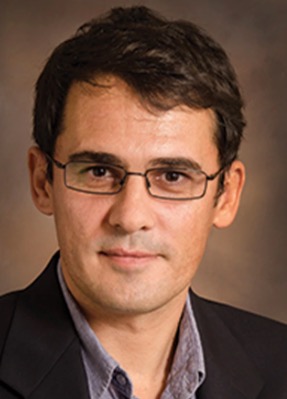 Ivan B. Djordjevic合作论文数Department of Electrical & Computer Engineering, College of Engineering, The University of Arizona;Department of Electrical and Computer Engineering, FAMU-FSU College of Engineering, Florida State University1Yonenaga, K.合作论文数1
 Åsa Haglund合作论文数Photonics Laboratory, Chalmers University of Technology1
 Tobias Grundl合作论文数Automobili Lamborghini S.p.A.1
 Ahmad N. Alomari合作论文数Electron. Eng. Dept., Yarmouk Univ. Irbid;c;Electron. Eng. Dept., Yarmouk Univ. Irbid1
 Markus Nolle合作论文数Fraunhofer Institute for Telecommunications, Heinrich Hertz Institute;c;Fraunhofer Institute for Telecommunications, Heinrich Hertz Institute1Daly, Aidan合作论文数1André Richter合作论文数1




