The Adverse Childhood Experience (ACE) Questionnaire is one of the most widely used assessments for trauma exposure and adversity experienced during the first 18 years of life (Felitti et al., 1998; Kia-Keating et al., 2019). While the ACE Questionnaire has shown to have good reliability and validity, inconsistencies have been demonstrated for the test-retest form of reliability (MacKenzie et al., 2005; Pinto et at, 2014; Zanotti et al., 2018). To address the lack of consensus on the test-retest reliability of the ACE Questionnaire and the appropriateness for use with adolescents, the current study examined test-retest reliability of the ACE measure for a small group of adolescents in residential treatment. Participants (n = 20) completed the ACE during week 1 and were later assessed at week 9. The test-retest reliability of the ACE was very high (r = 0.913), thereby supporting the overall reliability of the ACE questionnaire and its effectiveness in identifying baseline trauma. However, the results indicate that adolescents might not fully understand their past trauma experiences prior to receiving trauma-focused treatment. Potential explanations of unreliable reporting of ACEs, counseling implications and recommendations for multiple administrations are discussed.
Although associations between developmental trauma, juvenile justice involvement and youth substance use have been previously reported in the published literature, the interconnection among these three factors has not been adequately studied. This article describes the interconnection among these three factors and calls for greater attention to the role of adverse childhood experiences (ACEs) in the diagnosis and treatment of youth who present with histories of substance use and/or offending behavior. Pilot data are presented that show high rates of self-reported trauma exposure, substance use history, justice involvement, and mental health problems in a sample of adolescents in residential treatment. The data point to the need for residential treatment centers to consider trauma histories in developing treatment plans for youth with current and prior substance use and offending behavior.
Closure rates (CR) of counselors with a master’s degree in rehabilitation counseling (MRC) and master’s degrees in related disciplines (RM) were compared. High-quality closure rates (HQCR) were also compared, defined as CR for full-time jobs that paid a living wage. Analyses examined all counselors and, separately, only those with 6 or fewer years of experience. Last, analyses examined if disability severity predicts HQCR. Eighty-nine counselors completed a survey assessing their educational background. These data were linked to outcomes of 13,460 clients. CR of MRC and RM counselors did not differ. However, MRC counselors had higher HQCR ( p = .034), higher living-wage closure rate (LWCR; p = .025), and almost higher full-time job closure rate (FTCR; p = .066). MRC-RM comparisons using only counselors with 6 or fewer years of experience were also significant (all ps < .05) and, importantly, showed even stronger effects. Also, although clients with most-severe disabilities had lower CR ( p = .029), they had much lower HQCR, LWCR, and FTCR (all ps < .001). Although CR does not differ between MRC and RM counselors, MRC counselors are more likely to secure high-quality jobs for clients. Also, clients with most-severe disabilities are more likely to be placed in lower quality jobs. Implications for hiring rehabilitation counselors are discussed.
The purpose of this study, which was conducted over the course of five semesters at one institution, was to determine the effectiveness of the Academic Coaching for Excellence (ACE) program for academically at-risk students. The study utilized archival data, which had been collected by the Center for Academic Retention and Enrichment Services (CARES), for 1434 undergraduate students in a cohort-based, nonequivalent groups post-tests design. Results indicated that full- and part-time students who participated in academic coaching had significant GPA increases, were more likely to earn at least a 2.00 GPA in the intervention semester, and were more likely to be retained at the university the following semester than were those students who did not participate in the program. Implications for higher education professionals are discussed.
An increasingly common dialogue among mental health professionals revolves around adverse childhood experiences (ACEs) and developmental trauma. ACEs can occur in a number of ways with a myriad of potential outcomes, often making treatment choices difficult. During critical stages of neurodevelopmental growth, trauma makes a mark on the brain and body at a physiological level. Although the National Institute of Mental Health's Research Domain Criteria have been used to address this brain–body impact, the far-reaching scope of implications needs grounding in a theoretical framework. The current paper discusses developmental trauma and proposes a new reciprocally determinant model that advocates for neuroscience-informed counseling interventions such as neurofeedback therapy. Clinical implications and considerations for counselors are discussed.
BACKGROUND: Research shows counselors with a master's degree in rehabilitation counseling (MRC) do not have different closure rates than counselors with other master's (OM) degrees that are in rehabilitation-related disciplines. OBJECTIVE: To explore reasons for the lack of differences by comparing MRC and OM counselors on amount of pre-service training in job-related areas (Aim 1), perceptions of preparedness for work (Aim 2), time spent performing job-related activities (Aim 3), and through open-ended responses regarding education and work environment (Aim 4). METHODS: Counselors (53 MRC, 27 OM) completed an online survey assessing pre-service training, perceptions of preparedness, and time spent preforming job-related activities. RESULTS: Aim 1: MRC counselors reported more training in five areas (p-values < 0.001), but not in nine others. Aim 2: MRC counselors felt more prepared for their jobs (p = 0.001). Aim 3: No differences were found regarding time spent performing job-related activities. Aim 4: Responses suggested similar closure rates might stem from high administrative work strain, low client motivation, unavailability of jobs, impact of on-the-job experience, and closure quota demands. CONCLUSIONS: MRC-OM closure rate similarities are not due to inadequate MRC training, low feelings of preparedness for work, or MRC-OM differences in job-related activities; in fact, they may be due to factors unrelated to a counselor's education.
BACKGROUND: This article derives from data provided by the National EEOC ADA Research Project at VCU. It is intended to document the nature and scope of discrimination as reported to the U.S. Equal Employment Opportunity Commission, the enforcement agency for ADA, by persons with learning disabilities (LD). This article deals with the topic of discrimination "Issues;" i.e., the nature of the violations alleged by Charging Parties with learning disabilities.OBJECTIVE: To ascertain differences in the way people with LD experience workplace discrimination as compared to a general disability population.METHODS: Database mining and descriptive and non-parametric analyses of high-prevalence issues associated with learning disabilities as contrasted with a general disability population.RESULTS: Findings indicate that in general the ranking of high prevalence issues is very similar for both groups. But for six select issues, the proportions of allegations filed by LD and GENDIS groups are markedly different.CONCLUSIONS: These differences show that "more prevalent in LD" discrimination issues tend to involve currently employed workers and have a punitive effect; e.g., disability harassment and intimidation, constructive discharge and discipline. Onthe positive side, failure to provide reasonable accommodation and outright unlawful discharge are less commonplace for LD charging parties. Currently employed LD workers and employers may benefit from understanding these nuances.
BACKGROUND: This article derives from data provided by the National EEOC ADA Research Project at VCU. It is intended to document whether and how the findings of an EEOC investigation are different when allegations of workplace discrimination derived from persons with Learning Disabilities (LD) are compared to those derived from a General Disability Population (GENDIS). This particular article deals squarely with merit of the allegation upon closure of the investigation.OBJECTIVE: To ascertain differences in outcomes of investigations involving allegations derived from persons with LD vs. GENDIS.METHODS: Database mining and descriptive and non-parametric analyses of merit vs. non-merit closures were compared, as well as CHAID analysis of those factors which drive the difference in closure rates between the two groups.RESULTS: Findings indicate that in general proportion of merit for both groups is about the same. However, there are profound differences in the subcategories "settlements with benefits" (higher for LD) and conciliation failure (lower for LD; the EEOC finds merit but the employer does not concur). With respect to the CHAID analysis, only one predictor value was associated with a significant differentiation of the merit rate within LD: Merit rates were markedly higher for LD in the age group 18-21.CONCLUSIONS: The outcomes of EEOC investigations derived from persons with LD are not unique. Any history of LD as an "atypical" condition that is poorly understood or of questionable legitimacy is not confirmed by the "behavior" of the ADA implementation process. Indeed the only differentiation between the two groups derives from LD allegations in the narrow age band 19-21 years, wherein the veracity of their charges is elevated by 37%.
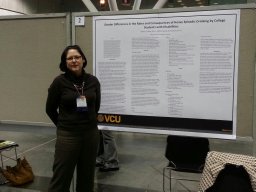
Objective: Our objective was to provide the first comprehensive picture of alcohol use and binge drinking by US college students with disabilities (SWDs), who represent at least 11% (1.6 million) of the US college student population.Methods: In fall 2013, we used a stratified random sampling technique to identify and recruit 2440 SWDs from 122 US colleges and universities. A total of 1285 (53%) SWDs from 61 (50%) colleges and universities completed a survey of alcohol and other drug use and the use of substances by student peers. We conducted 4 multiple logistic regression analyses to compare binge-drinking and non-binge-drinking SWDs by potential correlates of such use and a final model that included only significant variables.Results: SWDs aged <21 vs >= 21 (odds ratio [OR] = 0.90; 95% confidence interval [CI], 0.82-0.99) who spent more time vs less time socializing (OR = 1.24; 95% CI, 1.11-1.38), who spent less time vs more time studying (OR = -0.89; 95% CI, -0.80 to -0.99), and who used vs did not use marijuana (OR = 1.44; 95% CI, 1.18-1.75) or amphetamines (OR = 1.82; 95% CI, 1.15-2.89) were significantly more likely to binge drink. SWDs who reported using barbiturates were less likely to binge drink than were those who did not use barbiturates (OR = -0.36; 95% CI, -0.21 to -0.61). In the final model, use of amphetamines (OR = 1.74; 95% CI, 1.15-2.65) or marijuana (OR = 1.60; 95% CI, 1.32-1.94) was the highest predictor of binge drinking.Conclusion: SWDs' reported rates of binge drinking, although high, were not as high as those of nondisabled college students. Nevertheless, prevention efforts should be targeted toward college SWDs.
BACKGROUND: This article derives from data provided by the National EEOC ADA Research Project at VCU. It is one of 3 articles in this volume/issue. It is intended to document the nature and scope of discrimination as reported to the U. S. Equal Employment Opportunity Commission, the enforcement agency for ADA, by persons with learning disabilities ( LD). Specifically, a group of 9,480 allegations filed with the EEOC and derived from individuals with learning disabilities is compared to a group of 313,480 allegations derived from individuals with other known physical, mental, and behavioral impairments.OBJECTIVE: Comparisons were made based upon the characteristics of the individual charging parties including age, race and gender as well as characteristics of the employer including industry code and number of workers.METHODS: Database mining and descriptive and non-parametric analyses were applied to determine differences in these characteristics.RESULTS: Findings indicate that allegation activities are higher among LD charging parties who are white males between the ages of 15 and 39. Allegations by LD charging parties are more prevalent among smaller employers ( 15-100 workers) in the industries of Accommodation and Food Services, Retail Trade, Educational Services, and Arts/Entertainment/Recreation.
This federally funded program identifies gaps in research and provides support services for scientific, clinical, and translational research projects focused on the long-term effects of mild traumatic brain injury in veterans and active-duty service members.
ObjectiveMild traumatic brain injury (mTBI) and postconcussion syndrome (PCS) are common among military combatants. Hyperbaric oxygen (HBO2) is a proposed treatment for these conditions, but it has not been rigorously studied. The objective of this study was to determine the effects of HBO2 by 3 months post compression at 2 commonly employed dosing levels to treat PCS; whether specific subgroups may have benefited; and if no overall effect was found, whether benefit is masked by other conditions.MethodsThis randomized, double‐blind, sham‐controlled study was conducted at the Naval Air Station in Pensacola, Florida on 61 male Marines with a history of mTBI and PCS. Intervention consisted of 40 once daily 60‐minute hyperbaric chamber compressions at 2.0 atmospheres absolute (ATA) at 1 of 3 randomly preassigned oxygen fractions, resulting in respective blinded groups with an oxygen‐breathing exposure equivalent to (1) surface air (sham), (2) 100% oxygen at 1.5ATA, or (3) 100% oxygen at 2.0ATA. The main outcome measure was the Rivermead Post‐Concussion Questionnaire‐16 (RPQ‐16) collected before compressions and at 2 later points.ResultsThe interaction of time by intervention group was not significant for improvement on the RPQ‐16. Nor was there evidence of efficacy on the RPQ‐16 for any subgroup. No significant time by intervention interaction was found for any functional, cognitive, or psychomotor secondary outcome measure at an unadjusted 0.05 significance level.InterpretationUsing a randomized control trial design and analysis including a sham, results showed no evidence of efficacy by 3 months post‐compression to treat the symptomatic, cognitive, or behavioral sequelae of PCS after combat‐related mTBI. ANN NEUROL 2014;75:277–286
Background:The high incidence of persistent postconcussion symptoms in service members with combat-related mild traumatic brain injury has prompted research in the use of hyperbaric oxygen (HBO2) for management.Objective:The effects of HBO2 on persistent postconcussion symptoms in 60 military service members with at least 1 combat-related mild traumatic brain injury were examined in a single-center, double-blind, randomized, sham-controlled, prospective trial at the Naval Medicine Operational Training Center at Naval Air Station Pensacola.Methods:Over a 10-week period, subjects received a series of 40, once-daily, hyperbaric chamber compressions at 2.0 atmospheres absolute (ATA). During each session, subjects breathed 1 of 3 preassigned oxygen fractions (10.5%, 75%, or 100%) for 60 minutes, resulting in an oxygen exposure equivalent to breathing surface air, 100% oxygen at 1.5 ATA, or 100% oxygen at 2.0 ATA, respectively. Individual, subscale and total item responses on the Rivermead Postconcussion Symptom Questionnaire and individual and total Posttraumatic Disorder Checklist-Military Version were measured just prior to intervention and immediately postintervention.Results:Between-group testing of pre- and postintervention means revealed no significant differences on individual or total scores on the Posttraumatic Disorder Checklist-Military Version or Rivermead Postconcussion Symptom Questionnaire, demonstrating a successful randomization and no significant main effect for HBO2 at 1.5 or 2.0 ATA equivalent compared with the sham compression. Within-group testing of pre- and postintervention means revealed significant differences on several individual items for each group and difference in the Posttraumatic Disorder Checklist-Military Version total score for the 2.0 ATA HBO2 group.Discussion:The primary analyses of between group differences found no evidence of efficacy for HBO2. The scattered within group differences are threatened by Type 2 errors and could be explained by nonspecific effects.Conclusion:This study demonstrated that HBO2 at either 1.5 or 2.0 ATA equivalent had no effect on postconcussion symptoms after mild traumatic brain injury when compared with sham compression.
 Carolyn Graham合作论文数19
 Brian T McMahon合作论文数16
 David Cifu合作论文数11
 Belongia Lisa合作论文数6Jessica E Hurley合作论文数6Brett B Hart合作论文数5William Carne合作论文数VA5William C. Walker合作论文数4Debra Bartelli合作论文数3Pam Cogdal合作论文数3
 Haley R. Zettler合作论文数Dept Criminal Justice, Univ North Texas3Frances Ellmo合作论文数3Eraina Schauss合作论文数3
 Megan C McMahon合作论文数Dept Psychol, Univ Texas Austin3
 Adam P. Sima合作论文数3Franke Laura Manning合作论文数3
 Amy Armstrong合作论文数3Allen N. Lewis合作论文数3Eugenio Monasterio合作论文数2C. Fred Capps合作论文数2Chrisann Schiro-Geist合作论文数2Paige Dixon合作论文数2Eric Suedmeyer合作论文数2Michaela Lemieux合作论文数2Kiersten Hawes合作论文数2W Simon合作论文数2Tartaglia Alexander合作论文数2
 Dan Charman合作论文数Department of Geography, College of Life Environmental Sciences, University of Exeter2
 Fong Chan合作论文数University of Wisconsin-Madison2
 Michael M Mackay合作论文数2
 Miriam Mulsow合作论文数Texas Tech University2Keri O'Neal合作论文数2Richard S. Luck合作论文数2Jean-Pierre Haug合作论文数2
 John Grattan合作论文数Institute of Geography and Earth Sciences, University of Wales2Linda R Shaw合作论文数2Mary Yankaskas合作论文数2David X. Cifu合作论文数2
 Douglas Clark Strohmer合作论文数2Richard T. Roessler合作论文数2Rudy Arredondo合作论文数2
 Surabhi Naik合作论文数Department of Biotechnology, Indian Institute of Integrative Medicine2Brian T Mcmahon合作论文数2Paul Raskauskas合作论文数1Caroline Earwood合作论文数1Peter Temple合作论文数1Meera Patel合作论文数1Nick Sharma合作论文数1Matthias. Kuratli合作论文数1




