Significant time and effort are often required to solve and complete a macromolecular crystal structure. The development of automated computational methods for the analysis, solution, and completion of crystallographic structures has the potential to produce minimally biased models in a short time without the need for manual intervention. The PHENIX software suite is a highly automated system for macromolecular structure determination that can rapidly arrive at an initial partial model of a structure without significant human intervention, given moderate resolution, and good quality data. This achievement has been made possible by the development of new algorithms for structure determination, maximum-likelihood molecular replacement (PHASER), heavy-atom search (HySS), template- and pattern-based automated model-building (RESOLVE, TEXTAL), automated macromolecular refinement (phenix. refine), and iterative model-building, density modification and refinement that can operate at moderate resolution (RESOLVE, AutoBuild). These algorithms are based on a highly integrated and comprehensive set of crystallographic libraries that have been built and made available to the community. The algorithms are tightly linked and made easily accessible to users through the PHENIX Wizards and the PHENIX GUI.
Phaser is a program for phasing macromolecular crystal structures by both molecular replacement and experimental phasing methods. The novel phasing algorithms implemented in Phaser have been developed using maximum likelihood and multivariate statistics. For molecular replacement, the new algorithms have proved to be significantly better than traditional methods in discriminating correct solutions from noise, and for single-wavelength anomalous dispersion experimental phasing, the new algorithms, which account for correlations between F(+) and F(-), give better phases (lower mean phase error with respect to the phases given by the refined structure) than those that use mean F and anomalous differences DeltaF. One of the design concepts of Phaser was that it be capable of a high degree of automation. To this end, Phaser (written in C++) can be called directly from Python, although it can also be called using traditional CCP4 keyword-style input. Phaser is a platform for future development of improved phasing methods and their release, including source code, to the crystallographic community.
There are two likelihood functions in Phaser for use in experimental phasing: one for MIR/MIRAS/MAD phasing, and one specially developed for SAD (single-wavelength anomalous dispersion) phasing. The MIR/MIRAS/MAD function involves a two-dimensional (2D) integration over the complex plane. 2D integration is a slow process, and in the course of a typical experimental phasing run needs to be performed millions of times. We review here how both likelihood functions are derived, and discuss methods for overcoming the computational bottleneck in the integration of the MIR/MIRAS/MAD function, as implemented in the program Phaser.
Likelihood is being applied to an ever-expanding range of problems in macromolecular crystallography, from experimental phasing through to map calculation and structure refinement. We have shown that likelihood also provides a better measure for rotation and translation searches in the molecular replacement method, but searches using the full likelihood functions are computationally expensive. In our new program Phaser we have implemented fast approximations to the likelihood targets, which allow rotation and translation searches to be carried out quickly, but maintaining the sensitivity of the likelihood searches. Phaser contains a number of other innovations, including a likelihood-based correction for anisotropy, and a pruned tree search for multiple molecules, which allows it to solve many difficult molecular replacement problems automatically.
A new software system called PHENIX (Python-based Hierarchical ENvironment for Integrated Xtallography) has been developed for the automation of crystallographic structure solution. This provides algorithms to go from reduced intensity data to a refined molecular model, and facilitates structure solution for both the novice and expert crystallographer. Here, we review the major features of PHENIX, including the different user interfaces, and briefly describe the recent advances in infrastructure and algorithms.
We have been developing a new program, Phaser, to apply likelihood to solving macromolecular crystal structures by molecular replacement and experimental phasing methods.Initial experiences with molecular replacement using brute-force likelihood targets in the program Beast [1] showed that likelihood had greater power to discriminate correct solutions, but the brute-force approach was prohibitively slow.To address this problem we have developed likelihood-based fast rotation [2] and fast translation [3] functions.The combination of these fast targets in Phaser with powerful automation strategies makes it possible to solve many difficult molecular replacement problems routinely.More recent developments in Phaser focus on experimental phasing.The program includes new likelihood targets for phasing by SAD [4], as well as by MAD or MIRAS (unpublished).Completion of the heavy-atom substructure is accomplished through the automated interpretation of log-likelihood-gradient maps.Applications of Phaser to difficult structure solutions will be discussed, along with plans for future development.
 Airlie Mccoy合作论文数Cambridge Institute for Medical Research, University of Cambridge7
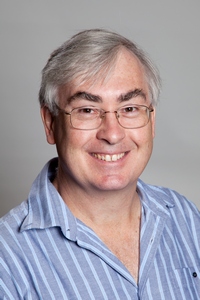 Randy J. Read合作论文数Department of Haematology, Cambridge Institute for Medical Research, University of Cambridge7
 Grosse-Kunstleve R W合作论文数3
 Paul D. Adams合作论文数Department of Bioengineering, UC Berkeley;Lawrence Berkeley National Laboratory3
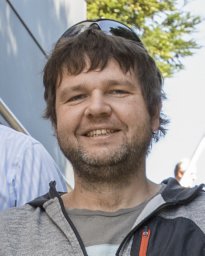 Afonine Pavel V合作论文数Lawrence Berkeley Natl Lab, Univ Calif Berkeley2
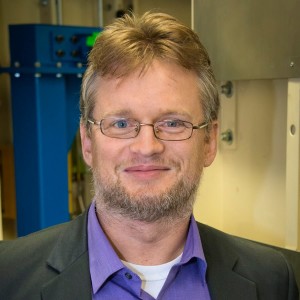 Peter Zwart合作论文数Physical Biosciences Division, Lawrence Berkeley National Laboratory2
 James Sacchettini合作论文数Department of Biochemistry and Biophysics, College of Agriculture & Life Sciences, Texas A&M University;Department of Chemistry, College of Arts & Sciences, Texas A&M University2
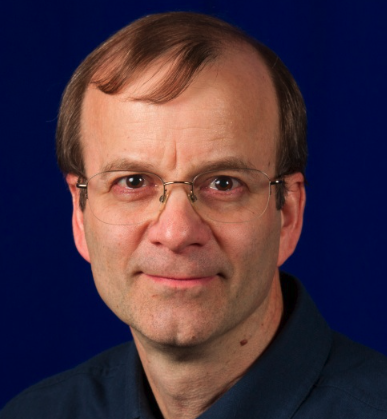 Thomas C. Terwilliger合作论文数Los Alamos National Laboratory2
 Erik Mckee合作论文数2
 Nigel W Moriarty合作论文数2
 Thomas R. Ioerger合作论文数Department of Computer Science & Engineering, College of Engineering, Texas A&M University2
 Li-Wei Hung合作论文数Los Alamos National Laboratory Physics Division2
 Nicholas Sauter合作论文数2
 Kreshna Gopal合作论文数1
 Lalji D. Kanbi合作论文数1
 Tod D. Romo合作论文数Department of Biochemistry and Biophysics, University of Rochester Medical Center1
 Martyn D. Winn合作论文数Daresbury Laboratory, Science and Technology Facilities Council1




