Michel Foucault's historical approach is usually understood as moving from archaeology to genealogy, the former describing his work of the 1960s and the latter the 1970s. From the mid-1970s Foucault certainly describes his work as genealogy, and he explicitly relates this to Nietzsche's project, which he had critically explored in lectures and the famous ‘Nietzsche, Genealogy, History’ essay published in 1971. But in lectures and one interview from the early 1970s, Foucault uses another term to describe the complementary approach to archaeology, which is that of dynastics, a mode of analysis he relates to both power and knowledge. Tracing the usage of these terms over time, this article explores their relation. Foucault uses the term dynastics to describe his approach after his explicit engagement with Nietzsche, and before settling on genealogy as the appropriate term. Foucault's use of dynastics is interesting for many reasons, including the way he glosses this as dunamis dunasteia. Foucault is here thinking about a range of senses, from dynamics or power to dynasties, heredities, and lineage. Even after he drops the term to describe his approach, Foucault is perhaps invoking the notion of dynastics every time he subsequently writes about power relations.
ABSTRACT: This article provides a survey of the material in the University at Buffalo archives concerning Foucault's two visits in 1970 and 1972. The 1970 visit was Foucault's first trip to the United States, and he gave a course advertised as "The desire for knowledge or the phantasms of knowledge in French literature in the nineteenth and twentieth centuries." On his return in 1972 as the Melodia E. Jones Chair he gave two courses: a seminar on "The Criminal in the Literature of the 18th and 19th Centuries" and a lecture series on "The Origins of Culture," renamed as "History of Truth." Using the personnel files and correspondence with his host John K. Simon, as well as the audio recordings of the 1972 lectures and parts of the 1970 course, this article reports on what we know of his teaching and its role in his initial reception in the United States. Particular attention is given to how much of the 1970 course has been published in different places, without its overall organization and linking theme being previously recognized.
Not for the first time, certain stakes came to the boil again in the 1950s surrounding what became referred to as the ‘Lukács question’, namely the position of Georg Lukács under the shadow of Stalinism. What follows is an interview by Patrick Tort with Henri Lefebvre on the ‘Lukács question’, arising from an earlier lecture delivered by the latter in Hungary in 1955. The interview is important for the light it sheds on the power of truth in relation to the Party, issues of proletarian science, class consciousness, and literary and aesthetic politics. Most crucially, the interview touches on the concept of the ‘socialisation of society’, or dialectical totality, in which elements are incorporated as internally related to the structure of a whole. In contesting Stalinism as a discursive complex and for its defence of Lukács, the interview is a crucial material contribution to Marxist theory.
This article discusses an important moment in the career of Alexandre Koyr & eacute;, and the history of philosophy in France. It looks at the 1951 election of a successor to & Eacute;tienne Gilson at the Coll & egrave;ge de France, for which Koyr & eacute; was one of the possible candidates, alongside Henri Gouhier and Martial Gueroult. Koyr & eacute; came close, but Gueroult was elected to the chair. In time, Gueroult was succeeded first by Jean Hyppolite and then, in 1970, by Michel Foucault. Using archival documents to discuss the process in detail, this article shows the weakness of Koyr & eacute;'s proposers, and the strength of Gouhier's application. Finally, drawing on Koyr & eacute;'s outline of his proposed teaching programme, it discusses how success might have shaped his future career, using this as an indication of his position within and beyond a French tradition in the philosophy and history of the sciences.
The biographical links between Michel Foucault and the comparative mythologist and philologist Georges Dumézil have received more attention than their intellectual connections. This article contributes by surveying Foucault's engagements, from a 1957 radio lecture to his late lectures at the Collège de France. Particular focus is on lectures on structuralism and history in 1970, some references between 1970 and 1981, and the use of Dumézil's work in each of Foucault's two final courses at the Collège de France. In each, Foucault takes up Dumézil's analyses of mythology in developing his own projects concerning history and antiquity.
Foucault’s Introduction to a translation of Ludwig Binswanger’s essay ‘Dream and Existence’ was published in late 1954. The translation was credited to Jacqueline Verdeaux, with Foucault acknowledged for the notes. Yet Verdeaux herself indicates the intensely collaborative nature of their working process and the translation. In 1958, Victor von Weizsäcker’s Der Gestaltkreis was published in French as Le Cycle de la structure, translated by Foucault and Daniel Rocher. Foucault went on to translate and introduce Immanuel Kant’s Anthropology as his secondary doctoral thesis. His engagement with Kant and Binswanger’s ideas has been discussed in the literature, but his role as translator has generally been neglected. His engagement with von Weizsäcker is almost never mentioned. This article critically discusses Foucault’s role in the Binswanger and von Weizsäcker translations, comparing the German originals with the French texts, and showing how this is a useful additional element to the story of the early Foucault.
This introduction to the special issue ‘Foucault Before the Collège de France’ surveys Foucault’s work in the first part of his career. While there is a familiar chronology to the books he published in the 1960s – from History of Madness to The Archaeology of Knowledge – the story can be developed in relation to his articles, his translations, his early publications and manuscripts, and his teaching. Looking at the programme of posthumous publication of many of his courses and unfinished manuscripts, this introduction discusses key themes, and introduces the papers of the special issue which analyse these texts in detail. It concludes with some general thoughts about what these hitherto neglected or hidden sources tell us about the work of Foucault. Although it adds some cautions about their use, we believe the texts and lectures analysed in this issue and others from the period before the Collège de France add valuable insights into our understanding of Foucault’s intellectual development, his interests and plans, and his enduring influence on a variety of fields in the humanities and social sciences.
In this extended review essay we discuss the lectures on sexuality which Foucault delivered in the 1960s, published in a single volume in 2018. The first part of the volume comprises five lectures given at the University of Clermont-Ferrand in 1964 to psychology students. The second part is Foucault’s course ‘The Discourse of Sexuality’, given at the experimental University of Vincennes in 1969 in the philosophy department. We explore both the themes of the lectures, and the important editorial materials provided by Claude-Olivier Doron which situate these themes in relation to recent developments in the history and philosophy of biology, gender and sexuality. These lectures provide some important and surprising additions to Foucault’s more familiar interest in sexuality, with discussion of plant and animal biology, sex differentiation, the question of sexual behaviour, perversion and infantile sexuality.
This response outlines the intention of thinking critically about terrain as a way to think about the political materiality of territory. It responds to the interlocutors particularly around the themes of place, geology, depth, Eurocentrism, and the relation between human and physical geography.
This article is based on the 2019 Dialogues in Human Geography plenary lecture at the Royal Geographical Society. It has four parts. The first discusses my work on territory in relation to recent work by geographers and others on the vertical, the volumetric, the voluminous, and the milieu as ways of thinking space in three-dimensions, of a fluid and dynamic earth. Second, it proposes using the concept of terrain to analyse the political materiality of territory. Third, it adds some cautions to this, through thinking about the history of the concept of terrain in geographical thought, which has tended to associate it with either physical or military geography. Finally, it suggests that this work is a way geographers might begin to respond to the challenge recently made by Bruno Latour, where he suggests that ‘belonging to a territory is the phenomenon most in need of rethinking and careful redescription; learning new ways to inhabit the Earth is our biggest challenge’. Responding to Latour continues this thinking about the relations between territory, Earth, land, and ground, and their limits.
This paper argues that territory is more than a simple concept, and that William Shakespeare is a valuable guide to understanding its complexities. Shakespeare's plays explore many aspects of geography, politics and territory. They include ideas about the division of kingdoms in King Lear, the struggle over its control in Macbeth and many of the English history plays, to the vulnerability of small territories with powerful neighbours in Hamlet. However, the plays also help us to understand the legal and economic issues around territory, of the importance of technical innovations around surveying and cartography, and the importance of landscapes and bodies. Shakespeare is especially interesting because debates in political theory at this time concerned a recognizably modern understanding, and European states were consolidating their own rule, marking boundaries and seizing colonial possessions. Shakespeare dramatizes many of these themes, from The Tempest to plays set in the Eastern Mediterranean such as Othello. Territory is a word, concept and practice, and their interrelation is explored with Shakespeare as a guide. This builds on the author's previous work on territory, but also develops the understanding further, especially around the colonial, corporeal and geophysical. Historical work on our contemporary concepts can also be revealing of our present.
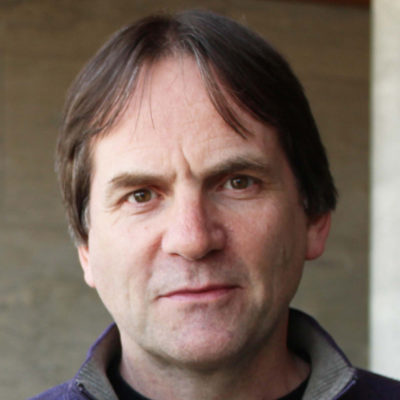 Simon Dalby合作论文数Department of Geography and Environmental Studies, Balsillie School of International Affairs, Wilfrid Laurier University4
 Jeremy Crampton合作论文数School of Architecture, Planning and Landscape, Newcastle University3
 Klaus Dodds合作论文数Geopolitics, Development, Security and Justice Group, Department of Geography, Royal Holloway, University of London3
 Ben Anderson合作论文数2Andrew Barry合作论文数2
 Karen Bakker合作论文数Department of Geography, Faculty of Arts, The University of British Columbia;Institute for Resources, Environment and Sustainability, The University of British Columbia;Radcliffe Institute for Advanced Study, Harvard University2
 Claudio Minca合作论文数Università di Venezia2
 John Agnew合作论文数Department of Geography, University of California, Los Angeles2
 Gordon L. Clark合作论文数Smith School of Enterprise and the Environment, Oxford University;Said Business School, Oxford University;School of Geography and the Environment, Oxford University2
 Henri Lefebvre合作论文数Texas A&M University2Joe Bryan合作论文数2
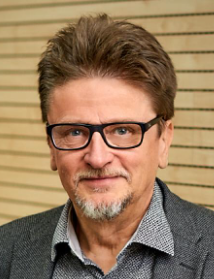 Anssi Paasi合作论文数Geography Research Unit, University of Oulu;Department of Geography, Luonnontieteellinen Tiedekunta, Oulun Yliopisto2
 Juliet J. Fall合作论文数2
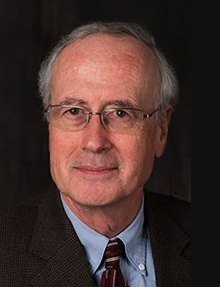 Alexander Murphy合作论文数Department of Geography;University of Oregon;Department of Geography, University of Oregon2Jaap de Wilde合作论文数1Dave Boothroyd合作论文数1Sam Durrant合作论文数1Nigel Clark合作论文数1Lucas Introna合作论文数1Mitchell Dean合作论文数1Anders Blok合作论文数1Huimin Jin合作论文数1Lily Kong合作论文数1Gurminder Bhambra合作论文数1David Byrne合作论文数1Ole Bjerg合作论文数1Patricia Clough合作论文数1Rosi Braidotti合作论文数1Christian Borch合作论文数1Melinda Cooper合作论文数1Peter Adey合作论文数1Ash Amin合作论文数1lars hedegaard合作论文数1Gunilla Herolf合作论文数1Boris Holzer合作论文数1Orazio Irrera合作论文数1Steve Herbert合作论文数1Erin Haney合作论文数1michael r molitor合作论文数1hugo caminos合作论文数1Allan Rosas合作论文数1Daniele Lorenzini合作论文数1Joyce Davidson合作论文数1Hanson Susan合作论文数1Matthew Fuller合作论文数1Herbert Kalthoff合作论文数1Rosalyn Diprose合作论文数1Michael Halewood合作论文数1Noel Castree合作论文数1




