Crocodylians are highly vocal reptiles, possessing a complex acoustic signalling system including vocal and non-vocal signals used for courtship, mating, mediating conflict, and providing maternal care. Despite this, research on crocodylian acoustic signalling remains infrequent, with methodologies and terminology varying widely across studies. Here, we systematically review the literature and standardise crocodylian acoustic signal descriptions, measurements, and terminology to establish a consistent foundation for future research. The compiled dataset included 22 publications, with 623 acoustic signalling observations and 53 distinct parameters measured across various species, life stages, and contexts. The American alligator (Alligator mississippiensis) was the most frequently studied species and distress calls the most commonly recorded signal type. Significant variation existed in parameters measured across studies, with dominant frequency, call duration, and fundamental frequency the most common. We synthesised acoustic parameters from available publications into comparable values and units, and provide these as a centralised database along with a standardised ethogram including representative spectrograms, and a glossary of commonly used terms facilitating clearer cross-species comparisons. Significant foundational level data gaps were identified with many species lacking defined repertoires, and notably, underwater acoustic signalling was rarely incorporated. We recommend shifting future research focus from distress calls to include a wider range of spontaneously produced acoustic signals, by individuals of known sex and life stage. The inclusion of a broader set of underrepresented acoustic parameters will also enable better cross-species comparisons, and identification of encoding in crocodylian acoustic signals. We further promote the reanalysis of existing data incorporating these key parameters, along with increased collaborative efforts, to add valuable insights informing conservation without requiring additional fieldwork. Such strategies will support future research into crocodylian acoustic communication and guide the development of more effective monitoring techniques such as passive acoustic monitoring and machine learning as tools for conservation and management of crocodylians.
Endotherms balance high and stable body temperatures against significant energetic costs and food demands. Heterothermy, including torpor, helps individuals balance energy budgets under challenging conditions. Small flying endotherms face considerable challenges when balancing energy budgets during periods of inclement weather with low food availability. Although there is a wealth of knowledge about heterothermic responses of temperate insectivorous bats, considerably less is known about its occurrence and the factors that promote it in nectar-feeding bats from tropical regions. Here, we experimentally tested whether Merriam's long-tongued bat (Glossophaga mutica), a Neotropical nectarivorous species, uses heterothermy in response to reduced energy intake. Using temperature sensitive PIT-tags, we monitored subcutaneous temperature in wild-caught males fed either the full (100%) or restricted (25%) amount of predicted daily energy expenditure. Compared to bats that were fed a full energy diet, energetically challenged bats maintained subcutaneous temperatures significantly closer to roost temperature during the daytime inactive period, indicating a greater heterothermic response. Our results provide further evidence that G. mutica can flexibly modulate body temperature in response to short-term energy deficits. This is similar to patterns observed in other nectarivorous bats, insectivorous bats, and nectar-feeding birds like hummingbirds. This study contributes to a growing understanding of heterothermy in tropical mammals and suggests that nectarivorous bats use heterothermy as an adaptive response to unpredictable food availability likely driven in part by climate change.
Trawling bats occur in urban environments globally and are found roosting in artificial structures near water such as bridges and culverts. Culverts are suitable dark, thermally stable and often humid environments, however knowledge on roost selection and availability of these artificial structures within urban environments are limited. The large-footed myotis (Myotis macropus) is a specialist trawling bat found roosting in culverts under roads in urban environments in Australia. We used an experimental design stratified by landscape variables and culvert attributes to identify roosting preferences to predict culvert roost potential distribution and quantify the availability of suitable culvert roosts for a trawling bat in the subtropical city of Brisbane, Australia. We completed seasonal surveys of 308 concrete culverts across the city, modelled the distribution of M. macropus roosts and then predicted available culvert habitat. The distribution of M. macropus roosts in concrete culverts is related to waterway density, distance to nearest large waterbody, vegetation cover and channel width at the landscape scale, and to the height and design of the culvert at the culvert scale. Myotis macropus preferred culverts taller than 1.2 m in height, and while a preference for box culverts was detected, both box and pipe designs were occupied. Culverts available for selection as roosts by M. macropus are limited in the city of Brisbane urban landscape. Disturbance to or loss of culvert roosts can have significant conservation implications to colonies of trawling bats roosting in culverts due to the limited availability of concrete culverts that provide suitable roost sites.
Efforts to create sustainable cities and urban climate-resilience depend on understanding how wildlife use the urban matrix to guide urban planning and design. Urban environments combine natural elements like topography and waterways, with various intensities of urban development. These combinations shape the spatial environment of cities and influence the diversity and persistence of urban wildlife. Insectivorous bats occur in urban areas, with urban tolerant species correlated with greater mobility and flexible roosting strategies, such as trawling bats. To understand how trawling bats use urban space, we studied patterns of land use selection in an urban population of a trawling bat, the large-footed myotis (Myotis macropus) in a subtropical city. We quantified fine-scale space use using radio telemetry over two seasons using land use categories applied in urban planning and design. Bats used urban land use types in a non-random manner, displaying a preference for green and blue space associated with the recreation land use type at both the landscape and home range scale. Tracked bats used waterways and riparian areas, as well as parkland, sportsgrounds and other green space adjacent to waterways. Trawling bats are dependent on riparian habitats, and these complex habitats are particularly vulnerable to changes to the availability of water resources associated with climate change. Maintaining spatial heterogeneity in urban planning and design by retaining and providing green space along, and adjacent to waterways, will provide a landscape mosaic for urban trawling bats to persist, facilitating climate change resilience in a specialist urban species.
1. Acoustic monitoring is an effective and scalable way to assess the health of important bioindicators like bats in the wild. However, the large amounts of resulting noisy data requires accurate tools for automatically determining the presence of different species of interest. Machine learning-based solutions offer the potential to reliably perform this task, but can require expertise in order to train and deploy. 2. We propose BatDetect2, a novel deep learning-based pipeline for jointly detecting and classifying bat species from acoustic data. Distinct from existing deep learning-based acoustic methods, BatDetect2’s outputs are interpretable as they directly indicate at what time and frequency a predicted echolocation call occurs. BatDetect2 also makes use of surrounding temporal information in order to improve its predictions, while still remaining computationally efficient at deployment time. 3. We present experiments on five challenging datasets, from four distinct geographical regions (UK, Mexico, Australia, and Brazil). BatDetect2 results in a mean average precision of 0.88 for a dataset containing 17 bat species from the UK. This is significantly better than the 0.71 obtained by a traditional call parameter extraction baseline method. 4. We show that the same pipeline, without any modifications, can be applied to acoustic data from different regions with different species compositions. The data annotation, model training, and evaluation tools proposed will enable practitioners to easily develop and deploy their own models. BatDetect2 lowers the barrier to entry preventing researchers from availing of effective deep learning bat acoustic classifiers. Open source software is provided at: ### Competing Interest Statement The authors have declared no competing interest.
The use of songs for mate-attraction is common. Intensive songs may indicate high energetic investment, reflecting an individual’s resource-holding potential and attractiveness as a prospective mate. Consequently, there can be a direct relationship between song metrics and lifetime reproductive success. While singing is held to be energetically costly, quantitative studies in mammals are lacking. Here, we present an exploratory analysis of energetic costs in a singing bat ( Mystacina tuberculata ). We recorded the songs of 12 male bats and quantified skin temperature ( T sk ) responses using temperature telemetry to estimate energy expenditure. We hypothesised that singing would be energetically costly and predicted correlations between T sk and song duty cycle and between duty cycle and body size. Contrary to our expectations, we found estimated energetic expenditure while singing to be comparatively low. We also found no relationship between estimated energy expenditure and duty cycle, and neither estimated energy expenditure nor duty cycle was correlated with body size. Our results suggest that energetic costs of singing in bats may be lower than previously assumed, and that song output may convey only limited fitness information. Significance statement Song is commonly used to communicate information related to mate-attraction or territory defence. Some aspects of song production require more energy to produce, making them an honest signal of a singer’s investment. While our knowledge of bird song and its relationship to mating success is well developed, a similar understanding regarding mammalian song is severely lacking. Numerous bat species produce song, yet we know little about the energetics of song production in this large and diverse order. Using temperature telemetry, we estimate the costs of singing in a free-living lek-breeding bat. To our knowledge, this is the first study to estimate the energetic costs of song production in a mammal.
Bats (Mammalia: Chiroptera) have sophisticated acoustic abilities adapted to many uses, including both echolocation and social vocalisations. Social vocalisations are used in a wide variety of contexts and vary greatly in acoustic arrangement and complexity. Among the most intricate are the courtship songs that males of certain species use to attract mates and advertise their qualities. To date, however, few studies have examined the phonological construction of bat songs or made a detailed assessment of the syntax used to combine different song elements. Here, we examine the syntactic construction of courtship songs in the New Zealand lesser short-tailed bat, Mystacina tuberculata , a highly vocal, lek-breeding species with exceptionally high song-output rates. We hypothesised that song construction in this species is both hierarchical and non-random, and demonstrates a high degree of individual variation, potentially allowing for individual recognition. We recorded the courtship songs of nine male bats and used manual classification of song components to examine the song structure. Here we examine whether the deployment of different song components is dependent on their position, and also determine the transition probabilities between different components. We find that the frequency of song-element production and the distribution of elements within songs are non-random at both the individual and population level, and that the number of elements used per phrase differs between individuals. Overall, we demonstrate that M. tuberculata songs are hierarchically constructed and employ phonological syntax to build syllables and phrases. We further show that bats employ high structural similarity and conservatism in the construction of syllables, while retaining a capacity for versatility and innovation that allows for considerable individual variation and, likely, individual recognition.
Automatically detecting the calls of species of interest in audio recordings is a common but often challenging exercise in ecoacoustics. This challenge is increasingly being tackled with deep neural networks that generally require a rich set of training data. Often, the available training data might not be from the same geographical region as the study area and so may contain important differences. This mismatch in training and deployment datasets can impact the accuracy at deployment, mainly due to confusing sounds absent from the training data generating false positives, as well as some variation in call types. We have developed a multiclass convolutional neural network classifier for seven target bird species to track presence absence of these species over time in cotton growing regions. We started with no training data from cotton regions but we did have an unbalanced library of calls from other locations. Due to the relative scarcity of calls in recordings from cotton regions, manually scanning and labeling the recordings was prohibitively time consuming. In this paper we describe our process of overcoming this data mismatch to develop a recognizer that performs well on the cotton recordings for most classes. The recognizer was trained on recordings from outside the cotton regions and then applied to unlabeled cotton recordings. Based on the resulting outputs a verification set was chosen to be manually tagged and incorporated in the training set. By iterating this process, we were gradually able to build the training set of cotton audio examples. Through this process, we were able to increase the average class F1 score (the harmonic mean of precision and recall) of the recognizer on target recordings from 0.45 in the first iteration to 0.74.
SummaryDespite many notable successes, the failure rate of animal translocations remains high. Conservation practitioners and reintroduction specialists have emphasised the need for ongoing documentation of translocation attempts, whether successful or not, including detailed methodologies and monitoring approaches. This study reports on the first translocation of the North Island subspecies of New Zealand’s smallest bird, the endemic Rifleman Acanthisitta chloris granti. We describe an improved transfer methodology following recommendations arising from a previous translocation of South Island Rifleman Acanthisitta chloris chloris. Key modifications included a reduced capture window, shorter holding times, lack of extended aviary housing, and separation of territorial individuals during holding. Survival from capture to release increased from 52% to 97% using this new methodology. However, only 22% of 83 released birds were found in the reserve the next breeding season, resulting in an initial breeding population of only six males and five females. An integrated Bayesian analysis of three years of subsequent population data, including a population boost from a second translocation, projected a median decrease to 0–5 females over 10 years, but with 95% prediction intervals ranging from 0 to 33. These projections explicitly account for parameter uncertainty, as well as demographic stochasticity, and illustrate the need to do so when making inferences for small reintroduced populations.
The large-footed myotis (Myotis macropus) is a specialist trawling bat with flexible roosting behaviour, being able to switch between caves, tree hollows and artificial roosts such as bridges, tunnels and culverts. However, little is known about how this species selects culvert roost sites in urban landscapes where hollows may be limited or absent. We surveyed 57 concrete culverts and found 21 M. macropus roosts comprising day and maternity roost sites; 305 bats were captured. Colony sizes averaged 20.6 ± 17.7 (range = 4–49) for maternity roosts and 2.0 ± 0.8 (range = 1–3) for day roosts. Roost culverts differed significantly from available culverts predominantly in terms of availability of microhabitat (lift holes and crevices). Roost culverts had lift holes that had greater cavity dimensions than available culverts and crevices were found only at roost culverts. Culverts containing microhabitat were a limited resource in this urban landscape and so increasing their availability may provide more urban roost sites for this specialist species.
Insects rely on chemical information obtained from their surroundings when locating biologically important resources. Detection of these chemicals is mediated by the antennae, which are endowed with various sensory structures called sensilla. Sensilla type, distribution and density vary among species, between sexes and at different life stages, and may provide important information regarding the ability of individuals to detect and process such external stimuli. The aim of this study was to quantitatively investigate the sensory architecture of larval and adult antennae in the New Zealand magpie moth, Nyctemera annulata (Arctiinae) . Using scanning electron microscopy the sensilla were identified and classified into 8 types: trichoid, basiconic, chaetic, auricillic, squamiform, styloconic, coeloconic and Böhm's bristles, with multiple subtypes. Larval antennae were found to possess morphology and sensory structures which are essentially ubiquitous across the Lepidoptera. Sexual dimorphism was apparent in the overall antennal morphology as well as in the distribution, density and morphology of particular types of sensilla in adult N. annulata , which likely represents a divergence in sensory functions based on the different resource cues responded to by males (sex pheromones) and females (host plant odours). This is a rare example of a study which quantifies variation in the numbers and dimensions of all antennal sensilla types for males and females to allow a thorough statistical assessment of sexual dimorphism in antennal sensory architecture.
The conservation status of all known New Zealand bat taxa was reassessed using the New Zealand Threat Classification System (NZTCS). A full list is presented, along with brief notes on the most important changes. This list replaces all previous NZTCS lists for bats. Of the seven taxa assessed, one taxon was classed as Nationally Critical (New Zealand long-tailed bat), and one each as Data Deficient (greater short-tailed bat), Nationally Vulnerable (northern lesser short-tailed bat), Declining (central lesser short-tailed bat), Recovering (southern lesser short-tailed bat) and Vagrant (little red flying fox). One taxon (long-tailed bat (North Island)) was classed as taxonomically indistinct from the New Zealand long-tailed bat.
Passive acoustic sensing has emerged as a powerful tool for quantifying anthropogenic impacts on biodiversity, especially for echolocating bat species. To better assess bat population trends there is a critical need for accurate, reliable, and open source tools that allow the detection and classification of bat calls in large collections of audio recordings. The majority of existing tools are commercial or have focused on the species classification task, neglecting the important problem of first localizing echolocation calls in audio which is particularly problematic in noisy recordings. We developed a convolutional neural network based open-source pipeline for detecting ultrasonic, full-spectrum, search-phase calls produced by echolocating bats. Our deep learning algorithms were trained on full-spectrum ultrasonic audio collected along road-transects across Europe and labelled by citizen scientists from www.batdetective.org. When compared to other existing algorithms and commercial systems, we show significantly higher detection performance of search-phase echolocation calls with our test sets. As an example application, we ran our detection pipeline on bat monitoring data collected over five years from Jersey (UK), and compared results to a widely-used commercial system. Our detection pipeline can be used for the automatic detection and monitoring of bat populations, and further facilitates their use as indicator species on a large scale. Our proposed pipeline makes only a small number of bat specific design decisions, and with appropriate training data it could be applied to detecting other species in audio. A crucial novelty of our work is showing that with careful, non-trivial, design and implementation considerations, state-of-the-art deep learning methods can be used for accurate and efficient monitoring in audio.
A growing body of research suggests that songs are an important part of the courtship behavior of many bat species, however there is little information on the basic characteristics of these vocalizations, or how they may function as a courtship signal. Lekking male lesser short-tailed bats (Mystacina tuberculata) appear to use vocal displays as a primary method for attracting mates, but it is unclear if these vocalizations constitute songs, and what characteristics females may use for mate selection. We recorded 16 lekking males and described the frequency and temporal properties of their vocalizations. We identified four notes (upsweeps, downsweeps, trills, and tones) that comprise courtship vocalizations, and males produced these notes either singly, or combined them linearly to form composite syllables. We classified 51 distinct syllable types (with an average of 29 types per male), with four (trills, upsweep-trills, trill-downsweeps, and upsweep-trill-downsweeps) comprising 69% of all syllables produced. The duration of trill-downsweeps scaled negatively with forearm length (a proxy for body size in bats), and all four main syllable types showed evidence of individuality. Based on the behavioral characteristics and contexts of these courtship vocalizations, we posit that this behavior constitutes singing. Furthermore, M. tuberculata potentially has one of the highest sustained song outputs yet described. Our results suggest the singing displays of M. tuberculata are signals that provide useful, honest cues of male characteristics and identity to females, and are as complex as the songs of many passerines.
Leks are aggregations of sexually displaying males visited by receptive females and characterized by intense male-male competition to attract mates. Success in lekking species is often contingent upon male display output and/or lek attendance, with energetically costly displays functioning as an honest indicator of male quality. Furthermore, display spaces are vigorously defended by territorial males, and territory characteristics are often linked to male phenotype. Here we describe the courtship and territorial behaviour of lekking lesser short-tailed bats, Mystacina tuberculata, and both behaviours appear to be conditional on body size. During the breeding season, lekking males occupy and defend small tree hollows and sing for long periods of the night to attract females. Although some males sing alone, others form 'timeshare' singing roosts, where multiple males visit sequentially to sing each night. In our study, solitary males were significantly smaller than timeshare males and individually had both higher song outputs and higher roost occupancy rates, although timeshare roosts had higher overall occupancy rates. There appeared to be no fitness difference between the two male groups, and while one timeshare roost contained relatively closely related individuals (which roost settlement simulations indicate was not a chance event), four did not. We discuss factors that may promote timeshare formation, including competition for access to desired roosts and potential by-product mutualisms. Courtship and sexual selection in bats is largely undescribed, and thus our study provides a useful description of behaviour in a little-studied taxon. (C) 2017 The Association for the Study of Animal Behaviour. Published by Elsevier Ltd. All rights reserved.
Variation in the diet of generalist insectivores can be affected by site-specific traits including weather, habitat, and season, as well as demographic traits such as reproductive status and age. We used molecular methods to compare diets of three distinct New Zealand populations of lesser short-tailed bats, Mystacina tuberculata. Summer diets were compared between a southern cold-temperate (Eglinton) and a northern population (Puroera). Winter diets were compared between Pureora and a subtropical offshore island population (Hauturu). This also permitted seasonal diet comparisons within the Pureora population. Lepidoptera and Diptera accounted for >80% of MOTUs identified from fecal matter at each site/season. The proportion of orders represented within prey and the Simpson diversity index, differed between sites and seasons within the Pureora population. For the Pureora population, the value of the Simpson diversity index was higher in summer than winter and was higher in Pureora compared to Eglinton. Summer Eglinton samples revealed that juvenile diets appeared to be more diverse than other demographic groups. Lactating females had the lowest dietary diversity during summer in Pureora. In Hauturu, we found a significant negative relationship between mean ambient temperature and prey richness. Our data suggest that M.tuberculata incorporate a narrower diversity of terrestrial insects than previously reported. This provides novel insights into foraging behavior and ecological interactions within different habitats. Our study is the first from the Southern Hemisphere to use molecular techniques to examine spatiotemporal variation in the diet of a generalist insectivore that inhabits a contiguous range with several habitat types and climates.
Global biodiversity is declining rapidly while the human population grows exponentially. This creates pressure for agricultural industries to improve productivity, but also demonstrate that on-farm management actions are minimising impacts on biodiversity. However, the costs and logistical considerations of traditional biodiversity assessment methods are beyond the scope of many agricultural industries and landholders. Our goal was to evaluate the potential for acoustic biodiversity monitoring in agricultural systems. We assessed a range of species-specific and more general acoustic indices using five key criteria (i.e. relevance to industry, diagnostic capability, spatio-temporal scale, logistical feasibility, and utility as a biodiversity surrogate) to determine whether they were suitable for assessing biodiversity outcomes for agricultural industries and individual farmers. Based on these assessment criteria, species-specific or guild-specific acoustic bioindicators that are processed using automatic recognisers are more appropriate for biodiversity monitoring when the goal is to assess industry- or farm-specific impacts on biodiversity. If there is no need to establish a diagnostic link between on-farm management practices and biodiversity, then acoustic indices are more logistically feasible to use and may more accurately reflect overall biodiversity. We also recommend using birds and bats for acoustic monitoring in agricultural systems because they are relatively easy to monitor, exhibit peaks in activity around dusk or dawn, and are not necessarily water dependent. We believe that acoustic monitoring has the potential to deliver consistent, repeatable results at a relatively low cost compared to traditional biodiversity monitoring, which will allow individual farmers and agricultural industries to more easily track their sustainability performance. This becomes even more critical as we consider the increasing role that agricultural regions will have in sustaining the world's rapidly declining biodiversity.
Geographic patterns of song variation are common in passerines and can develop as a consequence of the mechanisms of song acquisition and dispersal. In particular, the timing of dispersal relative to the sensory learning phase and the time of song crystallization is important. For example, when the sensory phase continues after dispersal or when males learn new songs every breeding season, i.e. open-ended learner, neighborhoods can develop where males share their songs. In this study, we utilize a unique, comprehensive dispersal and song recording dataset to investigate the existence and development of micro-geographic song variation in a wild passerine population. Machine learning song analysis methods allow us to overcome perceptual bias in the classification of the songs of New Zealand hihi (Notiomystis cincta). We show that males share more song elements of their repertoire with their neighbors than with more distant males or with males from the same natal area, implying that repertoire is acquired post-dispersal. Finally, we suggest that high levels of male competition have driven the development of post-dispersal vocal learning behavior in this species.
Variation in winter conditions differentially impacts thermoregulation of endotherms, with some species using torpor as an energy-saving strategy during periods of negative energy balance. We evaluated how differences in energy balance due to winter ambient temperatures (Ta), would lead to differing torpor expression and roost choice between populations. Here, we monitored Ta and skin temperatures (Tsk) of New Zealand lesser short-tailed bats (Mystacina tuberculata) using temperature telemetry from an inland population from Pureora, North Island and another from Hauturu/Little Barrier Island (Hauturu), an offshore island. Relative to Pureora, all recorded Ta variables were higher in Hauturu. Hauturu bats used short torpor (<24 h) more frequently (51% of observational days) than their Pureora conspecifics (33%). Furthermore, minimum Tsk of Hauturu bats correlated positively with mean Ta and Hauturu bats were more likely to arouse on nights with warmer sunset Ta. No correlation was found for Pureora bats. Torpor bout duration did not differ between sites. On Hauturu, bats preferred thermally unstable roosts and preferentially roosted inside dead punga/silver fern-trees (Cyathea dealbata). As punga thermal characteristics did not differ from Ta, Hauturu bats may take advantage of warm Ta to reduce rewarming costs. We did not observe differences in any thermoregulatory variables between sexes in Hauturu. Differences in winter Ta may differentially impact populations across a latitudinal gradient. Although bat populations in warmer climates are under less thermoregulatory stress, site and climate specific adaptations appear to be employed that affect roost choice and torpor patterns.
Positive emotional contagions are outwardly emotive actions that spread from one individual to another, such as glee in preschool children [1] or laughter in humans of all ages [2]. The play vocalizations of some animals may also act as emotional contagions. For example, artificially deafened rats are less likely to play than their non-hearing-impaired conspecifics, while no such effect is found for blinded rats [3]. As rat play vocalizations are also produced in anticipation of play, they, rather than the play itself, may act as a contagion, leading to a hypothesis of evolutionary parallels between rat play vocalizations and human laughter [4]. The kea parrot (Nestor notabilis) has complex play behaviour and a distinct play vocalization [5]. We used acoustic playback to investigate the effect of play calls on wild kea, finding that play vocalizations increase the amount of play among both juveniles and adults, likely by acting as a positive emotional contagion.
 Gareth Jones合作论文数School of Biological Sciences, University of Bristol19
 Corfield Jeremy R合作论文数12Kerry M Borkin合作论文数8
 Zenon Czenze合作论文数Zool, Univ New England7
 M Fabiana Kubke合作论文数School of Medical Sciences, University of Auckland7
 Cory A. Toth合作论文数Boise State University6
 J Martin Wild合作论文数Faculty of Medical and Health Sciences, University of Auckland6
 Shu-Yi Zhang (张淑仪)合作论文数中国科学院动物研究所6Martin K. Obrist合作论文数6
 Libiao Zhang (张礼标)合作论文数Institute of Zoology, Guangdong Academy of Sciences5
 Shuyi Zhang (张树义)合作论文数College of Animal Science and Veterinary Medicine, Shenyang Agricultural University5Jay Ruffell合作论文数School of Biological Sciences5Sarah J. Withers合作论文数4
 Mark Hauber合作论文数Advanced Science Research Center, Graduate Center, City University of New York4
 Kate Jones合作论文数Department of Genetics, Evolution & Environment, Division of Biosciences, University College London;People and Nature Lab, University College London;Faculty of Life Sciences, University College London4
 Mark Brigham合作论文数Department of Biology, Faculty of Science, University of Regina4
 Raoul Schwing合作论文数3
 Michael Towsey合作论文数3
 Todd Dennis合作论文数School of Biological Sciences, University of Auckland3
 Joseph M Szewczak合作论文数3
 Stephen J. Rossiter合作论文数University of London, Queen Mary University of London3
 Arjan Boonman合作论文数INCM – CNRS UMR6193, 31 Chemin Joseph Aiguier, 13402, Marseille Cedex 20, France3Michael M. Walker合作论文数3
 Colin F. J. O'Donnell合作论文数Southern Regional Science Centre;Department of Conservation;Department of Conservation, Southern Regional Science Centre3
 Tony Hickey合作论文数School of Biological Sciences, Faculty of Science, The University of Auckland3
 Ximena Nelson合作论文数School of Biological Sciences;University of Canterbury;School of Biological Sciences, University of Canterbury3
 Charlotte Hawkins (Walters)合作论文数2
 Elena Tilova合作论文数2Alanna Collen合作论文数2
 Cassandra Mark-Chan合作论文数2
 Kathleen Collier合作论文数School of Biological Sciences, University of Auckland2Ivan Pandourski合作论文数Institute of Biodiversity and Ecosystem Research2
 Ella Browning合作论文数Centre for Biodiversity and Environment Research University College London London UK2Farkas Szodoray-Paradi合作论文数2
 Mel Galbraith合作论文数Environm & Anim Sci, Unitec Inst Technol2
 Min Cao (曹敏)合作论文数Xishuangbanna Tropical Botanical Garden, Chinese Academy of Sciences2
 Graham Martin合作论文数Centre for Ornithology, School of Biosciences, University of Birmingham2
 Susan Fuller合作论文数2
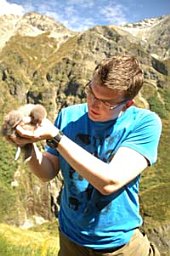 Robin Freeman合作论文数2
 Philip Eichinski合作论文数2
 John Hermanson合作论文数Biomedical Sciences, College of Veterinary Medicine, Cornell University2Lomas Kathryn合作论文数2
 Sattler Thomas合作论文数Snow and Landscape Research WSL, Swiss Federal Institute for Forest;Institute of Experimental Ecology, University of Ulm;Smithsonian Tropical Research Institute;University of Ulm, Smithsonian Tropical Research Institute2
 David E Pattemore合作论文数2Bing Liang合作论文数2
 Brock Fenton合作论文数Department of Biology, Faculty of Science, Western University2
 Oisin Mac Aodha合作论文数Institute for Adaptive and Neural Computation, School of Informatics, The University of Edinburgh2
 Louis Ranjard合作论文数MetService2
 Howard A. Ross合作论文数School of Biological Sciences, University of Auckland2




