This chapter explores ways in which children begin to learn science, in its different manifestations, from their earliest days. It recognises that science is inextricably intertwined with other STEM subjects. Above all, it stresses the importance of hearing the voice of the child, not ignoring it and their own understandings, listening to the child, not just telling them things, scaffolding their scientific literacy development and acquisition of science capital. The importance of out-of-school learning is recognised, including in museums of the widest genre. In the beginning, the youngest children observe and make sense of their world, including the science action in their lives, leading to science understanding upon which the theory can be built if formal education is available. The earliest interactions with everyday science are experiences, but are also the foundation for future understanding and learning. These are the foundation upon which science teachers can build to assist the learner in school in constructing the knowledge of the curriculum.
AbstractNature play is defined as freely chosen, unstructured interactions with and in nature. The aim of this study was to find out how nature play provides preschool children with play episodes where they experienced biological phenomena and living organisms. 21 four-to-six-year-old children from a preschool in Slovenia participated in the study. They were told to play in the forest. Their play was observed over four consecutive days, with each session lasting 1 h and a half. Three randomly selected children were equipped each time with small video cameras attached to their heads to automatically record sound and images from their perspective. The recordings were transcribed and edited, independently reviewed and analysed. 12 recordings were analysed, a total of 1167 min. 14.9% of the time was identified as play episodes in which the children experienced biological phenomena. The children paid more attention to animals than plants and fungi. Experiences with observed animals were more emotionally engaging and led to deeper learning about them. Many of the play episodes in which the teachers were invited to join were longer and led to deeper learning. This study has shown the importance of nature play for learning biology in early years.
This inspiring text celebrates young children as 'emergent biologists' and explains how their natural inquisitiveness and curiosity can be harnessed to increase early understanding of scientific concepts, and so lay the foundations for future learning about the living world. Full of practical tips, suggested discussion points and hands-on activities, Emerging Biology in the Early Years is a uniquely child-focussed resource. Chapters provide key information on the physical environment, including weather phenomena and soils, plants, animals and human development, and prioritise the child's perspective to offer activities which are in line with their natural development, thereby provoking discussion, problem-solving and child-led investigations. From planting seeds, to classifying rocks, flowers and animals, to understanding growth processes and recognising anatomical features, this book takes a holistic approach to science which moves beyond the confines of the curriculum and the classroom and shows how biology can be taught in a fun, engaging and inexpensive way both at home and in the early years setting. Providing a rich collection of ideas, activities, and downloadable sheets, this will be an invaluable resource for early years practitioners and parents looking to develop young children's scientific skills and understanding.
Children are born to play and are born as intuitive scientists and use numeracy and literacy in their play. Playing is an essential apprenticeship for developing scientific (STEM) literacy. Observing children spontaneously playing reveals that they are experiencing STEM in action. They are observing phenomena, asking questions, solving problems, design investigations and adapting what is available to use in their active investigations Nonspeaking children, until they acquire verbal language for themselves and communicating by gestures and actions about findings. Children have various modes of play, free choice, structured and structured. In imaginative play they replicate activities of adults, dressing up as an adult, cooking in a make-believe kitchen, composing and acting out a narrative. In all these activities children do compose their own narrative but listen to narratives particularly in Pictorial fiction books gradually being able to sort myth from reality as well as predicting outcomes and problem solving.
Many children learn about and experience animals in the everyday environment where they live and attend school. One way to obtain information about children's understanding of concepts or phenomena is by using their drawings in combination with written responses or interviews. This study assesses how much Slovenian students 10-15 years old (in sixth to ninth grade) know about owls by analysing their drawings and written responses. The study included 473 students. From assessing students' drawings and written responses, it can be concluded that the respondents had some knowledge of owls' appearance, their behaviours, diet and habitats. The differences between students in different grades regarding the representations of owls was not statistically significant. Some students had misconceptions about owls, such as the idea that owls can turn their heads 360 degrees, or they confused the long ear-tufts with external parts of the ears. The students' written responses provided additional information on their ideas about owls; particularly about owls' specific behaviours, diet, and conservational status. However, some information, such as depicting owls' body parts and body proportions or their habitats, was more clearly depicted with drawings. One third of the students drew owls in trees and forests, which makes owls good candidates for promoting forest conservation.
The research attempts to conceptualise natural history habitat dioramas as potential models for biological learning of local flora and fauna. A cohort of 9-year-old students from Malta was asked to draw in class a place with local animals and plants, another drawing at the NHM of Malta and a third drawing of their favourite habitat diorama. One-to-one interviews were conducted, during which the children were asked to elaborate on their drawings and comment on their choices. Drawings were analysed semi-quantitatively and qualitatively using the data analysis package Altas.ti. The inclusion of particular types of fauna (birds) in drawings was influenced by prior knowledge and culture. A progression from drawing from imagination in class and at the museum before viewing the diorama, to increasingly drawing from observation was noted. The educational potential and role in biological learning of dioramas has previously been reported in literature. Results indicate the sound potential of natural history habitat dioramas to act as scientific models for biological learning. A major contribution of this research was the creation of a novel interpretation model for museum settings.
Children have a basic knowledge of birds that they observe during their everyday life either in their garden, other gardens, round the house, walking in the local area or in the yard on school gardens. A total of 515 children, aged 3 to 16 (249 girls and 266 boys) enrolled in southern Brazilian public preschools, primary school and secondary schools, were invited to participate in this exploratory study. A semi-structured interview was conducted with 206 pupils asking to name which birds they knew, where they had seen these birds, which ones live around home, which they had seen further away. Additionally, they were asked which birds they knew from a list and the source of this knowledge where they had learned about the birds. They were asked to draw on a sheet of paper a representation of what the word “bird” meant to them. Results show the importance of everyday observations rather than beyond formal education in the children knowledge. Children from the earliest years notice birds in their everyday lives, and build a bank of knowledge, gradually acquiring an understanding of adaptation to a variety of habitats. Children notice birds in their lives to differing extent and sources according to the culture in which they are immersed. Experiences of seeing or finding out about birds are encapsulated for many children in the form of narratives and contribute to their mental models of birds and their habitats on which they will drew in formal science later (Biology and Environmental Education). Educational implications are discussed.
 Michael J. Reiss合作论文数Institute of Education, University of London/Department of Curriculum, Pedagogy and Assessment, Faculty of Education and Society, University of London24
 Patricia Patrick合作论文数Columbus State Univ16
 Annette Scheersoi合作论文数13
 carolyn boulter合作论文数12
 Michael Reiss合作论文数Faculty of Education and Society, University College London9Bartoszeck Amauri B合作论文数7
 Pavol Prokop合作论文数Department of Environmental Ecology, Comenius University7
 Dr Eirini Gkouskou合作论文数UCL Institute of Education6Stephen Tomkins合作论文数5Sajkowska Zofia合作论文数4
 Eliza Rybska合作论文数The Faculty Laboratory of Nature and Biology Education, Adam Mickiewicz University4
 Suzanne Gatt合作论文数University of Malta3
 Jenny Byrne合作论文数University of Southampton3
 Graca Simoes De Carvalho合作论文数Universidade do Minho;Largo do Paco;Largo do Paco, Universidade do Minho3Matej Prokop合作论文数3
 Gunnhildur Oskarsdottir合作论文数2
 Gregor Torkar合作论文数2Alastair Land合作论文数2
 Maria-Christina Kasimati合作论文数Dept Educ Sci & Early Childhood Educ, Univ Patras2
 Teresa J. Kennedy合作论文数Univ Texas Tyler2
 Willeke Rietdijk合作论文数2
 Theano Moussouri合作论文数Institute of Archaeology, Faculty of Social & Historical Sciences, University College London2Ueckert Catherine合作论文数2
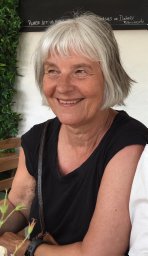 Hrefna Sigurjónsdóttir合作论文数Iceland University of Education Stakkahlíð2
 Sandra Selles合作论文数2
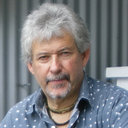 Martin Braund合作论文数2
 Marcus Hammann合作论文数Zentrum für Didaktik der Biologie, Universität Münster2V Manokore合作论文数1Cathy Mathews合作论文数1Cedric Cullingford合作论文数1Nicky Souter合作论文数1Michael J. Demchik合作论文数1Shao-Yen Chen合作论文数1Stephen Hoskins合作论文数1Alžbeta Hornáčková合作论文数1
 edward mifsud合作论文数1Tanja Gnidovec合作论文数1Ilaria Gaudiello合作论文数1
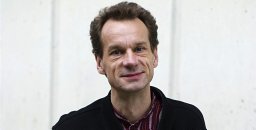 stefan jonsson合作论文数Linkoping Univ1Sari Havu-Nuutinen合作论文数1olivier sparagano合作论文数1kevin coward合作论文数1
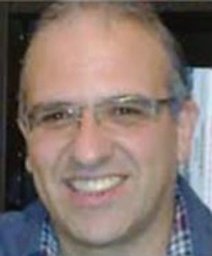 Dimitris Stavrou合作论文数Dept Primary Educ, Univ Crete1Iztok Tomažič合作论文数Biotech Fac, Univ Ljubljana1
 Ida Kaniawati合作论文数Fac Math & Sci Educ, Univ Pendidikan Indonesia1
 Tamjid Mujtaba合作论文数Department of Curriculum, Pedagogy & Assessment, Institute of Education, University College London1
 Jonathan Osborne合作论文数Graduate School of Education, Stanford University1
 Jana Fancovicova合作论文数1Jane Mulemwa合作论文数1




