Nebulin is a 770 kDa protein that is localized along the thin filaments of skeletal muscles in vertebrates. It is also present in the striated muscles of Amphioxus, an invertebrate cephalochordate that is phylogenetically close to vertebrates. However, the nebulin of urochordate ascidians or its expression in invertebrate hearts has not been investigated. In this study, we investigated the structure and cardiac expression of the nebulin gene in Ciona intestinalis, a urochordate whose phylogeny lies between cephalochordates and vertebrates. As a result of the gene structure analysis, we found that the Ciona nebulin gene predicted to be 62 kb and consists of 143 exons. The nebulin was expected to consist of a unique N-terminal region, followed by 155 nebulin repeats, another unique region, a Ser-rich region and a C-terminal SH3 domain. Whole-mount in situ hybridization experiments showed that the Ciona nebulin gene was expressed in a variety of muscles, including hearts. However, Western blot analysis using antibody to Ciona nebulin did not detect the presence of full-length nebulin. Alternatively, RT-PCR experiments on samples of Ciona heart detected the expression of nebulette-like and nrap-like isoforms from the Ciona nebulin gene. These results indicate that, similarly to vertebrate hearts, Ciona hearts do not express nebulin, but rather nrap- and nebulette-like isoforms. These results also imply that the nebulin, nebulette and nrap genes in vertebrates were separated from an ancestral invertebrate nebulin gene during vertebrate evolution.
Connectin is the largest protein that connects between Z-line and M-line of sarcomere and functions as a molecular spring of vertebrate striated muscles. At the contiguous region of connectin gene on mammalian genomes, there are two genes for proteins that function remain unknown. One protein (about 75kDa) consists of a SEC14 domain and three spectrin repeats, and the other protein (about 150kDa) consists of six spectrin repeats and an immunogloburin-like domain. We performed the RT-PCR experiments and revealed that these two genes are expressed in striated muscles. The western blot tests using newly produced antibodies also indicated that these proteins existed in striated muscles. The immunofluorescence microscopic observation elucidated that the 75kDa protein are located on the membrane of muscle fiber but the 150 kDa protein are localized at the Z-line of the sarcomere. The localization of these proteins are also confirmed by the transfection of GFP-fusion proteins into cultured skeletal muscle cells. These insights indicate that novel proteins that transcribed from the contiguous genes of connectin gene exist in striated muscles.
Connectin is the largest elastic protein that connects between Z-line and Mline of sarcomere and functions as a molecular spring of vertebrate striated muscles. In the upstream region of connectin gene, there are two genes for proteins which domain structures are closely related with that of connectin. Although RT-PCR experiments revealed that these two genes are expressed in striated muscle, their function remains unknown. In this study, we investigated the domain structures, isoforms, localizations and binding partners of these proteins in striated muscles. To know their physiological roles, we examined the effects of overexpression or knock-down of these proteins using cultured skeletal muscle cells. In this presentation, we introduce the result of our experiments.
Myofibrillogenesis is a complex production system of the striated muscles, which are correctly built by a lot of structural and signaling proteins. Some insights about the molecular mechanism of myofibrillogenesis were elucidated but most of them are not uncovered. SESTD1 is a novel protein that consists of SEC14 domain, three spectrin repeats and unique sequences and is expressed in various tissues including striated muscles. One research suggests that SESTD1 is involved in the planar cell polarity pathway during mammalian embryonic development and another research suggests that SESTD1 regulates some transient receptor potential channels in smooth muscle. However, it remains unclear about the function of SESTD1 in striated muscles. In this research, we investigated localization and binding partner of SESTD1 in striated muscles. SESTD1 was detected in the whole extracts from skeletal but not cardiac muscles by western blot using anti-SESTD1 monoclonal antibody. Immunofluorescence microscopy using the antibody revealed that SESDT1 is localized at Z-line of sarcomere. To search the binding partners of SESTD1, we carried out yeast two-hybrid screening with skeletal muscle cDNA libraries. Several proteins located in Z-line were obtained as candidates for SESTD1 C-terminus binding proteins and alpha-actin was obtained as a SESTD1 N-terminus binding protein. These results indicate that SESTD1 is the novel Z-line protein of the sarcomere in skeletal muscle and may function through binding to both Z-line structural proteins and actin filaments. We are currently investigating the role of SESTD1 in Z-line formation and actin filament assembly.
JapanGeneral IncorporatedAssociation with lipid binding short tail in both porcine aorta srnooth muscle and AIO celt, An appreciable preponion of the myosin I existed in the cytosol of the AIO.
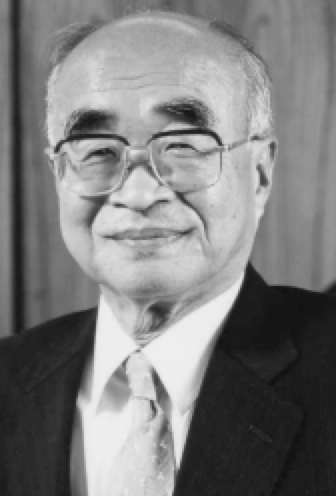 Koscak Maruyama (K. Maruyama)合作论文数Chiba University84
 Akira Hanashima合作论文数35Atsushi Fukuzawa合作论文数12
 Yuuki Kawamura合作论文数Faculty of Science, Chiba University11
 Kaoru Kubokawa合作论文数School of Education, Waseda University9Yulong Bao合作论文数9
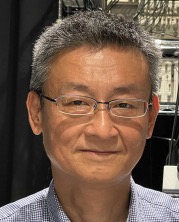 Takashi Murayama合作论文数Department of Pharmacology, Juntendo University;Department of Cellular and Molecular Pharmacology, Juntendo University Graduate School of Medicine8H Yajima合作论文数7Dh Hu合作论文数7Satoshi Nakayama合作论文数Dept Biol, Chiba Univ7Satoshi Ohtsuka合作论文数7Yuni Nakauchi合作论文数7
 Nobuyuki Kanzawa合作论文数Faculty of Science, Chiba University7Kouhei Sasano合作论文数6Jinen Shimamura合作论文数6H. Kume合作论文数5Hiroshi Ohtsuka合作论文数5Akira Matsuno合作论文数5Shigeru Takemori合作论文数5
 Hideo Higuchi合作论文数Department of Physiology, The Jikei University School of Medicine5
 Kohei Shiota合作论文数Congenital Anomaly Research Center, Graduate School of Medicine, Kyoto University;Department Anatomy and Development Biology, Faculty Medicine, Kyoto University;Shiga University of Medical Science5Yoshiharu Itoh合作论文数4mai kanno合作论文数4Yui Nomiya合作论文数4Akira Nishikawa合作论文数4Shinichirou Hatakeyama合作论文数4Y ITOH合作论文数4
 Hiroshi Noguchi合作论文数4Kazuyo Ohashi合作论文数4Di Hua Hu合作论文数4Makio Tokunaga合作论文数4Tetsu Matsuura合作论文数4BA Schaumann合作论文数3Michio Hiroshima合作论文数3tsuneo suzuki合作论文数3masayoshi kurasawa合作论文数3kunihumi tagawa合作论文数3yuh nanmoku合作论文数3Yukihiro Seiji合作论文数3T Suzuki合作论文数3Masako Kimura合作论文数3
 Fumio Arisaka合作论文数Department of Molecular Bioprocessing, Tokyo Institute of Technology3Kunifumi Tagawa合作论文数3Naruki Sato合作论文数3Atsushi Asakura合作论文数Molecular Medicine Program, Ottawa Health Research Institute3H Sugita合作论文数2H Higuchi合作论文数2Takei Kake合作论文数2Kaname Hiura合作论文数2




