Accurate segmentation of kidney tumors in medical images is crucial for effective treatment planning and patient outcomes prediction. The Kidney and Kidney Tumor Segmentation challenge (KiTS23) serves as a platform for evaluating advanced segmentation methods. In this study, we present our approach utilizing a Multi-Planner U-Net for kidney tumor segmentation. Our method combines the U-Net architecture with multiple image planes to enhance spatial information and improve segmentation accuracy. We employed a 3-fold cross-validation technique on the KiTS23 dataset, evaluating Mean Dice Score, precision, and recall metrics. Results indicate promising performance in segmenting Kidney + Tumor + Cyst and Tumor-only classes, while challenges persist in segmenting Tumor + Cyst cases. Our approach demonstrates potential in kidney tumor segmentation, with room for further refinement to address complex coexisting structures.
This paper investigates six deep-learning models for segmenting the short axis of the abdominal aorta in point-of-care ultrasound (POCUS) images. A total of 724 images from 175 adult patients were collected from various perspectives in a remote area. The dataset was split into three sets: 510 images (146 patients) for training, 74 images (from 17 patients) for validation, and 140 images (18 patients) for testing. The six deep learning models utilized in this research were UNet, Attention UNet, Res-UNet, Res-Attention UNet, YOLO (You Look Only Once), and a combination of YOLO with the Segment Anything model (SAM). The models were trained on the training dataset and during training hyperparameters were selected based on the models' performance on validation set. Res-Attention UNet achieved the highest Dice Similarity Score (DSC) on the training Dataset, (0.907) and the validation dataset (0.858). However, YOLO stood out as the top model with a DSC of 0.857 on the testing dataset, showing a reliable and effective segmentation performance. Furthermore, the models were additionally evaluated on an independent dataset of 375 images from 375 patients with mean DSC were YOLO + SAM: 0.763, YOLO: 0.759, UNet: 0.666, ResUNet: 0.618, Attention UNet: 0.687, and Res Att. UNet:0.693. When trained with 50% of the data, YOLO models significantly outperform UNet models, with the addition of SAM to YOLO (YOLO + SAM) only marginally affecting performance. The paper also introduces a user-friendly web-based Aorta segmentation tool, aiming to enhance reader’s experience by performing hands-on experiments on YOLOv8 model.
This study explores a hybrid framework integrating machine learning techniques and symbolic regression via genetic programing for analyzing the nonlinear propagation of waves in arterial blood flow. We employ a mathematical framework to simulate viscoelastic arterial flow, incorporating assumptions of long wavelength and large Reynolds numbers. We used a fifth-order nonlinear evolutionary equation using reductive perturbation to represent the behavior of nonlinear waves in a viscoelastic tube, considering the tube wall's bending. We obtain solutions through physics-informed neural networks (PINNs) that optimizes via Bayesian hyperparameter optimization across three distinct initial conditions. We found that PINN-based models are proficient at predicting the solutions of higher-order nonlinear partial differential equations in the spatial-temporal domain [-1,1]x[0,2]. This is evidenced by graphical results and a residual validation showing a mean absolute residue error of O(10(-3)). We thoroughly examine the impacts of various initial conditions. Furthermore, the three solutions are combined into a single model using the random forest machine learning algorithm, achieving an impressive accuracy of 99% on the testing dataset and compared with another model using an artificial neural network. Finally, the analytical form of the solutions is estimated using symbolic regression that provides interpretable models with mean square error of O(10(-3)). These insights contribute to the interpretation of cardiovascular parameters, potentially advancing machine learning applications within the medical domain.
Automated segmentation of distinct tumor regions is critical for accurate diagnosis and treatment planning in pediatric brain tumors. This study evaluates the efficacy of the Multi-Planner U-Net (MPUnet) approach in segmenting different tumor subregions across three challenging datasets: Pediatrics Tumor Challenge (PED), Brain Metastasis Challenge (MET), and Sub-Sahara-Africa Adult Glioma (SSA). These datasets represent diverse scenarios and anatomical variations, making them suitable for assessing the robustness and generalization capabilities of the MPUnet model. By utilizing multi-planar information, the MPUnet architecture aims to enhance segmentation accuracy. Our results show varying performance levels across the evaluated challenges, with the tumor core (TC) class demonstrating relatively higher segmentation accuracy. However, variability is observed in the segmentation of other classes, such as the edema and enhancing tumor (ET) regions. These findings emphasize the complexity of brain tumor segmentation and highlight the potential for further refinement of the MPUnet approach and inclusion of MRI more data and preprocessing.
This paper introduces a comprehensive approach for segmenting regions of interest (ROI) in diverse medical imaging datasets, encompassing ultrasound, CT scans, and X-ray images. The proposed method harnesses the capabilities of the YOLOv8 model for approximate boundary box detection across modalities, alongside the Segment Anything Model (SAM) and High Quality (HQ) SAM for fully automatic and precise segmentation. To generate boundary boxes, the YOLOv8 model was trained using a limited set of 100 images and masks from each modality. The results obtained from our approach are extensively computed and analyzed, demonstrating its effectiveness and potential in medical image analysis. Various evaluation metrics, including precision, recall, F1 score, and Dice Score, were employed to quantify the accuracy of the segmentation results. A comparative analysis was conducted to assess the individual and combined performance of the YOLOv8, YOLOv8+SAM, and YOLOv8+HQ-SAM models. The results indicate that the SAM model performs better than the other two models, exhibiting higher segmentation accuracy and overall performance. While HQ-SAM offers potential advantages, its incremental gains over the standard SAM model may not justify the additional computational cost. The YOLOv8+SAM model shows promise for enhancing medical image segmentation and its clinical implications.
This paper aims to describe the methodology used to develop, fine-tune and analyze a UNet model for creating masks for two datasets: Polyp Segmentation and Instrument Segmentation, which are part of MedAI challenge. For training and validation, we have used the same methodology on both tasks and finally on the hidden testing dataset the model resulted in an accuracy of 0.9721, dice score of 0.7980 for the instrumentation task, and the accuracy of 0.5646 and a dice score of 0.4100 was achieved for the Polyp Segmentation.
Haemodialysis machines are one of the important medical equipment which is used to treat renal failures and minimum downtimes are thus essential. Uninterrupted and constant use of these machines in hospitals worldwide makes them vulnerable to failures if not maintained properly. Consequently, the maintenance cost for dialysis machine is high. A method to implement a cost effective maintenance strategy is demonstrated in this work. Root Cause Based Maintenance (RCBM) strategy is employed at the component level to optimize the Reliability Based Maintenance schedules derived from the existing maintenance and failure data. In order to minimize the average cost of maintenance for Haemodialysis machines and ensure their high operational availability, a Cost-Model is derived, and Genetic Algorithm is employed for optimization in this work. The application of RCBM strategy results in cost saving of about 60% of the cost incurred using current maintenance scheme. Statistical and optimization calculations are performed using Reliasoft’s Weibull++ and MATLAB tools respectively.
Oximeter is an important clinical device used for measuring peripheral capillary oxygen saturation (SpO2) in blood and hence accurate results are needed in order to help physicians predict clinical problems in the initial stage(s) of liver or kidney diagnosis. Different issues associated with the accuracy of SpO2 and heart rate measurement accuracy are studied in this work. With the understanding of these issues, a new SpO2 monitoring system is proposed that comprises of a better detection method, novel discrete time signal processing (DTSP) algorithm, and a custom-made oximeter probe head. The proposed SpO2 measurement system is capable of determining low levels of SpO2 present in human blood and produce the results in a short time that enable real-time monitoring of a patient SpO2. It can also distinguish low level of SpO2 against background noise.
This article develops a conceptual understanding of smart consumer technology for interaction design research, articulated through the technological mediation, materials, and materiality of its concrete artefacts. It contrasts current forms of understanding that are based on functional and utilitarian criteria. Our central argument is that a bottom-up, material centric understanding would allow us to frame smart consumer technology as a material for design, and consequently allow for a clearer critical, reflective, and exploratory engagement with its design space. Applying Mediation theory, we develop a phenomenological analysis of technological mediation using the common artefacts of smart consumer technology while at the same time outlining their material composition and materiality. Complementing mediation theory with research through design, we use this understanding to frame material explorations and to articulate the outcomes and reflections derived from a concrete speculative design prototype. This article highlights how theory and exploratory practice can be engaged together to develop an evolving understanding of smart consumer technology as a material for design.
Recent strategic design and management discourse has identified gaps in the current framing of design for organisations, specifically highlighting a lack of discussions related to emergent design cultures and calling for a strategic framing of the art of design. Connecting and expanding these conceptual discussions with reflections from practice-based research through design, we seek to further the understanding of how design can be strategically translated into organisations. Drawing parallels between a strategic framing of design, and brands as enacted or manifested strategy, we present reflections from a design process of branding the strategic art of design for an academic research library. The outcome of our process was an overarching brand called Frilux, that manifested the strategic design approach at the library. Specifically, we propose that design can be framed strategically in an entanglement of organisational and design practices and mind-sets. Further, we suggest, this framing should be manifested across design outcomes that oscillate between intangible outcomes like strategic guidelines and values, to tangible outcomes like visual symbols and artefacts.
This paper presents a counterfunctional design concept for a smart surveillance camera, Eyespy, and its design process and expressions. Together, they illustrate new opportunities for the design of smart surveillance cameras and their everyday use. Through our work, we aim to expand the dominant discourse and the design space for smart surveillance cameras within HCI.
The Terrain Profiling Embedded System (TPES) has been designed by incorporating the requirement for both ground environment and underwater environments. Although extensive research has been carried out in the area of terrain profiling in different scenarios, however, limited work has been performed for under water environment. The present system, TPES is fitted with an ultrasonic emitter which scans the terrain. The ultrasonic pulses are reflected back by the surface under TPES and received back by the sensors. The value of the distance is deduced from time interval between the emitted and received pulse. The position on the map is determined by the inertial guidance system continuously and recorded simultaneously with the elevation data. For under water scenarios, the temperature of the water decreases non-linearly with the increase in depth resulting in the variation in velocity of the ultrasonic pulse. This necessitates the inclusion of this new variable in terrain profiling systems. To address this issue, the present system incorporates the temperature profile of the water for underwater applications to generate precise and accurate map. MATLAB is used to create the 2D/3D maps using the data provided by TPES.
In this paper, we present a reflective visual account of the process and outcome from a speculative research through design project – Hearsay. Through this account we unpack and present the conceptual, technical and material explorations that guided our design process. Further, using this mode of reflective visual articulation, we contribute to interaction design research by highlighting potential possibilities and problematics for design within the emergent space of intelligent voice based interfaces. INTRODUCTION With the recent push towards intelligent voice based interfaces in everyday objects like phones (Apple 2017), speakers (Amazon 2017a; Google 2017) and even refrigerators (Cunningham 2017), the practices of interaction design need to adapt to the new space of ‘intelligent’ networked devices. Being new and relatively unexplored, designs from the mass market are largely limited to interface explorations or control and query based feature designs. However, to extend our understanding of the possibilities and problematics latent within this space, we argue that there is a need for more exploratory and speculative engagement with it removed from the constraints of the mass market. In this paper, we present the process and outcome from such an exploratory and speculative (Auger 2013) research through design (Zimmerman and Forlizzi 2014) project – ‘Hearsay’. Hearsay is an ‘always-on’ and ‘always conversing’ voice activated lamp that Figure 1: Intelligent Voice based Interfaces in mass media. generates quirky and whimsical rather than efficient and functional responses while incorporating transparency rather than obscurity in its form and design (Figure 2). Our intent behind unpacking the design process, speculative explorations and outcome is twofold. By sharing a rich visual account of our exploratory process and its outcome, we wish to highlight the relatively unexplored possibilities of interaction within this space along with specific issues and problematics present within it. Further, we intend to extend the understanding of the complex and often obscured (Knutsen 2014) ‘intelligent’ technologies from a design perspective by discussing and unpacking the algorithms and systems that power Hearsay. No 7 (2017): Nordes 2017: DESIGN+POWER, ISSN 1604-9705. Oslo, www.nordes.org 2 Figure 2: Hearsay –an ‘always-on’ and ‘always conversing’ voice activated lamp that generates quirky and whimsical rather than efficient and functional responses. The conversations are immediately transcribed and are always available for the owner to see.
In this paper, we explore types of toolsets that are suitable for design thinking processes, when design teams consist of non-designers. We have conducted a series of workshops to experiment with open-ended, semi-structured and structured tools, using design thinking for libraries as a research case. Our results clearly indicate that semi-structured tools fared best regarding variety of outputs, breadth of ideas and engagement of participants.
Image recognition is the need of the hour. In order to be able to recognize an image, it is of immense importance that the image should be distinguishable from the background. In the present work, an approach is presented for automatic detection and recognition of regular 2D shapes in low noise environments. The work has a large number of direct applications in the real world. The algorithm proposed is based on locating the edges and thus, in turn calculating the area of the object helps in identification of a specified shape. The results were simulated using MATLAB tool are encouraging and validate the proposed algorithm. Index Terms: Edge Detection, Area Calculation, Shape Detection, Object Recognition
With service design taking increasingly strategic and transformational roles, effective organizational partnership and engagement has become crucial. However, since organizational communities are structured and function differently from social communities, participatory service innovation methods like co-design need to take additional factors and different strategies into account for effective engagement and participation in these settings. We draw from discussions in organizational studies to highlight challenges with regards to engagement in innovation processes within and across communities in organizations. Further, we look at knowledge brokers, a concept that features prominently in discourse in this area and outline it theoretically and through a strategy of application in co-design settings. Hence, we contribute to the current service design discourse by adding insights to both theory and practice. Finally, we describe the application of this strategy in two exploratory case studies with differing scales in terms of both the service being designed and the nature of participation from organizational communities.
Product demand and high consumption have been traditionally viewed as traits of successful business in the mass market. However, the environment is under immense strain to sustain hyper-consumption driven lifestyles fueled by conventional mass market business strategies. Sustainable services have started to emerge to disrupt such business practices and alter consumption driven processes to reduce the harmful impact on the environment. However, the adoption of such services has largely been limited to a niche environmentally conscious audience. Research has argued that for sustainable services to have a noticeable environmental impact, they need to be adopted in the mass market. In this paper, we discuss the challenges and outline the theoretical design considerations needed to frame desirable value propositions for sustainable services intended for the mass market. To do this, we review literature from the fields of strategic design, service design and Human Computer Interaction (HCI) and identify conceptual overlaps with broader discussions on sustainability and suggest that sustainability can potentially find a familiar voice in design due to their common interest in advocating an emphasis on people's needs and aspirations for a better present and future. Mutually, design and sustainability can discover new representations and opportunities for a better future beyond offerings designed to fuel incessant consumption of resources.
The changing technology landscape has reshaped the relationship between producers and consumers and has signaled a shift towards more collaborative and social cultural forms. These changing cultural practices are referred to as ‘Participatory Culture’. While the Internet offers an always on and readily accessible mode of engagement and involvement within participatory culture, these platforms need to be complemented with collaborative and creative participation in physical spaces for sustained engagement in real world cultural activities. Recent research on maker cultures and the growth of maker-spaces offers very relevant lessons in this regard. Using this research as a point of departure, we propose a decentralized and semi-organized form of maker-spaces called ‘pop-up’ maker-spaces that could act as triggers to create engagement within communities towards creative and collaborative production and informal knowledge sharing. Further, we describe three workshops that were setup as ‘popup’ maker-space environments as a part of a case study to discuss our findings and insights. While all the workshops had a pre-defined thematic area, the final outcomes were very different and represented differing conceptual and material explorations conducted by the participants. KeywordsParticipatory Culture; Collaborative Spaces; Creative Engagement; Co-operation; Awareness; Motivation;
In this paper, we explore types of toolsets that are suitable for design thinking processes, when design teams consist of non-designers. We have conducted a series of workshops to experiment with open-ended, semi-structured and structured tools, using design thinking for libraries as a research case. Our results clearly indicate that semi-structured tools fare best regarding variety of outputs, breadth of ideas and engagement of participants.
 Swati Srivastava合作论文数Industrial Design Center, IIT Bombay11
 Alma Leora Culén合作论文数Institute of Informatics, University of Oslo6
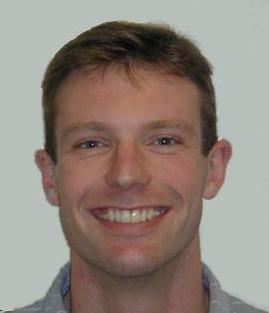 Erik Dam合作论文数Nordic Bioscience ;Imaging Department ;Herlev Hovedgade 2073
 Satyasaran Changdar合作论文数2
 Sandeep Sharma合作论文数2
 Ladislava Zbiejczuk Suchá合作论文数Dept Informat & Lib Studies, Masaryk Univ2
 Cher Ming Tan (谭云婷)合作论文数2
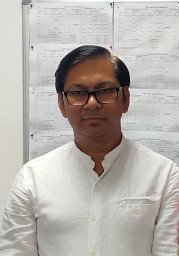 Amrindra Pal合作论文数DIT Univ2
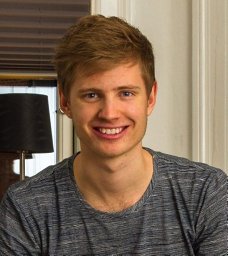 Mathias Perslev合作论文数Dept Comp Sci, Univ Copenhagen2
 Tone Bratteteig合作论文数Department of Informatics, University of Oslo2
 Udit Narula合作论文数1Katie Coughlin合作论文数1Abhishek Mishra合作论文数1
 Erik Bjørnager Dam合作论文数Department of Computer Science, Faculty of Science, University of Copenhagen1Lu-An Lai合作论文数1
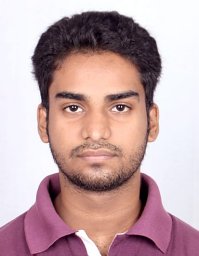 Bivas Bhaumik合作论文数Department of Applied Mathematics, University of Calcutta921
 Roman Novotny合作论文数1
 Arvind Keprate合作论文数Oslo Metropolitan University1
 Sabyasachi Mukhopadhyay合作论文数1Kumar Vivek合作论文数1Liao Chia-Chih合作论文数1Chen Hsiao-Wen合作论文数1
 Praveen Kant Pandey合作论文数Environmental Microbiology Section;Industrial Toxicology Research Centre;Environmental Microbiology Section, Industrial Toxicology Research Centre1
 Vivek Kumar Sehgal合作论文数Member IEEE and ACM, Department of Electronics and Communication, Jaypee University of Information Technology, Solan, India 173 2151
 Chung-Yi Li合作论文数1
 Andrea Alessandro Gasparini合作论文数1
 Kuan Fu Chen合作论文数College of Medicine, Chang Gung University1
 Soumen De合作论文数1




