We present evaluation results for FLUX.1 Kontext, a generative flow matching model that unifies image generation and editing. The model generates novel output views by incorporating semantic context from text and image inputs. Using a simple sequence concatenation approach, FLUX.1 Kontext handles both local editing and generative in-context tasks within a single unified architecture. Compared to current editing models that exhibit degradation in character consistency and stability across multiple turns, we observe that FLUX.1 Kontext improved preservation of objects and characters, leading to greater robustness in iterative workflows.The model achieves competitive performance with current state-of-the-art systems while delivering significantly faster generation times, enabling interactive applications and rapid prototyping workflows. To validate these improvements, we introduce KontextBench, a comprehensive benchmark with 1026 image-prompt pairs covering five task categories: local editing, global editing, character reference, style reference and text editing. Detailed evaluations show the superior performance of FLUX.1 Kontext in terms of both single-turn quality and multi-turn consistency, setting new standards for unified image processing models.
Diffusion models create data from noise by inverting the forward paths of data towards noise and have emerged as a powerful generative modeling technique for high-dimensional, perceptual data such as images and videos. Rectified flow is a recent generative model formulation that connects data and noise in a straight line. Despite its better theoretical properties and conceptual simplicity, it is not yet decisively established as standard practice. In this work, we improve existing noise sampling techniques for training rectified flow models by biasing them towards perceptually relevant scales. Through a large-scale study, we demonstrate the superior performance of this approach compared to established diffusion formulations for high-resolution text-to-image synthesis. Additionally, we present a novel transformer-based architecture for text-to-image generation that uses separate weights for the two modalities and enables a bidirectional flow of information between image and text tokens, improving text comprehension, typography, and human preference ratings. We demonstrate that this architecture follows predictable scaling trends and correlates lower validation loss to improved text-to-image synthesis as measured by various metrics and human evaluations. Our largest models outperform state-of-the-art models, and we will make our experimental data, code, and model weights publicly available.
We study the problem of inferring scene affordances by presenting a method for realistically inserting people into scenes. Given a scene image with a marked region and an image of a person, we insert the person into the scene while respecting the scene affordances. Our model can infer the set of realistic poses given the scene context, re-pose the reference person, and harmonize the composition. We set up the task in a self-supervised fashion by learning to re-pose humans in video clips. We train a large-scale diffusion model on a dataset of 2.4M video clips that produces diverse plausible poses while respecting the scene context. Given the learned human-scene composition, our model can also hallucinate realistic people and scenes when prompted without conditioning and also enables interactive editing. A quantitative evaluation shows that our method synthesizes more realistic human appearance and more natural human-scene interactions than prior work.
We present Stable Video Diffusion - a latent video diffusion model for high-resolution, state-of-the-art text-to-video and image-to-video generation. Recently, latent diffusion models trained for 2D image synthesis have been turned into generative video models by inserting temporal layers and finetuning them on small, high-quality video datasets. However, training methods in the literature vary widely, and the field has yet to agree on a unified strategy for curating video data. In this paper, we identify and evaluate three different stages for successful training of video LDMs: text-to-image pretraining, video pretraining, and high-quality video finetuning. Furthermore, we demonstrate the necessity of a well-curated pretraining dataset for generating high-quality videos and present a systematic curation process to train a strong base model, including captioning and filtering strategies. We then explore the impact of finetuning our base model on high-quality data and train a text-to-video model that is competitive with closed-source video generation. We also show that our base model provides a powerful motion representation for downstream tasks such as image-to-video generation and adaptability to camera motion-specific LoRA modules. Finally, we demonstrate that our model provides a strong multi-view 3D-prior and can serve as a base to finetune a multi-view diffusion model that jointly generates multiple views of objects in a feedforward fashion, outperforming image-based methods at a fraction of their compute budget. We release code and model weights at https://github.com/Stability-AI/generative-models .
We discuss implementation details in Sec. 1. We present results on general segmentation masks instead of bounding boxes in Sec. 2, partial body completion in Sec. 3, and cloth swapping in Sec. 4. We highlight the diversity of poses predicted by our model in Sec. 5. We conclude with a discussion of failure cases in Sec. 6 and societal impact in Sec. 7.
1. Details of Data Filtering and Model Fitting As mentioned in Section 3.5 of the main paper, we use the alignments obtained from the description model to extract individual repetitions for all motion concepts from the training dataset. For each motion concept c, we obtain a dataset of occurrences Dc = {d1, d2, · · · } where each element di corresponds to a small segment composed of a sequence of spline curves di = {si , si , · · · s li i }. Since this dataset Dc has been obtained from description model predictions, we perform two steps of filtering to generate cleaner data for learning our synthesis model.
We introduce Programmatic Motion Concepts, a hierarchical motion representation for human actions that captures both low-level motion and high-level description as motion concepts. This representation enables human motion description, interactive editing, and controlled synthesis of novel video sequences within a single framework. We present an architecture that learns this concept representation from paired video and action sequences in a semi-supervised manner. The compactness of our representation also allows us to present a low-resource training recipe for data-efficient learning. By outperforming established baselines, especially in the small data regime, we demonstrate the efficiency and effectiveness of our framework for multiple applications.
Shape programs encode shape structures by representing object parts as subroutines and constructing the overall shape by composing these subroutines. This usually involves the reuse of subroutines for repeatable parts, enabling the modeling of correlations among shape elements such as geometric similarity. However, existing learning-based shape programs suffer from limited representation capacity, because they use coarse geometry representations such as geometric primitives and low-resolution voxel grids. Further, their training requires manually annotated ground-truth programs, which are expensive to attain. We address these limitations by proposing Shape Programs with Repeatable Implicit Parts (ProGRIP). Using implicit functions to represent parts, ProGRIP greatly boosts the representation capacity of shape programs while preserving the higher-level structure of repetitions and symmetry. Meanwhile, we free ProGRIP from any inaccessible supervised training via devising a matching-based unsupervised training objective. Our empirical studies show that ProGRIP outperforms existing structured representations in both shape reconstruction fidelity and segmentation accuracy of semantic parts.
Current approaches to video analysis of human motion focus on raw pixels or keypoints as the basic units of reasoning. We posit that adding higher-level motion primitives, which can capture natural coarser units of motion such as backswing or follow-through, can be used to improve downstream analysis tasks. This higher level of abstraction can also capture key features, such as loops of repeated primitives, that are currently inaccessible at lower levels of representation. We therefore introduce Motion Programs, a neuro-symbolic, program-like representation that expresses motions as a composition of high-level primitives. We also present a system for automatically inducing motion programs from videos of human motion and for leveraging motion programs in video synthesis. Experiments show that motion programs can accurately describe a diverse set of human motions and the inferred programs contain semantically meaningful motion primitives, such as arm swings and jumping jacks. Our representation also benefits downstream tasks such as video interpolation and video prediction and outperforms off-the-shelf models. We further demonstrate how these programs can detect diverse kinds of repetitive motion and facilitate interactive video editing.
Given a relational specification between Boolean inputs and outputs, Boolean functional synthesis seeks to synthesize each output as a function of the inputs such that the specification is met. Despite significant algorithmic advances in Boolean functional synthesis over the past few years, there are relatively small specifications that have remained beyond the reach of all state-of-the-art tools. In trying to understand this behaviour, we show that unless some hard conjectures in complexity theory are falsified, Boolean functional synthesis must generate large Skolem functions in the worst-case. Given this inherent hardness, what does one do to solve the problem? We present a two-phase algorithm, where the first phase is efficient in practice both in terms of time and size of synthesized functions, and solves a large fraction of our benchmarks. This phase is also guaranteed to solve the problem when the representation of the input specification satisfies some structural requirements. For those cases where the first phase doesn't suffice, we present a second phase of our synthesis algorithm that uses a special class of algorithms, calledexpansion-based algorithms, to generate correct Skolem functions. This may require exponential time and generate exponential-sized Skolem functions in the worst-case. Detailed experimental evaluation shows that our overall synthesis algorithm performs better than other techniques for a large number of benchmarks.
We consider the task of mapping pseudocode to long programs that are functionally correct. Given test cases as a mechanism to validate programs, we search over the space of possible translations of the pseudocode to find a program that passes the validation. However, without proper credit assignment to localize the sources of program failures, it is difficult to guide search toward more promising programs. We propose to perform credit assignment based on signals from compilation errors, which constitute 88.7% of program failures. Concretely, we treat the translation of each pseudocode line as a discrete portion of the program, and whenever a synthesized program fails to compile, an error localization method tries to identify the portion of the program responsible for the failure. We then focus search over alternative translations of the pseudocode for those portions. For evaluation, we collected the SPoC dataset (Search-based Pseudocode to Code) containing 18,356 programs with human-authored pseudocode and test cases. Under a budget of 100 program compilations, performing search improves the synthesis success rate over using the top-one translation of the pseudocode from 25.6% to 44.7%.
Given a relational specification between Boolean inputs and outputs, the goal of Boolean functional synthesis is to synthesize each output as a function of the inputs such that the specification is met. In this paper, we first show that unless some hard conjectures in complexity theory are falsified, Boolean functional synthesis must generate large Skolem functions in the worst-case. Given this inherent hardness, what does one do to solve the problem? We present a two-phase algorithm, where the first phase is efficient both in terms of time and size of synthesized functions, and solves a large fraction of benchmarks. To explain this surprisingly good performance, we provide a sufficient condition under which the first phase must produce correct answers. When this condition fails, the second phase builds upon the result of the first phase, possibly requiring exponential time and generating exponential-sized functions in the worst-case. Detailed experimental evaluation shows our algorithm to perform better than other techniques for a large number of benchmarks.
General-purpose program synthesizers face a tradeoff between having a rich vocabulary for output programs and the time taken to discover a solution. One performance bottleneck is the construction of a space of possible output programs that is both expressive and easy to search. In this paper we achieve both richness and scalability using a new algorithm for constructing symbolic syntax graphs out of easily specified components to represent the space of output programs. Our algorithm ensures that any program in the space is type-safe and only mutates values that are explicitly marked as mutable. It also shares structure where possible and encodes programs in a straight-line format instead of the typical bushytree format, which gives an inductive bias towards realistic programs. These optimizations shrink the size of the space of programs, leading to more efficient synthesis, without sacrificing expressiveness. We demonstrate the utility of our algorithm by implementing Syncro, a system for synthesis of incremental operations. We evaluate our algorithm on a suite of benchmarks and show that it performs significantly better than prior work.
SymPy is an open source computer algebra system written in pure Python. It is built with a focus on extensibility and ease of use, through both interactive and programmatic applications. These characteristics have led SymPy to become the standard symbolic library for the scientific Python ecosystem. This paper presents the architecture of SymPy, a description of its features, and a discussion of select domain specific submodules. The supplementary materials provide additional examples and further outline details of the architecture and features of SymPy.
We present a new approach for specifying and verifying resource utilization of higher-order functional programs that use lazy evaluation and memoization. In our approach, users can specify the desired resource bound as templates with numerical holes e.g. as steps ≤ ? * size(l) + ? in the contracts of functions. They can also express invariants necessary for establishing the bounds that may depend on the state of memoization. Our approach operates in two phases: first generating an instrumented first-order program that accurately models the higher-order control flow and the effects of memoization on resources using sets, algebraic datatypes and mutual recursion, and then verifying the contracts of the first-order program by producing verification conditions of the form ∃ ∀ using an extended assume/guarantee reasoning. We use our approach to verify precise bounds on resources such as evaluation steps and number of heap-allocated objects on 17 challenging data structures and algorithms. Our benchmarks, comprising of 5K lines of functional Scala code, include lazy mergesort , Okasaki's real-time queue and deque data structures that rely on aliasing of references to first-class functions; lazy data structures based on numerical representations such as the conqueue data structure of Scala's data-parallel library, cyclic streams, as well as dynamic programming algorithms such as knapsack and Viterbi . Our evaluations show that when averaged over all benchmarks the actual runtime resource consumption is 80% of the value inferred by our tool when estimating the number of evaluation steps, and is 88% for the number of heap-allocated objects.
Boolean functional synthesis using AIGs and CEGAR has been recently proposed as a promising alternative to synthesis based on BDDs or on DPLL+CDCL style clausal reasoning. In this paper, we delve deeper into the AIG+CEGAR approach and propose techniques that significantly improve the performance of Boolean functional synthesis, sometimes by orders of magnitude vis-a-vis state-of-the-art tools. This is achieved by a combination of algorithmic modifications resulting from an improved theoretical analysis of the AIG+CEGAR approach. Our approach also harnesses the power of recently proposed efficient almost-uniform samplers to improve the performance of synthesis. Empirical evaluation on a suite of benchmarks shows that our approach outperforms existing state-of-the-art Boolean functional synthesis tools on most of these benchmarks.
We present a new approach for specifying and verifying resource utilization of higher-order functional programs that use lazy eval- uation and memoization. In our approach, users can specify the desired resource bound as templates with numerical holes e.g. as steps ≤ ? ∗ size(l) + ? in the contracts of functions. They can also express invariants necessary for establishing the bounds that may depend on the state of memoization. Our approach operates in two phases: first generating an instrumented first-order program that ac- curately models the higher-order control flow and the effects of memoization on resources using sets, algebraic datatypes and mu- tual recursion, and then verifying the contracts of the first-order program by producing verification conditions of the form ∃∀ using an extended assume/guarantee reasoning. We use our approach to verify precise bounds on resources such as evaluation steps and number of heap-allocated objects on 17 challenging data struc- tures and algorithms. Our benchmarks, comprising of 5K lines of functional Scala code, include lazy mergesort, Okasaki’s real-time queue and deque data structures that rely on aliasing of references to first-class functions; lazy data structures based on numerical rep- resentations such as the conqueue data structure of Scala’s data- parallel library, cyclic streams, as well as dynamic programming algorithms such as knapsack and Viterbi. Our evaluations show that when averaged over all benchmarks the actual runtime resource consumption is 80% of the value inferred by our tool when esti- mating the number of evaluation steps, and is 88% for the number of heap-allocated objects.
 Jiajun Wu (吴佳俊)合作论文数Computer Science Department, Stanford University5
 S Akshay合作论文数Department of Computer Science and Engineering, Indian Institute of Technology Bombay4
 Alex Aiken合作论文数Department of Computer Science, Stanford University;Computer Science Division, SLAC National Accelerator Laboratory4
 Shubham Goel合作论文数Avataar4
 Shetal Shah合作论文数Indian Inst Technol, Mumbai, Maharashtra, India4
 Supratik Chakraborty合作论文数Department of Computer Science and Engineering, Indian Institute of Technology Bombay;Centre for Formal Design and Verification of Software, Indian Institute of Technology Bombay;Centre for Liberal Education, Indian Institute of Technology Bombay4
 Dominik Lorenz合作论文数Black Forest Labs;Festo AG und Co KG3Zion English合作论文数Black Forest Labs3
 Andreas Blattmann合作论文数Black Forest Labs3
 Tim Dockhorn合作论文数Black Forest Labs3
 Robin Rombach合作论文数Black Forest Labs;Ludwig-Maximilians-Universität München3Harry Saini合作论文数2Yam Levi合作论文数2
 Dustin Podell合作论文数Black Forest Labs2
 Axel Sauer合作论文数Black Forest Labs2Isuru Fernando合作论文数2
 Alexei (Alyosha) Efros合作论文数Department of Electrical Engineering and Computer Sciences, University of California, Berkeley;Berkeley Artificial Intelligence Research Lab, University of California, Berkeley2
 Jiayuan Mao (茅佳源)合作论文数2
 Tim Brooks合作论文数DeepMind2
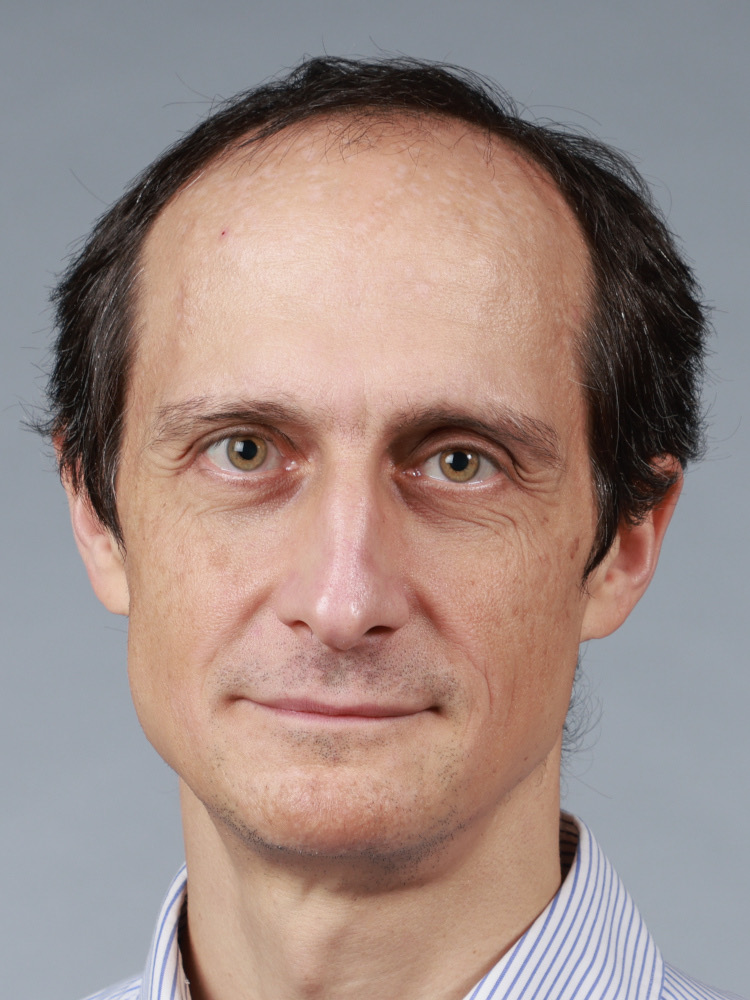 Viktor Kunčak合作论文数School of Computer and Communication Sciences, Ecole Polytechnique Federale of Lausanne2
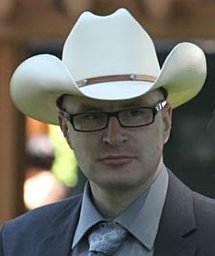 Ondrej Certik合作论文数1 Faculty of Mathematics and Physics;Charles University;Faculty of Mathematics and Physics, Charles University2
 Krishna Kumar Singh合作论文数Adobe Research2
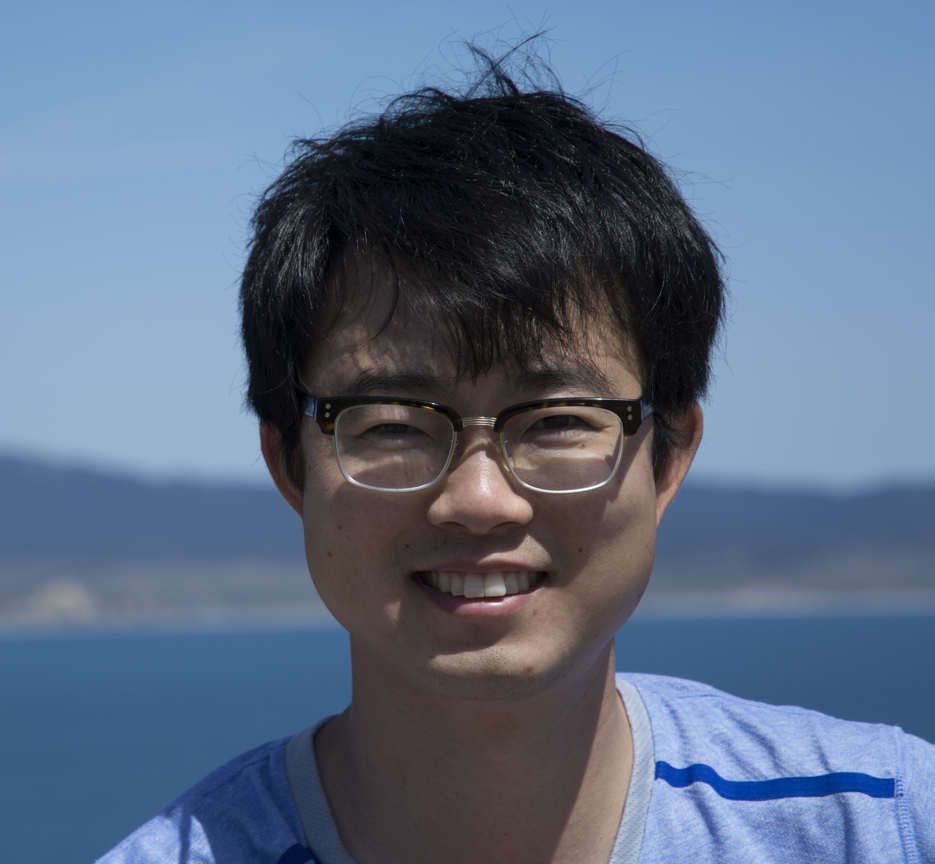 Jimei Yang (杨济美)合作论文数Adobe Research2
 Ravi Madhavan合作论文数2
 Jingwan Lu合作论文数Adobe Research2
 Patrick Esser合作论文数Black Forest Labs2Sergey B Kirpichev合作论文数1Maciej Kilian合作论文数1
 Jonas Julius Müller合作论文数Black Forest Labs1Adam Letts合作论文数1Frederic Boesel合作论文数1Mateusz Paprocki合作论文数1CP Smith合作论文数1Francesco Bonazzi合作论文数1
 Zhengyang Dong合作论文数Stanford University1Sean Vig合作论文数1Kartik Chandra合作论文数1
 Ashutosh Saboo合作论文数BITS Pilani1
 Thilina Rathnayake合作论文数Department of Computer Science, University of Illinois at Urbana-Champaign1
 Shivam Vats合作论文数Indian Inst Technol, Kharagpur, W Bengal, India1
 Amit Kumar合作论文数Department of Applied Mathematics, Delhi Technological University1Matthew Curry合作论文数1
 Congyue Deng合作论文数Schwarzman College of Computing, Massachusetts Institute of Technology1
 Panupong (Ice) Pasupat合作论文数Google AI, Google1
 Fabian Pedregosa合作论文数Google DeepMind1
 Yonglong Tian合作论文数OpenAI1
 Jason Keith Moore合作论文数Department of BioMechanical Engineering, Faculty of Mechanical, Maritime and Materials Engineering, Delft University of Technology1
 Vikram Voleti合作论文数Mila;University of Montreal1




