Abstract The first full amplitude analysis of B + → ψ(2S)K + π + π − decays is performed using proton-proton collision data corresponding to an integrated luminosity of 9 fb−1 recorded with the LHCb detector. The rich K + π + π − spectrum is studied and the branching fractions of the resonant substructure associated with the prominent K 1(1270)+ contribution are measured. The data cannot be described by conventional strange and charmonium resonances only. An amplitude model with 53 components is developed comprising 11 hidden-charm exotic hadrons. New production mechanisms for charged charmonium-like states are observed. Significant resonant activity with spin-parity J P = 1+ in the ψ(2S)π + system is confirmed and a multi-pole structure is demonstrated. The spectral decomposition of the ψ(2S)π + π − invariant-mass structure, dominated by X 0 → ψ(2S)ρ(770)0 decays, broadly resembles the J/ψϕ spectrum observed in B + → J/ψϕK + decays. Exotic ψ(2S)K + π − resonances are observed for the first time.
High-momentum two-particle correlations are a useful tool for studying jet-quenching effects in the quark-gluon plasma. Angular correlations between neutral-pion triggers and charged hadrons with transverse momenta in the range 4–12 GeV/c and 0.5–7 GeV/c, respectively, have been measured by the PHENIX experiment in 2014 for Au+Au collisions at √(s__NN)=200 GeV. Suppression is observed in the yield of high-momentum jet fragments opposite the trigger particle, which indicates jet suppression stemming from in-medium partonic energy loss, while enhancement is observed for low-momentum particles. The ratio and differences between the yield in Au+Au collisions and p+p collisions, I_AA and Δ_AA, as a function of the trigger-hadron azimuthal separation, Δϕ, are measured for the first time at the Relativistic Heavy Ion Collider. These results better quantify how the yield of low-p_T associated hadrons is enhanced at wide angle, which is crucial for studying energy loss as well as medium-response effects.
The LHCb collaboration measures production of the exotic hadron χ_c1(3872) in proton-nucleus collisions for the first time. Comparison with the charmonium state ψ(2S) suggests that the exotic χ_c1(3872) experiences different dynamics in the nuclear medium than conventional hadrons, and comparison with data from proton-proton collisions indicates that the presence of the nucleus may modify χ_c1(3872) production rates. This is the first measurement of the nuclear modification factor of an exotic hadron.
For accurate determination of particle masses accurate knowledge of the momentum scale of the detectors is crucial. The procedure used to calibrate the momentum scale of the LHCb spectrometer is described and illustrated using the performance obtained with an integrated luminosity of $1.6~ fb^{-1}$ collected during 2016 in $pp$ running. The procedure uses large samples of $J/\psi \rightarrow \mu^+ \mu^-$ and $B^+ \rightarrow J/\psi K^+$ decays and leads to a relative accuracy of $3 \times 10^{-4}$ on the momentum scale.
Abstract The Λ b 0 $$ {\Lambda}_b^0 $$ → D + D − Λ decay is observed for the first time using proton-proton collision data collected by the LHCb experiment at a center-of-mass energy of 13 TeV, corresponding to an integrated luminosity of 5.3 fb −1. Using the B 0 → D + D − K S 0 $$ {D}^{+}{D}^{-}{K}_S^0 $$ decay as a reference channel, the product of the relative production cross-section and decay branching fractions is measured to be R = σ Λ b 0 σ B 0 = B Λ b 0 → D + D − Λ B B 0 → D + D − K S 0 = 0.179 ± 0.022 ± 0.014 , $$ \mathcal{R}=\frac{\sigma_{\Lambda_b^0}}{\sigma_{B^0}}=\frac{\mathcal{B}\left({\Lambda}_b^0\to {D}^{+}{D}^{-}\Lambda \right)}{\mathcal{B}\left({B}^0\to {D}^{+}{D}^{-}{K}_{\textrm{S}}^0\right)}=0.179\pm 0.022\pm 0.014, $$ where the first uncertainty is statistical and the second is systematic. The known branching fraction of the reference channel, B B 0 → D + D − K S 0 $$ \mathcal{B}\left({B}^0\to {D}^{+}{D}^{-}{K}_{\textrm{S}}^0\right) $$ , and the cross-section ratio, σ Λ b 0 / σ B 0 $$ {\sigma}_{\Lambda_b^0}/{\sigma}_{B^0} $$ , previously measured by LHCb are used to derive the branching fraction of the Λ b 0 $$ {\Lambda}_b^0 $$ → D + D − Λ decay B Λ b 0 → D + D − Λ = 1.24 ± 0.15 ± 0.10 ± 0.28 ± 0.11 × 10 − 4 , $$ \mathcal{B}\left({\Lambda}_b^0\to {D}^{+}{D}^{-}\Lambda \right)=\left(1.24\pm 0.15\pm 0.10\pm 0.28\pm 0.11\right)\times {10}^{-4}, $$ where the third and fourth contributions are due to uncertainties of B B 0 → D + D − K S 0 $$ \mathcal{B}\left({B}^0\to {D}^{+}{D}^{-}{K}_{\textrm{S}}^0\right) $$ and σ Λ b 0 / σ B 0 $$ {\sigma}_{\Lambda_b^0}/{\sigma}_{B^0} $$ , respectively. Inspection of the D +Λ and D + D − invariant-mass distributions suggests a rich presence of intermediate resonances in the decay. The Λ b 0 $$ {\Lambda}_b^0 $$ → D *+ D − Λ decay is also observed for the first time as a partially reconstructed component in the D + D − Λ invariant mass spectrum.
Abstract A measurement of CP-violating observables associated with the interference of B0→ D0K⋆(892)0 and $$ {B}^0\to {\overline{D}}^0{K}^{\star }{(892)}^0 $$ B 0 → D ¯ 0 K ⋆ 892 0 decay amplitudes is performed in the D0→ K∓π±(π+π−), D0→ π+π−(π+π−), and D0→ K+K− final states using data collected by the LHCb experiment corresponding to an integrated luminosity of 9 fb−1. CP-violating observables related to the interference of $$ {B}_s^0\to {D}^0{\overline{K}}^{\star }{(892)}^0 $$ B s 0 → D 0 K ¯ ⋆ 892 0 and $$ {B}_s^0\to {\overline{D}}^0{\overline{K}}^{\star }{(892)}^0 $$ B s 0 → D ¯ 0 K ¯ ⋆ 892 0 are also measured, but no evidence for interference is found. The B0 observables are used to constrain the parameter space of the CKM angle γ and the hadronic parameters $$ {r}_{B^0}^{DK\star } $$ r B 0 DK ⋆ and $$ {\delta}_{B^0}^{DK\star } $$ δ B 0 DK ⋆ with inputs from other measurements. In a combined analysis, these measurements allow for four solutions in the parameter space, only one of which is consistent with the world average.
The first measurement of the Z boson production cross-section at centre-of-mass energy v s = 5.02TeV in the forward region is reported, using pp collision data collected by the LHCb experiment in year 2017, corresponding to an integrated luminosity of 100 +/- 2 pb-1. The production cross-section is measured for final-state muons in the pseudorapidity range 2.0 <. < 4.5 with transverse momentum pT > 20 GeV/c. The integrated cross-section is determined to be sZ.mu+mu- = 39.6 +/- 0.7(stat) +/- 0.6(syst) +/- 0.8(lumi) pb for the di-muon invariant mass in the range 60 < M mu mu < 120 GeV/c2. This result and the differential cross-section results are in good agreement with theoretical predictions at next-to-next-to-leading order in the strong coupling constant. Based on a previous LHCb measurement of the Z boson production cross-section in pPb collisions at v sNN = 5.02TeV, the nuclear modification factor RpPb is measured for the first time at this energy. The measured values are 1.2+0.5 -0.3(stat) +/- 0.1(syst) in the forward region (1.53 < y* mu < 4.03) and 3.6+1.6 -0.9(stat)+/- 0.2(syst) in the backward region (-4.97 < y* mu < -2.47), where y* mu represents the muon rapidity in the centre-of-mass frame.
A study of prompt Xi(+)(c) production in proton-lead collisions is performed with the LHCb experiment at a centerof-mass energy per nucleon pair of 8.16 TeV in 2016 in pPb and Pbp collisions with an estimated integrated luminosity of approximately 12.5 and 17.4 nb(-1), respectively. The Xi(+)(c) roduction cross section, as well as the Xi(+)(c) to Lambda(+)(c) production cross-section ratio, are measured as a function of the transverse momentum and rapidity and compared to the latest theory predictions. The forward-backward asymmetry is also measured as a function of the Xi(+)(c) ransverse momentum. The results provide strong constraints on theoretical calculation and are a unique input for hadronization studies in different collision systems.
The PHENIX experiment measured the centrality dependence of two-pion Bose-Einstein correlation functions in root sNN = 200 GeV Au + Au collisions at the Relativistic Heavy Ion Collider at Brookhaven National Laboratory. The data are well represented by Levy-stable source distributions. The extracted source parameters are the correlation-strength parameter lambda, the Levy index of stability a, and the Levy-scale parameter R as a function of transverse mass m(T) and centrality. The lambda(m(T)) parameter is constant at larger values of m(T), but decreases as m(T) decreases. The Levy-scale parameter R(m(T)) decreases with mT and exhibits proportionality to the length scale of the nuclear overlap region. The Levy exponent alpha(m(T)) is independent of m(T) within uncertainties in each investigated centrality bin, but shows a clear centrality dependence. At all centralities, the Levy exponent a is significantly different from that of Gaussian ( alpha= 2) or Cauchy ( alpha = 1) source distributions. Comparisons to the predictions of Monte-Carlo simulations of resonance-decay chains show that, in all but the most peripheral centrality class (50%-60%), the obtained results are inconsistent with the measurements, unless a significant reduction of the in-medium mass of the eta meson is included. In each centrality class, the best value of the in-medium eta mass is compared to the mass of the. meson, as well as to several theoretical predictions that consider restoration of U-A(1) symmetry in hot hadronic matter.
A bstract A search for the fully reconstructed $$ {B}_s^0 $$ B s 0 → μ + μ − γ decay is performed at the LHCb experiment using proton-proton collisions at $$ \sqrt{s} $$ s = 13 TeV corresponding to an integrated luminosity of 5 . 4 fb − 1 . No significant signal is found and upper limits on the branching fraction in intervals of the dimuon mass are set $$ {\displaystyle \begin{array}{cc}\mathcal{B}\left({B}_s^0\to {\mu}^{+}{\mu}^{-}\gamma \right)<4.2\times {10}^{-8},& m\left({\mu}^{+}{\mu}^{-}\right)\in \left[2{m}_{\mu },1.70\right]\textrm{GeV}/{c}^2,\\ {}\mathcal{B}\left({B}_s^0\to {\mu}^{+}{\mu}^{-}\gamma \right)<7.7\times {10}^{-8},&\ m\left({\mu}^{+}{\mu}^{-}\right)\in \left[\textrm{1.70,2.88}\right]\textrm{GeV}/{c}^2,\\ {}\mathcal{B}\left({B}_s^0\to {\mu}^{+}{\mu}^{-}\gamma \right)<4.2\times {10}^{-8},& m\left({\mu}^{+}{\mu}^{-}\right)\in \left[3.92,{m}_{B_s^0}\right]\textrm{GeV}/{c}^2,\end{array}} $$ B B s 0 → μ + μ − γ < 4.2 × 10 − 8 , m μ + μ − ∈ 2 m μ 1.70 GeV / c 2 , B B s 0 → μ + μ − γ < 7.7 × 10 − 8 , m μ + μ − ∈ 1.70, 2.88 GeV / c 2 , B B s 0 → μ + μ − γ < 4.2 × 10 − 8 , m μ + μ − ∈ 3.92 m B s 0 GeV / c 2 , at 95% confidence level. Additionally, upper limits are set on the branching fraction in the [2 m μ , 1 . 70] GeV /c 2 dimuon mass region excluding the contribution from the intermediate ϕ (1020) meson, and in the region combining all dimuon-mass intervals.
A bstract Using a dataset corresponding to 9 fb − 1 of integrated luminosity collected with the LHCb detector between 2011 and 2018 in proton-proton collisions, the decay-time distributions of the decay modes $$ {B}_s^0\to J/{\psi \eta}^{\prime } $$ B s 0 → J / ψη ′ and $$ {B}_s^0\to J/\psi {\pi}^{+}{\pi}^{-} $$ B s 0 → J / ψ π + π − are studied. The decay-width difference between the light and heavy mass eigenstates of the $$ {B}_s^0 $$ B s 0 meson is measured to be ∆Γ s = 0 . 087 ± 0 . 012 ± 0 . 009 ps − 1 , where the first uncertainty is statistical and the second systematic.
Abstract: The radiative decays χc1(3872) → ψ(2S) γ and χc1(3872) → J/ψγ are used to probe the nature of the χc1(3872) state using proton-proton collision data collected with the LHCb detector, corresponding to an integrated luminosity of 9 fb−1. Using the B+ → χc1(3872)K+ decay, the χc1(3872) → ψ(2S) γ process is observed for the first time and the ratio of its partial width to that of the χc1(3872) → J/ψγ decay is measured to be Γ_χ_c1(3872)→(2S)γ/Γ_χ_c1(3872)→J/γ=1.67± 0.21± 0.12± 0.04, where the first uncertainty is statistical, the second systematic and the third is due to the uncertainties on the branching fractions of the ψ(2S) and J/ψ mesons. The measured ratio makes the interpretation of the χc1(3872) state as a pure D0 D^∗ 0 + D^0 D*0 molecule questionable and strongly indicates a sizeable compact charmonium or tetraquark component within the χc1(3872) state.
Abstract A comprehensive study of the local and nonlocal amplitudes contributing to the decay B0 → K*0(→ K+π−)μ+μ− is performed by analysing the phase-space distribution of the decay products. The analysis is based on pp collision data corresponding to an integrated luminosity of 8.4 fb−1 collected by the LHCb experiment. This measurement employs for the first time a model of both one-particle and two-particle nonlocal amplitudes, and utilises the complete dimuon mass spectrum without any veto regions around the narrow charmonium resonances. In this way it is possible to explicitly isolate the local and nonlocal contributions and capture the interference between them. The results show that interference with nonlocal contributions, although larger than predicted, only has a minor impact on the Wilson Coefficients determined from the fit to the data. For the local contributions, the Wilson Coefficient $$ {\mathcal{C}}_9 $$ C 9 , responsible for vector dimuon currents, exhibits a 2.1σ deviation from the Standard Model expectation. The Wilson Coefficients $$ {\mathcal{C}}_{10} $$ C 10 , $$ {\mathcal{C}}_9^{\prime } $$ C 9 ′ and $$ {\mathcal{C}}_{10}^{\prime } $$ C 10 ′ are all in better agreement than $$ {\mathcal{C}}_9 $$ C 9 with the Standard Model and the global significance is at the level of 1.5σ. The model used also accounts for nonlocal contributions from B0→ K*0[τ+τ−→ μ+μ−] rescattering, resulting in the first direct measurement of the bsττ vector effective-coupling $$ {\mathcal{C}}_{9\tau } $$ C 9 τ .
AbstractA method is presented to reconstruct charged particles with lifetimes between $$10\,\text {ps} $$ 10 ps and $$10\,\text {ns},$$ 10 ns , which considers a combination of their decay products and the partial tracks created by the initial charged particle. Using the $${\varXi } ^- $$ Ξ - baryon as a benchmark, the method is demonstrated with simulated events and proton-proton collision data at $$\sqrt{s} =13\,\text {TeV},$$ s = 13 TeV , corresponding to an integrated luminosity of 2.0$$\,\text {fb} ^{-1}$$ fb - 1 collected with the LHCb detector in 2018. Significant improvements in the angular resolution and the signal purity are obtained. The method is implemented as part of the LHCb Run 3 event trigger in a set of requirements to select detached hyperons. This is the first demonstration of the applicability of this approach at the LHC, and the first to show its scaling with instantaneous luminosity.
A measurement of CP-violating observables in B± → D*K± and B± → D*π± decays is made where the photon or neutral pion from the D* → Dγ or D* → Dπ0 decay is not reconstructed. The D meson is reconstructed in the self-conjugate decay modes, D → K_S^0 π+π− or D → K_S^0 K+K−. The distribution of signal yields in the D decay phase space is analysed in a model-independent way. The measurement uses a data sample collected in proton-proton collisions at centre-of-mass energies of 7, 8, and 13 TeV, corresponding to a total integrated luminosity of approximately 9 fb−1. The B± → D*K± and B± → D*π± CP-violating observables are interpreted in terms of hadronic parameters and the CKM angle γ, resulting in a measurement of γ = ( 92_-17^+21 )°. The total uncertainty includes the statistical and systematic uncertainties, and the uncertainty due to external strong-phase inputs.
A bstract Decays of $$ {\Xi}_b^{-} $$ Ξ b − and $$ {\Omega}_b^{-} $$ Ω b − baryons to $$ {\Lambda}_c^{+}{h}^{-}{h}^{\prime -} $$ Λ c + h − h ′ − final states, with h − h ′− being π − π − , K − π − and K − K − meson pairs, are searched for using data collected with the LHCb detector. The data sample studied corresponds to an integrated luminosity of 8 . 7 fb − 1 of pp collisions collected at centre-of-mass energies $$ \sqrt{s} $$ s = 7, 8 and 13 TeV. The products of the relative branching fractions and fragmentation fractions for each signal mode, relative to the $$ {B}^{-}\to {\Lambda}_c^{+}\overline{p}{\pi}^{-} $$ B − → Λ c + p ¯ π − mode, are measured, with $$ {\Xi}_b^{-}\to {\Lambda}_c^{+}{K}^{-}{\pi}^{-} $$ Ξ b − → Λ c + K − π − , $$ {\Xi}_b^{-}\to {\Lambda}_c^{+}{K}^{-}{K}^{-} $$ Ξ b − → Λ c + K − K − and $$ {\varOmega}_b^{-}\to {\Lambda}_c^{+}{K}^{-}{K}^{-} $$ Ω b − → Λ c + K − K − decays being observed at over 5 σ significance. The $$ {\Xi}_b^{-}\to {\Lambda}_c^{+}{K}^{-}{\pi}^{-} $$ Ξ b − → Λ c + K − π − mode is also used to measure the $$ {\Xi}_b^{-} $$ Ξ b − production asymmetry, which is found to be consistent with zero. In addition, the $$ {B}^{-}\to {\Lambda}_c^{+}\overline{p}{K}^{-} $$ B − → Λ c + p ¯ K − decay is observed for the first time, and its branching fraction is measured relative to that of the $$ {B}^{-}\to {\Lambda}_c^{+}\overline{p}{\pi}^{-} $$ B − → Λ c + p ¯ π − mode.
The production cross-section of J/ψ pairs in proton-proton collisions at a centre-of-mass energy of √(s) = 13 TeV is measured using a data sample corresponding to an integrated luminosity of 4.2 fb−1 collected by the LHCb experiment. The measurement is performed with both J/ψ mesons in the transverse momentum range 0 < pT < 14 GeV/c and rapidity range 2.0 < y < 4.5. The cross-section of this process is measured to be 16.36 ± 0.28 (stat) ± 0.88 (syst) nb. The contributions from single-parton scattering and double-parton scattering are separated based on the dependence of the cross-section on the absolute rapidity difference ∆y between the two J/ψ mesons. The effective cross-section of double-parton scattering is measured to be σeff = 13.1 ± 1.8 (stat) ± 2.3 (syst) mb. The distribution of the azimuthal angle ϕCS of one of the J/ψ mesons in the Collins-Soper frame and the pT-spectrum of the J/ψ pairs are also measured for the study of the gluon transverse-momentum dependent distributions inside protons. The extracted values of ⟨cos 2ϕCS⟩ and ⟨cos 4ϕCS⟩ are consistent with zero, but the presence of azimuthal asymmetry at a few percent level is allowed.
This paper is a write-up of the ideas that were presented, developed and discussed at the fourth International Workshop on QCD Challenges from pp to AA, which took place in February 2023 in Padua, Italy. The goal of the workshop was to focus on some of the open questions in the field of high-energy heavy-ion physics and to stimulate the formulation of concrete suggestions for making progresses on both the experimental and theoretical sides. The paper gives a brief introduction to each topic and then summarizes the primary results.
Abstract A search for CP violation in D 0 → K S 0 K + π − $$ {D}^0\to {K}_S^0{K}^{+}{\pi}^{-} $$ and D 0 → K S 0 K − π + $$ {D}^0\to {K}_S^0{K}^{-}{\pi}^{+} $$ decays is reported. The search is performed using an unbinned model-independent method known as the energy test that probes local CP violation in the phase space of the decays. The data analysed correspond to an integrated luminosity of 5.4 fb −1 collected in proton-proton collisions by the LHCb experiment at a centre-of-mass energy of s $$ \sqrt{s} $$ = 13 TeV, amounting to approximately 950 thousand and 620 thousand signal candidates for the D 0 → K S 0 K − π + $$ {D}^0\to {K}_S^0{K}^{-}{\pi}^{+} $$ and D 0 → K S 0 K + π − $$ {D}^0\to {K}_S^0{K}^{+}{\pi}^{-} $$ modes, respectively. The method is validated using D 0 → K − π + π − π + and D 0 → K S 0 π + π − $$ {D}^0\to {K}_S^0{\pi}^{+}{\pi}^{-} $$ decays, where CP-violating effects are expected to be negligible, and using background-enhanced regions of the signal decays. The results are consistent with CP symmetry in both the D 0 → K S 0 K − π + $$ {D}^0\to {K}_S^0{K}^{-}{\pi}^{+} $$ and the D 0 → K S 0 K + π − $$ {D}^0\to {K}_S^0{K}^{+}{\pi}^{-} $$ decays, with p-values for the hypothesis of no CP violation of 70% and 66%, respectively.
In these proceedings, new experimental results from collisions of small systems are summarized and discussed. Traditionally collisions of small systems are regarded as baselines for large AA collisions. However, recent measurements in collisions of small systems have found signatures of QGP similar to those observed in large systems, which makes the understanding of origin of the observables in small systems much more complex.
 J. M. Durham合作论文数325M. Patel合作论文数317Q. Xu合作论文数294Z. Xu合作论文数289
 Frederic Teubert合作论文数European Organization for Nuclear Research287Saverio Simone合作论文数Dipartimento di Fisica, Università degli Studi di Bari Aldo Moro286Elizabeth L Thomas合作论文数285Patrick Spradlin合作论文数School of Physics & Astronomy, University of Glasgow284Giovanni Valenti合作论文数CERN283
 Sheldon Stone合作论文数Department of Physics, College of Arts and Sciences, Syracuse University283
 Tomasz Skwarnicki合作论文数College of Arts & Sciences, Syracuse University282F. Fleuret合作论文数282
 Tara Shears合作论文数Department of Physics, School of Physical Sciences, Faculty of Science and Engineering, University of Liverpool282
 Rafael Silva Coutinho合作论文数Department of Physics, College of Arts and Sciences, Syracuse University282
 Stefania Vecchi合作论文数INFN281F. Redi合作论文数280
 Mika Vesterinen合作论文数Department of Physics, University of Warwick280Andrea Valassi合作论文数Laboratoire de Physique Nucléaire et des Hautes Energies, IN2P3-CNRS280T'Jampens S合作论文数279
 Eluned Smith合作论文数Department of Physics, Massachusetts Institute of Technology;Laboratory for Nuclear Science, Massachusetts Institute of Technology279M. Stahl合作论文数279Vieites Diaz M合作论文数279Nicola Anne Skidmore合作论文数University of Bristol279Vincenzo Vagnoni合作论文数279
 Ricard Vázquez Gómez合作论文数Facultat de Física, Universitat de Barcelona279
 Ulrich Uwer合作论文数Fakultät für Physik und Astronomie, Physikalisches Institut, Universität Heidelberg278O. Steinkamp合作论文数278
 Niels Tuning合作论文数Nikhef278
 Nicola Serra合作论文数Physik-Institut, Universität Zürich278
 Miguel Ramos Pernas合作论文数277Michael Schmelling合作论文数Max-Planck-Institut fuer Kernphysik277H. Stevens合作论文数277
 Barbara Sciascia合作论文数Laboratori Nazionali di Frascati, Istituto Nazionale di Fisica Nucleare277
 Paul Soler合作论文数School of Physics & Astronomy, University of Glasgow277
 Marie-Hélène Schune合作论文数Laboratoire De L’accélérateur Linéaire, CNRS277A. Venkateswaran合作论文数275
 Nigel Watson合作论文数School of Physics and Astronomy, The University of Birmingham;Higher Education Academy;STEM.org275
 Mark Whitehead合作论文数School of Physics & Astronomy, University of Glasgow;Department of Physics, The University of Warwick275Heinrich Schindler合作论文数275
 Martin Schiller合作论文数Physikalisches Institut, Ruprecht-Karls-Universität Heidelberg275
 Michael Sokoloff合作论文数Department of Physics, University of Cincinnati275
 David Websdale合作论文数Department of Physics, Faculty of Natural Sciences, Imperial College London275L. Soares Lavra合作论文数274
 Gabriele Simi合作论文数Dipartimento di Fisica e Astronomia, Università degli Studi di Padova274
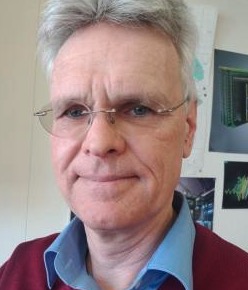 Schopper Andreas合作论文数European Organization for Nuclear Research274J. M. Otalora Goicochea合作论文数273M. Poli Lener合作论文数273A. Satta合作论文数273
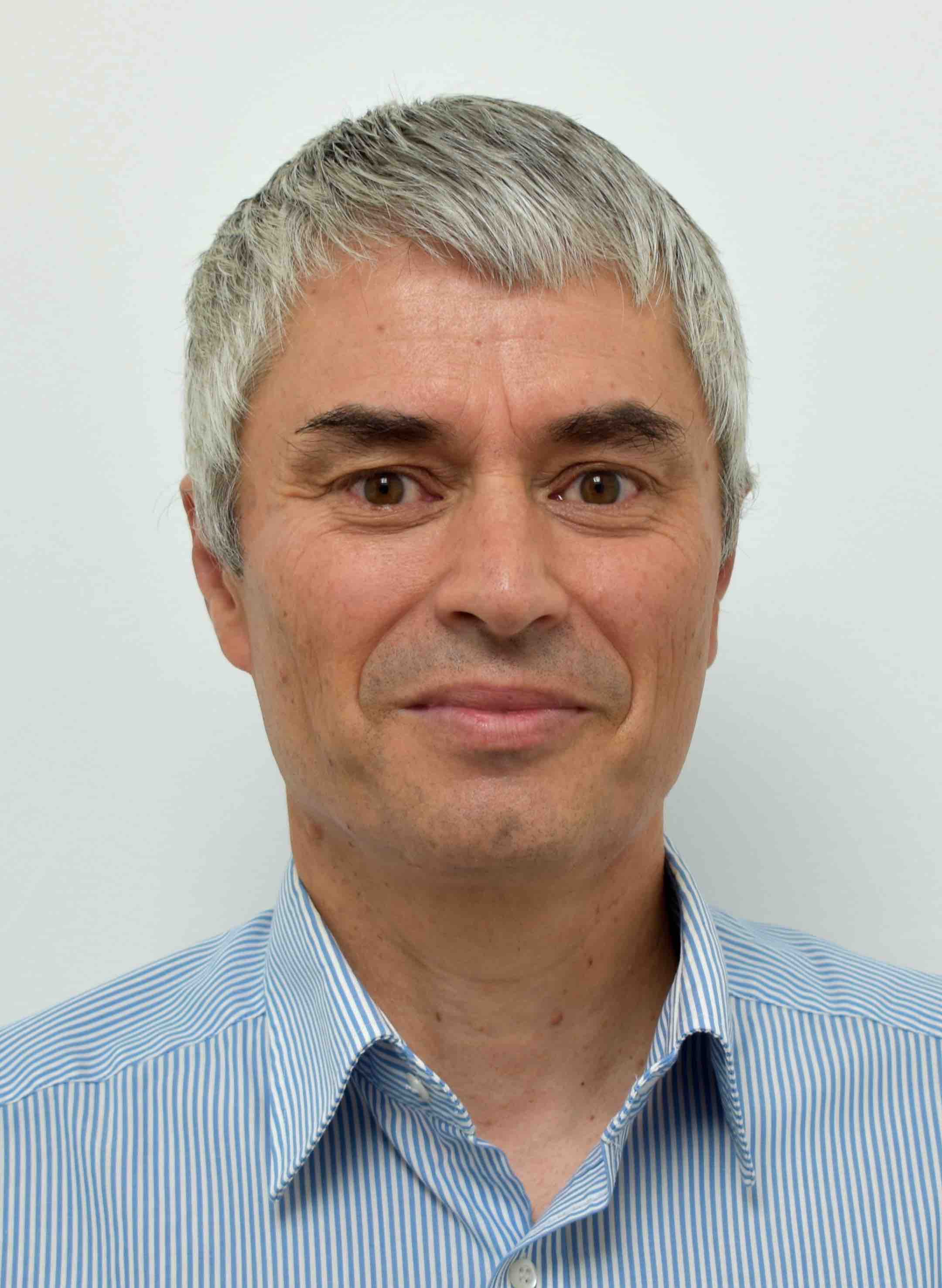 Olivier Schneider合作论文数High Energy Physics Laboratory, Institute of Physics, School of Basic Sciences, Ecole Polytechnique Fédérale De Lausanne273




