Fine-tuning vision-language-action (VLA) policies for long-horizon manipulation still relies heavily on behavior cloning, which requires costly high-quality demonstrations and keeps policies near the demonstration distribution. Reward models can reduce this dependence by reweighting demonstrations and providing dense supervision for on-robot reinforcement learning (RL), but they must be dense, accurate, and general. Existing methods fall short: task-specific stage-aware models are accurate but require per-task annotations, while general vision-language-model (VLM) reward models are broadly applicable but too coarse for fine-grained long-horizon progress. We introduce RM, a multi-task stage-aware reward model that combines an action-primitive-based stage estimator with a multi-gate Mixture-of-Experts (MMoE) value head to produce dense per-step rewards across manipulation tasks. Building on RM, we further propose SPIRAL (Self-Policy Improvement via Reward-Aligned Learning), an on-policy reward-guided framework that improves VLA policies from cheap autonomous rollouts. On a 10-task benchmark, RM reduces value-estimation MSE by 80
This paper investigates the entropy dynamics of Chain-of-Thought (CoT) and uncovers a consistent two-phase structure: an of exploration transitioning sharply to a of convergence. We demonstrate that the Confidence Region possesses two critical properties: 1) —answers in confidence region become highly accurate and stable, and 2) —models generate unnecessary tokens long after reaching the correct answer. These properties unlock more efficient and reliable inference strategies: 1) leverages reliability and redundancy to terminate computation safely when returns diminish, and 2) uses the Confidence Region signal to prioritize converged trajectories. To operationalize these insights, we formulate Confidence Region detection as a sequential change-point detection problem, being the first to apply classical change-point methods to monitor CoT reasoning. Using the Cumulative Sum (CUSUM) algorithm, a statistically optimal change-point detector, we develop a training-free framework for real-time inference control. Experiments show our approach establishes a superior Pareto-frontier for early exit. CUSUM achieves 63.06% accuracy with 11.1% token reduction, outperforming DEER and Dynasor by 3.28% and 4.36% in accuracy respectively. For test-time scaling, CUSUM-weighted voting consistently outperforms self-consistency.
AI agents are increasingly expected to complete long-horizon workflows that require sustained progress over hours, millions of tokens, and complex environments. Yet current agent benchmarks largely evaluate short-form tasks, such as single pull requests, small tickets, or 5-10 minute exercises, limiting our ability to measure agents' capabilities in planning, long-context understanding, and memory use. We introduce SWE-Marathon, a benchmark of 20 long-horizon tasks spanning software engineering and adjacent technical domains. Each task consists of a unique executable environment, a human-written reference solution, and a multi-layer verification suite. Logged agent attempts average 27.2M total tokens, making SWE-Marathon substantially longer-horizon than existing SWE and command-line agent benchmarks. Current frontier coding agents solve fewer than 30
Training vision-language-action (VLA) policies for humanoid loco-manipulation is constrained by the high cost and complexity of collecting human teleoperation demonstrations. VLA policies fine-tuned in simulators have, until now, failed to transfer effectively in humanoid loco-manipulation tasks. We present LEGS (Loco-manipulation via Embodied Gaussian Splatting), a hybrid simulator that composites a mesh foreground (robot, objects, props) over a photorealistic 3D Gaussian Splatting (3DGS) background reconstructed from a handheld scene capture. LEGS uses a procedural motion-primitive generator to synthesize labeled demonstrations at scale without human teleoperation, and a deterministic two-stage color calibration to align the rendered 3DGS image to the robot's deployment camera. On a Unitree G1 humanoid robot, across three pick-and-place tasks of increasing whole-body difficulty and three VLA backbones (psi_0, pi_0.5, GR00T N1.6), a policy trained purely on LEGS data matches or exceeds one trained on human teleoperation demos on every experiment. It also outperforms a mesh-only simulation baseline that ablates the effect of the 3DGS background, showing that photorealistic rendering is a key enabler for synthetic data transfer. Humanoid motion is recorded independently of scene appearance in LEGS, allowing the same auto-generated demonstrations to be re-rendered under new backgrounds and object meshes–covering a new scene at more than 15x lower cost than teleoperation–to augment training data for robustness to scene variations. Under combined object-and-scene appearance shift, the policy trained on re-rendered LEGS-AUG data maintains task success while the baseline trained on teleoperation data fails entirely. Our project page is located at https://legsvla.github.io/.
We present PRIMAL3, an ultra-large-scale learning-based framework for multi-agent pathfinding (MAPF) that integrates reinforcement learning, topology-aware communication, LaCAM3-guided training, and PIBT-based action refinement. PRIMAL3 targets failures at topologically critical states, where agents must coordinate decisively around bottlenecks, dead ends, and persistent conflicts. Each agent is represented using features derived from cut vertices, dead-end regions, shortest-path distances, and blocking estimates. Two complementary graphs capture agent interactions: a same-direction following graph propagates multihop context along compatible paths, while a different-direction conflict graph differentiates agents competing for shared space through masked attention and relative features. During training, we propose to let policy entropy identify uncertain agents, for which LaCAM3 provides confidence-triggered action interventions and label-smoothed imitation targets. During execution, a priority-aware PIBT module refines the proposed joint actions using persistent, learned, and distance-aware priorities together with policy-aware fallback preferences while maintaining collision-free execution. The resulting framework combines learned exploration with structured expert guidance without requiring LaCAM3 at inference. Experiments demonstrate that PRIMAL3 substantially outperforms state-of-the-art learning-based baselines and scales to ultra-large instances with up to city-level 100,000 agents. Real-world experiments further demonstrate the feasibility of deploying PRIMAL3 on physical robotic systems and ablation studies validate the individual contributions the components we proposed. Project page: https://marmotlab.github.io/PRIMAL3/
Autonomous drones capable of interpreting and executing high-level language instructions in unstructured environments remain a long-standing goal. Yet existing approaches are constrained by their dependence on hand-crafted skills, extensive parameter tuning, or computationally intensive models unsuitable for onboard use. We introduce a lightweight Vision-Language-Action (VLA) framework that runs fully onboard and follows natural-language commands in real time. Our policy is trained in a photorealistic 3D Gaussian Splatting (3DGS) simulator via Differentiable Reinforcement Learning (DiffRL), enabling efficient learning of low-level control from visual and linguistic inputs. At its core is a Mixture-of-Experts (MoE) action head, which adaptively routes computation to improve generalization while mitigating forgetting. In multi-task generalization experiments, our method achieves a success rate of 83% on trained tasks and 75% on unseen tasks in simulation. When deployed on real hardware, it attains 67% success on trained tasks and 50% on unseen ones. In multi-environment adaptation experiments, our method achieves an average success rate of 81% across diverse simulated environments and 67% across varied real-world settings. These results establish a new benchmark for fully onboard Vision-Language-Action (VLA) flight and demonstrate that compact, efficient models can enable reliable, language-guided navigation without relying on external infrastructure.
Functional robotic grasping requires a policy that generalizes across diverse object geometries and poses while maintaining task-specific contact precision. We study this challenge through mug-handle grasping, where thin handles, instance variation, and upright or inverted placements make both perception and control sensitive to object configuration. Grasp pose detection methods operate open-loop and are sensitive to estimation errors on thin handle structures. Learned visuomotor policies must implicitly learn to handle the coupled variation in visual appearance and action direction induced by different object placements, limiting generalization. We propose AnyMug, a canonicalized visuomotor reinforcement learning framework for functional grasping that trains a single closed-loop policy entirely in simulation and deploys it zero-shot on a real robot. AnyMug introduces observation-action canonicalization, which transforms both the depth observation and the predicted end-effector action into a shared object-centric frame. The policy therefore sees a consistent mug-centered view and emits actions in a canonical direction regardless of mug placement, allowing the same grasping behavior to be reused across configurations. A handle-aware reward further encourages precise approach, gripper alignment, and opposing-finger placement, while a pose curriculum and domain randomization improve training stability and sim-to-real transfer. In simulation, AnyMug achieves over 93
A staging system based on how big a role AI has in patient care can help to identify who is responsible in cases in which care fails.
My research aims to pioneer efficient and reliable wearable intelligence algorithms that transform healthcare robotics into adaptive, patient-centered systems. I take a four-step approach: (1) design multimodal wearable sensing platforms to capture human and biometric signals; (2) train a foundation model that learns from these rich datasets to reason about human behaviors and health states; (3) validate the model through large-scale simulation and principled uncertainty quantification; and (4) deploy it in rehabilitation and assistive robots for intelligent, personalized care. This research not only advances fundamental understanding of multimodal human behavior, but also opens new pathways for early disease diagnosis, adaptive treatment, and accessible digital health. By bridging AI, wearables, and robotics, my work aspires to lay the groundwork for the next generation of healthcare technologies that are proactive, trustworthy, and deeply aligned with human well-being.
Have you ever post-trained a generalist vision-language-action (VLA) policy on a small demonstration dataset, only to find that it stops responding to new instructions and is limited to behaviors observed during post-training? We identify this phenomenon as lock-in: after low-data, supervised fine-tuning (SFT), the policy becomes overly specialized to the post-training data and fails to generalize to novel instructions, manifesting as concept lock-in (fixation on training objects/attributes) and spatial lock-in (fixation on training spatial targets). Many existing remedies introduce additional supervision signals, such as those derived from foundation models or auxiliary objectives, or rely on augmented datasets to recover generalization. In this paper, we show that the policy's internal pre-trained knowledge is sufficient: DeLock mitigates lock-in by preserving visual grounding during post-training and applying test-time contrastive prompt guidance to steer the policy's denoising dynamics according to novel instructions. Across eight simulation and real-world evaluations, DeLock consistently outperforms strong baselines and matches or exceeds the performance of a state-of-the-art generalist policy post-trained with substantially more curated demonstrations.
Vision-Language-Action (VLA) models such as π_0 have demonstrated remarkable generalization across diverse fixed-base manipulators. However, transferring these foundation models to aerial platforms remains an open challenge due to the fundamental mismatch between the quasi-static dynamics of fixed-base arms and the underactuated, highly dynamic nature of flight. In this work, we introduce AirVLA, a system that investigates the transferability of manipulation-pretrained VLAs to aerial pick-and-place tasks. We find that while visual representations transfer effectively, the specific control dynamics required for flight do not. To bridge this "dynamics gap" without retraining the foundation model, we introduce a Payload-Aware Guidance mechanism that injects payload constraints directly into the policy's flow-matching sampling process. To overcome data scarcity, we further utilize a Gaussian Splatting pipeline to synthesize navigation training data. We evaluate our method through a cumulative 460 real-world experiments which demonstrate that this synthetic data is a key enabler of performance, unlocking 100
Large language model (LLM) agents are increasingly deployed to automate productivity tasks (e.g., email, scheduling, document management), but evaluating them on live services is risky due to potentially irreversible changes. Existing benchmarks rely on simplified environments and fail to capture realistic, stateful, multi-service workflows. We introduce ClawsBench, a benchmark for evaluating and improving LLM agents in realistic productivity settings. It includes five high-fidelity mock services (Gmail, Slack, Google Calendar, Google Docs, Google Drive) with full state management and deterministic snapshot/restore, along with 44 structured tasks covering single-service, cross-service, and safety-critical scenarios. We decompose agent scaffolding into two independent levers (domain skills that inject API knowledge via progressive disclosure, and a meta prompt that coordinates behavior across services) and vary both to measure their separate and combined effects. Experiments across 6 models, 4 agent harnesses, and 33 conditions show that with full scaffolding, agents achieve task success rates of 39-64
A fundamental challenge in autonomous driving is the integration of high-level, semantic reasoning for long-tail events with low-level, reactive control for robust driving. While large vision-language models (VLMs) trained on web-scale data offer powerful common-sense reasoning, they lack the grounded experience necessary for safe vehicle control. We posit that an effective autonomous agent should leverage the world knowledge of VLMs to guide a steerable driving policy toward robust control in driving scenarios. To this end, we propose SteerVLA, which leverages the reasoning capabilities of VLMs to produce fine-grained language instructions that steer a vision-language-action (VLA) driving policy. Key to our method is this rich language interface between the high-level VLM and low-level VLA, which allows the high-level policy to more effectively ground its reasoning in the control outputs of the low-level policy. To provide fine-grained language supervision aligned with vehicle control, we leverage a VLM to augment existing driving data with detailed language annotations, which we find to be essential for effective reasoning and steerability. We evaluate SteerVLA on a challenging closed-loop benchmark, where it outperforms state-of-the-art methods by 4.77 points in overall driving score and by 8.04 points on a long-tail subset. The project website is available at: https://steervla.github.io/.
Agent Skills are structured packages of procedural knowledge that augment large language model (LLM) agents at inference time. Despite rapid adoption, there is no standard way to measure whether they actually help. We present SkillsBench, a benchmark whose current inventory contains 87 tasks across 8 domains paired with curated Skills and deterministic verifiers. Our latest aggregate evaluation runs the 87-task benchmark under matched no-Skills and curated-Skills conditions for 18 model-harness configurations. Curated Skills raise the average pass rate from 33.9
Generalizable long-horizon robotic assembly requires reasoning at multiple levels of abstraction. While end-to-end imitation learning (IL) is a promising approach, it typically requires large amounts of expert demonstration data and often struggles to achieve the high precision demanded by assembly tasks. Reinforcement learning (RL) approaches, on the other hand, have shown some success in high-precision assembly, but suffer from sample inefficiency, which limits their effectiveness in long-horizon tasks. To address these challenges, we propose a hierarchical modular approach, named Adaptive Robotic Compositional Hierarchy (ARCH), which enables long-horizon, high-precision robotic assembly in contact-rich settings. ARCH employs a hierarchical planning framework, including a low-level primitive library of parameterized skills and a high-level policy. The low-level primitive library includes essential skills for assembly tasks, such as grasping and inserting. These primitives consist of both RL and model-based policies. The high-level policy, learned via IL from a handful of demonstrations, without the need for teleoperation, selects the appropriate primitive skills. We extensively evaluate our approach in simulation and on a real robotic manipulation platform. We show that ARCH generalizes well to unseen objects and outperforms baseline methods in terms of success rate and data efficiency. More details are available at: https://long-horizon-assembly.github.io.
We present SIREN for registration of multi-robot Gaussian Splatting (GSplat) maps, with zero access to camera poses, images, and inter-map transforms for initialization or fusion of local submaps. To realize these capabilities, SIREN harnesses the versatility and robustness of semantics in three critical ways to derive a rigorous registration pipeline for multi-robot GSplat maps. First, SIREN utilizes semantics to identify feature-rich regions of the local maps where the registration problem is better posed, eliminating the need for any initialization which is generally required in prior work. Second, SIREN identifies candidate correspondences between Gaussians in the local maps using robust semantic features, constituting the foundation for robust geometric optimization, coarsely aligning 3D Gaussian primitives extracted from the local maps. Third, this key step enables subsequent photometric refinement of the transformation between the submaps, where SIREN leverages novel-view synthesis in GSplat maps along with a semantics-based image filter to compute a high-accuracy non-rigid transformation for the generation of a high-fidelity fused map. We demonstrate the superior performance of SIREN compared to competing baselines across a range of real-world datasets, and in particular, across the most widely-used robot hardware platforms, including a manipulator, drone, and quadruped. In our experiments, SIREN achieves about 90x smaller rotation errors, 300x smaller translation errors, and 44x smaller scale errors in the most challenging scenes, where competing methods struggle. We will release the code and provide a link to the project page after the review process.
Autonomous visual navigation is an essential element in robot autonomy. Reinforcement learning (RL) offers a promising policy training paradigm. However, existing RL methods suffer from high sample complexity, poor sim-to-real transfer, and limited runtime adaptability. These problems are particularly challenging for drones, with complex nonlinear and unstable dynamics, and strong dynamic coupling between control and perception. In this paper, we propose a novel framework that integrates 3D Gaussian Splatting (3DGS) with differentiable deep reinforcement learning (DDRL) to train vision-based drone navigation policies. By leveraging high-fidelity 3D scene representations and differentiable simulation, our method improves sample efficiency and sim-to-real transfer. Additionally, we incorporate a Context-aided Estimator Network (CENet) to adapt to environmental variations at runtime. Moreover, by curriculum training in a mixture of different surrounding environments, we achieve in-task generalization, the ability to solve new instances of a task not seen during training. Drone hardware experiments demonstrate our method’s high training efficiency compared to state-of-the-art RL methods, zero shot sim-to-real transfer for real robot deployment without fine tuning, and ability to adapt to new instances within the same task class (e.g. to fly through a gate at different locations with different distractors in the environment). Our simulator and training framework are open-sourced at: https://github.com/Qianzhong-Chen/grad_nav.
Recent advances in 3D Gaussian Splatting (3DGS) have enabled real-time, high-fidelity view synthesis, but remain critically dependent on camera poses estimated by Structure-from-Motion (SfM), which is notoriously unreliable in textureless indoor environments. To eliminate this dependency, recent pose-free variants have been proposed, yet they often fail under abrupt camera motion due to unstable initialization and purely photometric objectives. In this work, we introduce **Nope-RoomGS**, an optimization framework with no need for camera pose inputs, which effectively addresses the textureless regions and abrupt camera motion in indoor room environments through a local-to-global optimization paradigm for 3DGS reconstruction. In the local stage, we propose a lightweight local neural geometric representation to bootstrap a set of reliable local 3D Gaussians for separated short video clips, regularized by multi-frame tracking constraints and foundation model depth priors. This enables reliable initialization even in textureless regions or under abrupt camera motions. In the global stage, we fuse local 3D Gaussians into a unified 3DGS representation through an alternating optimization strategy that jointly refines camera poses and Gaussian parameters, effectively mitigating gradient interference between them. Furthermore, we decompose camera pose optimization based on a piecewise planarity assumption, further enhancing robustness under abrupt camera motion. Extensive experiments on Replica, ScanNet and Tanks & Temples demonstrate the state-of-the-art performance of our method in both camera pose estimation and novel view synthesis.
With the widespread adoption of large language models (LLMs) in practical applications, selecting an appropriate model requires balancing not only performance but also operational cost. The emergence of reasoning-capable models has further widened the cost gap between "thinking" (high reasoning) and "non-thinking" (fast, low-cost) modes. In this work, we reveal that approximately 58
 Mac Schwager合作论文数Department of Aeronautics and Astronautics, School of Engineering, Stanford University;Computer Science Department, School of Engineering, Stanford University22
 Jianing Qiu合作论文数MyopiaMe11
 Bolei Zhou (周博磊)合作论文数Computer Science Department, Samueli School of Engineering, University of California, Los Angeles;Coco10
 Chuanyang Zheng合作论文数Hong Kong Baptist University Kowloon6
 Mingyu Ding (丁明宇)合作论文数UC Berkeley5
 Cewu Lu (卢策吾)合作论文数School of Artificial Intelligence, Shanghai Jiao Tong University;Center for DNA Information Storage, Shanghai Jiao Tong University5
 Ruohan Zhang合作论文数Stanford Vision and Learning (SVL) Lab, Department of Computer Science, Stanford University4
 Jiajun Wu (吴佳俊)合作论文数Computer Science Department, Stanford University4
 Chen Wang (王琛)合作论文数Shanghai Jiaotong University School of Medicine4
 Fei-Fei Li (李飛飛)合作论文数Computer Science Department, Stanford University;Human-Centered AI Institute, Stanford University4
 Yuke Zhu (朱玉可)合作论文数Department of Computer Science, College of Natural Sciences, The University of Texas at Austin;NVIDIA4
 JunEn Low合作论文数3Naixiang Gao合作论文数3
 Jianping Shi (石建萍)合作论文数SenseTime Group Limited3
 Timothy Chen合作论文数3Johnathan Tucker合作论文数3
 Quan Vuong合作论文数University of California San Diego3
 Shorinwa Ola合作论文数Stanford University Department of Mechanical Engineering Stanford CA USA3
 Roberto Martín-Martín合作论文数Department of Computer Science, College of Natural Sciences, The University of Texas at Austin3
 Brian Ichter合作论文数Google3
 Oier Mees合作论文数University of Freiburg3
 Sergey Levine合作论文数Department of Electrical Engineering and Computer Sciences, University of California, Berkeley3
 Pieter Abbeel合作论文数Department of Electrical Engineering and Computer Sciences, University of California, Berkeley;Amazon3
 Danfei Xu合作论文数School of Interactive Computing, College of Computing, Georgia Institute of Technology3
 Shuran Song合作论文数Robotics and Embodied Artificial Intelligence Lab, Stanford University;Department of Electrical Engineering, Stanford University3
 Chelsea Finn合作论文数Department of Computer Science and Electrical Engineering, Stanford University;Physical Intelligence3
 Stephen Tian合作论文数Center for Integrated Facility Engineering, School of Engineering, Stanford University3
 Haibao Yu合作论文数Institute for AI Industry Research, Tsinghua University3
 Ken Goldberg合作论文数Industrial Engineering and Operations Research Department, College of Engineering, University of California, Berkeley;University of California, San Francisco3
 Animesh Garg合作论文数School of Interactive Computing, College of Computing, Georgia Institute of Technology3
 Jeannette Bohg合作论文数Interactive Perception and Robot Learning Lab, Stanford AI Lab, Computer Science Department, Stanford University3
 Linxi Jim Fan合作论文数NVIDIA3
 Anirudha Majumdar合作论文数Mechanical and Aerospace Engineering, Princeton University3
 Danny Driess合作论文数Physical Intelligence3
 Dorsa Sadigh合作论文数Department of Electrical Engineering, Stanford University;Department of Computer Science, Stanford University;Google DeepMind3
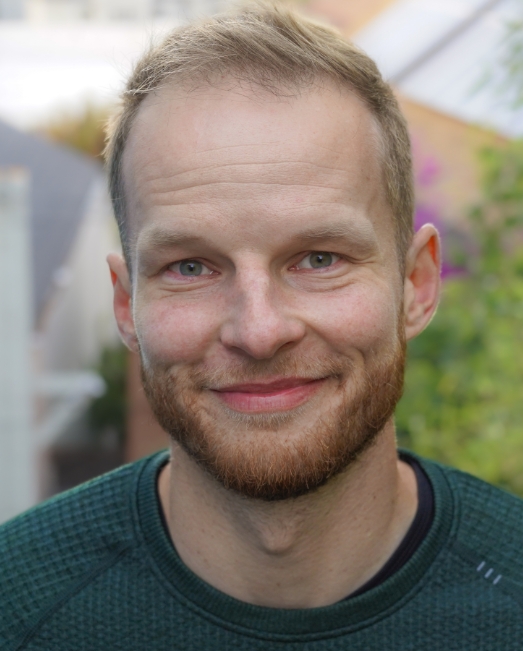 Karol Hausman合作论文数Physical Intelligence3
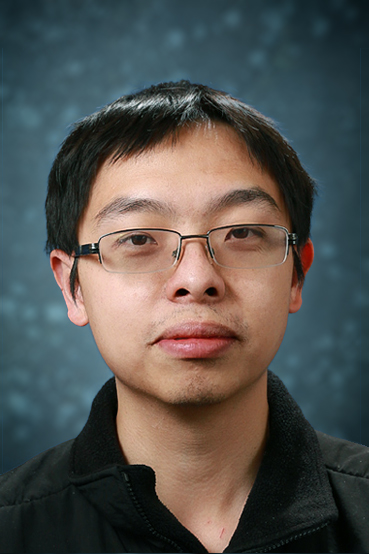 Dahua Lin (林達華)合作论文数Department of Information Engineering, The Chinese University of Hong Kong;Shanghai Artificial Intelligence Laboratory3
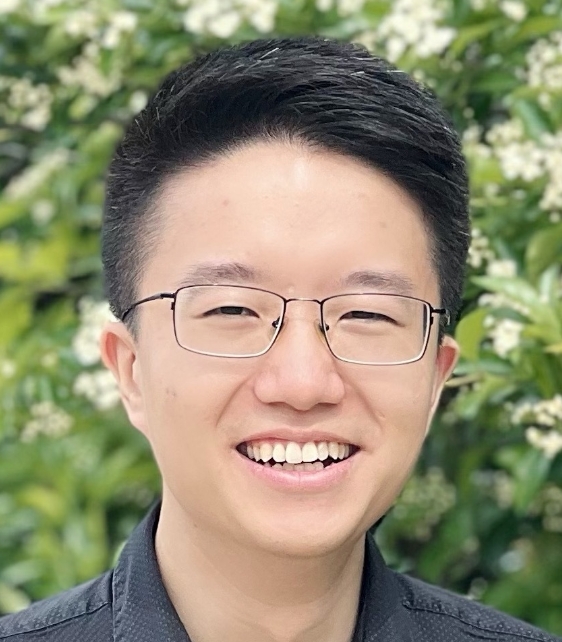 Yunzhu Li合作论文数Columbia University3Zichen Jeff Cui合作论文数2Yueh-Hua Wu合作论文数2Yifan Zhou合作论文数2Vidhi Jain合作论文数2Travis Armstrong合作论文数2Samuel Bustamante合作论文数2Mohit Sharma合作论文数2Maximilian Du合作论文数2Kevin Zhang合作论文数2Kendra Byrne合作论文数2Keegan Go合作论文数2




