Background Lack of access to Water, Sanitation, and Hygiene (WASH) services is a major public health concern in refugee camps, where extreme crowding accelerates the spread of communicable diseases. The Rohingya settlements in Cox’s Bazar, Bangladesh, exemplify these conditions, with large populations living under severe spatial constraints. Methods We develop a semi-supervised segmentation framework using the Segment Anything Model (SAM) to map shelters from multi-temporal sub-meter remote sensing imagery (2017–2025), improving detection in complex camp environments by 4·9% in F1-score over strong baselines. Findings The detected shelter maps show that shelter expansion stabilized after 2020, whereas continued population growth reduced per capita living space by ∼14% between 2020 and 2025. WASH accessibility, measured with an enhanced network-based two-step floating catchment area (2SFCA) method, declined from 2022 to 2025, increasing facility loads and exceeding global benchmarks. Gender-disaggregated scenarios that incorporate safety penalty further reveal pronounced inequities, with female accessibility ∼27% lower than male. Interpretations Our results demonstrate that remote sensing–driven AI diagnostics can generate equity-focused evidence to prioritize WASH investments and mitigate health risks in protracted displacement settings.
Many post-hoc explainable feature attribution techniques analyze gradient propagation and understand decisions of deep learning models. However, conventional gradient analysis used to generate such maps can be noisy, potentially compromising the reliability of explanations. In this work, we introduce a robust method for computing feature attributions by identifying critical parameters and refining gradient propagation through these parameters. This method reduces the impact of non-critical parameters, mitigating the effect of feature leakage and randomized initialization, which introduce noise in attribution maps. We implemented this concept as an add-on module, called CriGrad, and evaluated its efficacy using three benchmarks and seven explainable models. Our results show that focusing on critical parameters improves explanability in 93% of the cases, demonstrating its effectiveness and improved reliability.
The increasing frequency and intensity of natural disasters call for rapid and accurate damage assessment. In response, disaster benchmark datasets from high-resolution satellite imagery have been constructed to develop methods for detecting damaged areas. However, these methods face significant challenges when applied to previously unseen regions due to the limited geographical and disaster-type diversity in the existing datasets. We introduce DAVI (Disaster Assessment with VIsion foundation model), a novel approach that addresses domain disparities and detects structural damage at the building level without requiring ground-truth labels for target regions. DAVI combines task-specific knowledge from a model trained on source regions with task-agnostic knowledge from an image segmentation model to generate pseudo labels indicating potential damage in target regions. It then utilizes a two-stage refinement process, which operate at both pixel and image levels, to accurately identify changes in disaster-affected areas. Our evaluation, including a case study on the 2023 Türkiye earthquake, demonstrates that our model achieves exceptional performance across diverse terrains (e.g., North America, Asia, and the Middle East) and disaster types (e.g., wildfires, hurricanes, and tsunamis). This confirms its robustness in disaster assessment without dependence on ground-truth labels and highlights its practical applicability.
Explainable AI technologies analyze the deep models to reveal the reasoning behind their decisions. Although recent explainable AI approaches have shown success, the question remains whether they capture both key aspects of explainability: faithfulness and alignment of explanations with human knowledge. This paper presents a framework for integrating self-explaining capabilities into a deep model to achieve high prediction performance while providing faithful and human-aligned explanations. Our framework employs interpretable features directly in the decision-making process and computes the contribution of each feature through a verification across the entire dataset. This approach excludes approximations that compromise the faithfulness and enables the model to extract human knowledge in the data. Extensive experiments demonstrate that our framework maintains 99.9% of the performance of non-explainable deep models, while achieving high precision, receiving votes as a good explanation in 89.8% of cases, and securing the highest percentage of votes for the best explanation.
Time series forecasting uses historical data to predict future trends, leveraging the relationships between past observations and available features. In this paper, we propose RAFT, a retrieval-augmented time series forecasting method to provide sufficient inductive biases and complement the model's learning capacity. When forecasting the subsequent time frames, we directly retrieve historical data candidates from the training dataset with patterns most similar to the input, and utilize the future values of these candidates alongside the inputs to obtain predictions. This simple approach augments the model's capacity by externally providing information about past patterns via retrieval modules. Our empirical evaluations on ten benchmark datasets show that RAFT consistently outperforms contemporary baselines with an average win ratio of 86
Feature engineering for tabular data remains a critical yet challenging step in machine learning. Recently, large language models (LLMs) have been used to automatically generate new features by leveraging their vast knowledge. However, existing LLM-based approaches often produce overly simple or repetitive features, partly due to inherent biases in the transformations the LLM chooses and the lack of structured reasoning guidance during generation. In this paper, we propose a novel method REFeat, which guides an LLM to discover diverse and informative features by leveraging multiple types of reasoning to steer the feature generation process. Experiments on 59 benchmark datasets demonstrate that our approach not only achieves higher predictive accuracy on average, but also discovers more diverse and meaningful features. These results highlight the promise of incorporating rich reasoning paradigms and adaptive strategy selection into LLM-driven feature discovery for tabular data.
Large language models have revolutionized text generation, offering significant benefits while also posing threats to society, such as copyright infringement and misinformation. To prevent harmful use, the task of detecting machine-generated content has become an important research topic, though it remains particularly challenging across diverse content domains. This paper presents DGRM, an innovative add-on module designed to improve the domain generalization capability of existing machine-generated text detectors. Our model consists of two training components. (1) Feature disentanglement separates a text's embedding into target-specific and common attributes, thereby enhancing semantic domain generalization across different content domains. (2) Feature regularization applies constraints to these attributes to extract additional target-relevant information and ensure detection consistency under syntactic perturbations—thus achieving syntactic domain generalization. Evaluation over multiple datasets demonstrates that incorporating our module substantially improves the detection of machine-generated text across semantically and syntactically diverse domains. We hope our work contributes to mitigating the harmful use of language models.
Lack of access to Water, Sanitation, and Hygiene (WASH) services is a major public health concern in refugee camps, where extreme crowding accelerates the spread of communicable diseases. The Rohingya settlements in Cox's Bazar, Bangladesh, exemplify these conditions, with large populations living under severe spatial constraints. We develop a semi-supervised segmentation framework using the Segment Anything Model (SAM) to map shelters from multi-temporal sub-meter remote sensing imagery (2017-2025), improving detection in complex camp environments by 4.9
The spread of fake news harms individuals and presents a critical social challenge that must be addressed. Although numerous algorithmic and insightful features have been developed to detect fake news, many of these features can be manipulated with style-conversion attacks, especially with the emergence of advanced language models, making it more difficult to differentiate from genuine news. This study proposes adversarial style augmentation, AdStyle, designed to train a fake news detector that remains robust against various style-conversion attacks. The primary mechanism involves the strategic use of LLMs to automatically generate a diverse and coherent array of style-conversion attack prompts, enhancing the generation of particularly challenging prompts for the detector. Experiments indicate that our augmentation strategy significantly improves robustness and detection performance when evaluated on fake news benchmark datasets.
Recent studies on the urban heat island phenomenon reveal how rapid urbanization intensifies temperature disparities in urban cores, highlighting the need for sustainable urban planning solutions. Analyzing the problems caused by these effects requires high-resolution climate data; however, physical weather stations often lack sufficient regional coverage and resolution. Proposals for alternative methods have attempted to bridge this gap, but they fall short in capturing regional characteristics adequately or necessitate obtaining difficult-to-get input data. This research proposes to use satellite data, where the visual spectrum provides rich information about the degree of human development and is easy to obtain, to measure urban air temperature. Our model, UrbanHeat, uses multi-resolution satellite imagery and employs land surface temperature and global climate data as proxy labels to predict air temperature at a granular scale. The results show that the model provides predictions at a much finer scale while showing superior performance in measuring ordinal relationships between points by capturing both local and broad land cover details of the region. Our case studies demonstrate how predictions at high resolution can help protect vulnerable populations from extreme heat (e.g., elders or developing countries) and contribute to sustainable urban development worldwide.
Moving beyond traditional surveys, combining heterogeneous data sources with AI-driven inference models brings new opportunities to examine developmental conditions across expansive geographic areas. This research presents GeoSEE, a method that estimates socio-economic indicators such as poverty and population at the subnational level using a large language model. Leveraging a diverse set of information sources and analytical modules, such as satellite imagery and computer vision algorithms, the model efficiently selects the most appropriate components for estimating a given indicator and country. This choice is guided by the language model's prior knowledge, which functions similarly to the insights of a domain expert. The system then computes target indicators through incontext learning, synthesizing information from selected modules into natural language paragraphs. An extensive evaluation across Visegrad countries (i.e., Hungary, Slovakia, Poland, and Czech Republic) with various stages of development and multiple indicators demonstrates that our method accurately predicts estimates in both unsupervised and low-shot contexts. Its reliability in data-scarce environments, combined with cost-effective computation and scalability, makes it a viable tool for large-scale, fine-grained monitoring.
Socio-economic indicators like regional GDP, population, and education levels, are crucial to shaping policy decisions and fostering sustainable development. This research introduces GeoReg a regression model that integrates diverse data sources, including satellite imagery and web-based geospatial information, to estimate these indicators even for data-scarce regions such as developing countries. Our approach leverages the prior knowledge of large language model (LLM) to address the scarcity of labeled data, with the LLM functioning as a data engineer by extracting informative features to enable effective estimation in few-shot settings. Specifically, our model obtains contextual relationships between data features and the target indicator, categorizing their correlations as positive, negative, mixed, or irrelevant. These features are then fed into the linear estimator with tailored weight constraints for each category. To capture nonlinear patterns, the model also identifies meaningful feature interactions and integrates them, along with nonlinear transformations. Experiments across three countries at different stages of development demonstrate that our model outperforms baselines in estimating socio-economic indicators, even for low-income countries with limited data availability.
The Abstraction and Reasoning Corpus (ARC) poses a stringent test of general AI capabilities, requiring solvers to infer abstract patterns from only a handful of examples. Despite substantial progress in deep learning, state-of-the-art models still achieve accuracy rates of merely 40-55 ARC Competition, indicative of a significant gap between their performance and human-level reasoning. In this work, we seek to bridge that gap by introducing an analogy-inspired ARC dataset, GIFARC. Leveraging large language models (LLMs) and vision-language models (VLMs), we synthesize new ARC-style tasks from a variety of GIF images that include analogies. Each new task is paired with ground-truth analogy, providing an explicit mapping between visual transformations and everyday concepts. By embedding robust human-intuitive analogies into ARC-style tasks, GIFARC guides AI agents to evaluate the task analogically before engaging in brute-force pattern search, thus efficiently reducing problem complexity and build a more concise and human-understandable solution. We empirically validate that guiding LLM with analogic approach with GIFARC affects task-solving approaches of LLMs to align with analogic approach of human.
Moving beyond traditional surveys, combining heterogeneous data sources with AI-driven inference models brings new opportunities to measure socio-economic conditions, such as poverty and population, over expansive geographic areas. The current research presents GeoSEE, a method that can estimate various socio-economic indicators using a unified pipeline powered by a large language model (LLM). Presented with a diverse set of information modules, including those pre-constructed from satellite imagery, GeoSEE selects which modules to use in estimation, for each indicator and country. This selection is guided by the LLM's prior socio-geographic knowledge, which functions similarly to the insights of a domain expert. The system then computes target indicators via in-context learning after aggregating results from selected modules in the format of natural language-based texts. Comprehensive evaluation across countries at various stages of development reveals that our method outperforms other predictive models in both unsupervised and low-shot contexts. This reliable performance under data-scarce setting in under-developed or developing countries, combined with its cost-effectiveness, underscores its potential to continuously support and monitor the progress of Sustainable Development Goals, such as poverty alleviation and equitable growth, on a global scale.
Cross-platform topic dissemination is one of the research subjects that delved into media analysis; sometimes it fails to grasp the authentic topics due to platform-induced biases, which may be caused by aggregating documents from multiple platforms and running them on an existing topic model. This work deals with the impact of unique platform characteristics on the performance of topic models and proposes a new approach to enhance the effectiveness of topic modeling. The data utilized in this study consisted of a total of 1.5 million posts collected using the keyword ”ChatGPT” on the three social media platforms. The devised model reduces platform influence in topic models by developing a platform-invariant contrastive learning algorithm and removing platform-specific jargon word sets. The proposed approach was thoroughly validated through quantitative and qualitative experiments alongside standard and state-of-the-art topic models and showed its supremacy. This method can mitigate biases arising from platform influences when modeling topics from texts collected across various platforms.
Federated learning combines local updates from clients to produce a global model, which is susceptible to poisoning attacks. Most previous defense strategies relied on vectors derived from projections of local updates on a Euclidean space; however, these methods fail to accurately represent the functionality and structure of local models, resulting in inconsistent performance. Here, we present a new paradigm to defend against poisoning attacks in federated learning using functional mappings of local models based on intermediate outputs. Experiments show that our mechanism is robust under a broad range of computing conditions and advanced attack scenarios, enabling safer collaboration among data-sensitive participants via federated learning.
Large Language Models (LLMs), with their remarkable ability to tackle challenging and unseen reasoning problems, hold immense potential for tabular learning, that is vital for many real-world applications. In this paper, we propose a novel in-context learning framework, FeatLLM, which employs LLMs as feature engineers to produce an input data set that is optimally suited for tabular predictions. The generated features are used to infer class likelihood with a simple downstream machine learning model, such as linear regression and yields high performance few-shot learning. The proposed FeatLLM framework only uses this simple predictive model with the discovered features at inference time. Compared to existing LLM-based approaches, FeatLLM eliminates the need to send queries to the LLM for each sample at inference time. Moreover, it merely requires API-level access to LLMs, and overcomes prompt size limitations. As demonstrated across numerous tabular datasets from a wide range of domains, FeatLLM generates high-quality rules, significantly (10% on average) outperforming alternatives such as TabLLM and STUNT.
While advances in deep learning have enabled novel applications in various fields, face recognition in open-set scenarios remains a complex task, owing to the challenges posed by the extensive volume of low-quality face images. We introduce a new approach for recognizing faces in unconstrained open-set settings by leveraging uncertainty-aware embeddings through contrastive learning. Our model, called UCFace, effectively regulates the contribution of each face image based on the face uncertainty derived from image quality as an inverse proxy. Face embeddings are reinterpreted as a probabilistic distribution within the embedding space, where the degree of sharpness (i.e., distribution concentration) reflects the underlying uncertainty and probability density is used as a similarity metric to facilitate contrastive learning. Experiments on a wide range of face datasets, including those with high, mixed, and real-world low-resolution face images, demonstrate that UCFace enhances open-set face recognition performance by integrating the aspect of uncertainty.
We study the human-in-the-loop customs inspection scenario, where an AI-assisted algorithm supports customs officers by recommending a set of imported goods to be inspected. If the inspected items are fraudulent, the officers can levy extra duties. The updated decisions are used as additional training data for successive iterations. Inspecting only the likely fraudulent items may lead to an immediate gain in revenue, yet it does not bring new insights for learning dynamic trade patterns. In contrast, including uncertain items in the inspection helps gradually acquire new knowledge that will be used as supplementary training resources to update the system. Based on multiyear customs declaration logs obtained from three countries, we demonstrate that some degree of exploration is necessary to cope with domain shifts in trade data. The results show that a hybrid strategy of jointly selecting likely fraudulent and uncertain items will eventually outperform the exploitation-only strategy.
Algorithmic fairness has become an important machine learning problem, especially for mission-critical Web applications. This work presents a self-supervised model, called DualFair, that can debias sensitive attributes like gender and race from learned representations. Unlike existing models that target a single type of fairness, our model jointly optimizes for two fairness criteria - group fairness and counterfactual fairness - and hence makes fairer predictions at both the group and individual levels. Our model uses contrastive loss to generate embeddings that are indistinguishable for each protected group, while forcing the embeddings of counterfactual pairs to be similar. It then uses a self-knowledge distillation method to maintain the quality of representation for the downstream tasks. Extensive analysis over multiple datasets confirms the model's validity and further shows the synergy of jointly addressing two fairness criteria, suggesting the model's potential value in fair intelligent Web applications.
 Meeyoung Cha合作论文数School of Computing, Korea Advanced Institute of Science and Technology;Data Science Group, Pioneer Research Center for Mathematical and Computational Sciences, Institute for Basic Science42
 Sungwon Park合作论文数School of Computing, Korea Advanced Institute of Science and Technology24
 Sungkyu Shaun Park合作论文数Department of AI Convergence, Kangwon National University14
 Jihee Kim合作论文数School of Business and Technology Management, College of Business, Korea Advanced Institute of Science and Technology10
 Sundong Kim合作论文数AI Graduate School, Gwangju Institute of Science and Technology10
 Ahn Dong Hyun合作论文数Department of Materials Science and Engineering, Pohang University of Science and Technology9
 Jeasurk Yang合作论文数Seoul Natl Univ, Dept Geog, Seoul, South Korea8
 Sangyoon Park合作论文数Division of Social Science, School of Humanities and Social Science, Hong Kong University of Science and Technology7
 Xing Xie (谢幸)合作论文数Microsoft Research Asia7
 Seungeon Lee合作论文数5
 Dieu Vu合作论文数5
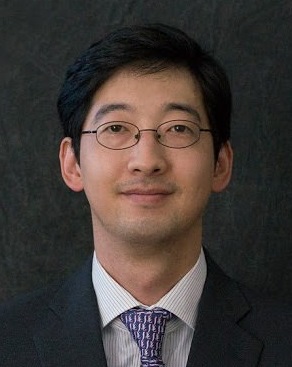 Hyunjoo Yang合作论文数College of Economics, Sogang University5
 Cha Hyunji合作论文数Korea Adv Inst Sci & Technol, Sch Comp, Daejeon, South Korea4Susang Lee合作论文数KAIST, Daejeon, Republic of Korea4Jeongwook Kim合作论文数4
 Jiyoung Han Yim合作论文数Master's Program in Science Journalism, Korea Advanced Institute of Science and Technology4
 Wonjae Lee合作论文数Graduate School of Culture Technology, College of Liberal Arts and Convergence Science, Korea Advanced Institute of Science and Technology4
 Cheng-Te Li (李政德)合作论文数Department of Computer Science and Information Engineering, National Cheng Kung University;Department of Statistics, National Cheng Kung University4
 Fangzhao Wu (吴方照)合作论文数4Xu Yizhan合作论文数3Hyeonho Song合作论文数Korea Adv Inst Sci & Technol, Sch Comp, Daejeon, South Korea3Mir Majid Molaie合作论文数3
 Karandeep Singh合作论文数Department of Learning Health Sciences, Medical School, University of Michigan3
 Xiting Wang (王希廷)合作论文数3Eunji Lee合作论文数2
 Bin Zhu合作论文数Microsoft Research Asia2Mingi Shin合作论文数2Danu Kim合作论文数2
 Seunghoon Hong合作论文数School of Computing, KAIST2
 Sang Won Lee合作论文数Kyungpook National University Chilgok Hospital2
 Jinsung Yoon合作论文数Google Cloud AI2
 Sercan ö. Arik合作论文数Google Cloud AI2
 Xiaoyuan Yi合作论文数2Jae-Gil Lee合作论文数1Doeun Kim合作论文数1Minseo Koo合作论文数1
 Minhyuk Song合作论文数Korea Advanced Institute of Science and Technology1
 Kyeongjin Ahn合作论文数School of Computing, Korea Advanced Institute of Science and Technology1
 Thi Nguyen Duc Khanh合作论文数1Jae-Hwan Jhong合作论文数1Tung Duong Mai合作论文数KAIST, Daejeon, Republic of Korea1Jaeyeon Kim合作论文数1Emanuele Arielli合作论文数Department of Architecture and Arts, Università Iuav di Venezia, Italy1Berhane Weldegebriel合作论文数School of Electrical Engineering, Korea Advanced Institute of Science and Technology (KAIST), Republic of Korea and Data Science Group, Institute for Basic Science (IBS), Republic of Korea1Changwook Jung合作论文数1Jung-Jun Lee合作论文数1




