최근 스마트 그리드, 스마트 시티와 같은 무선 네트워크의 수요에 대응하기 위한 기술인 Wi-SUN(Wireless Smart Utility Network)에 관심이 증가하고 있다. Wi-SUN은 응용에 따라 최소한의 하드웨어와 소프트웨어의 변경만으로 지원 가능한 미래 기술이다. 하지만 이러한 Wi-SUN에서도 발생하는 문제점으로 병목 현상이 있으며, 이를 해결하기 위해 부모 노드의 자식 노드 수에 제한을 두는 N_max 기법이 제안되었다. 그러나 N_max 기법에서는 고아 노드가 발생하는 추가적인 문제점이 있다. 본 논문에서는 고아 노드가 발생하지 않도록 연결성을 제공하고 병목현상을 해결할 수 있는 기법을 제안한다. 제안 기법은 네트워크 시뮬레이터 3(NS-3)를 이용하여 성능 평가를 진행한다.
With the emergence of services that require a high level of data usage, wireless networks are required to support higher data rates and greater capacity. To satisfy these requests, 5G architecture supports a high-frequency band. However, a high frequency occurs small range resulting in a need for numerous base stations (BSs). Deploying numerous BSs can be considered practically impossible due to high costs. To address the cost issue, instead of BSs, access points (APs) are used in Cell-free networks. That is, Cell-free networks that offer promising coverage gain and enhanced data rates consist of multiple APs and a single central process unit (CPU). This coverage of multiple APs' is much smaller than BS's. As a result, this small coverage can lead to frequent handovers. To overcome this frequent handover, an optimized handover scheme for the Cell-free network is required. Despite this optimization requirement, many studies in the Cell-free network field remain at the physical layer stage. No basic handover process is optimized for Cell-free networks, and no protocol for upper layers is defined. We consider that existing technologies will continue to be used in Cell-free networks, even if the protocols optimized for Cellfree networks are developed and used. For these reasons, we construct a Cell-free network architecture similar to the 5G structure for the handover process. In this paper, we investigate the handover process in 5G architecture and extend it to a Cellfree network environment. In our simulations, APs initiate and perform the handover process based on measurement reports from users. We analyzed and discussed the performance matrices of the handover in a Cell-free network environment, such as handover delay and throughput.
Recently, methods are studied to overcome various problems for Named Data Networking(NDN). Among them, a new method which can overcome content storm problem is required to reduce network congestion and deliver content packet to consumer reliably. According to the various studies, the content storm problems could be overcame by scoped interest flooding. However, because these methods do not considers not only network congestion ratio but also the number another different paths, the correspond content packets could be transmitted unnecessary and network congestion could be worse. Therefore, in this paper, we propose a new content forwarding method for NDN to overcome the content storm problem. In the proposed method, if the network is locally congested and another paths are generated, an intermediate node could postpone or withdraw the content packet transmission to reduce congestion.
In underwater wireless sensor networks (UWSN), acoustic communication naturally introduces challenges such as long propagation delay and high packet loss. The flooding-based routing protocol can address these challenges with its multipath characteristics. As in flooding-based routing, due to multipath propagation mechanism, not only DATA but also ACK messages are transmitted through multiple routes however still some packet loss will degrade the performance. So, to provide high reliability of message delivery, an efficient retransmission mechanism is inevitable. Though, if the network uses conventional transport layer protocol such as TCP, it will suffer a spurious retransmission problem as TCP was originally not designed for the multipath environment. In this paper, we propose route discrimination for flooding-based routing to reduce spurious retransmission in UWSN to solve the limitation. The notion of ACK copies waiting time (ACWT) is utilized which is selectively updated based on the similarity of paths of transmission of ACK message copies. We also improved our previous solution that lacks flexibility to cope with dynamic link error characteristics. Through evaluation, we verified that our new scheme achieves the performance improvements of 14%~84% in terms of retransmission ratio compared to the previous research.
Along with the fourth industrial revolution, the use of unmanned aerial vehicles (UAV) has grown very rapidly over the past decade. With this rapid growth, studies using UAVs are underway in various areas. UAVs are more economical and effective when utilizing several nodes rather than operating a single aircraft. In general, UAVs collect and transmit information to the control center (CC), and act on control commands from the CC. Communication between UAVs and the control center is usually achieved using modules such as radio frequency (RF), Bluetooth, Wireless Fidelity (Wi-Fi) and cellular. However, when multiple UAVs communicate directly with the CC, the limitations of communication technologies and problems with increasing nodes occur. To address these points, several studies have constructed an ad-hoc network of UAVs to address the limitations of Wi-Fi and Bluetooth communication range, or the high cost of cellular systems. However, previous studies have constructed fixed topology ad-hoc networks. These studies did not take into account the problem of changing network topology due to the rapid mobility and frequent formation changes of UAVs. Due to this, limits occurred such that UAVs moved only in the pre-built topology. In this paper, we propose a dynamic topology construction protocol for UAV swarms to address this problem. The main contents of this paper are as follows. We first look at the research and limitations of existing UAV communications, and propose a protocol to solve this problem. This paper proposes a protocol for UAV construction of ad-hoc networks when trying to perform missions using multiple UAVs, and also describes how the changed network topology is reconstructed when network topology changes due to changes in flight formation. Finally, we establish a situation and apply the proposed protocol, analyze the results and describe further required research.
Inter-networking of sensor nodes underwater results in the formulation of the Internet of Underwater Things (IoUT). Due to the harsh and dynamic underwater environment, the communicating wireless acoustic sensor nodes form low power and lossy network. Network congestion and packet loss due to link error is one of the fundamental problems faced by these networks. IETF standard application protocol for the Internet of things (IoT) is Constrained Application Protocol (CoAP) designed to counter such challenges. The existing congestion control algorithms for CoAP have known shortcomings while maintaining a satisfactory performance level when the link error is high. In this paper we propose, SWR_CC scheme in which the sensor nodes monitor the congestion in real-time and adjusts the congestion window size accordingly. The size of the congestion window is adjusted based on the congestion ratio and loss ratio information of the confirmable message. The simulation analysis showed that the proposed algorithm outperforms the congestion control mechanism introduced in CoAP.
The principle of Smart Cities is the interconnection of services, based on a network of Internet of Things (IoT) devices. As the number of IoT devices continue to grow, the demand to organize and maintain the IoT applications is increased. Therefore, the solutions for smart city should have the ability to efficiently utilize the resources and their associated challenges. Neighbor aware solutions can enhance the capabilities of the smart city. In this article, we briefly overview the neighbor aware solutions and challenges in smart cities. We then categorize the neighbor aware solutions and discuss the possibilities using the collaboration among neighbors to extend the lifetime of IoT devices. We also propose a new duty cycle MAC protocol with assistance from the neighbors to extend the lifetime of the nodes. Simulation results further coagulate the impact of neighbor assistance on the performance of IoT devices in smart cities.
Recently the Internet of Things (IoT) have gain much attention and, therefore, the demands for various streaming applications based on the IoT have increased. In this regard, the Constrained Application Protocol (CoAP) is a lightweight transmission protocol widely used in the IoT environment for providing streaming services. Generally, the CoAP protocol defines two message types i.e. confirmable message and non-confirmable message. However, since CoAP is not originally a transmission protocol design for streaming applications. Therefore, it cannot guarantee the reliability and real-time performance when streaming media is transmitted over it. In this paper, we propose a method to improve the QoS of streaming media transmission by dynamically changing the proportion of confirmable messages and non-confirmable messages. As the network conditions gradually gets better, the proposed method appropriately reduces the proportion of confirmable messages to meet the real-time requirements of streaming media. Finally, the simulation results show that the proposed scheme significantly enhances the QoS of the CoAP protocol for streaming service.
In our modern world, many Internet of Things (IoT) technologies are being researched and developed. IoT devices are currently being used in many fields. IoT devices use Wi-Fi and Bluetooth, however, communication distance is short and battery consumption is high. In areas such as smart cities and smart farms, IoT technology is needed to support a wide coverage with low power consumption. Low Power Wide Area (LPWA), which is a transmission used in IoT supporting a wide area with low power consumption, has evolved. LPWA includes Long Range (LoRa), Narrowband (NB-IoT), and Sigfox. LoRa offers many benefits as it communicates the longest distances, is cheap and consumes less battery. LoRa is used in many countries and covers a range of hundreds of square kilometers (km(2)) with a single gateway. However, if there are many obstacles to smart cities and smart farms, it causes communication problems. This paper proposes two (2) solutions to this problem: the relay method which is a multi-hop method and the Automatic Repeat Request (ARQ) system that detects packet loss in real-time and requests retransmission for LoRa. In this study, the actual performance of LoRa in the problematic environment was measured and the proposed method was applied. It was confirmed that the transmission rate of LoRa dropped when there were many obstacles such as trees. To use LoRa in a smart farm with a lot of space, multi-hop was observed to be better. An ARQ system is needed to compensate for the unexpected drop in the forward rate due to the increase in IoT devices. This research focused on reliability, however, additional network methods and automatic repeat request (ARQ) systems considering battery time should be researched in symmetry. This study covers the interdisciplinary field of computer science and wireless low power communication engineering. We have analyzed the LoRa/LoRaWAN technology in an experimental approach, which has been somewhat less studied than cellular network or WiFi technology. In addition, we presented and improved the performance evaluation results in consideration of various local and climatic environments.
Unlike terrestrial environment, the underwater environment possess additional and complicated challenges for wireless communication. For the underwater wireless communication, traditional radio wave communication is not feasible due to high channel fading and packet loss experienced high frequency communication that also reduces the communication range. Acoustic wave communication in dynamic underwater environment naturally inherits its own limitations that include low bandwidth, slow signal propagation speed, high packet loss and short communication range. Considering the UWSNs circumstances, protocols that can counter the high packet loss and low data rate are required. The MAC protocols designed for Underwater Wireless Sensor Network (UWSN) should incorporate changes in such a way that sensor nodes can have seamless and efficient communication while minimizing the effect of imposed constraints. In this paper, we therefore propose Optimized Multi-transmission Receiver-Initiated Medium Access Control (MAC) which considers harsh, lossy, and dynamic underwater environment. Our proposed method transmits optimized number of multiple packets to increase the successful packet delivery in harsh underwater environment with low data rate.
Internet of Underwater Things (IoUT) 1 is a network of networks mostly comprising of Underwater Wireless Sensor Networks (UWSNs) of underwater objects. These sensing nodes provide various services such as disaster prevention and management, tactical surveillance and environmental monitoring. Due to the underwater environmental constraints, these sensor nodes mostly communicate using an acoustic channel which inherits long propagation delay and network congestions. Congestion control schemes of existing protocols such as TCP require transmission of Ack messages for congestion detection which consumes unnecessary bandwidth. In this paper, we propose a reliable lightweight congestion control method for CoAP while using Ack message only in a necessary situation to reduce the use of Ack message. The proposed method adjusts the transmission rate based on the network successful packet delivery ratio of current time. Simulation results showed that our proposed scheme promises enhanced performance that can achieve higher throughput when compared with the congestion control mechanism of default CoAP standard.
For providing Internet service to underwater IoT nodes, it is necessary to divide the IPv6 packets appropriately according to appropriate MTU size. 6LoWPAN adaptation layer defined by IETF is able to support the address auto-configuration, header compression and so on. In particular, 6LoWPAN defines two configuration methods. In route-over configuration method and mesh-under configuration methods, fragmentation/reassembly processes are operated as hop-by-hop or end-to-end manner, respectively. However, route-over configuration method consumes computing overhead. On the other hand, mesh-under configuration method could decrease throughputs. Therefore, in this paper, we propose adaptive selection of configuration methods scheme in 6LoWPAN IoUT. In our scheme, each intermediate nodes measure overhead that is occurred by mesh-under configuration method and select their configuration method according to the measured overhead.
The VANET (Vehicle Ad Hoc Network) is gathering attention for autonomous vehicles and the MANET (Mobile Ad Hoc Network) is attracting interest as well. Therefore, efforts have been made to overcome the challenges of the VANET in which the topology changes in real time and instability exists due to the difference in speed and physical phase. Particularly in the IoT era, the total amount of network nodes in addition to vehicle nodes is expected to increase dramatically. Therefore, a clustering algorithm for a mesh network capable of autonomous configuration is suitable for reducing the load of the central control device and data redundancy on the network, which is expected to increase as the IoT era progresses. However, since clustering algorithms based on the existing research have been developed for the current traffic situation, inefficiency is inevitable in the future autonomous navigation period in which traveling path prediction can be accurately performed. Therefore, this paper discusses a clustering algorithm and a data propagation algorithm between clusters using path information. The main content of this paper is as follows. First, we propose a clustering algorithm using path information and considering the existing research results. In the autonomous navigation period, if the path is predictable, the probability that the nodes in the same cluster are in the same block for a longer time than the conventional one can converge to 100%. Therefore, the survival time of the cluster can be dramatically improved. Second, we developed a data propagation algorithm that can increase the information propagation rate of the entire network using path information. The cluster temporarily stores the data to be disseminated and then disseminates it when it encounters another cluster of neighbors. Therefore, data can be disseminated even for noncontiguous clusters. To summarize, this paper proposes clustering-based data dissemination algorithms and protocols using vehicle pathways for autonomous navigation and compares them with clustering-based data dissemination algorithms using existing directions.
Named Data Networking architecture has significant benefits in military applications, such as in-network caching, security, support of mobile nodes, etc. Content security is provided using signature of the content producer and encryption, however, the content name is visible to everyone that can have sensitive information. Leakage of such information is not desirable in military applications. Therefore, we propose a Content Name Privacy (CoNaP) scheme. CoNaP ensures that the adversary is not able to obtain any information from the content name. Simulations show that CoNaP satisfies more Interest packets with less delay as compared to the recent forwarding solutions.
In Underwater Wireless Sensor Networks, we faced a lot of challenges such as long propagation delay, and high packet loss. However, a flooding based routing protocol can address these challenges with its multipath characteristics. If the network uses a flooding based routing protocol, not only DATA but also ACK messages are transmitted through multiple paths. Although the messages are transmitted through multiple paths, we cannot avoid the packet loss completely. So, in order to provide high reliability of delivering messages, we need a retransmission mechanism. Though, if the network uses conventional transport layer protocol such as TCP, it will cause a spurious retransmission problem because it was not designed for the multipath environment. To overcome this problem, we suggest Path Similarity based Spurious Retransmission Minimization over Flooding based Routing in UWSN. Through our simulations, we verified that our scheme achieves the performance improvements of 10% ~ 45% in terms of retransmission ratio and 20% ~36% in terms of throughput compared to the Jacobson's RTO algorithm.
Routing in inter-vehicle communication is a challenging task owing to several intrinsic characteristics of vehicular networks, such as intermittent connectivity, dynamic topology, and inaccurate real-time location information. Routing accuracy in vehicular networks is directly proportional to the signaling overhead of the routing protocol employed. This signaling overhead is minimized by position based routing (PBR) protocols that make on-demand forwarding decisions based on the position information of neighboring vehicles. However, inaccurate position information caused by factors such as urban canyons, satellite coverage, intermittent connectivity, and error-prone channels, reduces the performance and reliability of PBR. In this paper, we propose a position-based routing scheme that applies a filtering method over the forwarding or relaying candidate vehicles based on the angle between the vehicle's direction of motion and the line between the sender and neighboring vehicles. By filtering inappropriate forwarding vehicles, the proposed method improves communication reliability in urban environments. Simulation results show that the proposed filtering scheme improves the performance of PBR in terms of packet delivery ratio and end-to-end delay
The Internet penetration rate is rising all over the world. In South Korea, there is no area which does not have Ethernet ports and Wi-Fi. So many people are familiar with network, Internet. However, there are still many countries and regions that do not know the weather today because the Internet is not available yet. To solve this problem, many people are studying the mesh network and actually building it and making efforts to spread the Internet. But, in reality, software that can build and manage such a mesh network is insufficient. In order to solve this problem, this paper proposes Gathering of Organization Treating Humble Ad-hoc Management (GOTHAM) and describes the results. GOTHAM is designed to solve three problems that exist in mesh network users. The first is that the mesh network is difficult to install, and the second is that there is no mesh network topology visualization software for batman-adv. And finally, there is no mesh network integration system for administrators. This paper focuses on these three problems and explains the GOTHAM that combines software-defined network (SDN). In addition, this paper describes three modules of GOTHAM. GOTHAM-setting, GOTHAM-main, and GOTHAM-GUI are explained in detail, and how these three modules work together is described. And also, we evaluate and analyze the performance of file transfer function using flow control which is a user application in the GOTHAM-main module. GOTHAM’s goal is not to be used for research but to actually run and let people use right now. That’s why GOTHAM is an open source project. All the software used in GOTHAM is open source. And also, we use hardware which is inexpensive and easy to get anywhere.
The mesh network has propagated rapidly, because of the Internet. All over the world, many people cannot use the Internet, because the Internet cable is not installed. So many mesh network communities try to set up the mesh network nodes and manage it. By its effort, there are more than 50 thousand mesh nodes in the world. However, there are no enough people who can make the mesh network and can manage it. By this reason, we develop open source GOTHAM. It has three main part. There are "Self-Organizing", "Visualization" and "Content-Centric". G.O.T.H.A.M is designed for people who don't know the network. So, it focuses simplicity, familiarity and automaticity. In this paper we explain original G.O.T.H.A.M and new G.O.T.H.A.M with Hazelcast including three functions. And also, we describe the program which runs with GOTHAM. All of the software in this paper is available on Github.
In underwater wireless sensor networks (UWSNs), not only data packets but also sensor nodes can be lost due to ocean current, running out of battery and etc. Among various routing protocols, Routing Protocol for Low Power and Lossy Networks (RPL) is a promising routing protocol to overcome this problem since it provides multiple upward path establishments and path repair methods. However, unlike upward paths, downward routing in RPL have low reliability since it source routing technique for reducing routing table size. In order to increase the reliability of downward paths, RPL standard defines two operational modes (Mode Of oPeration, MOP) for intermediate nodes, i.e., storing mode and non-storing mode. A node which operates in storing mode can increase the reliability, however it cannot be operated in storing mode for the all instances due to the limited memory. In this paper, we therefore propose a hop interval based MOP decision method for intermediate nodes. In our proposed method, the sink calculates the hop interval between storing nodes based on the number of application and each intermediate nodes decide their MOP according to the calculated hop interval. In addition, we propose a QoS-based initial storing node decision scheme to reflect differences between swallow and deep water.
 Choong Seon Hong合作论文数Networking Intelligence Lab, School of Computing, Kyung Hee University;Department of Computer Science and Engineering, Kyung Hee University78
 Dongkyun Kim合作论文数Department of Civil and Environmental Engineering, Hongik University34
 Seunggwan Lee合作论文数18
 Dong-Ho Cho合作论文数School of Electrical Engineering, Korea Advanced Institute of Science and Technology13
 Nguyen H. Tran合作论文数School of Computer Science, Faculty of Engineering, The University of Sydney11
 Gijeong Kim合作论文数9
 Nguyen Van Mui合作论文数Kyung Hee University9Eunbae Moon合作论文数8
 Junho Seo合作论文数Kyungpook Natl Univ, Sch Comp Sci & Engn, Daegu 41566, South Korea8
 Muhammad Mahbub Alam合作论文数Department of Computer Engineering;Kyung Hee University;Department of Computer Engineering, Kyung Hee University7
 Duc Ngoc Minh Dang合作论文数7
 Muhammad Toaha Raza Khan合作论文数6Yumi Oh合作论文数6Cheolhoon Kim合作论文数6
 Phuong Luu Vo合作论文数6
 Tuan Anh Le合作论文数6Misun Ahn合作论文数5Yonghwan Jeong合作论文数5Md. Obaidur Rahman合作论文数5
 Shariful Islam合作论文数5
 Abdul Wahid合作论文数Department of Electrical Engineering, COMSATS Institute of Information Technology5
 Md. Abdur Razzaque合作论文数Green Networking Research Group, University of Dhaka5
 Hong-Jong Jeong合作论文数5
 Cuong T. Do合作论文数5
 Daeho Lee合作论文数4
 Jun Lee合作论文数4
 Rim Haw合作论文数Kyunbg Hee University4
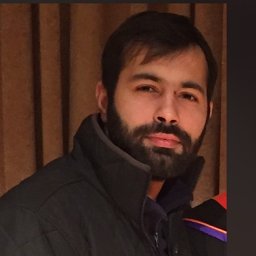 Syed Hassan Ahmed合作论文数Kyungpook National University4Zaw Htike合作论文数4
 Hyeong Cheol Park合作论文数Environmental Biotechnology National Core Research Center, Gyeongsang National University4
 Rossi Kamal合作论文数4
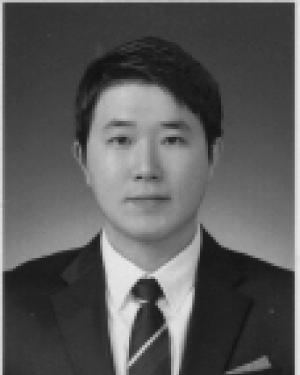 Hongseok Yoo合作论文数4
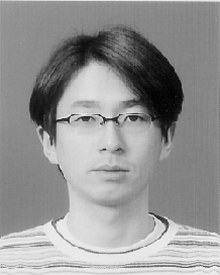 Jae-Jo Lee合作论文数4
 Md. Abdul Hamid合作论文数Department of Computer Engineering, Kyung Hee University4
 Muhammad Azfar Yaqub合作论文数3Gyewan An合作论文数3Yeongjoon Bae合作论文数3
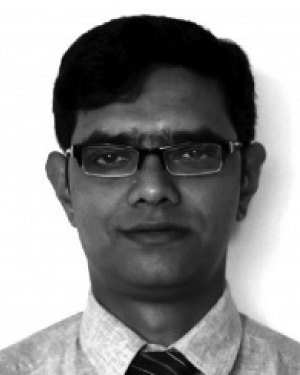 Md. Mustafizur Rahman合作论文数3
 Seunghyun Hong合作论文数Dept Comp Engn, Kyung Hee Univ3Jinho Kim合作论文数Dept Life Sci, Chung Ang Univ3Sangyun Han合作论文数3hyunjun kim合作论文数3Junhwan Park合作论文数3Dong Ha Kim合作论文数3
 Junho Kim合作论文数Kookmin University3gyusun yi合作论文数3
 Mohammad Helal Uddin Ahmed合作论文数3
 Muhammad Mostafa Monowar合作论文数Networking Lab, Kyung Hee University3




